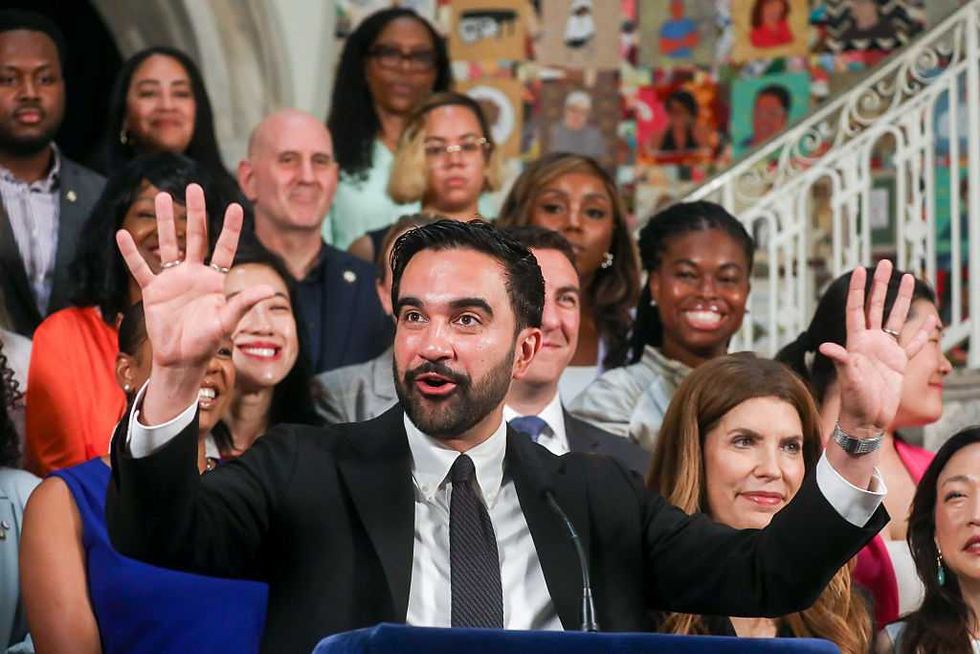
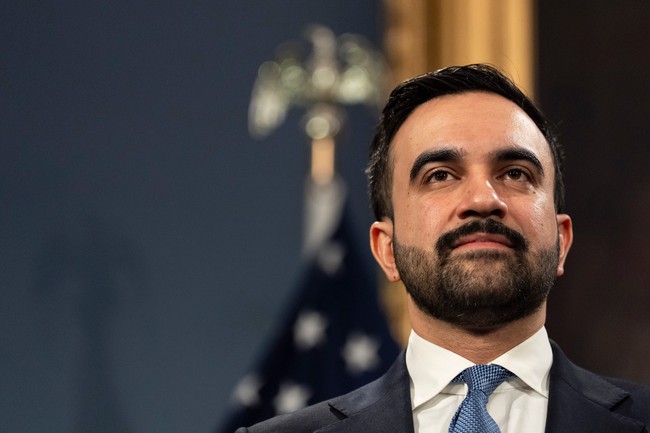
"Have you ever been to the U.S.-Mexico border?” “No.”One word. That may have been the most revealing moment of New York City Democratic Mayor Zohran Mamdani’s recent interview with the New York Times.Sanctuary policies are easy to defend from a podium at New York City Hall. They are much harder to defend before communities that have already paid the price.Mamdani defended his city’s sanctuary policies, which he reinforced after taking office by signing an executive order reaffirming them.The problem is not so much that Mamdani has never visited the border. It is that he seems unwilling to understand why communities that lived through the border crisis reached a very different conclusion.That lesson is visible far beyond the Rio Grande.Consider Goliad County in South Texas. The rural county has about 7,000 residents and sits roughly 160 miles from the U.S.-Mexico border.Testifying before the Senate Judiciary Committee last year, Sheriff Roy Boyd described how the crisis transformed the community he serves.Boyd’s office averaged 77 arrests a year during the five years before 2021. From 2021 through 2024, that average jumped to 413. Deputies discovered 16 cartel stash houses, and pursuits involving suspected human smugglers became routine.Residents began hearing voices and movement on remote properties after dark. Many no longer felt safe alone in their own homes.Those facts expose what Mamdani’s answer overlooks. The border crisis did not remain at the border. Cartel activity and illegal immigration reached inland communities that lacked the personnel and equipment to confront them. Former Border Patrol agent and Texas Public Policy Foundation senior fellow Ammon Blair calls cartels “hybrid threats.”As Blair puts it, “Cartels don’t just smuggle. They destabilize.” Boyd has described them as “contractors and subcontractors” in a network moving migrants and drugs from the border into Texas’ largest cities.That reality changed Texas’ response. In 2021, as illegal crossings surged under President Joe Biden, Goliad became one of the first inland counties to declare a local disaster. Boyd suggested giving local law-enforcement agencies flexible grants for overtime, new officers, patrol vehicles, and other equipment.Those grants became part of Operation Lone Star.According to Texas Republican Gov. Greg Abbott’s office, Operation Lone Star has produced more than 535,700 apprehensions and referrals, 57,400 criminal arrests, and 47,500 felony charges. Texas law enforcement has also intercepted more than 779 million lethal doses of fentanyl.RELATED: The revolution will not be televised — it will be livestreamed in 4K Andrew Lichtenstein/Corbis/Getty ImagesBoyd later launched the Operation Lone Star Task Force, which allows local agencies to share deputies, intelligence, and resources across jurisdictional lines while targeting human smuggling, cartel activity, and organized crime.New York has felt the downstream effects too. Former Mayor Eric Adams warned that the migrant crisis would “destroy New York City.” Mamdani nevertheless continues to defend sanctuary policies that impede cooperation with federal immigration authorities.Goliad’s experience carries a national lesson. Criminal organizations do not recognize state boundaries. The same networks that move people across the border traffic drugs, weapons, and money into communities nationwide. They exploit ports of entry, the northern border, and weaknesses far from either frontier.The farther those networks spread, the more Americans discover that border security is not someone else’s problem.Mamdani may be proud of New York City’s sanctuary stance.His one-word answer showed more than where he has never been. It revealed what he refuses to see.Sanctuary policies are easy to defend from a podium at city hall. They are much harder to defend before communities that have already paid the price.
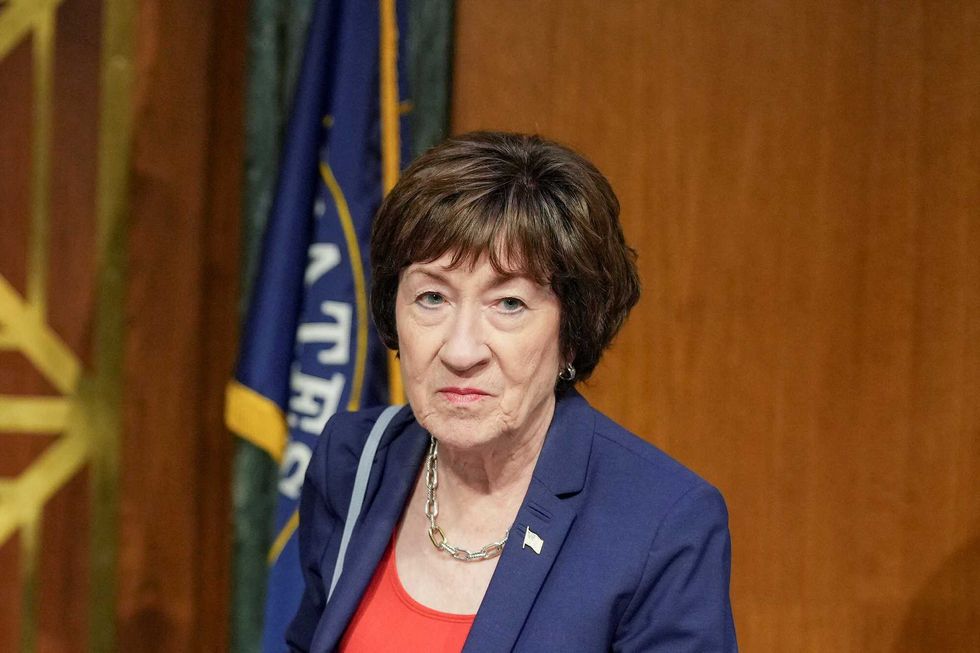
Maine Democrats on Saturday overwhelmingly nominated Troy Jackson, a former state Senate president and logger by trade, as their party’s nominee to challenge longtime Republican incumbent Susan Collins in November’s high-stakes US Senate election.“Well, thank you, Maine,” Jackson, 58, said after securing the votes of 566 of 571 delegates during Saturday’s special Democratic convention at Cross Insurance Center in Bangor. “Today we turn the page, today this becomes a general election campaign, and today we win the work of defeating Susan Collins in November.”“For nearly 30 years, Collins has told Maine that she is ‘concerned’,” Jackson said, referring to the 73-year-old incumbent’s go-to word when President Donald Trump and Republicans attack rights and justice. “She was concerned while she rubber-stamped Trump’s Medicaid cuts and gutted our healthcare.”“She’s concerned when she cut taxes for corporations and the wealthy,” he continued. “Concerned when she confirmed justices who overturned Roe v. Wade. And really tragically, she was concerned when she gave [US Immigration and Customs Enforcement] billions to terrorize our neighbors and murder people in the streets with no accountability.”“But concern does not lower the costs of groceries or gas,” Jackson said. “Concern does not keep our monitoring wards of rural hospitals like down in Lincoln County open. Concern does not restore all the rights that she’s taken away. Maine does not need another six years of concern. We need someone with courage. We need a fighter, and we need a senator who remembers exactly who sent them to Washington.”“So if you’ve ever been ignored, underestimated, pushed around, or told that you have to wait your turn while the rich cut the line, I’m asking you to stand with us in this campaign,” he continued. “If you believe in your heart that healthcare is a right, stand with us. And if you believe that workers deserve power, stand with us. And if you believe our freedoms are worth defending, stand with us.”“And if you believe that Maine deserves a senator who will fight like hell for working-class people, well, stand with us,” Jackson added. “We have a party to unite, we have a movement to build, and we have a senator to defeat.”Jackson’s improbably rapid rise followed former Democratic nominee Graham Platner’s withdrawal from the race earlier this month amid allegations of sexual assault and abusive behavior. Supporters of Platner’s progressive platform warned at the time that they would not back a replacement candidate who did not share the same pro-worker, anti-war agenda.While Collins spokeswoman Blake Kernen called Jackson a “low-energy version” of Platner, Maine Democrats decided the fifth-generation lumberjack fit the bill.“The working class has been left behind and forgotten about,” Shelly Mountain, a former Aroostook County Democratic Committee chairwoman and Jackson delegate at the convention, told NBC News. “He is definitely working class and always—has always—been a champion for the working class.”Progressive politicians, advocacy groups, and labor organizations cheered Jackson’s nomination, with Sen. Elizabeth Warren (D-Mass.) saying that “he’s ready to fight for working people and flip this seat.”International Association of Machinists and Aerospace Workers (IAM) president Brian Bryant said Saturday that “Troy Jackson knows firsthand what it means to work hard for a living and fight for a better future for working families.”“Throughout his career, he has stood shoulder-to-shoulder with union members and working people, never backing down from a challenge when workers’ rights were on the line,” he added. “He represents the strength of a people-powered movement focused on fairness, opportunity, and economic justice. Troy has our full support as he heads to the general election.”
President Trump’s newly announced tariffs could put Republican candidates at risk going into the midterms as Democrats seek to go on the offensive over the economic impact of Trump’s trade agenda. The Trump administration announced Thursday it will impose double-digit tariffs on imports from 60 trading partners over forced labor violations. Those duties went into…
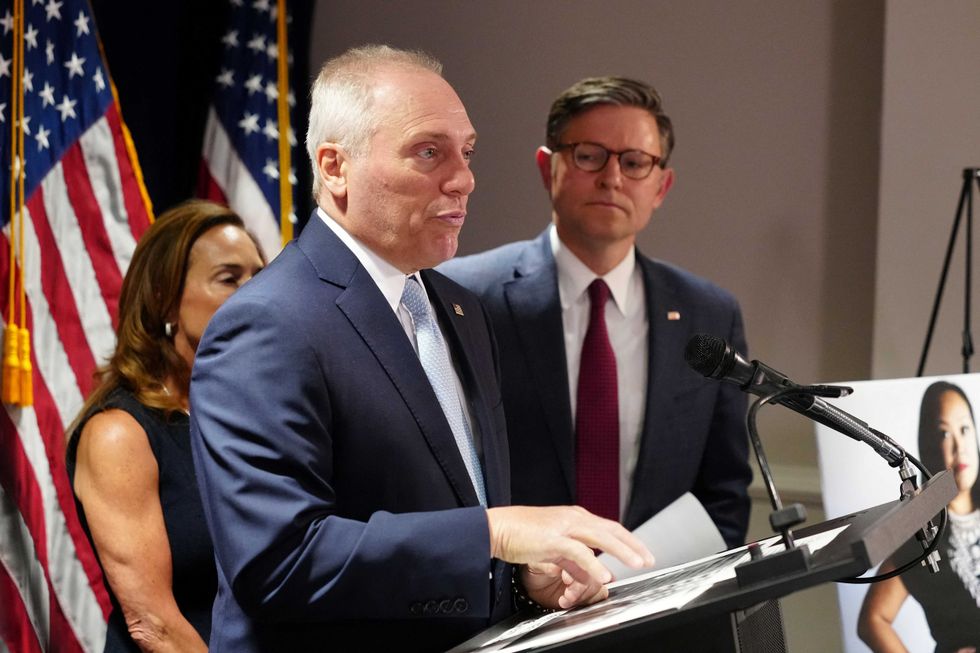
Republican lawmakers heading home for summer recess faced a messaging crisis after accomplishing little despite holding majorities in both chambers, according to Politico. GOP members were aware they will confront voters' frustration over issues dominating national attention: rising gas prices, inflation, and healthcare costs. House Majority Leader Steve Scalise attempted to project confidence Thursday."Cost of living comes up. Safety and security, border security comes up. All of them come up, you know, and that's why it's important to remind people that we're addressing those issues," he said. Yet his claims are contradicted by the Iran war consistently draining resources, driving fuel prices and souring the economy for working families. The timing of the war powers vote coincides with members leaving town and four Republican defections. In addition, Vulnerable Michigan incumbent Rep. Tom Barrett claims GOP lawmakers are already worried about Democratic takeover prospects in 2027, Politico wrote. “We have a hell of a lot of work to do, that’s clear,” one House Republican who was granted anonymity told the outlet.Watch the video below. Your browser does not support the video tag.
Senator Lisa Murkowski’s concerns about the SAVE America Act are legitimate, and they can be fixed with amendments rather than a no vote.
The post Exclusive—Jenny Beth Martin: Senator Murkowski, Let’s Get You to ‘Yes’ on the SAVE America Act appeared first on Breitbart.
A Republican group has vowed to spend at least $42 million against the new nominee to be one of Maine’s Democratic senators, Troy Jackson, the Daily Caller […]