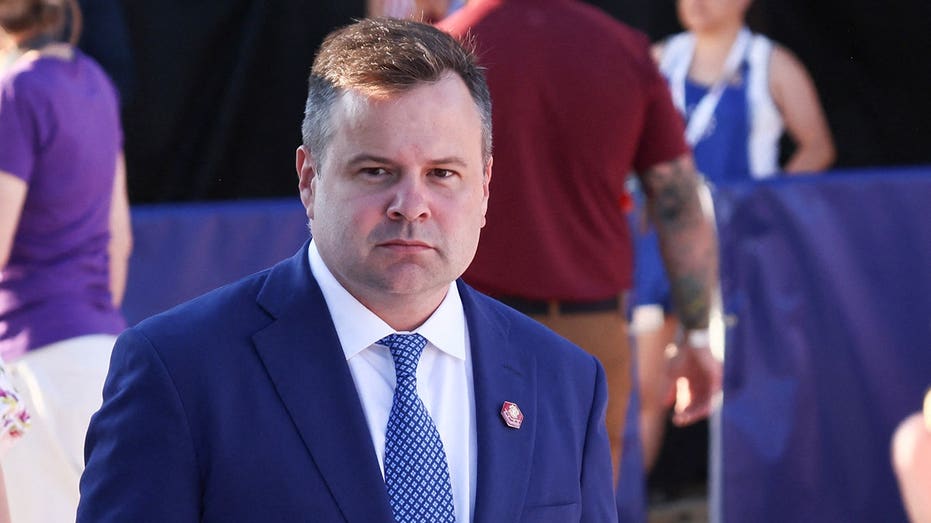
The Federal Reserve typically telegraphs its interest rate moves in advance, then follows through. This week will provide the clearest evidence yet on whether chairman Kevin Warsh is ending the era of the no-surprises Fed.The big picture: Markets are now putting meaningful odds on the Fed delivering an interest rate hike at the conclusion of its two-day meeting this week.If the Federal Open Market Committee were to do so, it would suggest a new era in which the central bank is less predictable — accepting more volatility and surprise as the price to be paid for greater policy nimbleness.State of play: In the final public communications before the Fed entered its pre-meeting blackout period, signs were pointing to the FOMC leaving rates unchanged at this meeting, but holding out the possibility of a future rate hike if inflation doesn't move down.Since then, there has been a re-escalation of hostilities in the Persian Gulf that sent oil prices and longer-term bond yields upward.That led traders to put greater weight on the possibility of a rate hike — currently about 34% in the CME's FedWatch tool, up from 16% a week ago.Zoom out: Warsh often speaks of not pre-judging the outcome of policy meetings and of officials going in with an open mind and having a "family fight" decide optimal policy.That would imply a wider aperture of potential moves (or non-moves) than has been the norm under his immediate predecessors.Yes, but: The flip side of greater agility in policy is that there is more risk of appearing skittish and overly reactive to the latest headlines.If Fed officials were inclined to be a bit more patient on raising rates 10 days ago, should a $10 move in the price of crude oil (much of which has already reversed itself) really shake those plans?Warsh will face pressure in a post-meeting news conference Wednesday to explain either a move or non-move more clearly than he has been inclined to do in his public comments to date.What they're saying: "Since markets have priced in about a one-third chance at this meeting, there will be some surprise no matter what the FOMC does," Bill English, a former top Fed economist, tells Axios."They should do the right thing, given the information they have," adds English, now a professor at the Yale School of Management. "I don't see a problem with the Committee surprising markets at a particular meeting — that should happen from time to time," he says. "But I do see a problem with not explaining the reasoning behind a move (or lack of move) because that could lead markets to react unexpectedly."Of note: The European Central Bank left interest rates unchanged last week, with Warsh's European counterpart Christine Lagarde arguing that policymakers could not overinterpret fast-moving swings in oil prices while the conflict remained unresolved."We have seen so abrupt changes, occurring in a matter of days, not just in terms of the level of the conflict but also the consequences in terms of energy prices," Lagarde told reporters.A brief history of surprise Fed rate movesIn recent decades, the Fed has surprised markets most often when it aims to send a deliberate shock through the system.In the 2008 global financial crisis, and again in the 2020 onset of the pandemic, several emergency meetings resulted in supersized rate cuts, intended to instill confidence that the Fed wouldn't allow an economic collapse.Conversely, supersized interest rate hikes starting in June 2022 hoped to signal the Fed's resolve to contain inflation.The intrigue: Those were undertaken in extreme circumstances — not just routine adjustments to try to recalibrate rates based on the state of the economy, but rather moments when the surprise itself was part of the goal.And even in those cases, the moves weren't complete shocks on the day of the meeting. In June 2022, a last-minute pivot to a supersized 0.75-point rate increase was preceded by press reports foreshadowing the decision.Flashback: When the FOMC met in September 2008, two days after Lehman Brothers failed, it elected not to adjust interest rates. Many officials spoke of the need to wait to see how the event rippled through the economy before taking action."In uncertain circumstances like these, I think it would be unwise to react too hastily to a fluid situation," said then-St. Louis Fed president James Bullard.Zoom in: The downside of surprising markets was evident with the "taper tantrum" in May 2013, when chairman Ben Bernanke said the Fed could soon begin slowing its quantitative easing policies.That took bond markets by surprise and fueled a sell-off, driving longer-term interest rates sharply higher at a time when the U.S. economic recovery was tenuous — which hadn't been Bernanke's intention.The episode weighed on then-governor Jerome Powell, who said in a September 2015 policy meeting that he didn't want to raise interest rates until market odds were "way north of 50 percent.
President Donald Trump is facing a dramatic reversal on the issue that helped secure his 2024 win, according to CNN chief data analyst Harry Enten.In October 2024, a plurality of voters, 44 percent, believed Trump would improve their financial situation, compared with 38 percent who expected to be worse off, but that dynamic has flipped sharply. Current polling shows 58 percent of voters, nearly three in five, now say Trump is making them financially worse off, while the share saying he's made them better off has collapsed from 44 percent down to just 13 percent."These are absolutely devastating numbers," Enten said. "The issue that got Trump re-elected, now the voters absolutely turn against him."The shift extends to broader perceptions of the economy. In November 2024, just 42 percent of Americans, well under half, said the economy was getting worse. That figure has since jumped to 59 percent, while only about one in five now say conditions are improving. With inflation and the economy widely expected to be the top issue in the midterms, Enten said, those numbers present a serious problem for Republicans heading into the fall."That's an equation that does not work out to success," he said.Historically, Trump's standing looks especially weak. According to a CBS poll, his net economic approval rating is 30 points underwater at this point in his second term — worse than George W. Bush's numbers heading into the 2006 midterms, a comparison Enten noted has not historically boded well for the president's party.The economic anxiety comes as Trump pushes for interest rate cuts and has installed a new Federal Reserve chair. But prediction markets aren't betting on it happening soon. According to Kalshi, there's less than a 1 percent chance the Fed cuts rates at its meeting this week, and only about a 19 percent chance of a cut at all this year.The bottom line, Enten said, is that the public and financial markets alike currently see little reason to expect the economic relief Trump has promised. - YouTube youtu.be
Warning in a new piece for The Hill about the potential to supercharge President Donald Trump's abuses and fraud, a former federal director urged Congress to oppose the nomination of Todd Blanche, due to his aiding of "the most corrupt president in the nation’s history."Previously serving as Trump's personal attorney prior to his White House return, Blanche was first appointed to serve as Deputy Attorney General before being elevated to acting Attorney General after the exit of Pam Bondi. His time in the administration has been marked by scandal and controversy, from his involvement in the botched release of the Epstein files to his support of Trump's "slush fund" lawsuit settlement, but he has managed to impress the president, who nominated him to lead the Department of Justice as the proper Attorney General.William S. Becker is a climate action activist who previously served for over a decade as the Department of Energy's central regional director, as well as a special assistant to the department’s assistant secretary of energy efficiency and renewable energy. On Monday morning, he published a new piece for The Hill sounding the alarm about Blanche, warning that he has aided in corruption by Trump that would make Richard Nixon's misdeeds look like "child's play" and strongly urged Congress to reject his nomination."As deputy attorney general, Blanche proved that he will not only tolerate Trump’s lawlessness but also participate in it," Becker wrote. "He has openly violated Congress’s bipartisan law requiring the release of all Epstein files. He has collaborated with Trump’s scheme to reward Jan. 6 rioters with millions of dollars in compensation for their prosecution and convictions related to Trump’s effort to steal the 2020 election."He continued: "Blanche has collaborated to make the department Trump’s personal weapon of retribution with specious and malicious charges against the president’s perceived enemies. The Brennan Center for Justice says grand juries have refused to indict Trump’s targets at least 18 times. Courts or prosecutors have aborted 16 grand jury subpoenas, along with nearly half the cases against protesters and immigrants for alleged assaults of law enforcement officers. Courts have dismissed 16 lawsuits that sought state voter data and thousands of misdemeanor charges against migrants, quashed nine subpoenas that tried to force hospitals to turn over records on gender-affirming care, and dropped at least 79 cases related to ICE protests."Becker also noted that Blanche has had a hand, alongside Bondi, in the massive purge of talent from the DOJ, with around 5,000 staffers being fired or pushed out under their watch, creating a "toxic and ethically challenged" environment. Blanche's push for the charges against former FBI Director James Comey, which accuse him of threatening Trump's life by sharing the "86 47" seashell photo on social media, has also been criticized as an effort to chill dissent that is right out of "the authoritarian playbook.""Those who most covet the job of attorney general may not be worthy to have it," Becker concluded. "The best candidates are willing to resign from the department in its defense. The best outcome would be for Blanche’s nomination to die in committee."
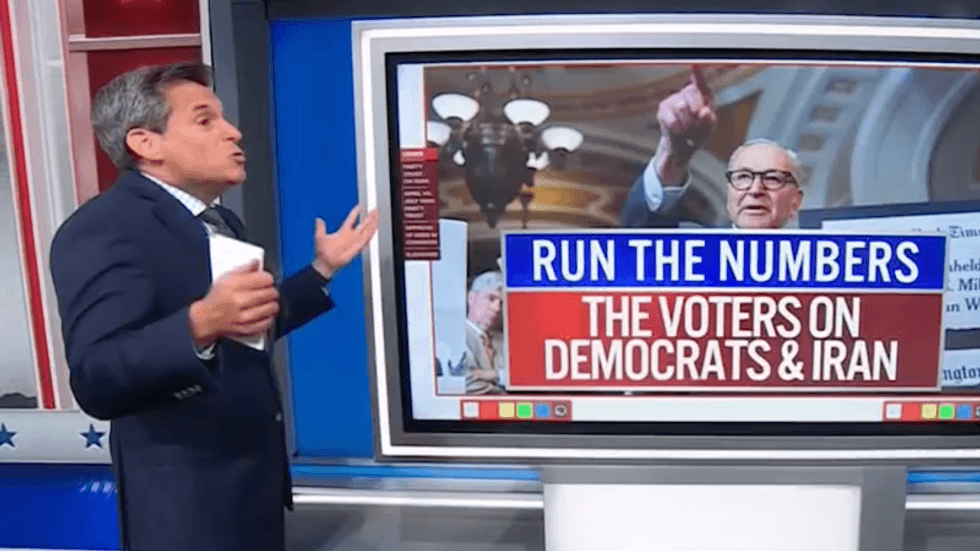
CNN's John Berman was left momentarily speechless by new polling data on President Donald Trump's war in Iran.New polling data presented by the network's Harry Enten suggests Democrats have failed to capitalize on public unease over the 80-year-old president's handling of the Iran conflict, and Berman expressed surprise by the findings."The president's approval rating is sagging, the war in Iran is widely unpopular, so you'd think that Democrats, you might think that Democrats in Congress could see some kind of boost in the polls on this subject," Berman said. "You might think that, but you'd be wrong ... Man, I'm tongue-tied because actually these numbers surprise me. I was looking at them, and I am surprised that they are like this."Two separate polls released this month found Republicans holding a narrow edge over Democrats on the question of who is more trusted to handle Iran policy, Enten said. A CNBC poll found Republicans ahead by two points, and a CBS News poll released just a day later showed the identical two-point advantage."Now, one poll is one thing, but you put the two of them together, and you can see that the American people, simply put, are not buying what Democrats are selling on Iran," Enten said. "They still trust Republicans more. Even if you look at President Trump's approval ratings on the subject, and they're negative, too, but yet Republicans and Trump still more trusted than Democrats are."More striking, Enten said, is the direction of movement over time. A Washington Post-Ipsos poll from April had shown Democrats slightly ahead on Iran trust, by two points. Since then, the numbers have flipped in Republicans' favor — suggesting that as the war has dragged on, public trust has shifted toward the GOP rather than eroded, defying expectations that prolonged conflict would benefit the opposition party."The Democratic Party in the minds of the American public are weak, weak, weak," Enten said.Net approval ratings for Democrats in Congress hovered around negative 40 points in late February, among the lowest levels ever recorded for the party. That unpopularity, Enten suggested, may be undercutting Democrats' ability to convert dissatisfaction with Trump into political trust for themselves, even among some Democratic-leaning voters who remain unhappy with their own party's direction heading into the fall elections. - YouTube youtu.be
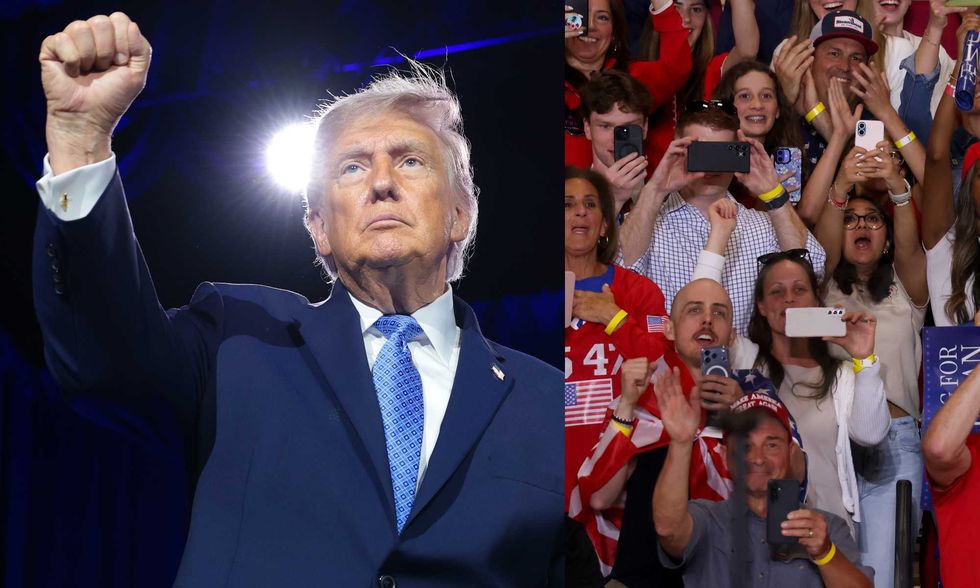
A recent national poll from RMS Research has some very good news for supporters of President Donald Trump.In a poll conducted between July 13 and Tuesday, the president's net approval rating increased to the highest level he's had since spring despite the U.S.-Israeli strikes on Iran and some inflation woes. That lead might not be enough for Democrats to win control of both houses of Congress given the structural advantage Republicans have.Trump hit 46% approval with only 52% of respondents saying they disapprove of the president's job, for a net rating of -6.RMS Research data reveals this rating is the highest for Trump since late April and early May, when his net rating sunk to -17.The results mirrored those reported by a Morning Consult poll released July 6, which also concluded his net approval rating had climbed to its highest since April. Improvements among Republicans and independents led to the increase.Republicans in general also "gained trust across the board," Morning Consult said, while Democrats' "issue edge narrowed on everything."However, despite the increase, Republicans continue to lag behind Democrats on the generic ballot. Democrats have 45% support in the generic ballot while Republicans have only 42%, per Morning Consult.That lead might not be enough for Democrats to win control of both houses of Congress given the structural advantage Republicans have through redistricting in several states, according to recent analysis from CNN political analyst Harry Enten. RELATED: Democrats face CRUSHING math problem trying to take over the Senate, CNN's Harry Enten says Republicans made gains on many issues that the poll asked voters to consider. Democrats stalled, despite having a lead. The generic ballot is seen as a bellwether for the midterm elections.Like Blaze News? Bypass the censors, sign up for our newsletters, and get stories like this direct to your inbox. Sign up here!
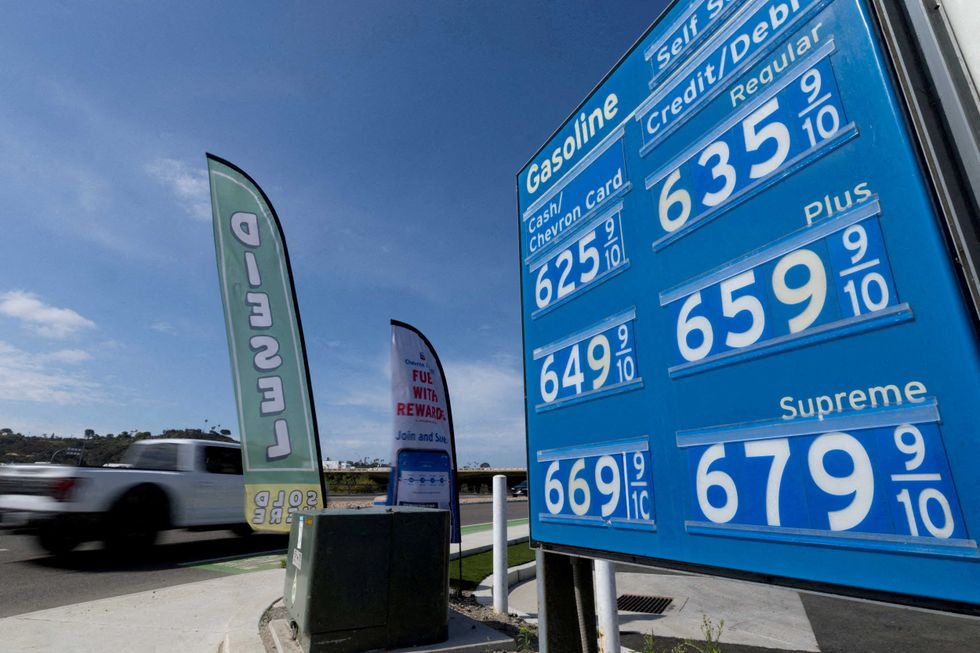
On July 6, political scientist Robert Pape made an ominous prediction that an "August energy shock" could send global oil prices skyrocketing, but on Monday, a recent development led him to double down and forecast an even bigger shock to come.Last week, the Yemeni military organization the Houthis implemented a new maritime blockade on Saudi Arabian energy exports through the Red Sea, and over the weekend, Saudi Arabia launched attacks against the Houthis after its oil tankers came under fire.“After Houthi attacks on Saudi oil tankers, over 40% of Saudi oil bypassing Hormuz via the Red Sea is not hitting the global market. More attacks could reduce this further,” Pape, a professor at the University of Chicago, wrote in an analysis published Monday on his Substack. “By opening an active Red Sea front through its regional partners while keeping Hormuz closed, Iran [is] no longer presenting Washington with one maritime challenge. It is creating a two-front war problem in strategically linked theaters that must be managed at the same time.”Pape predicted as far back as June 15 that Iran was well positioned to “exploit the oil inventory clock” and weaponize rising oil prices to its advantage. He reiterated that analysis on July 6 and more explicitly predicted that an “energy shock” could hit global markets in August.Energy prices have, in fact, increased significantly since Pape’s initial prediction. With the United States having ramped up attacks on Iran starting earlier this month, gas prices have since soared in the United States to an average of $4.10 a gallon as of Friday, and are “poised to climb higher,” per NBC News.“In my July 6 briefing, I warned that the earlier prediction was on track,” Pape wrote. “The developments of the past week reinforce that strategic logic and likely make the coming shock more severe.”