Sen. Bernie Sanders (I-Vt.) on Sunday dismissed a warning from Rahn Emanuel, former U.S. ambassador to Japan, who wrote in The Wall Street Journal that “Bernie bros” could “spoil” the Democratic Party’s chances in the midterm elections. “There is a strong division within the Democratic Party,” Sanders told CBS News’s Margaret Brennan during an appearance…
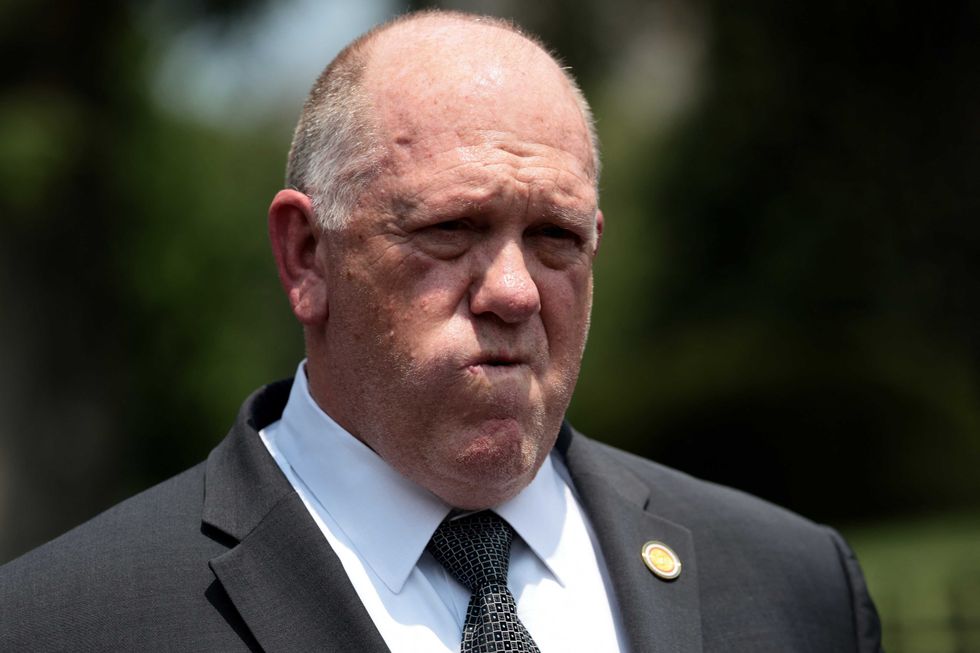
A high-ranking official in President Donald Trump's administration was subjected to ridicule and scorn Sunday after he struggled to answer basic questions.CNN anchor Dana Bash asked White House Border Czar Tom Homan about Immigration Control and Enforcement officers in Texas and Maine who fatally shot unarmed fathers this month. "Do you know specifically what happened to the officers involved in the Texas and Maine shootings?" Bash asked. "Are they on administrative leave?""I don't know, specifically," he said. "The policy would be to put them on administrative leave."Bash pressed, "But as border czar, you don't know for sure if they have been?"Homan shrugged and said, "No."Lorenzo Salgado Araujo, 52, was killed during a traffic stop in Texas on July 7 — FBI claims that he had drugs in his car were later disproved.Joan Sebastian Durán Guerrero, 25, was fatally shot in Maine on July 13 by an ICE agent identified in reports as David Brouillette, an Army veteran whose two ex-wives have accused him of abuse.Bash quizzed Homan on this point. "One of the ICE officers connected to the fatal shooting in Maine was accused of abuse by two ex-wives…Should someone with those issues be an ICE agent?" asked Bash.Homan replied, "No, if those are facts, I don't think he should have ever cleared vetting."Homan's admissions of ignorance stunned onlookers who expected greater detail from an official who oversees Trump's mass deportation initiative."If Tom Homan doesn't know he should be fired on the spot," replied X user Craig Carl. "This is a blatant lie or gross incompetence.""ICE has vetting?" political commentator Mike Bates quipped. "Who knew!""Feckless lying stupid sack of s---," fumed Lizzie Cochrane.Even Bash joined in on the bashing, as video shows, when Homan declared, "I wouldn't say that mistakes were made.""We've seen with our own eyes that mistakes were made," she said. "Deadly mistakes were made. At least 5 of them."
Substack has identified a real problem. It may have chosen the worst possible solution.On July 21, Substack co‑founder Chris Best announced a new feature called “scan for AI text.” Readers can run posts, Notes, comments, and replies longer than 100 words through an AI detector made by Pangram. The resulting report estimates how much of the text was written by a human and how much was generated or assisted by artificial intelligence.An unexplained algorithmic score is not proof of authorship.Best calls the problem “Claudefishing”: Passing off machine‑generated writing as the product of a human mind. He argues that readers deserve to know whether they are engaging with a person or, in his words, something “written by no one.”That concern is legitimate. Anyone who spends much time online can recognize the rise of AI slop: The smooth, bloated, strangely lifeless prose that says very little in far too many words. It’s taking over LinkedIn, search results, marketing blogs, and, increasingly, journalism.But Substack’s solution risks creating another problem: a culture in which every writer is treated as a potential fraud and every reader is encouraged to become an investigator.Pangram is good, but still not good enoughPangram is not one of the primitive AI detectors that declares that Dickens used ChatGPT. It may be the most capable product in its category.The system is a machine‑learning classifier trained on both human‑written and AI‑generated documents. It breaks text into tokens, converts them into numerical representations, and looks for patterns its model associates with human or machine authorship.Pangram says it repeatedly searches large collections of human writing for passages its model gets wrong, adds those difficult examples to its training data, and retrains the detector.Its current model, Pangram 3.3, also uses an architecture called EditLens, which attempts to estimate not merely whether AI was involved but how extensively a human text may have been edited by AI.Pangram claims an overall accuracy above 99% and a false‑positive rate of one in 10,000 human documents. Independent research has generally found it far more accurate than competing detectors. One University of Chicago study found almost no false positives among roughly 3,000 medium‑ and long‑form samples.That sounds reassuring until Pangram is applied to individual human beings.A detector can be excellent at identifying broad trends across millions of documents and still be inappropriate as a lie detector for a particular writer. At sufficient scale, even a one‑in‑10,000 error rate produces innocent people who must somehow prove that they wrote their own words.Pangram CEO Max Spero has said the detector should “never be the ending arbiter.” But he has also acknowledged that the model’s internal reasoning is largely uninterpretable. It can provide a score, but it cannot necessarily explain which meaningful piece of evidence caused it to reach its verdict, according to the Atlantic.That is a serious problem when the verdict carries the implicit accusation that an author is a liar.Substack’s own moral authority was falsely flaggedThe irony is hard to miss.In his announcement, Best invokes writer Freddie deBoer to explain why undisclosed AI writing is a betrayal of the reader. Best quotes from a June essay by deBoer arguing that the value of art lies partly in knowing there is a human consciousness behind it.But just two days before Best announced the Pangram integration, deBoer published a detailed account of Pangram failing to recognize his own human writing.RELATED: Is Google's next Android feature always-on eavesdropping? Yuliia Kaveshnikova/Getty Images Someone had accused deBoer of using AI after Pangram classified a roughly 300‑word section of one of his essays as entirely AI‑written. DeBoer knew that was false.When he submitted the full 5,000‑word essay, however, Pangram declared it entirely human. When he divided the supposedly artificial passage into smaller pieces, those pieces were also classified as human.The same words became human or artificial depending on how much surrounding text deBoer submitted.So the writer Substack chose as its moral authority on the importance of human authorship had just become a case study in the inability of Substack’s chosen detector to identify human authorship reliably in an individual case.Best apparently agrees with deBoer that readers should not be deceived about whether a human being stands behind a piece of writing. But Pangram had placed deBoer in exactly the opposite position: A human writer was forced to defend himself against a machine suggesting that no human stood behind his words.That contradiction should have given Substack pause. Instead, it gave every reader access to the machine.Technology journalist Taylor Lorenz was also accused of using AI after Pangram flagged her work.
A federal judge's “unexpected” demand to Attorney General Todd Blanche regarding the Epstein files proves a bedrock judicial principle is “on life support," a legal expert argued Sunday.Federal Judge Emmet Sullivan gave Blanche five days to provide the court with unredacted versions of certain Epstein-related files for private review as it litigates a lawsuit filed by lawyer and media figure Katie Phang. Phang sued Blanche for allegedly violating the Epstein Files Transparency Act by unlawfully redacting certain files.Blanche provided the court with an explanation as to why certain files were redacted, but Sullivan, doubting Blanche’s explanation, demanded he provide proof supporting his claims. Such a demand, as noted by Joyce Vance, former U.S. attorney for the Northern District of Alabama, demonstrated how the Trump administration had all but gutted the key judicial principle known as the “presumption of regularity.”“It was commonly used to advance the idea that in the absence of evidence to the contrary, courts should presume government employees, including DOJ lawyers, acted properly in the execution of their duties. Now it’s on life support and Judge Sullivan’s order is another nail in its coffin,” Vance wrote in an analysis published Saturday on her Substack.“This most recent order suggests that Judge Sullivan doesn’t believe the government when it says something is the case, even when that ‘something’ is as simple as the identity of the person in a ‘to’ line in an email. But the government has acted like it has something to hide, even after Congress passed the Transparency Act and Trump signed it into law.”Specifically, Phang has raised doubts that redacted names on a handful of Epstein-related files were lawfully withheld. The Justice Department (DOJ) has claimed the redactions in question were permitted under the Epstein Files Transparency Act, but Sullivan is refusing to take the DOJ at their word.“So the Judge isn’t accepting what the government has represented to it as truthful, and is requiring documentation to support its claims,” Vance wrote.“Under any other president, the Attorney General would have been disturbed by the suggestion prosecutors couldn’t be trusted. There would be disciplinary review. But here, the acting Attorney General is the defendant in the case. It’s paradigmatic of how far DOJ has fallen.”
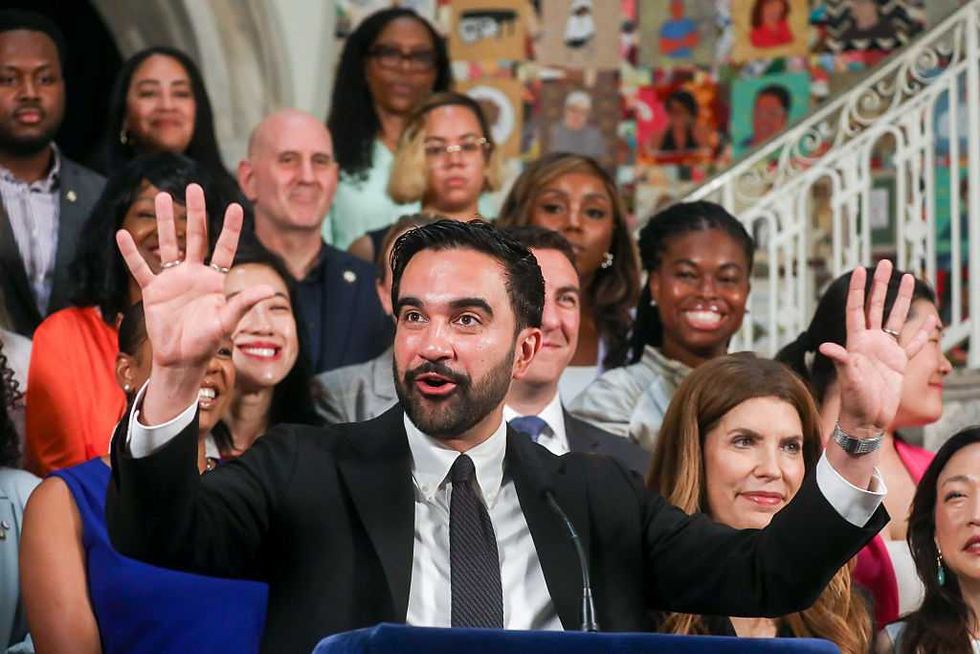
"Have you ever been to the U.S.-Mexico border?” “No.”One word. That may have been the most revealing moment of New York City Democratic Mayor Zohran Mamdani’s recent interview with the New York Times.Sanctuary policies are easy to defend from a podium at New York City Hall. They are much harder to defend before communities that have already paid the price.Mamdani defended his city’s sanctuary policies, which he reinforced after taking office by signing an executive order reaffirming them.The problem is not so much that Mamdani has never visited the border. It is that he seems unwilling to understand why communities that lived through the border crisis reached a very different conclusion.That lesson is visible far beyond the Rio Grande.Consider Goliad County in South Texas. The rural county has about 7,000 residents and sits roughly 160 miles from the U.S.-Mexico border.Testifying before the Senate Judiciary Committee last year, Sheriff Roy Boyd described how the crisis transformed the community he serves.Boyd’s office averaged 77 arrests a year during the five years before 2021. From 2021 through 2024, that average jumped to 413. Deputies discovered 16 cartel stash houses, and pursuits involving suspected human smugglers became routine.Residents began hearing voices and movement on remote properties after dark. Many no longer felt safe alone in their own homes.Those facts expose what Mamdani’s answer overlooks. The border crisis did not remain at the border. Cartel activity and illegal immigration reached inland communities that lacked the personnel and equipment to confront them. Former Border Patrol agent and Texas Public Policy Foundation senior fellow Ammon Blair calls cartels “hybrid threats.”As Blair puts it, “Cartels don’t just smuggle. They destabilize.” Boyd has described them as “contractors and subcontractors” in a network moving migrants and drugs from the border into Texas’ largest cities.That reality changed Texas’ response. In 2021, as illegal crossings surged under President Joe Biden, Goliad became one of the first inland counties to declare a local disaster. Boyd suggested giving local law-enforcement agencies flexible grants for overtime, new officers, patrol vehicles, and other equipment.Those grants became part of Operation Lone Star.According to Texas Republican Gov. Greg Abbott’s office, Operation Lone Star has produced more than 535,700 apprehensions and referrals, 57,400 criminal arrests, and 47,500 felony charges. Texas law enforcement has also intercepted more than 779 million lethal doses of fentanyl.RELATED: The revolution will not be televised — it will be livestreamed in 4K Andrew Lichtenstein/Corbis/Getty ImagesBoyd later launched the Operation Lone Star Task Force, which allows local agencies to share deputies, intelligence, and resources across jurisdictional lines while targeting human smuggling, cartel activity, and organized crime.New York has felt the downstream effects too. Former Mayor Eric Adams warned that the migrant crisis would “destroy New York City.” Mamdani nevertheless continues to defend sanctuary policies that impede cooperation with federal immigration authorities.Goliad’s experience carries a national lesson. Criminal organizations do not recognize state boundaries. The same networks that move people across the border traffic drugs, weapons, and money into communities nationwide. They exploit ports of entry, the northern border, and weaknesses far from either frontier.The farther those networks spread, the more Americans discover that border security is not someone else’s problem.Mamdani may be proud of New York City’s sanctuary stance.His one-word answer showed more than where he has never been. It revealed what he refuses to see.Sanctuary policies are easy to defend from a podium at city hall. They are much harder to defend before communities that have already paid the price.