11 indicted in smuggling deaths of 7 migrants who hid inside Texas cargo container
Source: New York Post · Bias: Right
Summary
Six people were found dead inside the shipping container in a rail yard in Laredo, Texas, and another had been left for dead alongside the tracks along the way, according to the US Attorney for the Western District of Texas, Justin R. Simmons.
11 indicted in smuggling deaths of 7 migrants who hid inside Texas cargo container
Right
Six people were found dead inside the shipping container in a rail yard in Laredo, Texas, and another had been left for dead alongside the tracks along the way, according to the US Attorney for the Western District of Texas, Justin R. Simmons.
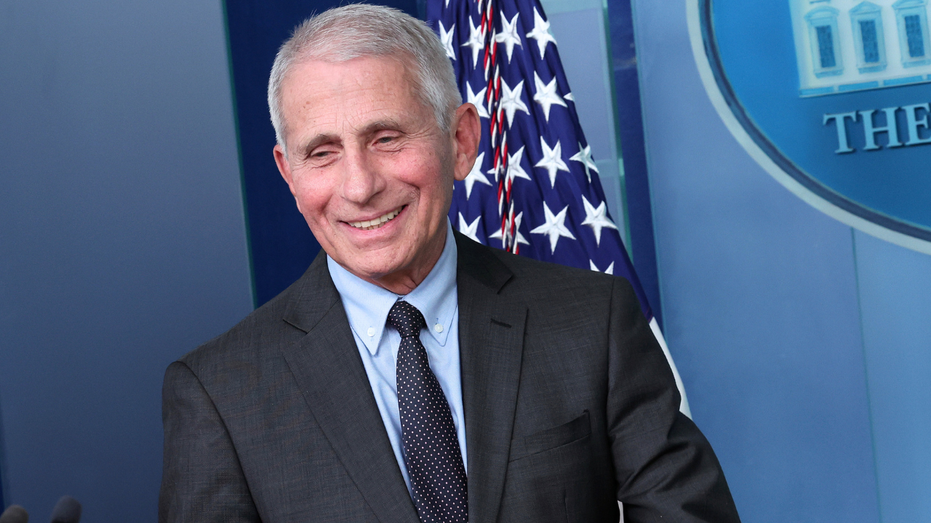
In late June 2020, as US daily COVID cases reached a record 40,000 in a single day, Dr. Fauci felt fit to mention that he had received an invitation to appear on "Dancing with the Stars."
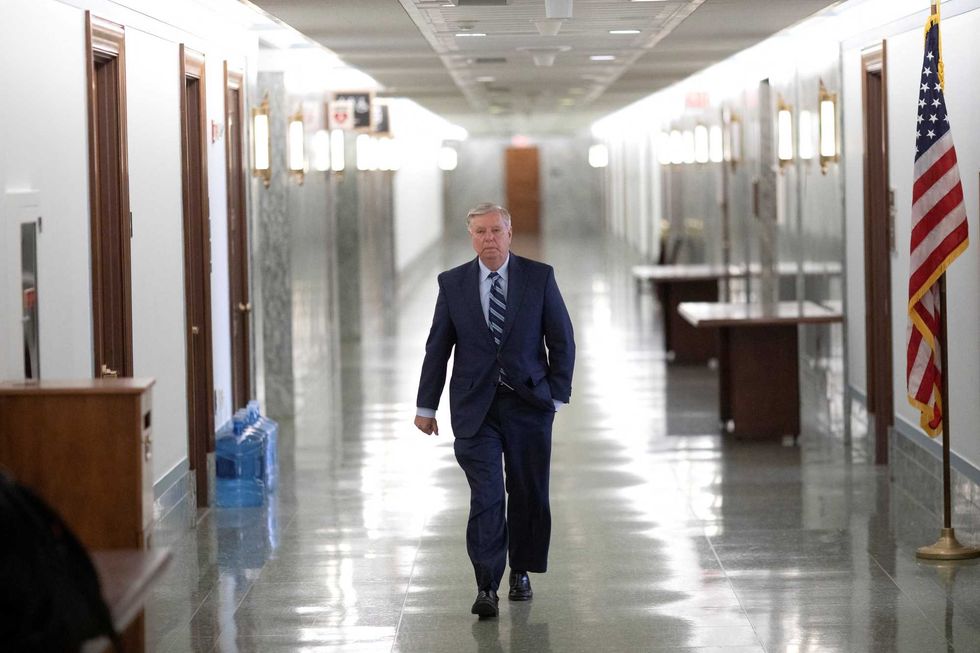
A "disheveled and exhausted" Sen. Lindsey Graham (R-SC) was heard complaining before he died that his GOP colleagues wouldn't help him, The Wall Street Journal reported Sunday.The new revelations come from documentary filmmaker Alex Holder, who had “been granted extensive access to Graham since 2023” for a documentary he was filming about the South Carolina Republican, per the Journal. Holder revealed a number of new details about Graham to the Journal, chief among them being what occupied Graham’s mind in his final weeks.“Graham frequently looked tired, prompting Holder to ask if he was doing OK,” the Journal’s report reads.“Graham would say he didn’t have time to sleep because he needed to finish off the Iranian regime; sort out a peace deal between Russia and Ukraine; and establish ties between Saudi Arabia and Israel by the end of the year," the report stated. "At one point, when Graham looked ‘absolutely disheveled and exhausted,’ Holder said, the senator complained that others weren’t helping him.”Graham had long been a proponent of U.S. military action against Iran, and played an outsized role in pushing President Donald Trump to approve a more aggressive posture against Tehran. In a newly published video filmed by Holder of Graham’s reaction to the U.S. attacks on Iran in late February, Graham could be seen struggling to contain his excitement.“Look what we’ve done here," Graham could be heard saying. "I almost cried."Holder told the Journal the GOP senator remained dedicated to achieving his self-imposed goal of toppling Iran, among other things, despite a growing weariness. Holder told the Journal, “He’d say, ‘There’s no way I can die yet.'"🇺🇸🇮🇷 Unreleased documentary footage of the late Sen. Lindsey Graham reveals his years-long effort to push for regime change in Iran and lobby President Trump to expand U.S. military action against Iran, according to WSJ.The footage shows Graham speaking candidly with world… pic.twitter.com/xIb8gRWS1J— Megatron (@Megatron_ron) July 26, 2026
Israeli Prime Minister Benjamin Netanyahu gave a stern rebuke of Mayor Zohran Mamdani, accusing Hizzoner — without evidence — of celebrating the Oct. 7, 2023 Hamas attack.
Israeli Prime Minister Benjamin Netanyahu claimed New York City Mayor Zohran Mamdani “celebrated” Hamas’s Oct. 7, 2023, massacre of Israelis. Speaking in a Sunday appearance on Fox News, Netanyahu addressed Mamdani’s video address on X, during which he derided the prime minister as a war criminal and called for him to be arrested if he […]
It’s hard to believe that we’re less than two months away from the 25th anniversary of the 9/11 attacks, that horrible day when war arrived at our doorstep.One thing that’s always stuck in my head was the fact that 15 of the 19 hijackers onboard the four jets that wreaked such deadly havoc were citizens of Saudi Arabia. This doesn’t necessarily mean that kingdom had an active hand in the terror, and the 9/11 Commission found no evidence that the Saudi government knowingly funded or directed the attacks. But it still makes you wonder.I bring this up now because you may have heard that Trump this week approved a landmark 30-year deal to provide the Saudis with the civilian nuclear program they had long sought. It gives U.S. companies a monopoly on developing a nuclear infrastructure for the Arab country without the necessity of requiring monitoring and inspections by the International Atomic Energy Agency to make sure the “peaceful” use of nuclear fuel isn’t enriched for a weapon.If it sounds like a horrible idea, that may be because it is. No oversight to keep a rogue nation in line? What could possibly go wrong besides everything?But of course, money talks, and that’s something the oil-rich Saudi Arabia has in outrageous abundance. It’s the only language that Trump understands, and the deal would be worth billions in contracts to U.S. firms that work in nuclear technology.And of course, this is a giant victory for the Saudi Crown Prince Mohammed bin Salman, better known as MBS, who has long vowed to build a nuclear weapon if Iran is permitted to. It’s frankly difficult to argue with this logic, even if Trump’s much-repeated reason for his war is to stop Iran from making nukes.What’s the difference between Iran and Saudi Arabia having a nuclear weapon? Several billion dollars, that’s what. The deal with the Saudis pretty much guarantees that nuclear nonproliferation is out the window in the Middle East for the foreseeable future.But let’s get back to MBS for a moment. He is the key to this whole deal, and his relationship with Trump is at the center of it. The president basically sees the guy as a living, breathing ATM who has access to so much wealth that Trump is willing to look past the fact he’s a murderous swine.It was a little under eight years ago that a Saudi journalist, dissident, author, columnist and editor named Jamal Khashoggi entered the Saudi consulate in Istanbul to obtain documents for his upcoming marriage. He never left. He was assassinated and carved into pieces by a bone saw, and all suspicion fell on MBS for having approved the operation to murder Khashoggi for his critical assessment of the Saudi government.MBS denied any involvement. But we might imagine that this incident would stain the relationship between America and Saudi Arabia. And that assessment would be wrong. Trump for one never thinks less of someone who dismembers a journalist and in fact has disparaged other journalists for making MBS feel uncomfortable in press briefings.When Trump traveled to Riyadh in 2025 and stood beside MBS, he smiled broadly while declaring of him, “I like him a lot. I like him too much.” Indeed, we all know how Trump feels about vicious leaders. These are his people. His cup of admiration runneth over.There is also too much money at stake for Trump to ever seriously question his buddy about something so minor as a nuclear agreement. He is literally selling out the world’s safety. Just look at how handsomely his relationship with the kingdom has paid off for his son-in-law, Jared Kushner.It was in 2021 that Saudi Arabia’s Public Investment Fund (PIF) committed $2 billion to Kushner’s private equity firm, Affinity Partners. It’s been emphasized by Kushner that this is an investment in the fund, not a personal payment to him, except for the fact that the fund is him. He owns Affinity and his firm collects management fees. Senate investigators estimated in 2024 that Affinity had accrued roughly $87 million in fees from the Saudi government to date.Then this past March, Kushner – while working purportedly as a Mideast envoy – in his spare time spoke with potential investors from PIF about raising an additional $5 billion for Affinity. Do I even need to mention that PIF is led by MBS?It thus goes without saying that this nuclear pact stinks of nepotism and payoffs. The interest conflicts are glaring and multitudinous. You think that when there are billions of dollars of family money at stake, the extended Trump family is going to worry about inspections and keeping Saudi Arabia from developing nukes when that’s already their stated goal?This is how graft and corruption puts the world at risk. It extends far beyond personal accountability. The only thing keeping the kingdom from enriching its own nuclear fuel to create weapons is its own assurances.Are we really supposed to trust the Saudi energy ministry’s promises of “cooperation on the peaceful uses of nuclear energy”?
Social media's magicians spent decades perfecting the art of slicing human attention into advertising revenue. Is the next step on the corporate road map farming human tissue for spare parts?The tech is there, or almost there. The ideas have percolated for decades. All it takes, it seems, is the will.The concept of individual self-ownership becomes entirely obsolete.An early pitch deck for R3 Bio, a quiet biotech startup operating out of California, laid out a vision that makes classic horror fiction look rather mild. The company’s leadership, reports suggest, engaged in internal discussions regarding the production of brainless, nonsentient human bodies designed for the explicit purpose of organ harvesting, pharmaceutical testing, and eventual commercial deployment.They christened these biological monstrosities "organ sacks."The terminology speaks volumes to the moral framework seizing imaginations in the contemporary tech executive class. When a team of researchers and engineers looks at the human form and sees an inconveniently conscious container for marketable kidneys, the line between medical innovation and factory farming disappears completely.Executives at R3 Bio floated plans to reprogram monkey cells, cultivate complete organ systems, and engineer these living biological constructs to be intentionally primitive enough to bypass federal ethical guidelines.But this isn't some sudden Silicon Valley obsession. The ambition to redesign human biology has been gathering momentum worldwide for years.They have a dreamIn October 2022, biotech investors gathered in Zurich to debate the commercial viability of synthetic biology, openly celebrating the day human biology would be fully decoupled from traditional ideas of personhood. The attendees viewed the human body as an inefficient piece of legacy software requiring a total architectural overhaul. It was only a matter of time before the idea caught on.Scientists at R3 Bio defended their research behind the usual wall of righteous PR speak, insisting their work aims to end the chronic shortage of donor organs and cure terminal illnesses. They publicly insist that full-scale human organ fabrication remains outside their current operational scope and that their public website reflects a commitment to safe, traditional cell therapy.But the problem runs deeper than what R3 Bio says it is or isn't doing today. It's what history tells us can happen when scientific ambition outruns consent, oversight, and basic human dignity.The playbook never changes. In 1951, researchers extracted cancer cells from Henrietta Lacks without her knowledge or consent, creating the HeLa cell line that generated billions in profit for pharmaceutical giants while her family struggled to pay medical bills. The medical establishment transformed a living human being into a self-sustaining corporate product, establishing a precedent that today's biotech firms are eager to scale up to the entire human torso. There is an enormous amount of money to be made. And where the fevered dreams of high-tech immortality are concerned, human morality has a troubling habit of turning negotiable.RELATED: Anti-aging mogul's next act? He'll harvest organs from his own clone L-R: Bridget Bennett/Bloomberg/Getty Images; Aldara Zarraoa/Getty ImagesA society grounded in the belief that human life possesses inherent dignity treats the human body as an inherently sacred structure rather than a machine assembled from interchangeable parts. The secular technocracy reigning in Northern California views the human body as a collection of meat components that can be optimized, monetized, and swapped out.Death of the selfThe transition from healing the sick to manufacturing customized human vessels happened while everyone was distracted by social media algorithms. Engineers want to replace a failing heart, grow an artificial liver in a vat, construct a brainless body to house the spares, and call the whole process market efficiency. The language of human medicine was completely swallowed by the inhumane jargon of auto repair.This mechanistic worldview demands that every biological boundary be erased in the name of efficiency and infinite growth. If a brainless body exists as a legal product, the entity owning the patent exercises total property rights over a human biological shell. If a corporation can copyright the genetic sequence of a custom-grown torso, the concept of individual self-ownership becomes entirely obsolete.Tech elites frequently talk about death as a minor coding error awaiting a software upgrade. They invest billions in longevity protocols, upload schemes, and cellular rejuvenation, completely convinced that their wealth entitles them to bypass mortality itself.
Data: The Cook Political Report with Amy Walter. Map: Erin Davis/Axios VisualsThe midterm elections are 100 days out. Political reporter Hans Nichols, lead author of the Hill Leaders newsletter, shares his intel on the state of the races:The big picture: The House environment favors the Dems. The terrain favors Republicans. The same is broadly true on the Senate side — except the structural advantages are even greater for Republicans.THE HOUSE — currently 218 Rs, 212 Ds, 1 independent, and 4 vacanciesWhy Democrats are upbeatThe polls. The latest Fox News poll has Democrats ahead by 7 points on the generic ballot. Toss in Democratic enthusiasm — and the fact that Democratic candidates have outperformed 2024 nominee Kamala Harris in the vast majority of special elections — and you can see why House Republicans are privately so nervous.The cost of living. Yes, inflation has cooled. But prices have risen during the first two years of President Trump's current term, and that's especially true on the one billboard everyone sees — gas prices. The real political gift for Democrats is the direct link between $4-a-gallon gasoline and the unpopular war in Iran that Trump launched.Why Republicans are cautiously optimisticRedistricting. Add up all the mid-cycle redistricting in nine states, squint through a Republican lens, and you'll see nine new GOP seats. Put on Democratic glasses and assume that Republicans are renting a few of those seats (especially in mostly Hispanic parts of the Rio Grande Valley) instead of owning them, and it looks closer to six seats.Either way, Republicans like where they ended up in the redistricting wars of 2026.There are now 23 Democrats running for the House in districts Trump in 2024 — vs. eight Republicans who represent districts Harris won (half are in California).One key battlegroundFor House Minority Leader Hakeem Jeffries (D-N.Y.), the road to the majority runs through Iowa, which has been hit hard by inflation (think fertilizer as much as diesel) and retaliatory agriculture tariffs. In 2018, Democrats picked up two of the three seats the GOP held. On a good night this year, they'd pick up two of the current four Republican seats. Three for four would be a great night. But if Republicans hold all four of those seats, it's hard to see a Democrat winning the gavel.THE SENATE — currently 53 Rs, 45 Ds, and 2 independents who caucus with DsWhy Republicans are upbeatThe national environment is grim, but every state is its own ecosystem and the map favors Republicans. Democrats need to flip four seats, including at least two in solidly red states.Maine. Give Senate Minority Leader Chuck Schumer (D-N.Y.) credit. He recruited his way out of a bad map. But he didn't run the table, and in Maine his worst nightmare came true: Democrats have an untested candidate against a proven winner.After populist Democrat Graham Platner flamed out (predictably, Schumer would tell you), Republicans are about to unload on the new substitute nominee, Troy Jackson. Meanwhile, incumbent GOP Sen. Susan Collins is well-funded and ready to make her case that she delivers for Maine as appropriations chair — shipbuilding, rural hospitals, firehouses.If Democrats lose Maine, they'll need to win in three double-digit Trump states. Schumer loves a pair of recruits in two such red states because they've won statewide before: former Sen. Sherrod Brown in Ohio and former Rep. Mary Peltola in Alaska. Then Democrats will need some magic in Texas or Iowa — or both, if Democrats lose Michigan.This brings us to the final wildcard of the Democratic primary season: the Aug. 4 showdown between Rep. Haley Stevens and progressive insurgent Abdul El-Sayed in Michigan.Stevens' money advantage is staggering — $50 million to $1 million on the PAC front in the last two months. And yet the race is tied in the polls.Many establishment Democrats think El-Sayed — who has the support of progressive Rep. Alexandria Ocasio-Cortez (D-N.Y.) — is too far left to win a general election. El-Sayed's run for Senate is something of a proving ground for AOC, who's weighing a bid for Senate or president in 2028.