Salon.com
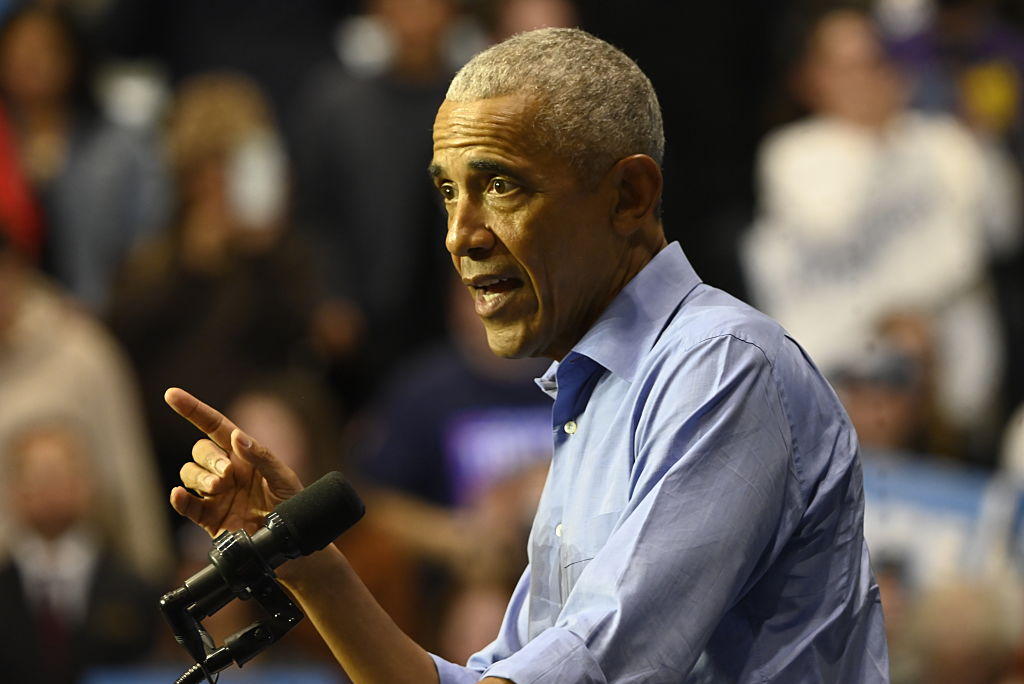
“You’d think we would’ve learned that lesson by now”: Obama says US can’t “bomb” way to Iran deal
The former president worried that a new deal with Iran will be far worse than the one that was in place until 2018
Left

A truly neutral education would ignore many fundamental principles that educators take for granted.
The former president worried that a new deal with Iran will be far worse than the one that was in place until 2018

Educators increasingly cannot afford even life's basic necessities, writes Randi Weingarten.
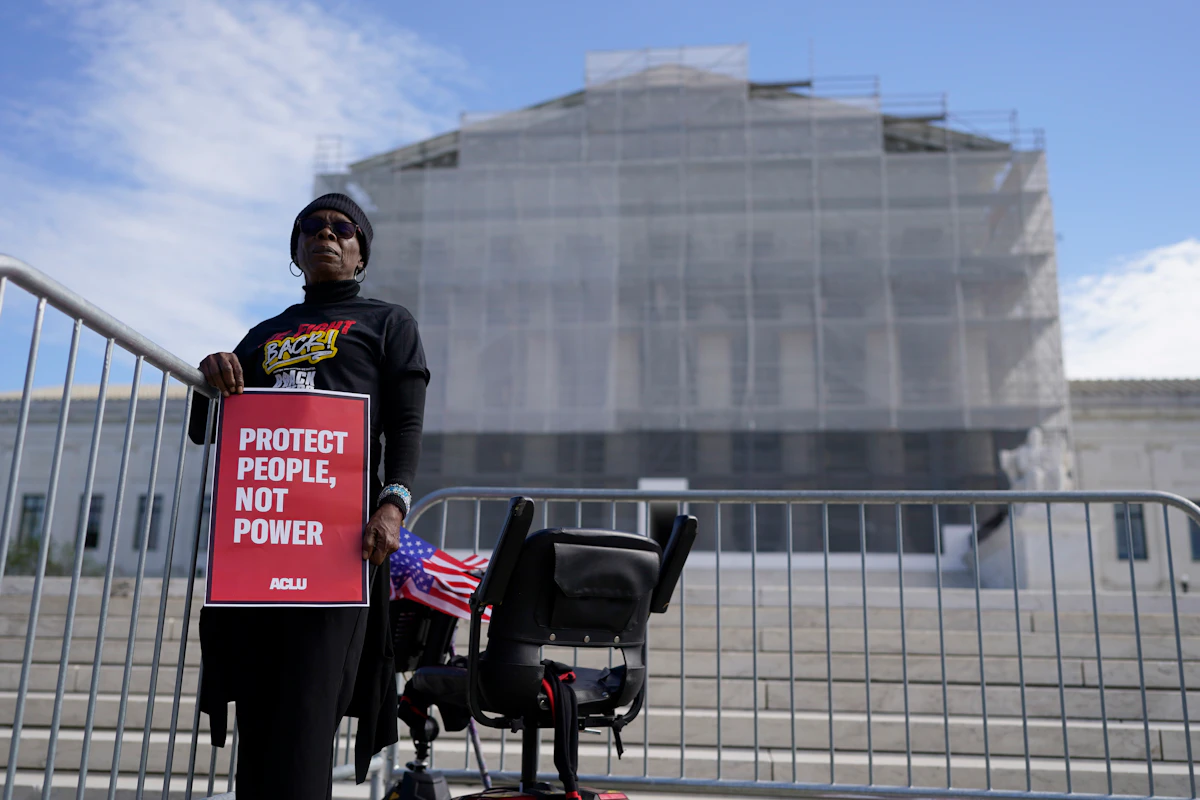
In 2018, David Tyson Jr., an African American, sued Richardson Independent School District in Texas for violating Section 2 of the Voting Rights Act. In the district’s 164-year history, Tyson was the only person of color ever to serve on the school board. Yet, at the time of the lawsuit, white students made up less than 30 percent of the district while Black and Hispanic students made up nearly 60 percent.When Congress enacted the Voting Rights Act at the height of the Civil Rights Movement, it gave communities the tools to combat these kinds of racial harms. Section 2 of the act outlaws state and local governments from enacting voting rules that result in racial discrimination. One of the undersung aspects of the Supreme Court’s recent decision in Louisiana v. Callais—for which there has been much hue and cry over the way it’s paved the path for right-wing state governments to draw majority-minority federal districts out of existence—is that it cuts away at this protection for local governments, as well, rendering it “all but a dead letter,” as Justice Kagan laments in her dissent.While the media has focused on Callais’s impact on Congress in the 2026 midterms, its darkest mark will be on local governments. Section 2 of the Voting Rights Act has been most frequently applied to address and remedy local electoral practices, not state ones. Its use heralded diverse school boards and city councils where national minorities, by virtue of being local majorities, can govern.Through this phenomenon, diversity develops twice over. First, through representational diversity and second, through institutional diversity. Minorities can see themselves represented on school boards, county commissions, and city councils. And they can harness that representation to institute local governments that do not look like state or national government. These more representative governments are more likely to become local laboratories willing to conduct policy experiments or try alternative governance approaches that the broader polity dismisses or ignores. This is why diversity at the level of individuals and institutions cultivates a rich democracy. Callais endangers these sites of local democracy by hollowing out Section 2 protections.But back in 2018 when Tyson filed his lawsuit, Section 2 of the Voting Rights Act was still intact. We can look back in time to see its salutary effects. Tyson told a “tale of two districts,” where—unsurprisingly—a ceaselessly homogeneous school board had harmful consequences for the Richardson school district. Elementary schools where at least 70 percent of the students met grade level in two or more subjects were two-thirds white—and the vast majority were not economically disadvantaged. By contrast, the lowest-performing elementary schools were predominantly made up of Black, Latino, and economically disadvantaged students. Atop the startling peak of disparity was the 60-point achievement gap between the district’s highest-performing school, which was predominantly white, and its lowest-performing school, which was predominantly Latino.These racial inequities did not go unnoticed by the Black and Latino voters of Richardson. And yet, Richardson’s school board remained persistently white for one reason: the district’s voting practices. While white students constituted a minority in the district’s schools, white voters still comprised a majority of the district’s population. These demographics, combined with an at-large, district-wide voting scheme where every voter in the district voted in every school board election, meant that minority voters would never succeed in electing a candidate of their choice. The minority vote would always be diluted against the white vote. The school board—whether under the threat of ongoing litigation or by a genuine change of heart—agreed to end this pernicious status quo. In 2019, Richardson Independent School District settled. As part of the settlement, the district moved toward a single-member district voting model. Specifically, it instituted an electoral scheme that allows voters within a predefined border to elect a board member to represent them—similar to congressional districting. Two of the five single-member districts in Richardson were drawn to ensure that Black and Latino voters were the majority. Voters from these districts later elected Regina Harris, the first Black woman, and Debbie Rentería, the first Hispanic person, to serve on the school board.Richardson was not alone in making this kind of change. In response to immigration and changing racial demographics, the late 2010s saw a spate of lawsuits across school boards in North Texas alleging violations of Section 2 of the Voting Rights Act. Many of these districts settled and moved to electoral systems that gave voters of color greater voice in their representation.

Other members of President Trump’s Cabinet began to consider Vice President JD Vance a “conspiracy theorist” as he pushed for the release of the Epstein files and an interview with Ghislaine Maxwell in the midst of their panicked attempt to snuff out the biggest controversy of Trump’s second term.New reporting from The New York Times reveals that while the Cabinet remained staunch in their public defense of Trump, there was chaos behind the scenes last year over Trump’s deep connections to the sexual predator. Vance played a large role in the internal discord, as he seemed to be the loudest voice pushing “the darkest theories about Epstein and a cabal of predators hidden within the country’s ruling class”—leading White House chief of staff Susie Wiles to call him a major conspiracy theorist.When Trump’s Cabinet learned that The Wall Street Journal was set to publish their story on Trump’s birthday letter to Epstein, the team met in the Situation Room to discuss their options. Vance pushed for the administration to fully release the files quickly, suggesting that they have Epstein coconspirator Ghislaine Maxwell either do an interview with Tucker Carlson or testify before Congress. In Vance’s mind, this would solidify Trump’s alibi and secure confidence with their MAGA base—which happened to care very much about the Epstein files. Both plans were struck down and the team pointed out that Maxwell would want something in return. “Pardoning Maxwell, a trafficker of young girls, would create a huge P.R. problem,” Communications Director Steven Cheung argued. “We can’t offer Ghislaine Maxwell anything,” said White House deputy chief of staff James Blair. “A, I don’t know why we would. And B, if we give Ghislaine Maxwell any sort of break whatsoever and then she turns around and says nice things about us, or says nice things about us and we give her a break, it will undermine the entire point of her saying good things. That will feed the conspiracy theory, period. If there’s nothing for her to say that hurts us, we shouldn’t have to offer her anything.”The report makes it abundantly clear that there was no consensus on how to handle the political tsunami of the Epstein files, as it also details the falling out between former Attorney General Pam Bondi, former FBI Co-Deputy Director Dan Bongino, and FBI Director Kash Patel. The drama between them came to a head after a tumultuous few months in which Bondi went from claiming she had Epstein’s client list sitting on her desk, to handing out big white binders to MAGA influencers, to then claiming there was essentially nothing new in the files. “You fucked this thing up from the start,” Bongino screamed at her a day after the DOJ memo claiming there was nothing more in the files to be released. “The way you’ve been talking about this—that dumb fucking charade with the Epstein files, the ‘They’re on my desk’ nonsense, all the promises to the folks out there.”While it’s unclear where Vance stands among Trump and the rest of the Cabinet now, it’s clear that he’ll have to answer for the internal decisions made last summer for the entirety of his political career.
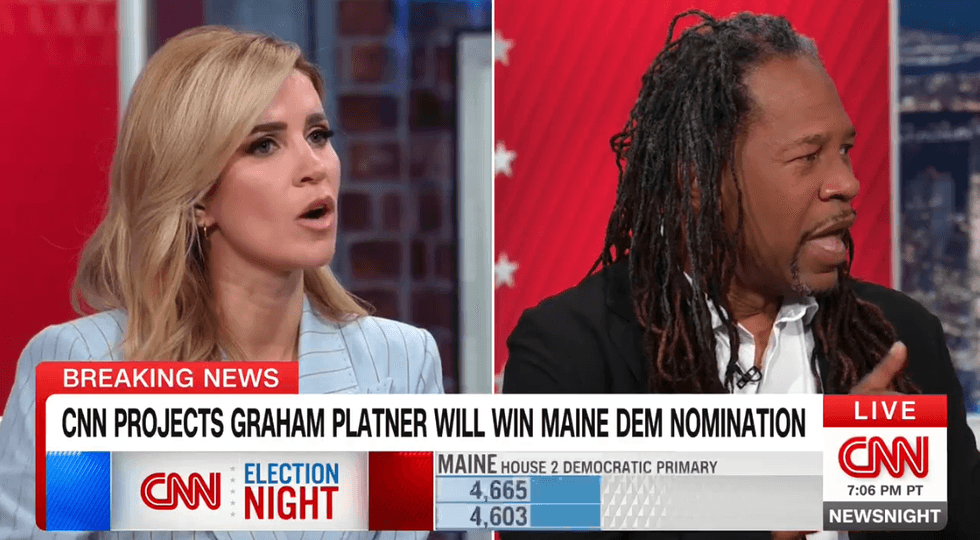
CNN pundits clashed and yelled over each other when talking about a scandal-plagued candidate's primary victory.Political journalist LZ Granderson explained on CNN why he believes Maine Democratic Senate candidate Graham Platner still has support despite allegations about infidelity and aggression against women. Platner had just won the Democratic primary, setting him up to square off against Sen. Susan Collins (R-ME)."He looks like a dude," Granderson said. "Let's just say what it is. He's got the scruff. He's got the edge."Granderson argued that the messenger matters as much as the message itself, but Caroline Sunshine, a former Trump White House staffer, shook her head as Granderson tried to make his point."No, no," Sunshine yelled. "I don't think it's that. I don't think that's what it is."Granderson insisted, however, "When I look at Graham Platner, the first thing I think of, he looks like a dude, and he looks like someone who looks very different than many of the men who lead the Democratic Party."

Rep. Josh Gottheimer (D-N.J.) on Tuesday said Maine Democratic Senate candidate Graham Platner should win his primary on Tuesday and then get off the ballot so that Democrats can replace him with a stronger candidate in the fall. Platner is expected to win Tuesday’s Democratic primary for Senate. He would then face Sen. Susan Collins…
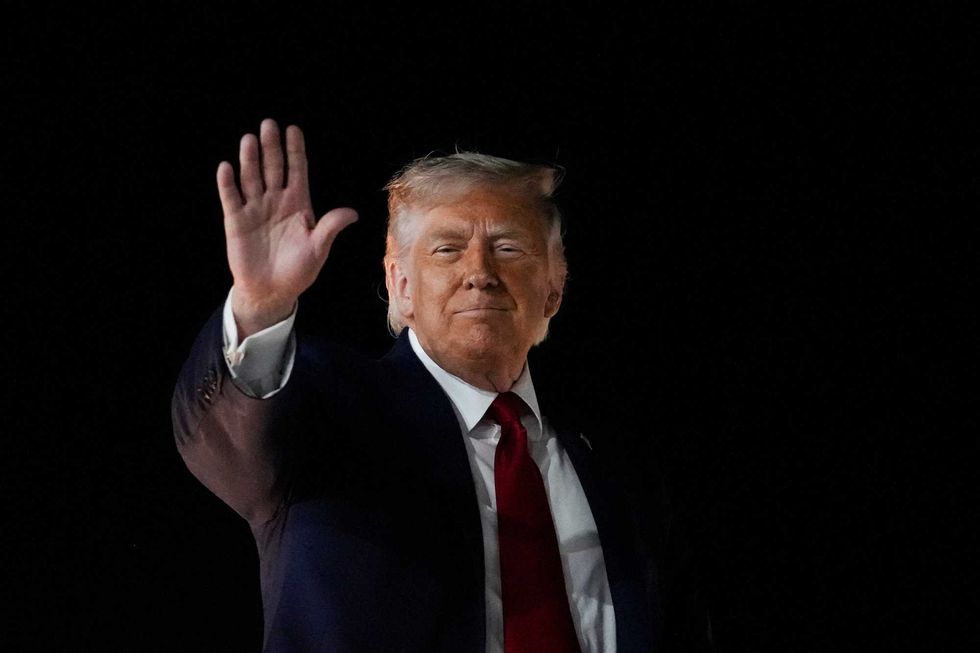
In the face of rising gas prices caused by President Donald Trump’s decision to launch war with Iran, a sizeable majority of Americans expect that the problem will only continue to get worse. According to the Hill, a new poll shows that nearly two out of three U.S. voters think the cost of gas will continue to rise over the coming year. “The survey, released Monday by Reuters/Ipsos, found that 59 percent of 4,531 respondents said that gas prices will go up in the next 12 months,” explained the Hill. “Meanwhile, 17 percent of respondents said that they will improve, 13 percent said they will stay the same and 11 percent either skipped the question or were unsure. More than 8 in 10 Democrats and more than 6 in 10 independents believe gas prices will continue to increase over the next year. Just more than one-third of Republicans said the same while a plurality of that group, 39 percent, said the opposite.”This shows that not only do Americans in general see the situation getting worse moving forward, but that one in three Republicans share that pessimism. That surprisingly sizeable negative faction within the president’s own party suggests a strong level of discontent with his economy and doubt over his handling of the war. “Negotiations to end the conflict in the Middle East, which recently passed the 100-day mark, are ongoing and on rocky footing, after Iran and Israel traded fire over the weekend,” the Hill explained. “President Trump told reporters early Tuesday morning that negotiations with the Islamic Republic are ‘going well’ and he ‘could have at least an idea by one or two days from now’ on whether the two sides will come to an agreement. Throughout the conflict, the president has expressed optimism about the state of negotiations.” The gas poll, however, suggests that voters — even a third of his own — don’t share that optimism. While gas prices have eased slightly in recent days, “Gas prices remain well above their benchmark in the days before the war. AAA reported on Feb. 26, two days before the U.S. and Israel launched strikes on Iran, that the national average for a gallon of regular gas was under $2.99.” As of Tuesday, the average price is $4.16 — an increase of nearly 40 percent.According to Patrick De Haan, the head of petroleum analysis at GasBuddy, the recent dip in fuel prices is due to lower oil costs and “improving refinery runs.” He went on to note, however, that with the Strait of Hormuz still “effectively closed,” any “further deterioration” in the region “could send prices sharply higher.” “For now, motorists may enjoy the savings at the pump,” he warned, “but the risk of a significant reversal has not gone away.”
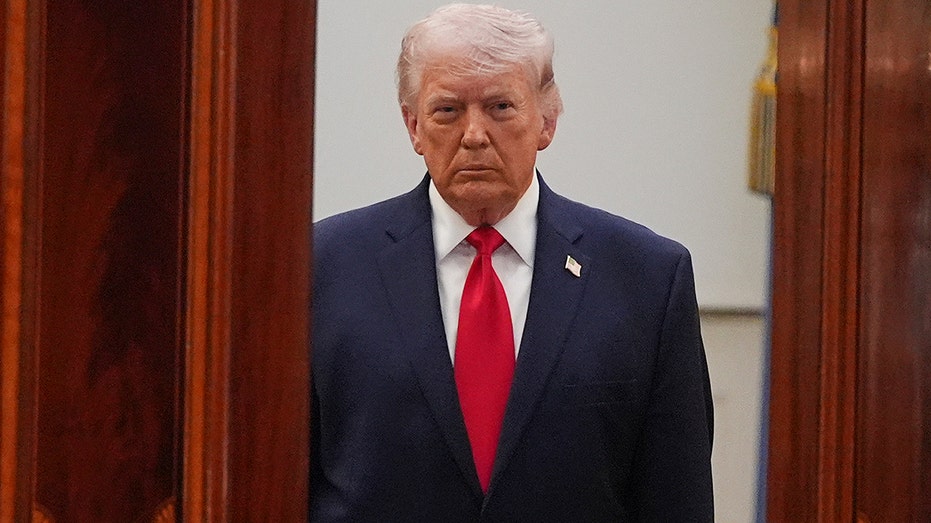
Trump projects confidence in Iran nuclear deal despite unresolved uranium enrichment disputes and a fragile ceasefire that nearly unraveled.