Plus: Democratic socialists sweep New York’s House primaries, the White House escalates sanctions on Cuba, and an extreme weather conference is canceled due to extreme weather.
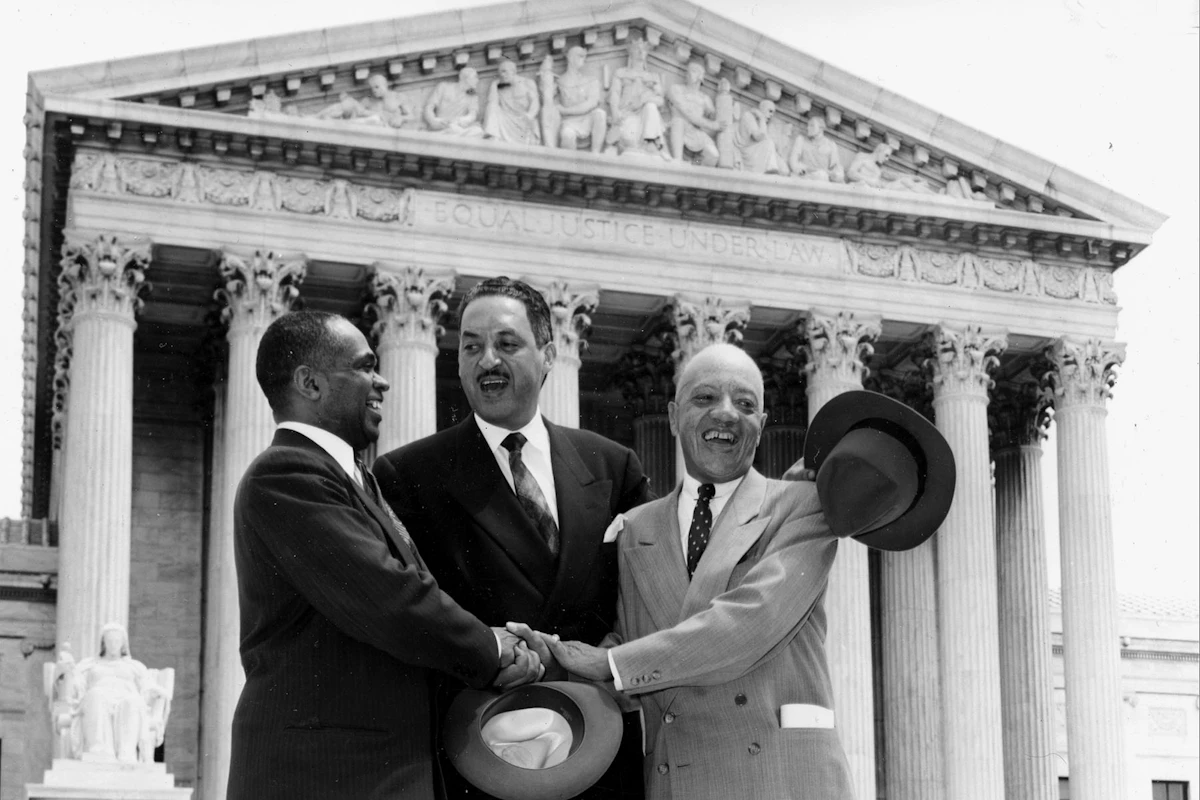
1. Brown v. Board of Education, 1954This school desegregation decision was so important that Chief Justice Earl Warren made sure the judges were unanimous. And even with that, 20 or so years passed before it was actually enforced.2. Dred Scott v. Sandford, 1857A shameful decision not to extend citizenship to descendants of slaves by a shameful court that helped precipitate the Civil War. Let us note, however, that the vote was 7–2, so bravo to Benjamin Robbins Curtis and John McLean.3. Marbury v. Madison, 1803In which Chief Justice John Marshall established judicial review—giving the court the power to declare a congressional law unconstitutional. Would be lovely if we could undo this today.4. Plessy v. Ferguson, 1896The infamous “separate but equal” ruling. Homer Plessy was seven-eighths Caucasian and tried to sit in a white railway car. Not in Louisiana, bub!T-5. Citizens United v. Federal Election Commission, 2010A disgraceful ruling to all but undo campaign finance rules. Its impact on U.S. elections has been corrupting beyond our ability to count—quite literally, since one result of this decision is that we have no way of tracking how much corporations pour into campaigns.T-5. Roe v. Wade, 1973The landmark pro-abortion ruling. Interestingly, at first, the Jerry Falwells of this country weren’t up in arms about this one. Homeschooling was their big issue at the time.“This case … empowers Trump to violate as many laws as he wants without fear of the consequences. Immunity breeds impunity.”—author and columnist Jonathan Alter on Trump v. U.S.7. Trump v. United States, 2024The ruling that offered the president immunity from criminal prosecution for official acts. One of the most annoying naïve-liberal guessing games of the Roberts court era: Maybe Gorsuch or Kavanaugh will save us here! No. They didn’t.8. Bush v. Gore, 2000The race to the right-wing gutter started here, with a decision so rancidly political—it settled a dispute over vote recounting—that the five majority justices noted it was “limited only to the present circumstances,” i.e., meant to install George W. Bush as president.T-9. McCulloch v. Maryland, 1819Unlike Marbury, this John Marshall ruling suits liberals today just fine: It declared the supremacy of federal over state law and would define the potential scope of the administrative state. Some conservatives would like to overturn it. At the rate we’re going, they won’t need to.T-9. Obergefell v. Hodges, 2015A rare victory for progress and decency in the modern era, thanks to Anthony Kennedy joining the court’s (then) four liberals to legalize same-sex marriage.T-11. Dobbs v. Jackson Women’s Health Organization, 2022Another Deep South case, and wham, nearly a half-century of pro-abortion rights precedent tossed out the window. Every justice who voted for this clearly lied about their beliefs at their confirmation hearings.T-11. West Coast Hotel Company v. Parrish, 1937The famous case in which the anti–New Deal Supreme Court, perhaps brushed back by FDR’s court-packing scheme, shifted its right-wing gears and held that a minimum wage was constitutional. Justice Owen Roberts called it “the switch in time that saved nine.”T-11. Baker v. Carr, 1962One of three “one person, one vote” cases decided by the Warren court in the early 1960s. Warren, upon retiring, called these cases the most important of his tenure. One justice had a nervous breakdown during deliberations.T-14. Loving v. Virginia, 1967The court here held unanimously that the marriage between the appropriately named Richard Loving, a white man, and his Black wife, Mildred Jeter, could stand.T-14. Miranda v. Arizona, 1966The bane of cops from the day it was decided, it ensured that people under arrest were made aware of their rights. Kind of amazing it hasn’t been reversed yet.
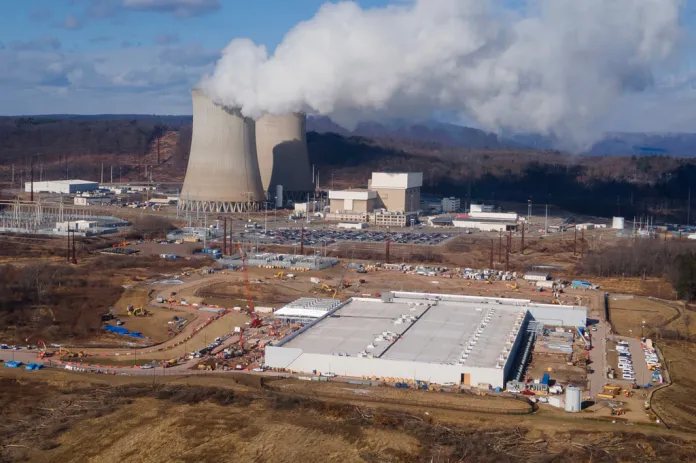
President Donald Trump has made rebuilding the U.S.’s nuclear industrial base a central part of his energy agenda. Last week, a nuclear startup operating in Emery County, Utah, took an important step toward making that revival real. Valar Atomics became the first Department of Energy-authorized reactor built outside a national laboratory to reach “criticality.” Valar […]
A special 79-year-old man has received unparalleled access to Eli Lilly’s obesity drug.Millions of Americans are eagerly awaiting access to retatrutide, a powerful new drug from the pharmaceutical company. But one unidentified person has been able to gain premature access to the drug via the Food and Drug Administration’s “compassionate use” program, STAT reported Tuesday.The FDA program is designed to prioritize access to experimental drugs for patients with grave or life-threatening medical issues. And while the name of the individual is not known, several signs indicate that they are likely very well connected.A senior clinician at the National Institutes of Health, Ranganath Muniyappa, requested access to the drug for the unnamed patient in April. Muniyappa cited a diagnosis of refractory obesity with obstructive sleep apnea and pulmonary hypertension, a potentially life-threatening disease characterized by high blood pressure in the lungs. The request reportedly drew the attention of top health officials, which STAT noted was indicative of the patient’s influence.Based on the vague parameters of the patient’s identity, STAT reached out to the White House to see if the recipient could possibly be Donald Trump, who similarly suffers from obesity and has publicly expressed interest in obesity drugs. The White House did not explicitly deny the patient was Trump.When asked if Trump was the 79-year-old man in question, White House spokesperson Kush Desai did not say no, and instead referred STAT to the Department of Health and Human Services. (The president was 79 at the time of the request, and turned 80 earlier this month.)When asked if Trump had obstructive sleep apnea and pulmonary hypertension, Desai offered Trump’s latest medical evaluation as a counter, which he falsely claimed “covers this,” according to STAT. It does not—the memo makes no mention of either disease.HHS did not address the issue of the retatrutide application or the patient’s identity.“The FDA supports expanded access programs that can provide patients with serious or life-threatening conditions access to investigational treatments when no comparable or satisfying approved therapies are available,” HHS spokesperson Emily Hilliard told STAT. “Each request is reviewed on a case-by-case basis based on the clinical circumstances and applicable statutory and regulatory requirements.”In a public exchange with STAT over X later Tuesday morning, Desai specified that the application was “not for the president.” STAT reporter Lizzy Lawrence responded that she had asked several federal agencies multiple times on Monday but that no one had answered her question directly.Whoever the patient is, they had been previously treated with other obesity drugs, such as tirzepatide, though sources who spoke with STAT indicated the patient experienced only moderate weight loss as a result. Muniyappa reportedly recommended against bariatric surgery because of the patient’s age and co-morbidities.This story has been updated.
A federal judge on Monday blocked the Trump administration’s overhaul of an immigration verification system to check voter eligibility across the nation, striking down a central pillar of the government’s efforts to exercise more federal control over elections.This article was originally published by Votebeat, a nonprofit news organization covering local election administration and voting access.The judge cited Texas’ use of the Systematic Alien Verification for Entitlements, or SAVE, database, which flagged several voters who were actually citizens as noncitizens, as evidence that it threatened both privacy and voting rights less than five months before the November midterm election.“The federal government has knowingly trampled on the privacy rights of American citizens in a manner that threatens the sacred right to vote,” Judge Sparkle Sooknanan said in her 75-page ruling. “This Court cannot stand idly by while that happens.”Sooknanan’s decision does not eliminate SAVE, a decades-old immigration-status verification program. But it blocks the Trump administration’s 2025 overhaul of the system, which made it easier for states to check their voter rolls against the federal database, which includes individuals’ citizenship status and Social Security numbers. Election officials have found that the modified database, however, is prone to error, something Sooknanan referenced in her decision. Federal officials, she wrote, “haphazardly combined and repurposed the private information of millions of Americans, including citizenship data that they knew to be unreliable.”The ruling could strengthen challenges by voters who were removed, flagged, or placed under review by the system.“States have partnered with the federal government to access the database and are actively removing United States citizens from voter rolls based on inaccurate information,” the judge wrote.Voting rights groups, Trump administration react to rulingThe case was filed by the League of Women Voters and other groups who argued that the SAVE system was inaccurate and that using it to check voter rolls violated citizen privacy rights. “Today’s decision is a resounding victory for voters,” said Marcia Johnson, chief of activation and justice for the League of Women Voters. “Efforts to create a federal voter database to facilitate voter purges threaten the fundamental right at the heart of our democracy.” Justin Levitt, a professor at Loyola Law School who worked in the White House on democracy and voting rights issues under President Joe Biden, agreed that voters would benefit from the ruling.“This provides incremental reassurance that they won’t be inaccurately singled out and have to jump through even more hoops to vote,” he said. “It stops the use of a deeply flawed process to cause trouble for real eligible citizens.”However, James Percival, the general counsel at the Department of Homeland Security, which maintains the SAVE database, criticized the ruling as a misguided effort to block the Trump administration from trying to address voter fraud.“It’s amazing how hard the Left will fight to stop us from solving problems they insist do not exist,” Percival said in a statement. The Justice Department did not immediately respond to requests for comment. Michael Morley, a professor at the Florida State University College of Law and faculty director of the FSU Election Law Center, said the ruling prevents the federal government from using all the information at its disposal to ensure that only eligible voters take part in elections.“It seems to leave the government in a somewhat tenuous position of being able to provide citizenship data to states for voting purposes that is less accurate than it otherwise would be,” he said. “It restricts the government’s ability to take advantage of all of the most accurate sources of information it has in order, in most cases, to confirm people’s citizenship status.” Judge cites Texas’ use of SAVE database in rulingTexas intervened as a defendant in the case since it had been actively using SAVE to verify the citizenship status of its more than 18 million registered voters. The state gained access to the database in March 2025 after signing a memorandum of agreement with the Department of Homeland Security. In October, the Texas Secretary of State’s Office announced SAVE had flagged 2,724 people as “potential noncitizens” and sent the list to county election officials to investigate. That process involved mailing letters to each person flagged, requesting additional information to verify their citizenship. If county officials received no response after 30 days, the person’s registration was canceled. Some voters who responded to the notices turned out to be U.S. citizens after all; others had their registrations canceled, although a specific number hasn’t been released.