Warning for Senate Republicans: MAHA voters oppose Save Our Bacon Act
Center Right
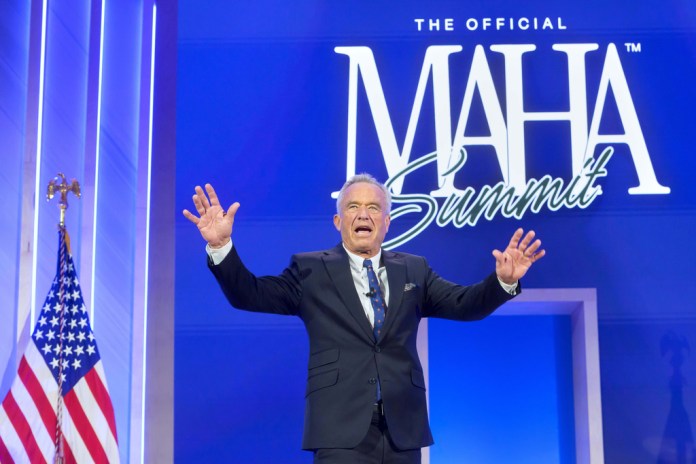
Rep. Anna Paulina Luna (R-FL) generated significant media attention with her successful MAHA-backed work to remove pro-pesticide policies from the House version of the Farm Bill. But despite attracting less attention, her rejected amendment to remove the so-called Save Our Bacon Act may prove to be even more consequential for congressional Republicans. The SOB Act […]
Senate Republicans are bracing for an end-of-week slog of votes as tension continues to build with the Trump White House, Punchbowl News reported on Thursday morning.Senate Majority Leader John Thune (R-SD) and Whip John Barrasso (R-WY) face "a marathon of twisting arms and whipping votes on two pieces of legislation that have little in common" other than the fact that "Trump has made passing them much harder than it needed to be," said the report — namely, the passage of the Foreign Intelligence Surveillance Act (FISA) authorization, and the Homeland Security reconciliation package to fund immigration enforcement.The "heartburn" Republicans face, per the report, is that Trump has complicated all of this by demanding $1 billion for "security" for his White House ballroom project, something the GOP has finally rejected outright; introduced and backed off the "Anti-Weaponization Fund" which has forced Senate Republicans to consider banning it directly in their legislation; and nominating his unqualified and highly partisan housing finance chief Bill Pulte to serve as Director of National Intelligence, which has caused Democrats to threaten a boycott of FISA.The weaponization fund alone has created additional pain points by causing some Republicans to demand a formal ban on the fund in the reconciliation as a condition for their vote, with Sen. Thom Tillis (R-NC) saying, “We need to take action here. It’s creating headwinds that we don’t need. If we’ve got the acting AG saying it’s done, then let’s just stick a fork in it.”Senate Minority Leader Chuck Schumer (D-NY), meanwhile, plans to introduce an amendment requiring a rewrite of the bill to include this language. Only four Republican votes would be needed to pass it.The upshot, per other reports, is that Republicans on Capitol Hill are privately enraged at Trump for constantly tripping up not only their priorities, but his own.
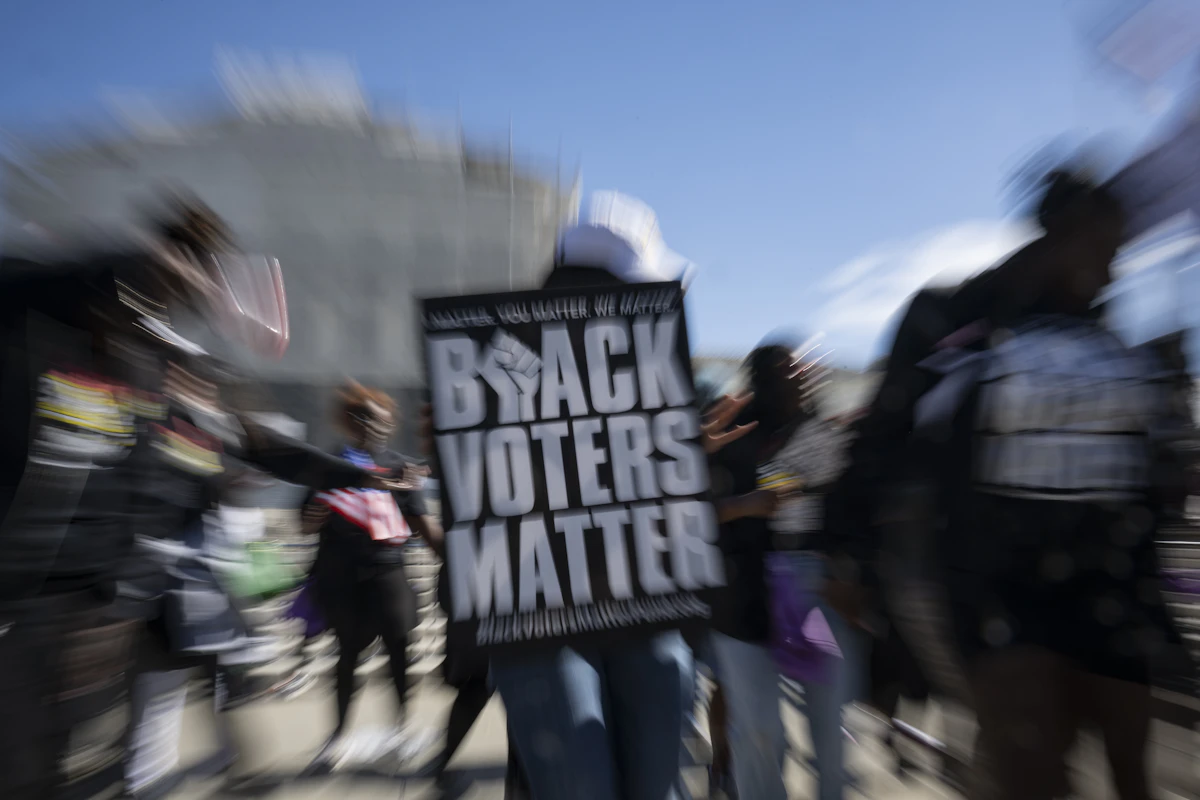
The Supreme Court handed down a bombshell order on Tuesday night that made racial gerrymandering effectively impossible to challenge in court, expanding upon last month’s decision in Louisiana v. Callais to eliminate the last vestiges of the Voting Rights Act of 1965—and with it, the primary mechanism for protecting multiracial democracy in the American South.Tuesday’s 6-3 order in Allen v. Milligan, which was technically unsigned, allows Alabama—and, in the future, other states—to enact legislative maps even if a federal court rules that they were enacted with racially discriminatory intent. This decision goes well beyond the court’s ruling in Callais, which focused on VRA claims under Section 2 about gerrymandered maps with a racially discriminatory effect.The decision gives carte blanche to Southern state lawmakers to eliminate majority-Black districts as soon as they feasibly can—or, in Alabama’s case, even if it is not actually feasible or practical. (More on that later.) In 1957, the Supreme Court unanimously ordered Southern states to desegregate their schools “with all available speed.” In 2026, the court’s conservative majority is demanding the elimination of Black electoral power in the South on the same time scale.“In addition to being wrong on the merits, the Court’s decision inflicts two grave harms on the public,” Justice Sonia Sotomayor wrote in her dissent. “It debases the democratic process by upending Alabama’s entire election in the name of permitting Alabama to discriminate against Black Alabamians. It also corrodes the rule of law by rewarding Alabama’s gamesmanship and outright defiance of court orders.”Allen v. Milligan may sound familiar because we have been here before. The Supreme Court already heard the case as a Section 2 challenge to Alabama’s post-2020 congressional districts in 2023. Chief Justice John Roberts and Justice Brett Kavanaugh joined with the court’s three liberals to uphold a district court ruling that required Alabama to draw a second majority-Black congressional district.Though the decision was a surprise victory for voting-rights groups, given the Roberts Court’s hostility to the VRA, there were also warning signs lurking beneath the surface. The majority opinion by Roberts merely stated that the district court had “faithfully applied the court’s precedents” while going out of its way to endorse those precedents.“The concern that §2 may impermissibly elevate race in the allocation of political power within the States is, of course, not new,” Roberts concluded. “Our opinion today does not diminish or disregard these concerns. It simply holds that a faithful application of our precedents and a fair reading of the record before us do not bear them out here.” In hindsight, the ruling reads more like a stay of execution than a grant of clemency.Let us take stock of how we got here. Conservatives have long sought to limit the VRA’s power. In the 1980 case Mobile v. Borden, the Supreme Court held that a “facially neutral” voting practice only violates Section 2 if it is enacted with discriminatory intent. While that may have been relatively easy to prove in the Jim Crow era, Congress also intended to root out more subtle and insidious forms of racially discriminatory voting practices.To that end, Congress amended the VRA in 1982 to reverse the Supreme Court’s ruling and specifically prohibit laws that had a discriminatory effect, regardless of intent, under Section 2. The high court accepted Congress’s vote-dilution framework in the 1986 case Thornburg v. Gingles and laid out a multi-part test to determine when and how racial-gerrymandering claims could succeed. (Borden and Gingles did not involve racial-gerrymandering claims per se, but the impact on them is identical.)Since Roberts and Justice Samuel Alito joined the high court in 2005, the Supreme Court has grown steadily more hostile to the Voting Rights Act. In 2013, the court’s conservative majority struck down the VRA’s preclearance formula in Shelby County v. Holder because the justices thought it was outdated and violated the “equal sovereignty of the states,” a bespoke principle to which the court has never returned. That ruling freed many jurisdictions, mostly in the South, from seeking preapproval from federal courts or officials before changing their voting laws. A wave of voting restrictions soon followed.In the 2021 case Brnovich v. Democratic National Committee, the court took aim at Section 2 as applied to state voting laws. Alito, writing for the court, threw up a wave of new constraints on Section 2 claims to state election laws. Transmuting Fox News talking points into the law of the land, he even claimed that states could overcome Section 2 challenges to voting laws by invoking the phantasmal threat of voter fraud. “The majority creates a set of extra-textual exceptions and considerations to sap the Act’s strength, and to save laws like Arizona’s,” Justice Elena Kagan wrote in her dissent.
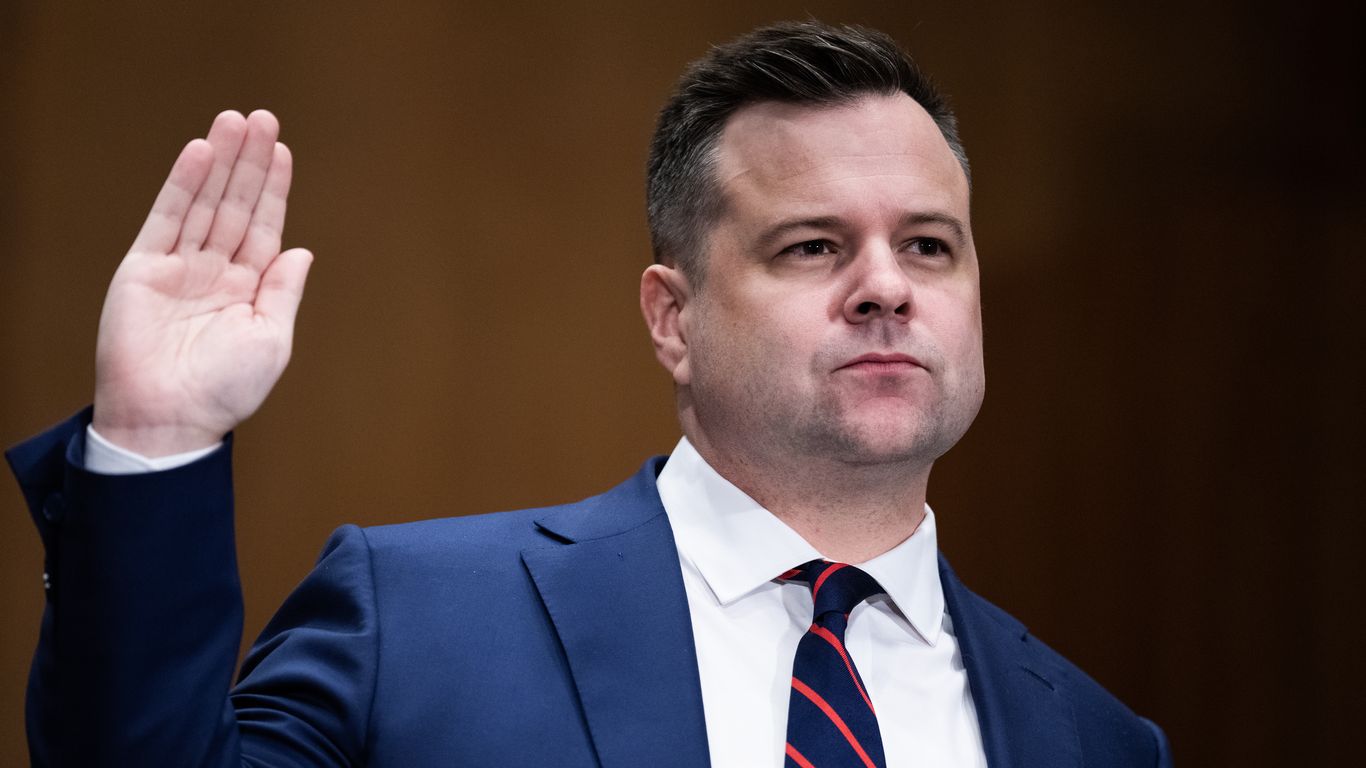
Just when President Trump removed one thumb from the eye of Senate Republicans — scrapping his $1.8 billion "anti-weaponization fund" — he put another right back in with his choice of Bill Pulte as director of national intelligence.Why it matters: This time, the stakes are even higher: Democrats are threatening to let the government's spy powers lapse next week unless Trump yanks the appointment.State of play: Democratic outrage over Trump's latest moves usually doesn't amount to much. But Republicans need at least eight Democratic votes in the Senate to prevent the Foreign Intelligence Surveillance Act Section 702 from lapsing on June 12, potentially forcing Trump to choose between sticking with Pulte or keeping Section 702 alive.The warning lights started flashing on Monday when Sen. Mark Warner (D-Va.) teed off on the appointment. "I thought I had gotten to the stage where I could no longer be shocked by Donald Trump's choices," he told MS NOW, "but this may be the most outrageous of all."As vice chair of the Senate Intelligence Committee, Warner is a key player in the Section 702 renewal debate.Now Warner is pressing Senate Majority Leader John Thune to urge the White House to drop Pulte, per Punchbowl. As DNI, he would play a key role overseeing the Section 702 program.Senate Minority Leader Chuck Schumer said Tuesday that renewal of surveillance powers, which has already been delayed for months, is in further jeopardy. "The timing of this announcement could not be worse," he said. "With just over a week until FISA Section 702's authorities expire, this announcement and its timing clearly make passing an extension of FISA much harder."The big picture: The backlash isn't just coming from Democrats. Some of the sharpest criticism has come from Trump's own party.Thune himself did not mince words about Pulte, who used his perch as head of the Federal Housing Finance Agency to target Trump's adversaries. "We don't need a weaponized DNI, we need professionals there," he said.Thune's predecessor as Senate leader, Mitch McConnell, also came out against Pulte. "Anyone performing this role of such immense public trust must have the extensive national security experience required by statute, and no nominee who falls short of this requirement will earn my vote," he said.At a Tuesday hearing, Sen. Thom Tillis (R-N.C.) asked Treasury Secretary Scott Bessent whether he actually threatened to punch Pulte in the face, as journalist Rachael Bade reported last year. "No sir, I actually said I was going to kick his ass," Bessent replied. To which Tillis said, "Good … I share the emotion."Tillis also said Pulte is "not fit" to be DNI and that "the timing of this nomination couldn't have been worse."Sen. John Cornyn (R-Texas) said of Pulte, "I don't see any evidence of qualifications for that job, but I'm willing to listen."Yes, but: Hitching Pulte to the FISA extension "is a really risky strategy," Thune told reporters Tuesday, per Axios' Hans Nichols and Kate Santaliz. Tillis and Sen. Susan Collins (R-Maine) also indicated they oppose linking the two.For the record: "Bill Pulte is a great selection and he will do a great job on behalf of the American people," White House spokesman Davis Ingle said in a statement. "Holding FISA hostage puts America's national security at risk and it is shameful that some Democrats are threatening to put partisan politics ahead of the safety of the American people." The bottom line: The administration abandoned the anti-weaponization fund. Now it has to decide whether to do the same with Pulte.
President Trump announces plans to nominate acting Attorney General Todd Blanche to permanently lead the Department of Justice after Pam Bondi's firing.
During a White House dinner this evening, President Trump told the audience he was going to officially nominate Todd Blanche to fill the open position as U.S. Attorney General tomorrow. [Video from Dan Scavino] President Trump with an announcement tonight at the @WhiteHouse… Congratulations @TheJusticeDept @DAGToddBlanche—🇺🇸🦅 pic.twitter.com/7C7N0Gjall — Dan Scavino (@Scavino47) June 4, 2026 President […]
The post President Trump Say He Will Officially Announce Acting AG Todd Blanche Nomination as U.S. Attorney General Tomorrow appeared first on The Last Refuge.
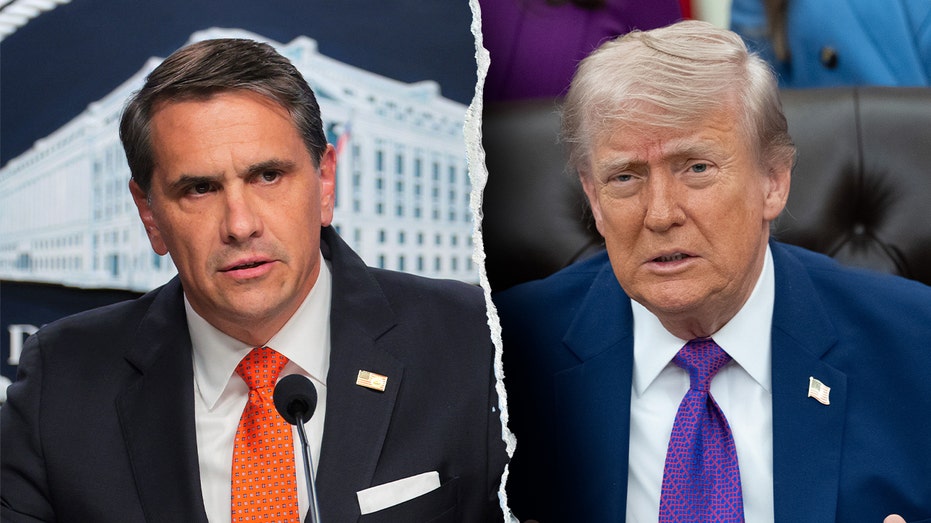
President Donald Trump gave Republicans another reason to pull their hair out on Wednesday after he refused to confirm whether he would pursue a controversial move that has received a lot of blowback. Trump has teased establishing a $1.776 billion fund to pay people who claim that they were wrongfully prosecuted by the government. The fund would have been established as part of a settlement of a private lawsuit Trump filed against the IRS in 2019 over his leaked tax returns. The fund received blowback after several of Trump's allies said they would seek restitution. Acting Attorney General Todd Blanche told Congress repeatedly on Tuesday that the administration was abandoning the fund. But Trump refused to confirm that plan when asked during a press gaggle on Wednesday, which seemed to spook some Republicans, according to CNN's Manu Raju. "This is just another example where Republicans want to pull their hair out on Capitol Hill," Raju told Kaitlan Collins on "The Source." "A perfectly laid plan, so they thought, until Trump comes out and says something else and completely cuts their legs from underneath them."