U.S. Declaration at 250: New Challenges, Enduring Principles
Center Right
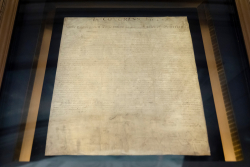
With the signing of the Declaration of Independence 250 years ago, America's founders accomplished something new under the sun: They brought into existence a nation rooted in the belief that individuals are by nature free and equal.
Freedom 250 is holding a candlelight tribute on Memorial Day to honor the sacrifices of fallen U.S. military service members who fought to secure and defend American freedom and recount their stories. The non-partisan organization, founded to celebrate the United States’s 250th birthday, will highlight the lives of late veterans Captain Humber “Rocky” Versace (a […]
The fallout from Louisiana v. Callais has been nothing short of tragic, with terrible echoes of the past. As Reconstruction ended in 1877, states in the South either killed, expelled, or used other means to force out Black legislators. Over the last two weeks, freed from abiding by Section 2 of the 1965 Voting Rights Act, Southern states have rushed to redraw their district lines to ensure that members of Congress elected by Black voters can’t win reelection. We are in a new era of American democracy, particularly for Black Americans. The Republican Party now views Democratic Party electoral wins and policy success as an existential crisis that it must prevent by any means necessary. Crushing Black political power is therefore essential to the GOP, since African Americans overwhelmingly support the Democratic Party. And the current Supreme Court, more than any in decades, has not only removed virtually all constraints on policies that might negatively affect African Americans but actively looks to outlaw any public policy that might benefit Blacks. This era demands a new framework for Black politics—fresh strategies, tactics, leaders, and goals. We need a “Double Front” approach. And we should be clear-eyed: Even before Callais, the existing models of Black politics were growing stale. It’s worth explaining when and how Black politics lost its effectiveness. There has never been a singular Black political movement or African American ideology. Booker T. Washington and W.E.B. Du Bois famously quarreled. Du Bois’s own views shifted over the course of his life. The reality of the civil rights activism of the 1950s and ’60s was more complicated and messy than beautiful Martin Luther King speeches and smartly organized boycotts. But after the civil rights victories of the 1960s, a clear Black politics emerged and predominated for five decades. Aspiring Black leaders, who had earlier led from the pulpit or protests, sought and won political office, most commonly becoming either mayor or member of Congress in heavily Black areas. A network of Black organizations, such as the National Urban League and the NAACP, focused less on the mass protests of the civil rights era and more on behind-the-scenes lobbying and collaborating with those Black officials in office. Though they varied considerably, these organizations often became synonymous with a single famous leader, such as Jesse Jackson and Al Sharpton. And these leaders were often treated by the media and politicians as spokespeople for the entire Black population. These politicians, groups, and leaders aligned tightly with the Democratic Party, viewing it as the only vehicle to advance Black political goals. The results of this approach have been uneven. On the one hand, African American politicians became increasingly powerful within the Democratic Party, gaining committee chairmanships, the mayor’s office in some of America’s largest cities, Cabinet and judicial appointments, and finally, in Barack Obama, the party’s presidential nomination. These elected officials delivered major policy victories to Black Americans and the country as a whole, from local economic empowerment of Black communities to the Affordable Care Act. On the other hand, African Americans became a “captured minority,” the term invoked by Princeton political scientist Paul Frymer. Democratic Party officials knew that Black voters would back them no matter what, so they had little incentive to push hard for policies and programs that would help African Americans in particular. Electoral pressures led the Democratic Party to set an agenda that would appeal to swing voters in swing states—a very non-Black constituency.As the Democratic Party became increasingly concerned that advancing Black concerns turned off white voters, Black Democratic politicians and prominent activists faced a choice: advance in the party by downplaying and sidelining Black concerns, or advocate Black interests at the expense of their careers. Many chose the former. Contrary to conservative pundits who claim that he stoked racial conflict, Obama actually spoke far less about racial issues than his Democratic predecessors. Prominent activists shifted from pressuring Democratic politicians to being very defensive of them. Sharpton and others negotiated with mayors, presidents, and corporations, but grew unaccountable to Black America at large—operating more like celebrities than community activists. Over time it became difficult to distinguish the policies of Black and white mayors, as both were beholden to the police and corporations in their cities and thereby unwilling (and often lacking any real power) to advance policies to help rank-and-file Black Americans. The Congressional Black Caucus for a time earned its self-given moniker, the “Conscience of the Congress,” pushing the U.S. in radical directions, whether on enforcing civil rights or in the fight against apartheid in South Africa.
The Ebola outbreak spreading throughout Central Africa is the first major outbreak since the Trump administration demolished its global health programs and largely withdrew from the world stage last year. Experts say the absence is palpable. While the U.S. is sending resources and teams of experts overseas, public health and infectious disease experts say President…
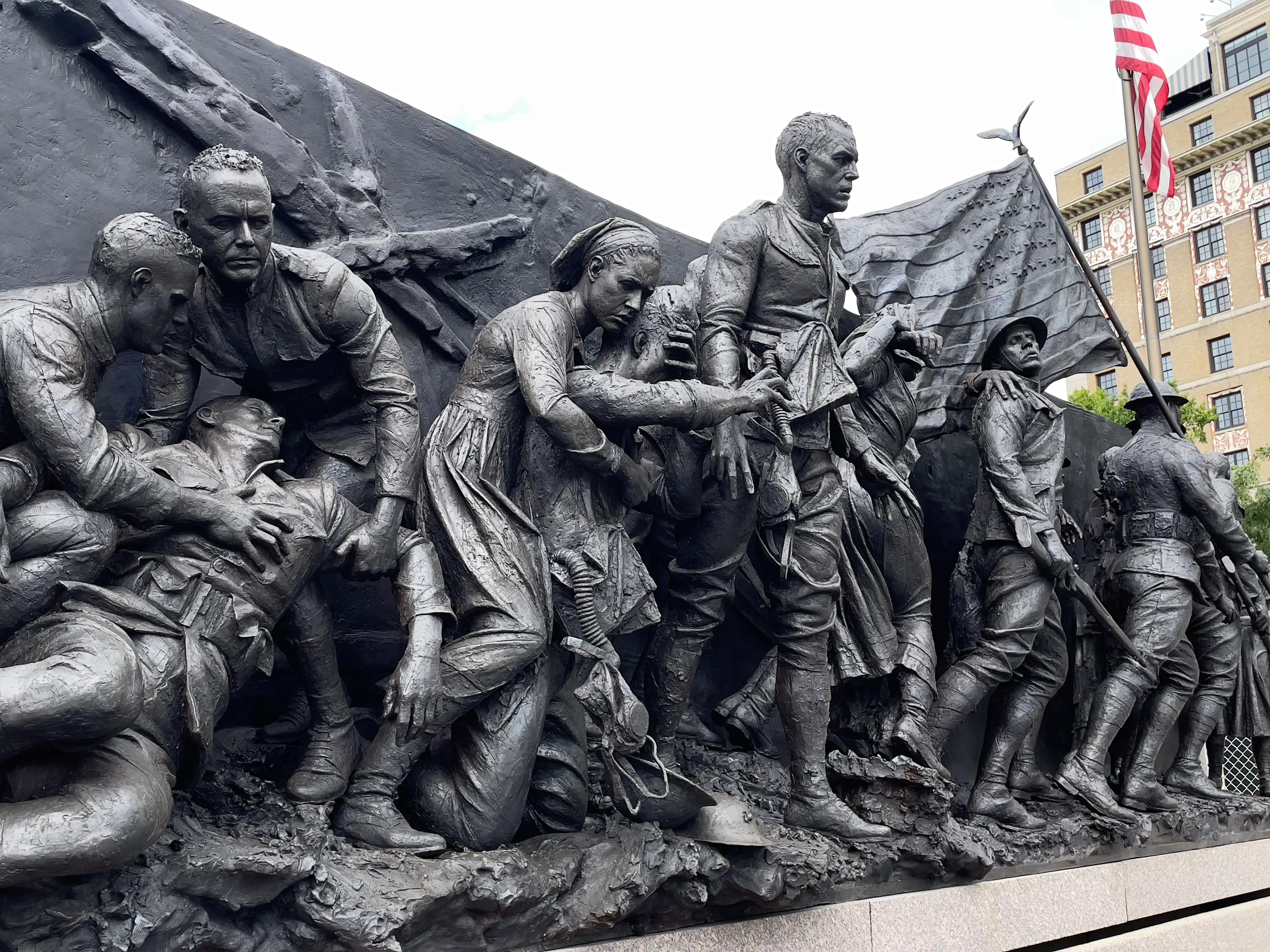
This article is part of Upstream, The Daily Wire’s new home for culture and lifestyle. Real human insight and human stories — from our featured writers to you. *** There are many famous memorials within walking distance of each other in our nation’s capital, but perhaps none so imposing as the World War I Memorial just steps ...
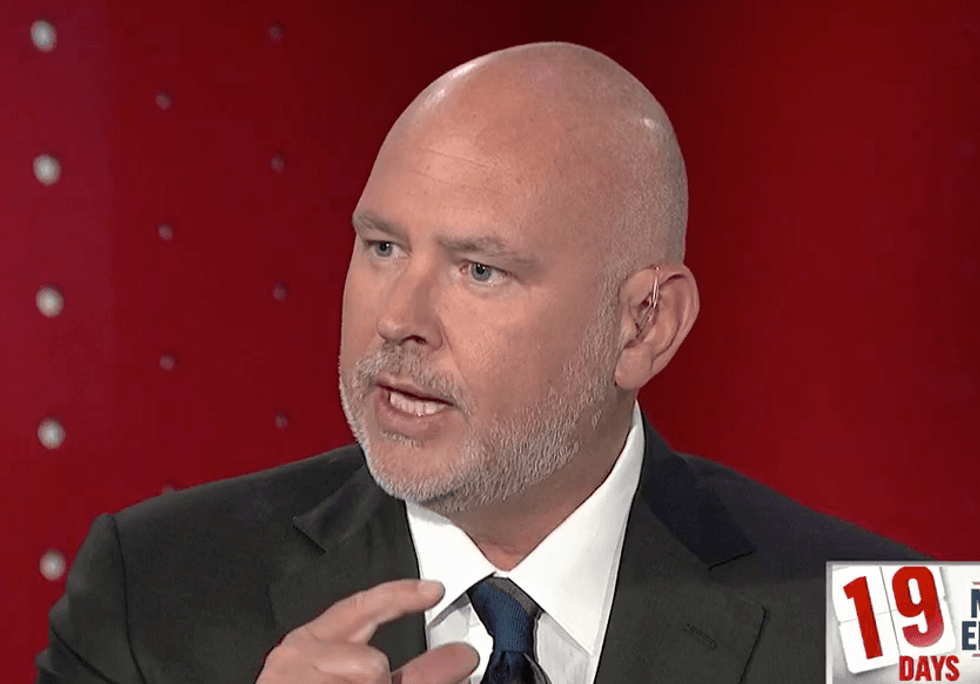
President Donald Trump is trying to become an American Caesar, argued one of President George W. Bush’s advisers in a recent Substack post — but returning to America’s core ideals can stop him.In his Sunday argument, Steve Schmidt ventured back 90 years to 1936, when President Franklin D. Roosevelt was running for his second term and the Nazis under Adolf Hitler were ascendant in the burgeoning German empire. After describing how the Nazis’ persecution of Jews in Europe was matched by America’s persecution of African Americans across the Atlantic, Schmidt quoted a Roosevelt speech that summed up the fundamentally American qualities that he believes can ultimately take down Trump.“Faith — in the soundness of democracy in the midst of dictatorships,” Schmidt quoted Roosevelt. “Hope — renewed because we know so well the progress we have made. Charity — in the true spirit of that grand old word. For charity literally translated from the original means love, the love that understands, that does not merely share the wealth of the giver, but in true sympathy and wisdom helps men to help themselves.”Schmidt then connected Roosevelt’s rhetoric to modern American politics.“What Franklin Roosevelt laid out is an indictment of our age of selfishness in which an accumulation of factors has arisen in perfect symmetry with the most dangerous man in American history,” Schmidt argued. “Donald Trump is a liar, a cheat, a narcissistic sociopath, a convicted sex abuser and conman.”He concluded, “He is well on his way to becoming an American Caesar, unequal in stature, above the law and in absolute control over vast institutions that can yield power through control. The American citizen is becoming a leashed dog tethered to the state, which grants favors to some, and punishment to others. This must be opposed. It must be defeated — or we will lose America, and there is nowhere left to go.”Last week Schmidt explicitly connected his ongoing argument that Trump is becoming a dictator with the president’s $1.776 billion slush fund to Jan. 6ers and other political supporters (as well as possibly institutions directly connected with himself).“It is remarkable,” Schmidt argued. “Donald Trump has just been given more than $1.8 billion by his lawyer's signature, who is now the Attorney General, creating a slush fund for extremists that Donald Trump can reward them, give them recompense, give them reparations. Donald Trump didn't invent corruption, but he has perfected it. He has created a vicious cult of personality.”After pointing out that in 2020 there was a massive breach of IRS data that impacted more than 400,000 people, none of whom has received a settlement, Schmidt concluded that “millions of Americans work hard and they pay half of what they make to the IRS — to taxes — to fund the schools, the roads, the military. What's happening with Trump isn't just not right. It is an insult, a mockery of every hardworking person who plays by the rules. Donald Trump is laughing at us.”He added, “And so is his family. They are the greatest collection of takers in all of whole history of the United States. There are no examples of corruption that are even in the same galaxy as this. It is truly, truly incredible. Mind-boggling. And yet it rolls on, and it will continue to do so until there's a Democratic Congress that makes it stop.”