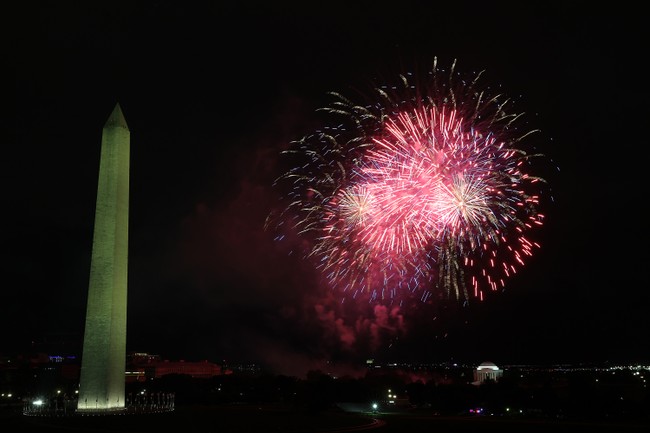
Maryland Gov. Wes Moore (D) on Friday criticized President Trump’s decision to hold a July Fourth rally on the National Mall during a heat wave in the Washington, D.C., metropolitan area. “I think that we should never ask our people to sacrifice in order to hear a speech,” he told The Hill’s Judy Kurtz and Hillary…
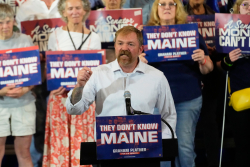
Two major polls of the Maine Senate race dropped this week, and they told the same story: The race is incredibly close, and Democrat Graham Platner has real work to do among the working class. He's running an aggressively left-populist, anti-establishment campaign targeting the billionaire class-and boasts lots of blue-collar appeal-but GOP Senator Susan Collins is way ahead among those voters. Why?
The Trump administration is asking a federal judge to quickly lift her recent ruling against major provisions of a presidential executive order on elections, arguing in an appeal that the court’s action will effectively prevent the government from putting new voting restrictions in place before the November election.This article was originally published by Votebeat, a nonprofit news organization covering local election administration and voting access.Last week, U.S. District Judge Indira Talwani halted President Donald Trump’s efforts to create centralized lists of adult citizens and give the U.S. Postal Service unprecedented authority over who can vote by mail. Her 37-page ruling concluded that the president did not have the constitutional authority to regulate state elections, as his March executive order tried to do.The executive order directed the U.S. Department of Homeland Security and Social Security Administration to create a nationwide list of verified U.S. citizens over 18, and thus presumably eligible to vote in federal elections. It also called on the U.S. Postal Service to create a system to handle and accept mail-in ballots only from voters on preapproved lists.Talwani’s order prevents the federal government from enforcing those provisions of the order against the 24 jurisdictions (23 states and the District of Columbia) whose attorneys general and governors brought the lawsuit in federal court in Massachusetts. The list includes most Democratic-led and swing states, including Arizona, California, Michigan, Nevada, New York, North Carolina, Pennsylvania, and Wisconsin.This week, the Trump administration appealed Talwani’s ruling to the First Circuit Court of Appeals and said it is still proceeding with its efforts to set up the new system for the rest of the states. But it warned that the judge’s order will make it impossible for the U.S. Postal Service to create a bifurcated system for the November election, even if the administration ultimately prevails on appeal. Government attorneys asked Talwani to lift her ban by Monday.The request for a quick decision suggests that the Trump administration may be trying to speed things up so the case reaches the U.S. Supreme Court as soon as possible.“Operationally, it would not be possible for us to put a two-tiered system in place where one set of rules apply to the ballot mail of the Plaintiff States, and another applies to the remaining states,” Steven Monteith, the Postal Service’s chief customer and marketing officer and executive vice president, said in a court filing. “Doing so would cause operational confusion and significantly increase the complexity and efficiency of implementing any final rule.”But the Trump administration’s nationwide efforts to use the Postal Service to regulate who gets ballots also hit a separate legal roadblock this week when another federal judge in Washington, D.C., ruled that the executive order violates a years-old agreement requiring the federal government to ensure voters who request mail-in ballots get them in time to ensure they can be counted.U.S. District Judge Emmet Sullivan concluded that the Trump administration’s plans to send ballots only to voters on preapproved lists breached a 2021 agreement between the Postal Service and the NAACP meant to ensure that the agency prioritized ballot delivery. In contrast to Talwani’s ruling, Sullivan’s decision applies nationwide.“These proposed rules directly undermine commitments that the Postal Service made to ensure mail-in ballots are delivered and counted,” said Anthony Ashton, senior associate general counsel for the NAACP, in a statement.The U.S. Postal Service and Department of Homeland Security did not respond to requests for comment.Dion Nissenbaum is Votebeat’s senior national reporter and is based in Houston. Contact Dion at dnissenbaum@votebeat.org. Votebeat is a nonprofit news organization covering local election integrity and voting access. Sign up for their newsletters here.
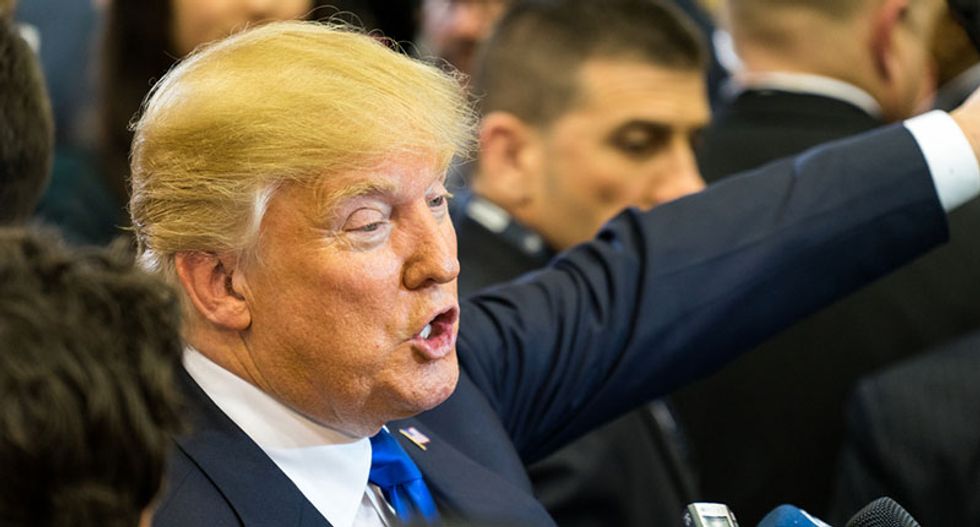
An author who has written four books about President Donald Trump claimed on Thursday that first lady Melania Trump has concocted a "preposterous" new way to try and silence him. Michael Wolff, co-host of the "Inside Trump's Head" podcast with Joanna Coles of The Daily Beast, said during a new episode that Melania Trump's legal team has moved to sanction the lawyers representing Wolff for bringing a frivolous lawsuit against her. A federal judge threw out Wolff's anti-SLAPP lawsuit against Melania Trump in May, which he filed after she threatened to bring a $1 billion lawsuit against Wolff for his claims about the Trump family's ties to disgraced financier and convicted sex criminal Jeffrey Epstein. “Essentially, they are moving to sanction my lawyers for doing nothing more than bringing the lawsuit against Melania Trump,” Wolff said on the podcast. “So this is preposterous on its face.”Wolff also claimed that he found out about the move from Boris Epshteyn, a lawyer close to the Trumps, whom Donald Trump has described as someone who will "say anything" to make him happy. He claimed that hearing about the move from Epshteyn revealed that the strategy behind the lawsuit “was being coordinated at the highest levels of Trump law.”
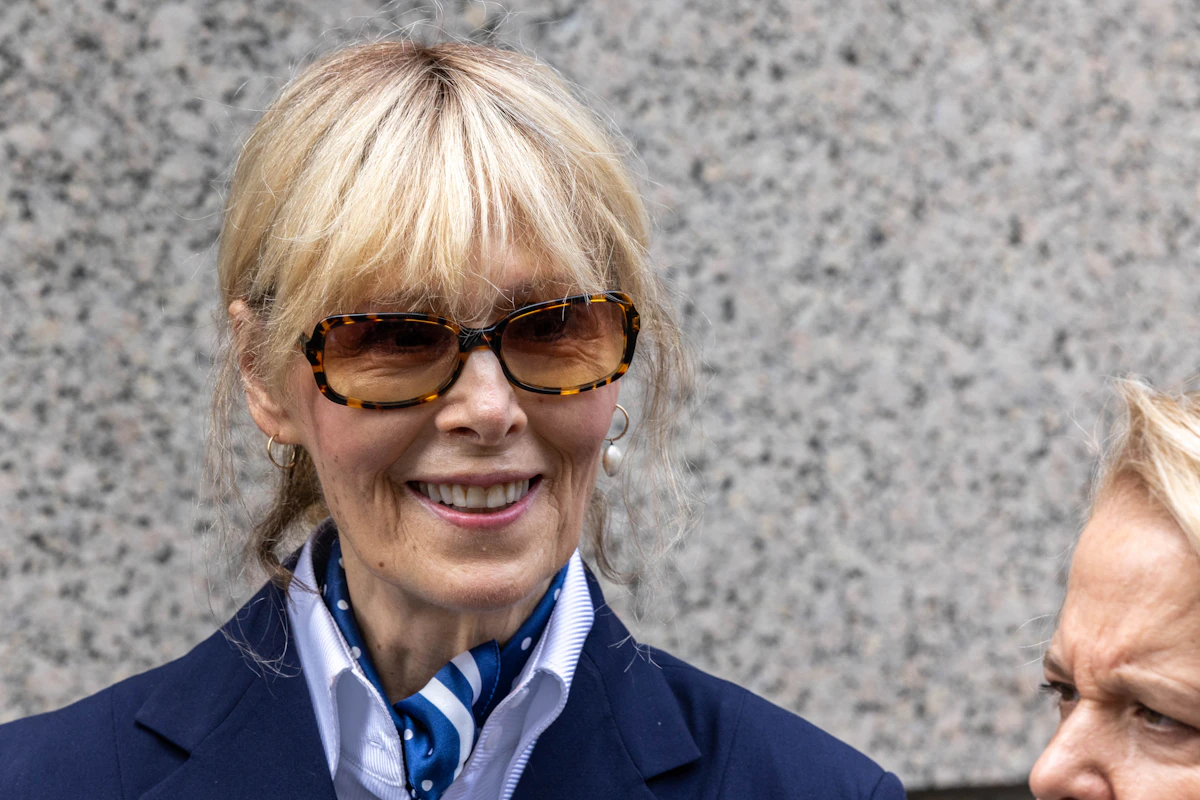
Donald Trump is still trying to stiff E. Jean Carroll, according to the columnist’s attorney.Roberta Kaplan, Carroll’s lawyer, wrote in a court filing Tuesday that Trump’s legal representative had called her the day prior asking for another delay to the $5 million sum Trump owes the writer. Later Monday, Kaplan said she informed Trump’s team that “Carroll does not consent,” and asked whether Trump would comply with the immediate disbursement of funds.Carroll has a long and unfortunate history with the president. Trump was found liable by a jury in May 2023 for having sexually assaulted Carroll in the mid-1990s, for which she was awarded $5 million in damages. He subsequently lost his defamation case against her the following January, when a judge ruled that Trump had continued to defame the advice columnist by denying the assault on the basis that she wasn’t his “type,” and by accusing her of making up the allegations against him for the benefit of her book. A jury awarded Carroll $83.3 million in that case.But Carroll hasn’t yet seen a dime from either case. In May, a federal appeals court allowed Trump to continue staving off his payments until the Supreme Court decided whether or not to pick up the case. The court made their decision Monday, rejecting Trump’s challenge and allowing the verdict to stand.In a separate filing Tuesday, Kaplan asked a judge to implement an expedited payment schedule for the sum that Trump owes Carroll. She referred to a June 2023 filing in which both parties agreed that Carroll could collect if the Supreme Court refused to hear the case.Kaplan added that, by this point, the $5 million sum had accrued an additional $779,783 in interest, raising Trump’s initial debt to nearly $5.8 million.Nonetheless, Trump has continued to make a target out of Carroll. In May, the Justice Department opened a criminal investigation into the writer, probing whether Carroll committed perjury in her previous cases against Trump.