As soon as LeBron James informed the Los Angeles Lakers that he would be signing elsewhere in free agency this offseason, the Golden State Warriors were thought to be among the most likely teams to land him. However, it seems that one key hold-up in the Warriors’ pursuit of another star player could keep them...
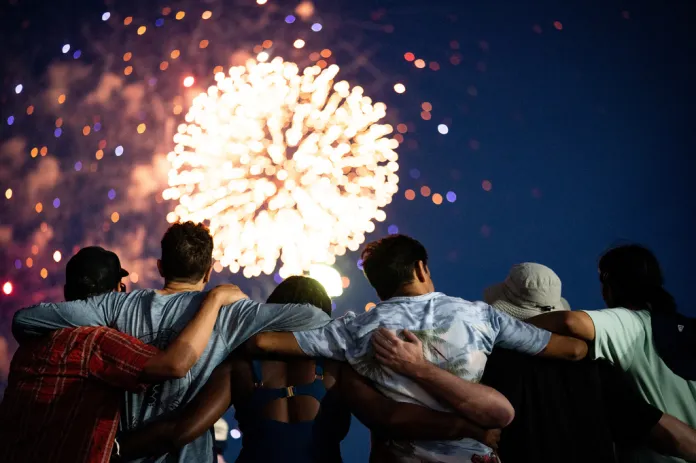
This year’s July Fourth National Mall fireworks aren’t scheduled to begin until 10:30 p.m. at the earliest, and visitors will have to go through extensive security screenings to be let into the viewing area. The inconveniences associated with this year’s event have caused some people to look elsewhere for Fourth of July celebrations. If the […]
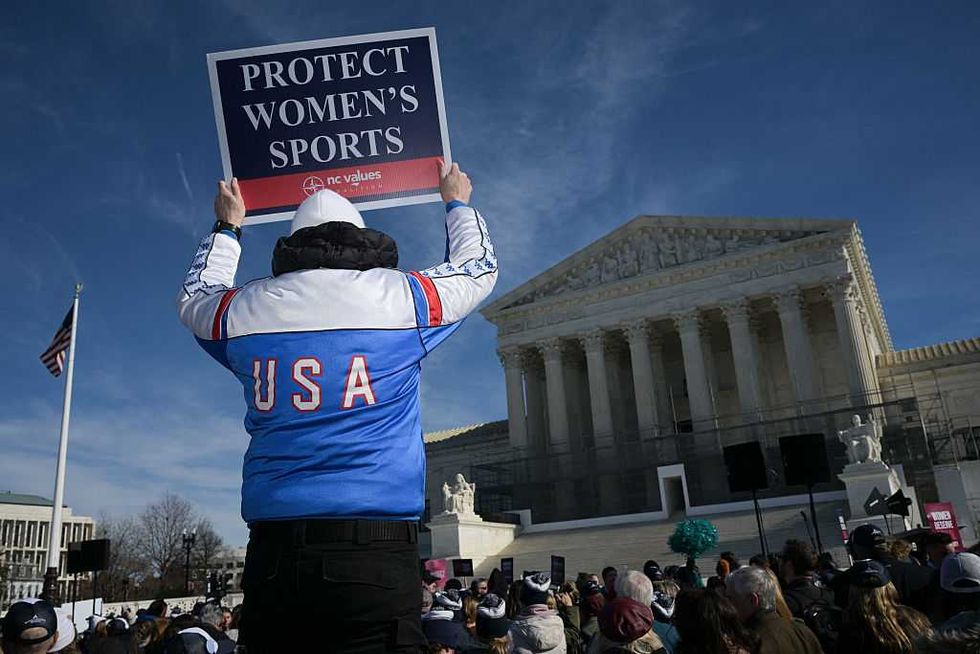
In a decisive ruling Tuesday, the Supreme Court has settled the most consequential legal question for women's sports in a generation — affirming what biology and fairness have always made clear: Women's sports must remain protected spaces for female athletes.The court ruled 9-0 that Title IX — the federal law that ensures equal opportunities for women in education and sports — and 6-3 that the Equal Protection Clause allow states to protect female athletes with sex-based categories in sports.Changing the culture means rejecting the lie that biology is bigotry.The decisions in Little v. Hecox and West Virginia v. B.P.J. mark a watershed. The court recognized that sex is a biological fact, not a feeling, and that it shapes athletic performance in ways no paperwork or policy can undo.Writing for the majority, Justice Brett Kavanaugh held that Title IX "cannot plausibly be interpreted to refer to anything other than biological sex."By upholding the constitutionality of state laws safeguarding sex-based categories in athletics, the court has reinforced the rights of girls and women in the 27 states that have already passed protective legislation. This is a win worth celebrating.No longer will biological males like B.P.J. dominate girls’ shot-put competitions in West Virginia next season. The ruling draws a firm line: Sex is not a feeling, and paperwork and lip gloss cannot rewrite reality.Female athletes deserve fair competition, safe locker rooms, and equal opportunity — the principles Title IX was built to protect and that reflect simple scientific truth. The majority opinion emphasizes immutable biological differences in strength, speed, and physiology and rejects the claim that gender identity can override sex in the context of physical athletics.Yet this victory, meaningful as it is, remains incomplete.In the remaining 23 states — California chief among them — business as usual persists. Biological males can still claim girls’ and women’s titles, taking podium spots from female athletes they outperform.The patchwork nature of this decision means fairness remains geographically contingent. But a girl’s right to compete on a level playing field should not depend on her zip code.We have made progress. President Trump’s 2025 executive order provided critical momentum, functioning with the force of law and prompting the NCAA to reaffirm that women’s categories are for women. The International Olympic Committee has committed to protecting the female category starting with the 2028 Los Angeles Games. Ballot initiatives in blue states like Colorado and Washington this November will let voters decide directly whether girls deserve their own sports. In Maine, fathers have mobilized to put the Protect Girls’ Sports in Maine initiative on the ballot so their daughters can have the same opportunities their mothers did.These developments are encouraging. But the challenges remain formidable.The NWSL and the WNBA still operate without meaningful sex verification. Professional leagues, private events such as the Boston Marathon, and college athletics remain fractured. Birth certificates — the only proof of sex required by the NCAA — can be changed in 44 states. Given the fungible nature of paperwork and other IDs, documents cannot substitute for actual biological testing at the highest levels of sport.Blue states continue to defy federal guidance, treating fairness as optional. Interstate competition creates impossible inconsistencies. A female athlete protected in Tennessee could still face unfair qualification scenarios against out-of-state males if she advances to national competition.How is that fair?The deeper truth is that a Supreme Court ruling can set a legal boundary, but it cannot change the culture by itself. That work falls to all of us — parents, athletes, coaches, journalists, and everyday citizens who refuse to stay silent.RELATED: Democrats can’t escape their trans problem Kirby Lee/Getty ImagesFor too long, institutions have prioritized feelings, optics, and activist pressure over the safety, dignity, and opportunity of girls and women. We saw a version of the same pattern in the gymnastics sex abuse scandals I helped expose decades ago: Adults in power looked the other way while vulnerable athletes paid the price.The Safe Sport Act now exists to protect young athletes from abuse, but the coaching culture has not changed enough, and abuse still occurs. SafeSport faces a four-year backlog of abuse reports.Changing the culture means rejecting the lie that biology is bigotry.It means parents showing up at school board meetings, statehouses, and ballot initiatives with unrelenting clarity. It means athletes — female and male — finding the courage to speak the truth even when it costs them.
Letting states ban trans girls — that is, biological boys — from girls’ sports in publicly funded schools and colleges is a victory for states' rights and common sense.
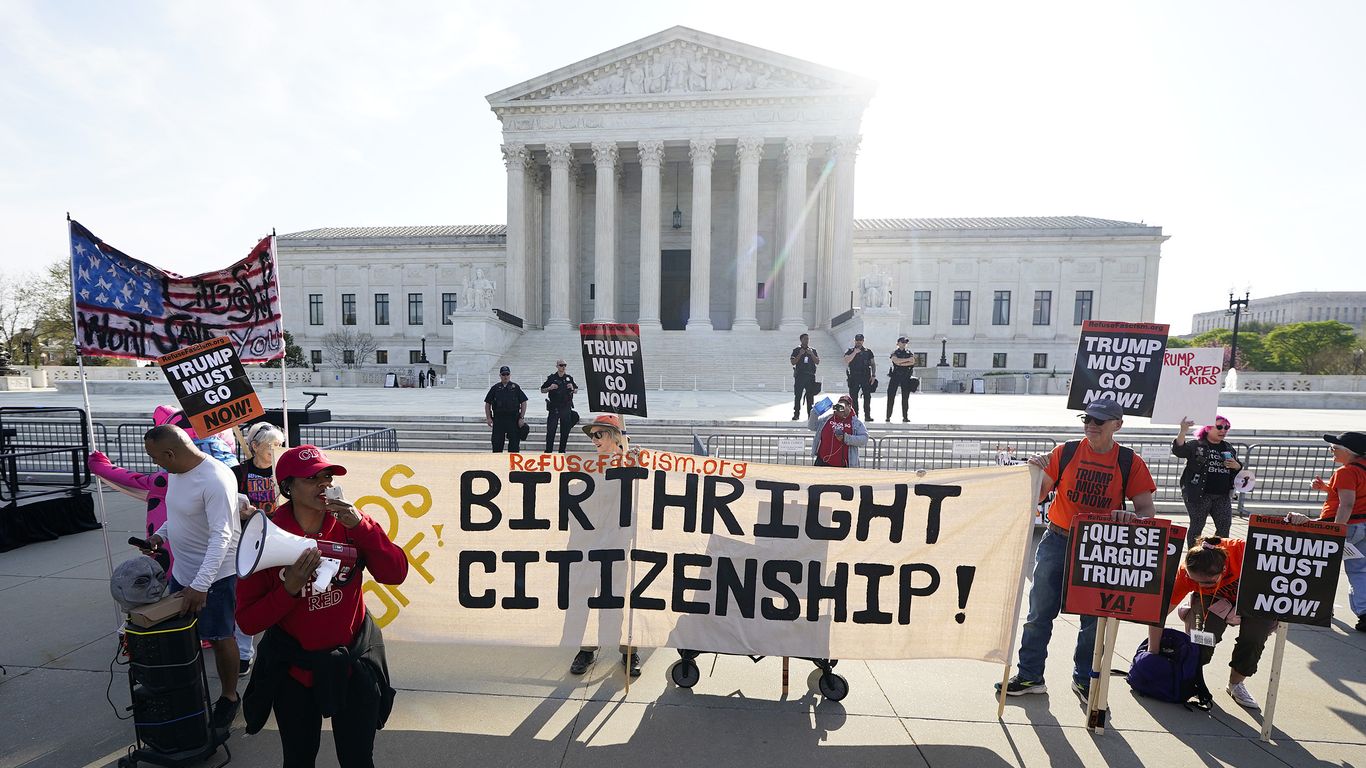
The Supreme Court struck down President Trump's executive order restricting birthright citizenship on Tuesday, reaffirming the long-held belief that any person born on American soil is a citizen.Why it matters: The decision is a blow to Trump, who sought to limit by executive fiat who is eligible for American citizenship as part of his widespread immigration crackdown.What they're saying: "Citizenship, then and now, was the right to have rights— to freely participate in our political community," Chief Justice John Roberts wrote for the five-justice majority."Children born in the United States to parents unlawfully or temporarily present are 'subject to the jurisdiction' of the United States and are citizens at birth under the Fourteenth Amendment's Citizenship Clause."Yes, but: In a dissenting opinion, Justice Clarence Thomas said "[b]oth the Civil Rights Act and the Citizenship Clause guaranteed citizenship to persons born and domiciled in the United States regardless of their race.""Because many potential applications of the President's Order are consistent with the original public meaning of the Citizenship Clause, I respectfully dissent."Threat level: If the administration had succeeded in its arguments, millions of babies would no longer be eligible for citizenship, losing their rights to work authorization, safety net provisions, voting and more.Some of those children could have become stateless with no guaranteed rights at all if their parents' home countries refused to grant them citizenship. Prior to the decision, Trump had lambasted Justices Neil Gorsuch and Amy Coney Barrett — both of whom he had appointed — on Truth Social, anticipating that they would vote against him on birthright citizenship."I don't want loyalty, but I do want and expect it for our Country," he said.Catch up quick: Trump's order sought to limit birthright citizenship to people who have at least one legally present parent in the U.S.The order was based on a once-fringe position that the 14th Amendment doesn't expand to those present in America illegally because they aren't "subject to the jurisdiction" of America, as required in the amendment.The majority of the justices appeared skeptical of the Trump administration's arguments during the case's initial oral arguments, including Roberts.Zoom in: Two of Trump's three appointees sided, at least in part, with the president.Justice Brett Kavanaugh concurred with the judgment but disagreed with the court's reasoning, arguing that Trump's executive order violated a separate immigration statute. Thomas was joined by Gorsuch, who wrote that "By definition, temporary visitors to this country do not choose to make a permanent home here, and their children thus cannot claim the privilege of citizenship.""Because the executive order is lawful at least to this extent, respondents' facial challenge must fail."By the numbers: Two-thirds of Americans support preserving the 14th Amendment's right to birthright citizenship.That includes the majority of Independents and many Republicans.Roughly 53% of Trump's most religious voting block — white evangelical Protestants — say they support the constitutionally guaranteed right.Go deeper: What's at risk if SCOTUS sides with Trump in birthright citizenship caseEditor's note: This story was updated with additional information and context throughout.
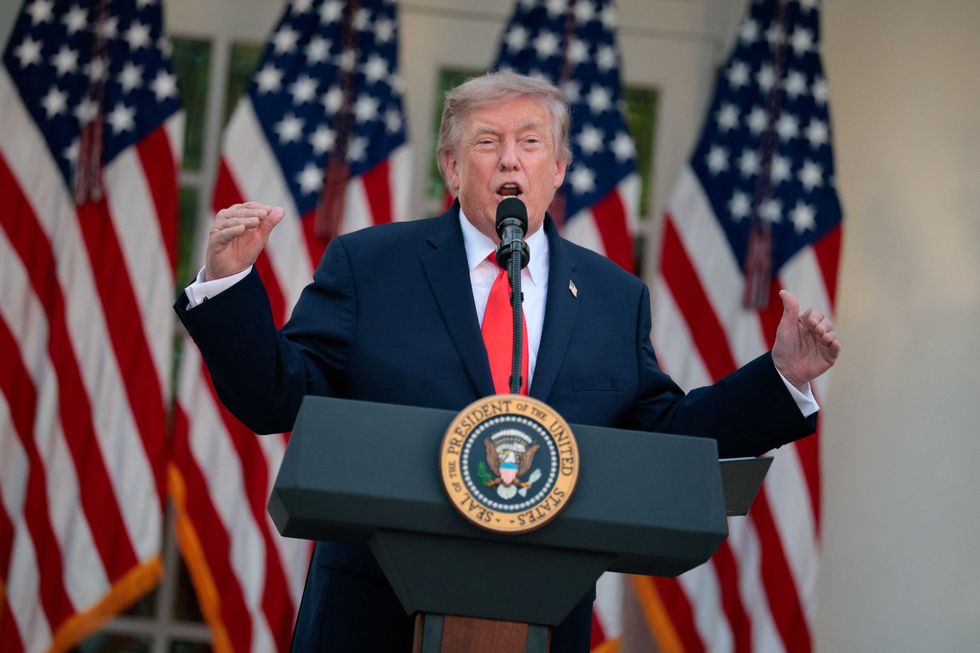
President Donald Trump's image within the MAGA movement is "collapsing under the weight of reality" as his followers find it more difficult to reconcile his brand with the administration's recent fumble in the war with Iran, according to one analyst. Mary Trump, a psychologist and author, argued in a new Substack essay that her uncle is driving a wedge in his base as he continues to tout his brand of strength after he signed a memorandum of understanding with the Iranian regime that some have described as a complete capitulation. The agreement allowed Iran to immediately resume selling oil and lifted some sanctions on the regime in exchange for reopening the Strait of Hormuz, which had been shut since the early days of the war. Trump described the phenomenon as a "growing divide" within the movement itself. "This is no longer simply a disagreement over one agreement with Iran. It is an increasingly public recognition that the image Donald carefully constructed over decades as a fearless negotiator and master dealmaker is collapsing under the weight of reality. The farther reality drifts from the mythology, the harder it becomes for even his most devoted supporters to reconcile the two," Mary Trump wrote."One faction refuses to acknowledge that Donald could ever be wrong and therefore views whatever agreement he signs as, by definition, a success. The other sees what is unfolding as an unmistakable capitulation after months of war, tens of billions of dollars spent, global instability, higher energy prices, and the unnecessary loss of human life," she added.