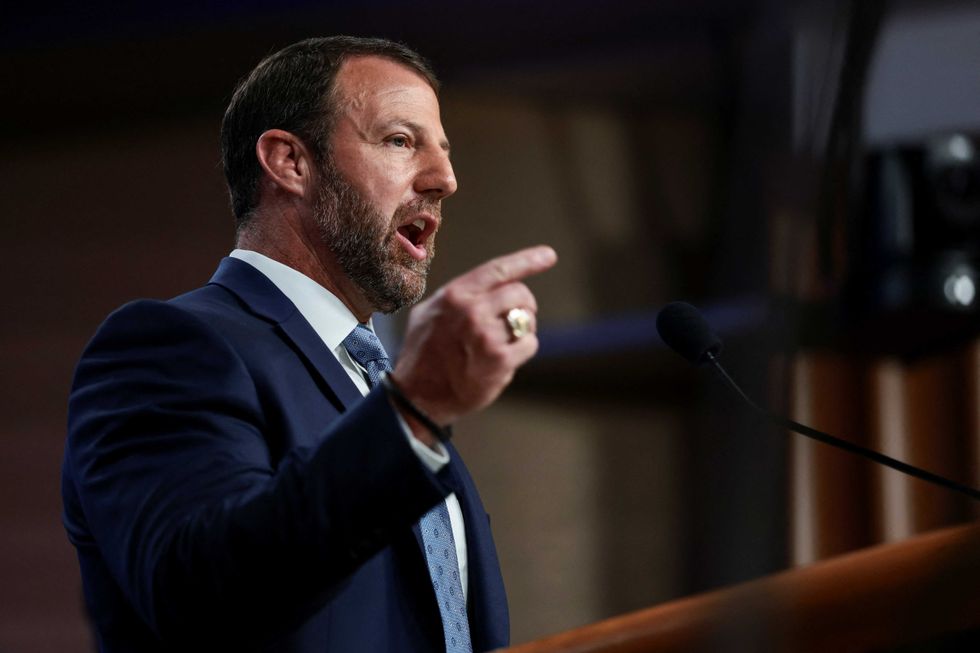
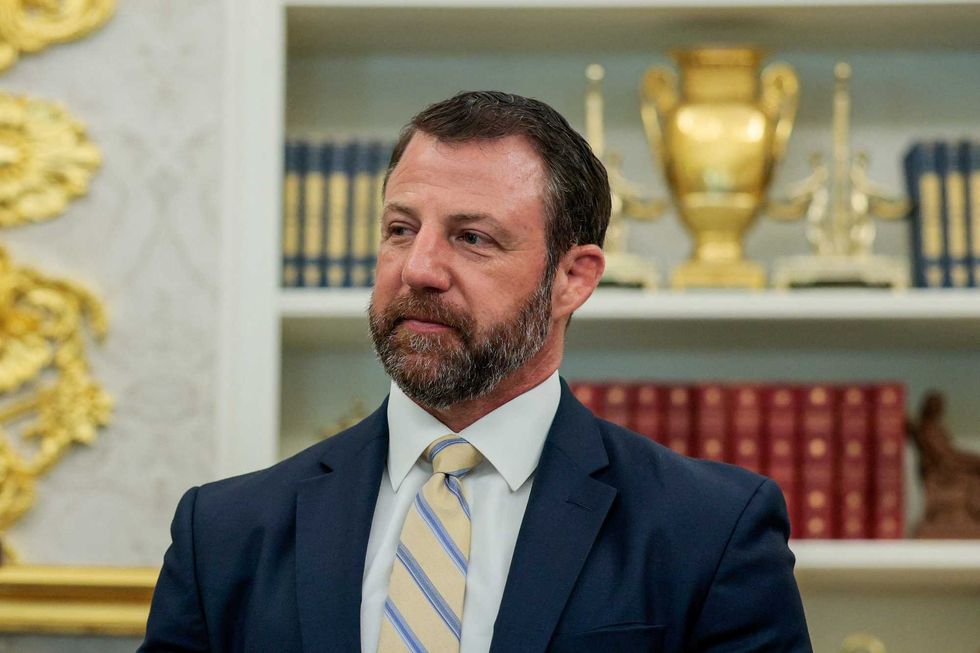
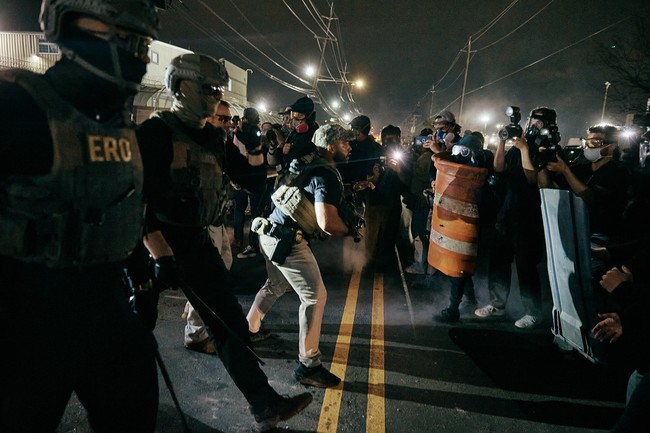
Five Michigan Democratic lawmakers, led by Rep. Haley Stevens, sent a letter Thursday to Department of Homeland Security Secretary Markwayne Mullin opposing a planned Immigration and Customs Enforcement detention facility in Romulus, Michigan. The bipartisan opposition includes Stevens, Debbie Dingell, Hillary Scholten, Kristen McDonald Rivet, and Shri Thanedar, joining Rep. Rashida Tlaib's efforts against the facility. The letter challenges ICE's claim that community impact studies and due diligence were completed before purchase, noting that local officials were never consulted, reports Michigan Advance. It also lists environmental concerns, including floodplain and wetlands regulations.The opposition is bolstered by Michigan Attorney General Dana Nessel and the City of Romulus, filing federal lawsuits to stop development. Representatives cited conditions at Michigan's existing North Lake Processing Center in Baldwin, where detainee Nenko Gantchev died in December 2025, and ongoing hunger strikes and documented conditions for detainees. U.S. Sens. Elissa Slotkin and Gary Peters received no response to their February letter raising similar concerns.Watch the video below. Your browser does not support the video tag.
Five Democratic U.S. Representatives from Michigan sent a letter on Thursday to Secretary of Homeland Security Markwayne Mullin to oppose the development of a planned ICE detention facility in Romulus.Rep. Haley Stevens of Birmingham led the letter and was joined by Reps. Debbie Dingell of Ann Arbor, Hillary Scholten of Grand Rapids, Kristen McDonald Rivet of Bay City, and Shri Thanedar of Detroit — almost the entire Democratic delegation to the U.S. House from Michigan, except for Rep. Rashida Tlaib, who has also been actively fighting against the detention center’s opening. The detention center is in Thanedar’s district.The letter lays out a number of arguments that have been well-worn against the detention center — including local opposition and zoning concerns and environmental regulations for the area’s floodplain and wetlands.“In response to initial press inquiries, an ICE spokesperson stated that new detention ‘sites will undergo community impact studies and rigorous due diligence process to make sure there is no hardship on local utilities or infrastructure prior to purchase’,” the representatives wrote. “No local officials were consulted about any such study or due diligence, raising questions about whether the analysis was completed before the purchase of the facility and, if it did occur, the accuracy of the work.”“Given these dynamics, it is clear DHS must not move forward with the planned Romulus detention facility,” the letter continues, noting that Michigan Attorney General Dana Nessel and the City of Romulus have already sued in federal court to stop or slow the detention center’s development.GET THE MORNING HEADLINES. SUBSCRIBEStevens and Scholten have also been vocally opposed to the major ICE detention facility in Michigan that is currently operating, the North Lake Processing Center in Baldwin, a facility privately owned by GEO Group and contracted as an ICE detention center, especially in the wake of the December 2025 death of Nenko Gantchev at the Baldwin facility.A hunger strike at that facility and concerns about the conditions for detainees were further cited as reasons not to open a second major detention facility, this time owned by ICE, in Michigan.Both U.S. Senators from Michigan, Elissa Slotkin and Gary Peters, sent a similar letter to then-Homeland Security Secretary Kristi Noem in February with a series of questions on planned capacity, staffing levels, and environmental or economic impact analysis.Thursday’s letter noted that Slotkin and Peters received no response to that letter and re-emphasized their questions, but also added new questions about the scope and timeline for reviewing DHS contracts and the property acquisition process for the purchase of the Romulus property.The letter also comes as a group of local advocates and organizers has been heavily criticizing Gov. Gretchen Whitmer for her relative silence on the development of the detention center, with Nessel and federal elected officials taking a much more vocal and active stance against it.
Democrats are approaching what could be their most wide-open presidential primary in decades, but I'd venture a confident prediction today: one of the two Georgia senators will be on the party's ticket in 2028.
In short order, a fresh crop of candidate will be vying for our votes for the right to face the GOP presidential nominee. Here's what we'll be asking in return.
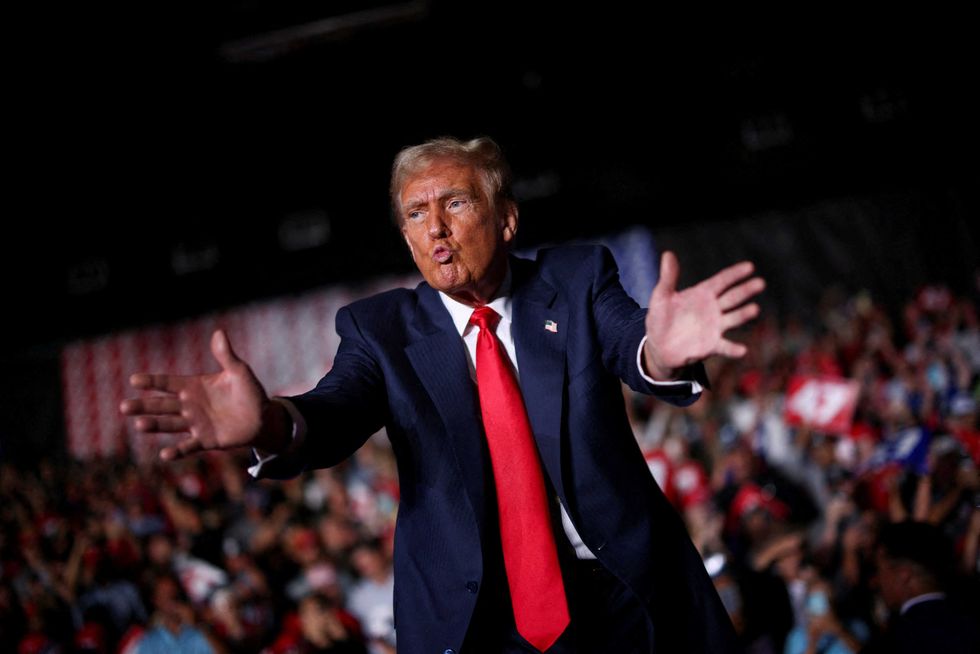
President Trump has repeatedly pressured the Federal Reserve to cut interest rates, claiming in a recent NBC interview that "there's no reason to raise interest rates." However, according to a recent report from financial site The Motley Fool, economic data and market indicators suggest his seven-word assertion requires a reality check.Since Trump's inauguration in January 2025, he has publicly criticized former Fed Chair Jerome Powell and the Federal Open Market Committee for not aggressively slashing rates. The FOMC has lowered the federal funds rate six times between September 2024 and December 2025, but the current range of 3.5% to 3.75% remains well above Trump's stated target of 1% or below.Trump's push for lower rates has multiple motivations. Rate cuts would encourage business borrowing, potentially fueling AI data center investments and job growth. Lower rates would also reduce mortgage costs and make homeownership more affordable. Most significantly, lower borrowing costs would ease the burden of servicing the nation's ballooning federal debt, which has exceeded $1.38 trillion annually since the decade began.Yet inflation tells a different story, The Motley Fool reports. In February, trailing 12-month inflation stood at a modest 2.4%, aligned with the Fed's 2% target. However, Trump's February military action against Iran disrupted approximately 20 million barrels of daily petroleum production—representing 20% of global supply. This energy crisis has dramatically reshaped the inflation landscape.Energy prices have soared in response, lifting trailing 12-month inflation from 2.4% in February to an estimated 4.18% in May. Multiple inflation measures reached their highest levels since 2023: Consumer Price Index inflation at 3.8%, Personal Consumption Expenditures at 3.8%, and Producer Price Index inflation at 6%. Services inflation and shelter costs have also climbed to their highest levels since mid-2025.The effects extend beyond gas pumps. According to The Motley Fool's analysis, energy supply shocks typically unfold in stages, with delayed inflationary impacts on businesses proving particularly problematic. As higher transportation and production costs filter through the economy, inflation can intensify and persist longer than initial price spikes suggest.These economic realities point toward interest rate hikes, not cuts, The Motley Fool argues. Core Personal Consumption Expenditures—the Fed's preferred inflation measure—continue edging higher despite expectations for modest overall inflation declines. FOMC meeting minutes from April indicate a majority of members favored removing the easing bias statement, a preliminary step toward rate increases.Futures markets are betting against Trump's position. According to The Motley Fool, the CME Group's FedWatch Tool shows a 71.3% probability of at least one rate hike by December 2026, based on June 8 data. Trump's handpicked Fed successor, Kevin Warsh, has demonstrated hawkish voting tendencies during his previous FOMC tenure.While Wall Street would prefer Trump's assessment to prevail, The Motley Fool concludes that economic precedent and current data suggest interest rate hikes loom ahead.
The US and Iran may sign an agreement to reopen the Strait of Hormuz on the sidelines of the Group of Seven world leaders summit next week, according to senior officials.