Hardcore supporters of President Donald Trump who are enamored with his anti-immigrant policies are less in love with the numbers coming out of the Department of Homeland Security.When they can get them.Trump's base is turning on the administration over what they view as deliberately inflated deportation claims and a failure to deliver on campaign promises. The crack in the MAGA coalition is widening as immigration hardliners realize they've been played, The Dispatch is reporting.The problem is transparency. According to the report, DHS has stopped releasing the underlying data that would back up its press release deportation claims."Since January 2025, the Trump administration has stopped releasing data tables from the DHS statistics office that break down how many people have been removed from the country, under what circumstances, and by which enforcement agency. Other agency-specific data sources have also not been updated since Trump took office, including the ICE statistics portal, which was previously updated quarterly," Grayson Logue of The Dispatch reported. The silence has fueled suspicions.Mark Morgan, a former CBP and ICE official from Trump's first term, is now openly accusing the administration of deception. "I'm confused, I'm frustrated, and quite frankly, I'm angry because I believe we're being intentionally misled," Morgan said this week. He's part of the Oversight Project, an activist group that recently sued the administration to force release of enforcement data.DHS touts deportation figures like 356,000 or 400,000, but immigration researchers "struggle to verify these numbers using available data." When activists break down the figures, they discover the numbers include exits, returns, and other removals that don't constitute interior deportations—the mass deportation campaign Trump promised.MAGA media personalities are now expressing buyer's remorse. Fox News personality Tomi Lahren dedicated a recent podcast to attacking DHS for "fudging the numbers" and delivering underwhelming results.Rosemary Jenks, co-founder of the Immigration Accountability Project, articulated MAGA's feelings during an appearance on Steve Bannon's podcast: "I think the numbers aren't as good as they want them to be. That's really the only conclusion we can get to.""We just gave billions and billions of dollars to ICE, and we're happy for that, we supported that, and we want to cheerlead for ICE and for the Trump administration, but we need the numbers in order to do that," she complained.
President Donald Trump is traveling to Michigan on Monday to promote his economic agenda ahead of the state's Aug. 4 primary, as Republican strategists privately worry that rising prices could weigh heavily on this fall's elections.The trip lands in one of the toughest possible settings for that message, reported the Washington Post. Michigan's economy is deeply tied to the automotive industry, which has been rattled by the administration's tariffs, including a newly announced 50 percent tariff on Canadian goods — a major blow given the tens of billions of dollars in trade between the state and Canada.“We are going to have to navigate a difficult time in terms of oil prices and the impact on the economy,” said Michigan-based GOP strategist Jason Cabel Roe. “But removing one of the most hostile actors towards the United States of the last 50 years from the board is a pretty significant accomplishment.”Roe, who is working on a competitive House race, said he expects cost-of-living concerns to weigh heavily on voters, even as he argues Republicans can frame short-term price pain as the cost of confronting a hostile foreign adversary. Still, he admitted feeling uneasy about the political terrain with the election roughly 100 days away.“I’m a little nervous right now,” Roe said.That unease is shared elsewhere in the party. Longtime GOP operative Doug Heye warned that any policy fueling inflation is a liability for Republican candidates broadly, even as other Michigan strategists argue the tariffs can be sold as protecting American workers and supply chains from exploitation.Compounding the challenge, Trump himself has periodically undercut his party's economic message, dismissing affordability concerns as a "hoax" and saying he likes inflation — comments strategists worry blunt the GOP's own talking points on tax cuts and manufacturing investment.Some Republican strategists see the party's best path forward not in defending the economy directly, but in pivoting to a contrast with Democrats, particularly by highlighting a contentious Michigan Senate primary featuring a further-left candidate. But even that approach carries risk, Heye said, cautioning that leaning too hard into attacking Democrats could look like changing the subject from voters' financial pain.Meanwhile, Democrats are moving to capitalize, with the state party chair framing Republicans as having enabled Trump's cost-raising agenda heading into November.“The economy? I got two words: It sucks,” said Armetris Hare, a caterer set up outside a Detroit courthouse. “The war made everything higher. Why are we even in this war?”“I want Trump to make America great again — but not the way he did it,” she added.
During the run-up to President Donald Trump’s election in 2024, he told his followers that “mass deportations” were on the way. Now, while the immigration crackdown has undoubtedly been one of his most visible policies, many in the MAGA movement are beginning to say they were “intentionally misled,” arguing that Trump isn’t doing enough to deliver on his xenophobic campaign promises. This is according to the conservative publication the Dispatch, which asserts that “a vocal part of his base is beginning to publicly break with the administration over immigration enforcement.”While the Trump administration has pursued “maximalist enforcement for more than a year — with deadly consequences — while also claiming the deportation campaign is prioritizing the ‘worst of the worst’ criminals” and that “its enforcement policies have resulted in a record-high number of deportations,” “the agency has stopped releasing the underlying data that would substantiate — or possibly undermine — its claims.” Now, says the Dispatch, “a vocal contingent of mass-deportation activists don’t believe the topline numbers coming from DHS and argue the administration is failing to honor Trump’s promise to deport millions of people.”“I’m confused, I’m frustrated, and quite frankly, I’m angry because I believe we’re being intentionally misled,” said Mark Morgan, a former Customs and Border Protection (CBP) acting commissioner and Immigration and Customs Enforcement (ICE) acting director during Trump’s first term. Morgan is involved in the Oversight Project, “an activist group lobbying for mass deportations that recently sued the administration to get access to enforcement data DHS used to publish regularly.”Since Trump entered office, the White House has stopped releasing detailed immigrant arrest data via platforms like the ICE website, which used to be updated quarterly. Instead, DHS now puts out simple topline totals asserting hundreds of thousands of deportations along with millions of self-deportations. Currently the agency claims that more than 2 million undocumented immigrants have left the country. “Significantly,” notes the Dispatch, “this number was not based on actual records DHS has of millions of people leaving. DHS cited a Center for Immigration Studies researcher’s analysis as the source of the initial number, but has not explained how it has calculated the subsequent increases; the researcher, Steven Camarota, told The Dispatch last fall that how DHS has used the estimate doesn’t add up.”Deportation lobbyists accuse the White House of fudging the numbers by including removals that were not previously considered deportations, like those turned away at airports due to visa paperwork issues or those apprehended while attempting to cross the border. As a result, “Immigration hard-liners in the House sent a letter to DHS last month requesting detailed data releases, citing conflicting reports on the numbers of deportations and the lack of transparency in how the agency is calculating self-deportations.”While earlier in the month, DHS released data indicating that immigration arrest levels have reached the highest of the term, peaking at 1,400 per day in July, according to the Dispatch, “after more than a year of DHS circulating unsubstantiated and conflicting data, deportation hawks seem unimpressed and disinclined to believe the numbers.” As Mike Howell, president of the Oversight Project and head of the Mass Deportation Coalition, pointed out last week, the 356,000 removals claimed by the administration in 2026 “includes exits and removals other than from interior deportations. ‘The numbers are also strikingly out of step with press releases claiming deportations cresting one million and self-deportations exceeding 2 million,’ he added.”Other MAGA figures have expressed similar disappointment. According to the Dispatch, “Tomi Lahren, a Fox commentator, dedicated her podcast show last week to criticizing DHS for fudging the numbers and producing underwhelming results. Deportation advocates like Lahren and Howell argued that even taking the latest 356,000 figure at face value ... it’s still a far cry from the expectations set by Trump during the 2024 campaign when he promised the largest deportation campaign in history that would remove millions and millions of people from the country.”
President Donald Trump is facing a dramatic reversal on the issue that helped secure his 2024 win, according to CNN chief data analyst Harry Enten.In October 2024, a plurality of voters, 44 percent, believed Trump would improve their financial situation, compared with 38 percent who expected to be worse off, but that dynamic has flipped sharply. Current polling shows 58 percent of voters, nearly three in five, now say Trump is making them financially worse off, while the share saying he's made them better off has collapsed from 44 percent down to just 13 percent."These are absolutely devastating numbers," Enten said. "The issue that got Trump re-elected, now the voters absolutely turn against him."The shift extends to broader perceptions of the economy. In November 2024, just 42 percent of Americans, well under half, said the economy was getting worse. That figure has since jumped to 59 percent, while only about one in five now say conditions are improving. With inflation and the economy widely expected to be the top issue in the midterms, Enten said, those numbers present a serious problem for Republicans heading into the fall."That's an equation that does not work out to success," he said.Historically, Trump's standing looks especially weak. According to a CBS poll, his net economic approval rating is 30 points underwater at this point in his second term — worse than George W. Bush's numbers heading into the 2006 midterms, a comparison Enten noted has not historically boded well for the president's party.The economic anxiety comes as Trump pushes for interest rate cuts and has installed a new Federal Reserve chair. But prediction markets aren't betting on it happening soon. According to Kalshi, there's less than a 1 percent chance the Fed cuts rates at its meeting this week, and only about a 19 percent chance of a cut at all this year.The bottom line, Enten said, is that the public and financial markets alike currently see little reason to expect the economic relief Trump has promised. - YouTube youtu.be
With gas prices back above $4 a gallon and the midterms approaching, Republicans are choosing to defend President Donald Trump's Iran policy rather than distance themselves from it — a bet that could backfire as voters feel the pinch at the pump.Some GOP lawmakers acknowledge the political risk, but few are willing to blame the 80-year-old president for the higher prices or criticize his decision to launch a war against Iran as they make their case to voters heading into the midterm elections, reported MS NOW.“It’s certainly something we’re concerned about,” said Rep. Richard Hudson (R-NC), chair of the National Republican Congressional Committee. “President Trump did the right thing ... We need to support what he’s doing. If that means we have to go to the voters and explain it, so be it.”Hudson insisted the issue had not yet shown up in NRCC polling, but Republicans seem aware that voters are skeptical of the war and its impact on fuel costs.“We’ve got to explain to people that, you know, unfortunately until we get some new leadership in Iran, we’re going to continue to see conflict, which is going to see higher gas prices,” said Sen. Rick Scott, who previously chaired the Senate GOP’s campaign arm.That message may not hold. Some Republicans not seeking reelection were more candid about the risk. Rep. Thomas Massie (R-KY) suggested voters would eventually stop trusting favorable media coverage and start reacting to what they're paying at the pump.“Eventually, I think people’s pocketbooks are going to impose reality on them, and they’re going to quit watching Fox and pay more attention to the gas prices,” Massie said. Rep. Bill Cassidy (R-LA), who like Massie was ousted by a Trump-endorsed primary challenger, was more measured, arguing that solving the affordability problem is good politics.Many rank-and-file Republicans dismissed the price increases as temporary, deflecting blame toward local regulations, alleged corporate price gouging, or the previous administration. Rep. Ted Budd (R-NC) invoked Biden-era gas prices while defending the Iran strikes as necessary. Reps. Tim Moore (R-NC) and Tim Burchett (R-TN) both pointed fingers at oil companies rather than the war.Rep. Troy Nehls (R-TX) dismissed the entire issue as election-season noise. “The only reason you’re talking about gas prices is because we’re a few months away from a general election, and you’re just trying to get people irritated,” he told MS NOW. “That’s what you do.”“We knew it was going to go up," Nehls added, "but it is really temporary.”Vulnerable incumbents took a different tack. Reps. David Valadao (R-CA), Mike Lawler (R-NY) and Brian Fitzpatrick (R-PA) each tried to shift blame toward Democratic energy policy rather than directly defend the war's economic fallout.The polling suggests the political ground is shifting under them. Oil prices jumped roughly 10 percent last week as hostilities continued, and gains Trump had made in approval ratings after an earlier ceasefire have largely disappeared. A Gallup poll found two-thirds of Americans reporting financial hardship from rising gas prices, with majorities saying they're driving less or altering summer travel plans. A Politico poll found most Americans, including a majority of MAGA voters, blame the war for the price spike — and nearly half of those MAGA respondents said it could push them to vote outside their party.Democrats are moving quickly to capitalize. House Democratic Leader Hakeem Jeffries (D-NY) has directly tied the price surge to the war, while Rep. Pat Ryan (D-NY) argued the administration has failed on both of its major promises — lowering costs and avoiding new wars.
In most states the jury duty summons process comes from registered voter rolls. As a consequence, when a person is called for jury duty and is then disqualified as a non-citizen, we have another way to judge the scale of non-citizens on the voter rolls. Reviewing lists of disqualified non-citizen jurors is now taking place […]
The post The Scale of Ineligible People Called for Jury Duty Starts to Highlight Number of Illegal Aliens Currently on Voter Rolls appeared first on The Last Refuge.
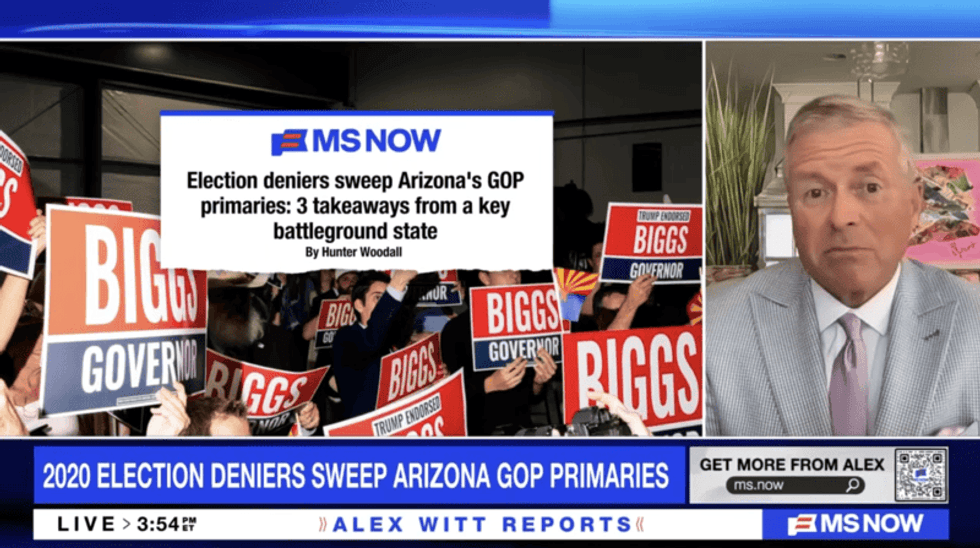
A former Republican lawmaker lamented recent election victories by MAGA candidates in Arizona during a new interview on MS NOW, warning that it could lead to a world of hurt for the party in the midterms. Charlie Dent, a former Republican lawmaker from Pennsylvania, told MS NOW's Alex Witt that the recent victories of candidates like gubernatorial candidate Andy Biggs, a Republican congressman who supported President Donald Trump's efforts to overturn the results of the 2020 election, and Mark Lamb, a Trump-endorsed candidate to replace Biggs in the House who faced a sexting scandal ahead of the primary, could weigh on the party going forward. "It doesn't help, and it makes it much harder for ... not just Arizonans, but Republicans generally to win general elections," Dent said. Dent's comments came at a time when Republicans are gearing up for a tough midterm season. Democrats have won a slew of statewide races since Trump's second term began, prompting some analysts to suggest the party could win back both the House and Senate in November. However, some analysts also worry that Trump may be trying to blunt those gains through illicit means. For instance, Trump recently gave a national address about alleged foreign interference in the 2020 general election, which some saw as the president laying the groundwork to contest the upcoming election results if Republicans suffer steep losses. Dent said the recent MAGA election victories put Republicans in a position to lose more than they gain. "Arizona has done this before, by the way, with Kari Lake and other nominees who are simply repulsive to a lot of, I'll say. To mainstream voters, those more centrist voters, independents, [they are a] total turn-off," Dent said. "So, election deniers, they might please the president in some elements of the base. But republicans end up losing far more than they gain." "I never quite understood it," he added. "I don't know when Arizona Republicans are going to learn their lesson. They haven't had a lot of success statewide since Governor [Doug] Ducey. And so, it looks like they're [going to] have another bad year."
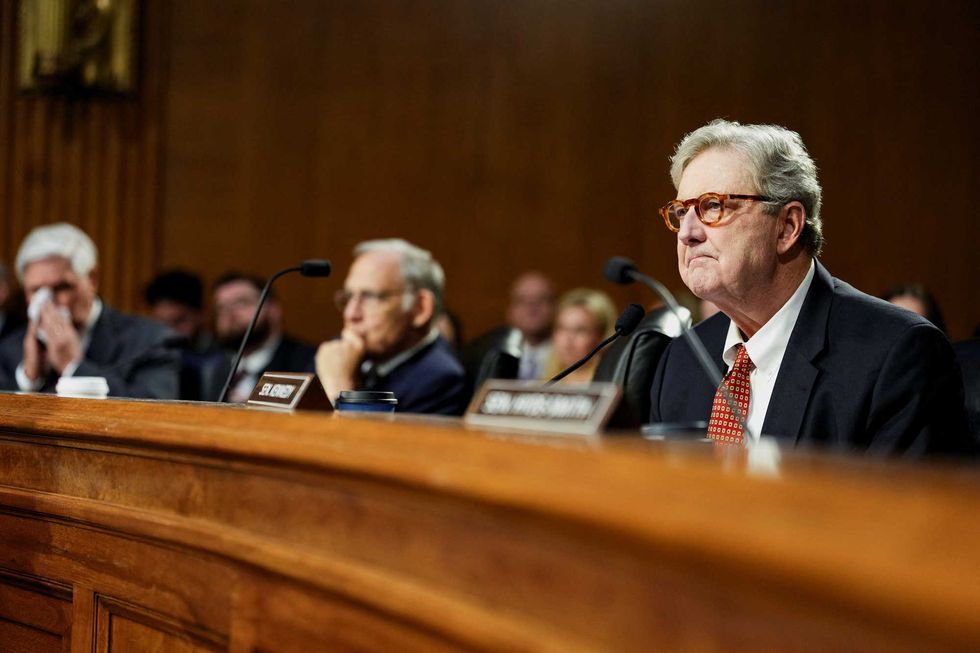
A MAGA Senator took to the airwaves to call out President Donald Trump for hypocrisy. Sen. John Kennedy (R-LA) admitted on "Face the Nation" Sunday that he was not "comfortable" with Trump's newly announced and already problem-laden nuclear deal."We're bombing a country to keep'm from getting a nuclear weapon," said Kennedy. "But we're signing a deal with another country...that the world perceives as possibly, someday leading to a nuclear weapon."The countries, of course, are Iran — which Trump ostensibly started to dismantle their nuclear program — and Saudia Arabia, the nation Trump wants to allow to enrich uranium.The U.S. struck the deal Wednesday but hit a snag over the Saudi government's relationship with Israel. Less than 24 hours after announcing the deal, Trump added a condition that the Saudis normalize those relations. Experts warn the deal could trigger a cascade of nuclear ambitions across the Middle East, The Wall Street Journal has reported, and critics note the Saudis gave Trump's son-in-law Jared Kushner's private equity firm $2 billion."Face the Nation" host Margaret Brennan noted Sunday that any deal would have to be approved by Congress, which prompted Kennedy to list off his concerns. "The world's on a hair trigger," Kennedy said. "The world looks at what's going on in Ukraine, the Middle East, the world looks at America's relationship now with Europe."He added, "People are scared." The Louisiana lawmaker is hardly the first U.S. senator to vent frustration with Trump this week. White House demands that Majority Leader Sen. John Thune (R-SD) do more to pass the SAVE America Act — a non-citizen voting ban critics describe as redundant and dystopian — have infuriated GOP members of the Senate. "Instead of pointing the finger at Republicans," Thune said, "they might think about going after the people who are stopping it on the floor, which is the Democrats."Sen. Thom Tillis (R-NC) added, "I have 1000 percent confidence in Thune, and anybody in the White House who thinks he's not a good leader isn't qualified for their job.""This idea that he can just command members of the Republican conference to get in line is just a fantasy," responded Sen. John Cornyn (R-TX). “It’s creating a circular firing squad for Republicans.”Kennedy himself added, “John can’t put a gun to people’s heads."