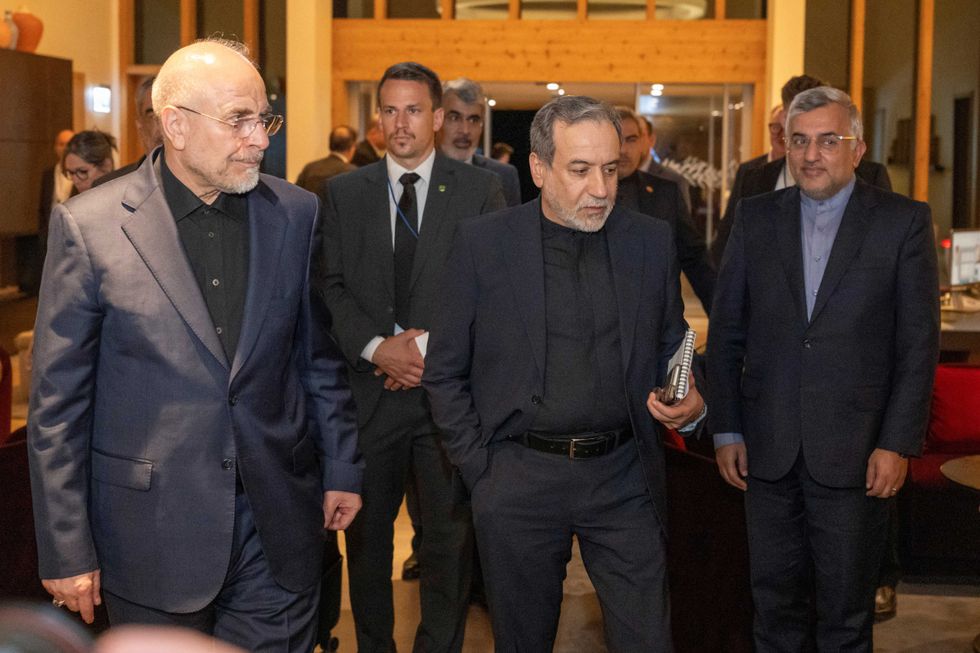
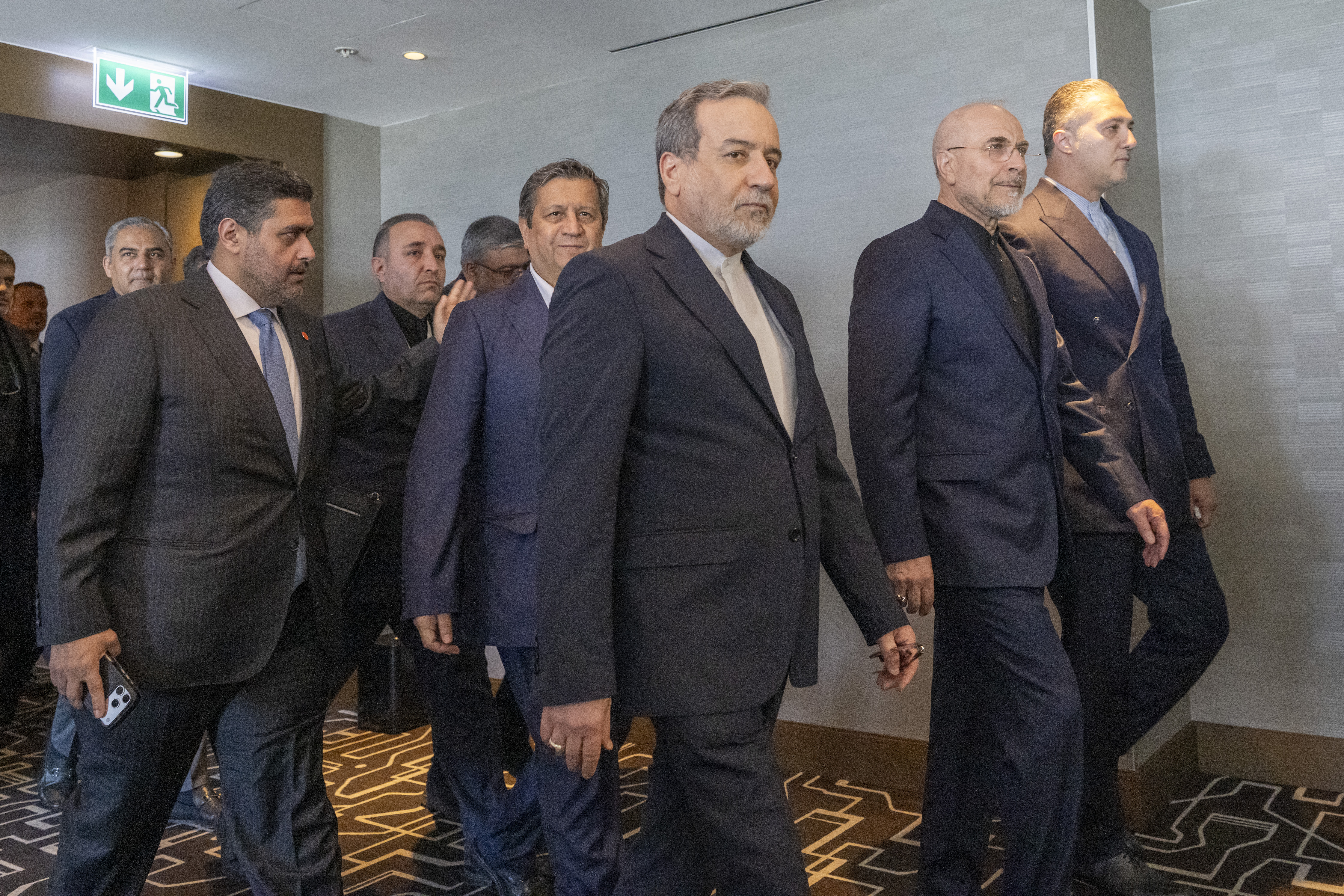
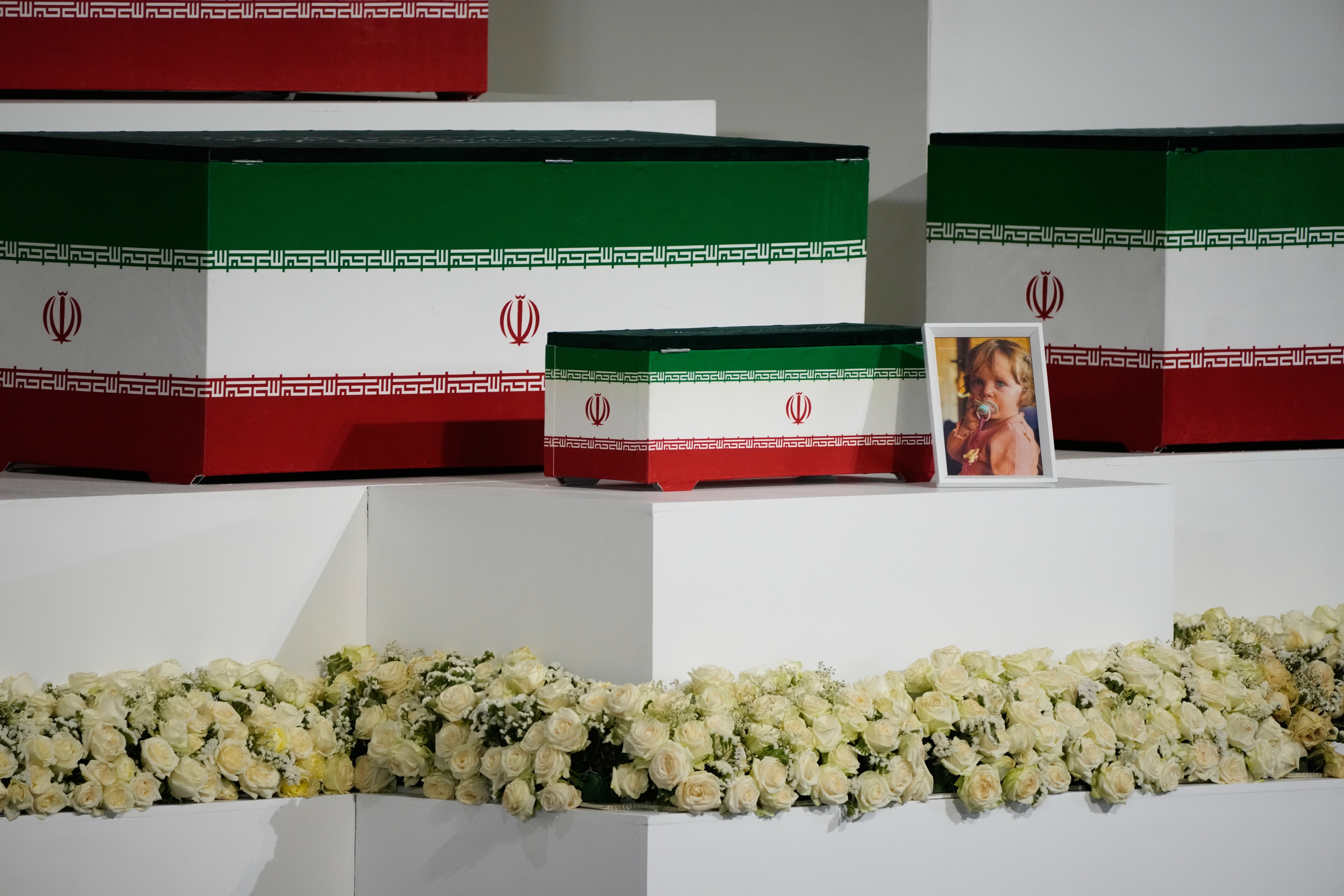
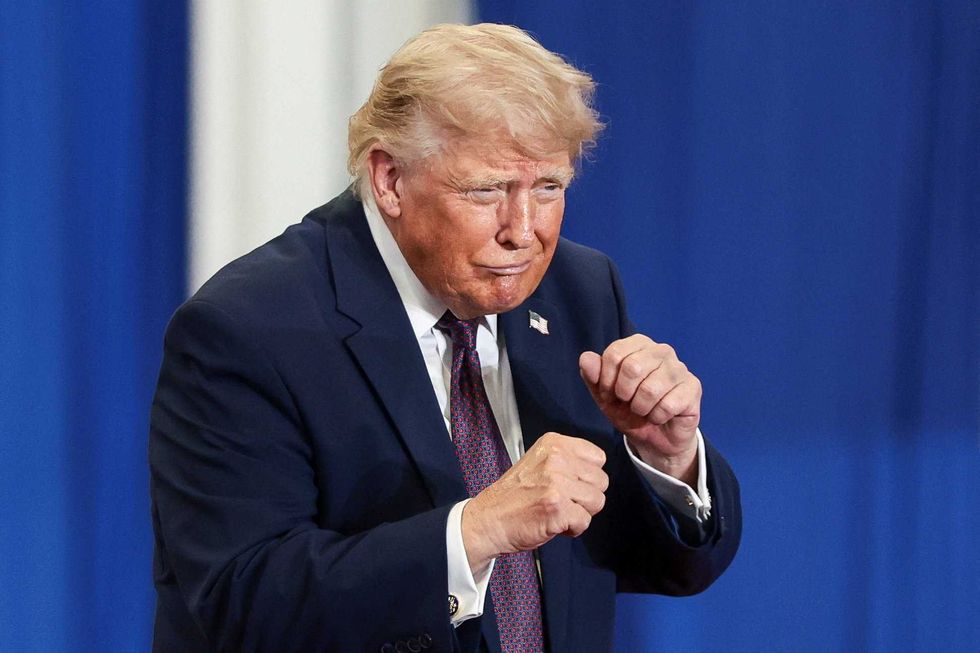
Trump administration officials reportedly believed that the Israeli government intended to assassinate Iran’s top negotiators—including the country’s foreign minister—during peace talks with the US in an effort to sabotage diplomatic progress.The New York Times reported Thursday that “American concerns about the targeting of two particular Iranian officials—Abbas Araghchi, Iran’s foreign minister, and Mohammad Bagher Ghalibaf, the speaker of the Parliament—spiked during delicate ceasefire negotiations that began in April.” In response, the US “went so far as to ask other countries in the region to warn Iran about the possibility Israel could target the two officials,” according to the Times, which cited unnamed current and former American officials.The US and Israel have killed dozens of top Iranian officials since launching their illegal joint war in late February. But the allied countries reportedly removed Araghchi and Ghalibaf from their target list in late March, opening the possibility of high-level negotiations to end the war.But Israel remained bent on targeting the negotiators, according to the Times, whose reporting was later corroborated by The Washington Post.The Times detailed one dramatic incident in April, when Ghalibaf was planning to travel to Pakistan’s capital to meet with US Vice President JD Vance:Pakistani fighter jets escorted the Iranian airplanes carrying a delegation of more than 70 Iranians from the border of Iran to Islamabad and back again when the session was over.But on the way back to Tehran, an Israeli security threat emerged.Iran’s security forces notified the plane carrying Mr. Ghalibaf back to Tehran that they had picked up intelligence that Israel planned to attack the plane and that two Israeli fighter jets had entered Iran’s airspace from its western border near Iraq, the two officials said.Mahdi Mohammadi, a senior adviser for Mr. Ghalibaf, who accompanied him to Islamabad, confirmed this account on his social media page. The plane made an emergency landing in the city of Mashhad, Iran’s closest airport to the Pakistani border, and the Iranian delegation traveled some eight hours by land back to Tehran, Mr. Mohammadi and the two officials said.The Post reported that “cracks emerged” between the US and Israeli approaches to the war following Israel’s assassination of top Iranian national security official Ali Larijani in March.“They’ve wiped out everybody,” Trump told reporters in late March, suggesting Israel’s assassination campaign was making it difficult to find potential negotiating partners.Trita Parsi, executive vice president of the Quincy Institute for Responsible Statecraft, wrote in response to the new reporting that “Israel is a state that, on paper, is a US partner, but in reality is so extreme in its obsession to undermine US diplomacy that it even tries to assassinate those the US engages with in crucial negotiations.”“I can’t recall a government as terrified of peace as the one running Israel,” Parsi added.At present, the Israeli government—led by Prime Minister Benjamin Netanyahu—is endangering tenuous US-Iran peace talks with its continued occupation of and assault on Lebanon, which Iran has highlighted as a key factor in the negotiations.Visiting occupied southern Lebanon earlier this week, Netanyahu declared to Israeli troops that “our insistence is that we will not leave... until the threat is removed.”Parsi wrote earlier this week that “beyond his long-standing desire to use American force to subjugate Iran to Israeli domination and achieve a regional balance favorable to Israel,” Netanyahu “now also has stark political and personal reasons to restart the war” with Iran.“The [US and Iran’s memorandum of understanding] has come at a steep political cost for Netanyahu,” wrote Parsi. “His prospects for reelection in October are weaker than they have been in months. Once seen as the Israeli leader uniquely capable of delivering President Trump, he now confronts the prospect that both the war and the ensuing diplomacy will leave Israel in a strategically weaker position—undermining the very case he has made for his leadership.”“And of course,” Parsi added, “if he loses the elections, he will likely spend the next few years in jail, as he will lose his immunity as prime minister and face trial over corruption charges.”The story was published in partnership with Common Dreams, read the original here.
The country's theocracy hopes to see millions flood the streets of the capital beginning Saturday in scenes reminiscent to the burial of the late Supreme Leader Ayatollah Ruhollah Khomeini in 1989.
Majdal Zoun, south Lebanon — The Israel Defense Forces revealed on June 19 that it had discovered an Iranian-financed and designed Hezbollah tunnel in the heart of this town that can be used to launch lethal drones into Israel. The IDF blew up the drone factory and tunnel. An IDF official told me, “It took them […]
Israel attempted to kill Iran’s negotiators on their plane after talks between the U.S. and Iran concluded in Pakistan, The New York Times reported. The attempt occurred […]
In a 6-3 decision breaking on partisan lines, the Supreme Court ruled in Trump v. Slaughter that Trump can fire Federal Trade Commissioners and other federal agency directors without cause. The ruling overturns longstanding Supreme Court precedent and express statutory instruction that combined to protect the political independence and subject matter expertise of federal agencies for over 90 years.The ruling presents a novel reading of a president’s Constitutional duty to “take care that the laws be faithfully executed,” expanding that power for a rogue president hellbent on breaking laws instead of executing them. As Justice Sotomayor put it, “The Court… is elevating (Trump) above his once-coequal branches by transforming a duty to take care that the laws be faithfully executed into a license to act in defiance of those very laws.”An activist Roberts Court has now written into existence an all-powerful unitary executive despite elaborate instructions in art. I, II and III to keep the three branches of government separate and equal. Rejecting federal laws that restrict a president’s removal of agency directors to for-cause removal, SCOTUS has made the president all powerful and Congress less relevant, while arrogating scientific and technical questions to itself.Trump’s corporate donors can now choose their own regulatorsBefore republicans on the bench rewrote it this week, the Federal Trade Commission Act stated that a President could only remove a commissioner for “inefficiency, neglect of duty, or malfeasance in office.” That statute clearly and intentionally barred presidents from firing directors for partisan or corrupt reasons, and from punishing regulators who rule against a president’s corporate donor(s). Vesting a singularly authoritarian executive with unprecedented, expansive powers, the Supreme Court re-wrote federal laws to advance their own political narrative.Over two dozen federal agencies will be affected, covering everything from the financial markets, the commodities markets, and nuclear power. Agencies like the Federal Trade Commission, Federal Communications Commission, and the Securities and Exchange Commission were all Congressionally designed to be independent watchdogs, enforcers insulated from partisan whims. Now Trump can remove any commissioners who threaten to rule against his allies, assuring that his political supporters will be afforded preferential review, licensing, merger approvals and other rulings.With Trump’s new latitude to fire any agency head who threatens meaningful regulation, his corporate donors have been effectively empowered to choose their own regulators. Federal laws passed to protect human health, finance, banking, communications, workplace safety, and clean air, soil and water have been rendered functionally meaningless.Replacing science, expertise and merit with political fealtyCongressionally created and funded federal agencies serve express, statutory purposes written to safeguard the American public. The Supreme Court had protected agency autonomy and expertise dating back to 1935, ruling that some degree of autonomy was necessary for federal agencies to meet specific scientific, economic, communications, trade, health, and environmental mandates. Federal agencies were never meant to be a president’s personal toys with which to reward donors and cronies.For a president in the habit of accepting lavish gifts and cash from foreign governments, along with hundreds of millions from domestic supplicants, finding even more room for self-dealing, corruption and political favoritism must be heady. For the rest of us, it’s dangerous. We actually need competent people to run the federal government, even in its post-DOGE watered down state.If Trump declares that every home must be heated by dirty coal, the head of the Energy Commission must try to effectuate that command no matter the harm to Americans’ lungs. If Trump declares that particulate matter, fossil fuels and the widespread use of Monsanto is good for the environment, any EPA director who contradicts him with cancer and death statistics will be silenced through removal. It’s governance by full Idiocracy.A know-nothing, anti-science president can now follow his gutTo every American outside the Fox News propaganda bubble, Trump has demonstrated astonishing incompetence on all fronts. From economically illiterate tariffs to our defeat in Iran, sprinkled with comically disastrous results in between, an ignorant and arrogant “I follow my gut” Trump revels in rejecting science and expertise as Americans pay the price.The only thing saving the nation from complete chaos and disaster to date is that several federal agencies had retained some level institutional competence despite Trump (and Musk’s) best efforts to dismantle them.
President Donald Trump called himself the “best president in the history of Israel” on Thursday as his relationship with Israeli Prime Minister Benjamin Netanyahu continues to strain amid the unresolved Iran war. During an interview with CNBC host Joe Kernen, Trump boasted that he has been the greatest ally of Israel in its most challenging […]