

Monday's Summary
This briefing analyzes the news climate of the previous 24 hours, ending April 19, 2026. Today’s report evaluates a period of high-stakes military escalation in the Middle East, fluctuating global energy markets, and significant friction between the executive branch and religious and judicial institutions.
Where the Narratives Split
The most striking divergence in the last 24 hours involves the framing of the escalating conflict in the Middle East. High-consensus reporting confirmed the seizure of an Iranian vessel and the continued blockade of the Strait of Hormuz. However, right-leaning outlets focused almost exclusively on the tactical success and the "strength" of the administration's military response. Conversely, left-leaning and centrist financial outlets focused on the "setbacks" to global trade, noting that Friday’s optimism regarding the opening of the Strait has been erased by the new round of hostilities, leading to a sharp rise in Brent crude prices.
Furthermore, the domestic reaction to the war has created a "split-screen" narrative regarding the Papacy. Left-leaning outlets characterized the friction between Trump and Pope Leo XIV as a political crisis that could alienate Catholic voters. Right-leaning outlets mitigated this narrative by focusing on Vice President JD Vance’s respectful rhetoric toward the Pope, framing the administration’s stance as one of prayerful resolve rather than pure hostility. Finally, the intense focus on the Supreme Court’s "intellectual honesty" found in left-leaning outlets was virtually non-existent in the right-leaning viral cycle, which remained dominated by the kinetic developments of the Iran war.
Trump Says Iran 'Can't Blackmail' United States, After Ships Come Under Fire in Strait of Hormuz
President Donald Trump said that the United States will not be "blackmailed" after the Iranian military has once again proclaimed that the Strait of Hormuz will be closed and allegedly fired on multiple vessels on Saturday. The post Trump Says Iran ‘Can’t Blackmail’ United States, After Ships Come Under Fire in Strait of Hormuz appeared first on Breitbart.
‘It did not go well for them’: U.S. seizes Iranian cargo ship after ‘blowing a hole’ in its engine room, Trump says
'We have full custody of the ship, and are seeing what's on board!'
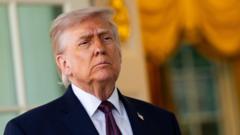
Why and how is US blockading Iranian ports in Strait of Hormuz?
Donald Trump says that the US is blockading the Strait of Hormuz. What does this mean in practice?
Left-Leaning Media's Perspective
- Judicial Integrity and Historical Narrative: Outlets focused heavily on a recent address by Justice Clarence Thomas at the University of Texas, criticizing his characterization of the Progressive Era. The narrative centers on a perceived "hard-right" ideological shift within the Supreme Court, linking the rhetoric of Justices Thomas and Alito to broader concerns about the erosion of labor rights and social safety nets.
- The Trump-Vatican Rift: Significant attention was paid to the public "clash" between President Trump and Pope Leo XIV. Coverage framed the Pope’s criticism of the Iran war as a potential turning point for the American Catholic voting bloc, highlighting the tension between the administration’s foreign policy and traditional religious leadership.
- Economic Volatility: Reports emphasized the 6% jump in oil prices following the failure of the Strait of Hormuz to remain open to tanker traffic. The focus remained on the impact on American consumers, with skepticism regarding the administration's claims that gasoline prices have already peaked.
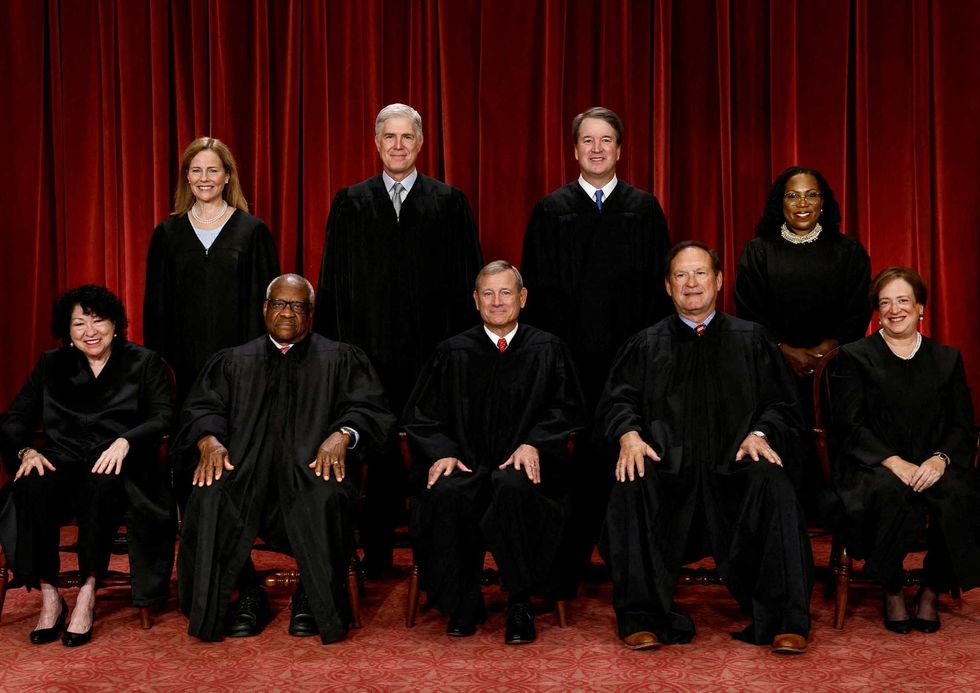
The worst Supreme Court Justice ever
I’ve long assumed that Samuel Alito was the worst. Alito — who authored the majority opinion in Dobbs v. Jackson Women's Health Organization (2022), the case that ended constitutional abortion rights by merely asserting that the high court’s prior opinion in Roe v. Wade (1973) was wrongly decided; who accepted a 2008 luxury fishing trip to Alaska, including private jet travel, from hedge fund billionaire and GOP donor Paul Singer yet failed to disclose it on Alito's financial forms and didn’t even recuse himself from decisions involving Singer’s subsequent business before the Supreme Court; who hoisted an inverted American flag outside his Virginia home shortly after the January 6 Capitol riot, a symbol of support for Trump's false claims of a stolen 2020 election — has the moral and intellectual stature of a poisonous toad. But I’ve come to revise my view of the court’s worst Justice.Clarence Thomas is 77 years old. He has now served on the Supreme Court for over 34 years, making him the longest-serving member of the Court. He is a bitter, angry, severe hard-right, intellectually dishonest, ideologue. After reading his latest thoughts on America, I’ve concluded Thomas is even worse than Alito. Last Wednesday, Thomas gave a rare public address at the University of Texas in Austin that began as a banal tribute to the Declaration of Independence before degenerating into a misleading screed against progressivism. “At the beginning of the twentieth century, a new set of first principles of government was introduced into the American mainstream,” Thomas intoned. “The proponents of this new set of first principles, most prominently among them the twenty-eighth president, Woodrow Wilson, called it progressivism.”Thomas went on to blame progressives for the worst crimes of the 20th century, insisting that “Stalin, Hitler, Mussolini, and Mao” were all “intertwined with the rise of progressivism,” as was “racial segregation,” “eugenics,” and other evils. This is pure rubbish. In reality, America’s Progressive era emerged at the start of the 20th century from the corruption and excesses of America’s first Gilded Age (we’re now in the second, if you hadn’t noticed) — its record inequalities of income and wealth, its “robber barons” who monopolized industries and handed out sacks of money to pliant legislators, it’s dangerous factories and unsafe working conditions, its violent attacks on workers who tried to form unions, its corporate control over all facets of government, its widespread poverty and disease, and its corrupt party machines. In many ways, the Progressive Era — whose most prominent leader was Republican president Theodore Roosevelt, not Woodrow Wilson, by the way — saved capitalism from its own excesses by instituting a progressive income tax, an estate tax, pure food and drug laws, and America’s first laws against corporate influence in politics.Then, under Teddy Roosevelt’s fifth cousin (Franklin D.), came Social Security, the 40-hour workweek (with time-and-a-half for overtime), the right to form unions, and laws and regulations that limited Wall Street’s ability to gamble with other people’s money. Clarence Thomas got it exactly backwards. Had we not had the Progressive Era and its reforms extending through the 1930s, America might well have succumbed to fascism — as did Germany under Hitler, and Italy under Mussolini, or to communist fascism, as did Russia under Stalin. Progressive and New Deal reforms acted as bulwarks against the rise of fascism in America.In fact, it’s been the demise of such reforms since Ronald Reagan that have opened the way to Trumpian neo-fascism. Over a third of American workers in the private sector were unionized in the 1950s, giving them bargaining leverage to get higher wages and better working conditions. Now, fewer than 6 percent are unionized, which has contributed to the flattening of wages, a contracting middle class, inequalities of income and wealth rivaling the first Gilded Age, and an angry and suspicious working class that’s become easy prey for demagogues. Wall Street has been deregulated — allowing it to go on gambling sprees such as the one that produced the financial crisis of 2008, which claimed millions of working peoples’ homes, savings, and jobs. America’s social safety nets have become so frayed that almost a fifth of the nation’s children are now in poverty. Yet Reagan, George W. Bush, and Trump have slashed taxes on the rich and on big corporations and have allowed giant corporations to merge into giant monopolies rivaling the trusts of the first Gilded Age. And Trump has ushered in an era of corruption the likes of which America hasn’t seen since that earlier disgraceful era. Thomas claims that “The century of progressivism did not go well.” Baloney. It helped America create the largest middle class the world had ever seen, while also extending prosperity to millions of Black and brown people.
Pope Leo and President Trump Clash Over Iran War
President Donald Trump lashed out at Pope Leo XIV after his criticism of the war in Iran and the tangling of church and state shows the key voting block of American Catholics is slipping for Trump. NBC’s Raf Sanchez reports in this week’s Sunday Focus.
Oil prices jump after Strait of Hormuz setbacks
Data: Financial Modeling Prep; Chart: Ben Geman/AxiosOil prices are up around 6% Sunday evening after the weekend brought fresh escalation of the U.S.-Iran conflict.Why it matters: The jump after international markets opened reverses a large chunk of the sharp decline Friday, when President Trump and Iran's foreign minister claimed the Strait of Hormuz was opening to tanker traffic.The longer oil transit remains throttled, the longer crude prices will remain high.That affects U.S. drivers, because the county is deeply tethered to the global oil market despite being the world's largest producer.The latest: The global benchmark Brent crude is up to $95.42 Sunday night, while WTI, the main U.S. reference, is at $89.77.Catch up quick: American forces seized an Iranian-flagged cargo ship after it tried to bypass a U.S. naval blockade in the Gulf of Oman, President Trump said Sunday.It's the first seizure and the first ship fired upon since the U.S. blockade went into effect last Sunday — in response to Iran effectively holding the Strait or Hormuz hostage since the war began on Feb. 28.And Iran said on Saturday that the Strait is again closed to traffic following threats of such action if the U.S. continued its blockade of the shipping channel.Reality check: Even before the weekend's developments, analysts were questioning whether the Friday announcements were anywhere near enough to provide ship owners the confidence needed to resume transit.What they're saying: U.S. average gasoline prices may not return to pre-Iran war levels under $3-per-gallon until next year, Energy Secretary Chris Wright said Sunday morning."But prices have likely peaked, and they'll start going down, certainly with a resolution of this conflict, you'll see prices go down," he said on CNN's "State of the Union."Wright added that under $3 is "pretty tremendous" in inflation-adjusted terms. He argued the Trump administration has successfully managed the historic disruption.By the numbers: U.S. gasoline prices reached their highest point so far this year at $4.16 per gallon earlier this month and now are at $4.05, per AAA data.Wright said the highest point this year is still about $1 below the Biden-era peak in 2022. (Per AAA, the 2022 peak was about $5.02, compared to $4.16 this month.)What we're watching: Vice President JD Vance will lead a U.S. delegation for another round of talks with Iran in Islamabad before the ceasefire is scheduled to end on Tuesday night, two U.S. officials told Axios.The talks could provide an eleventh hour opportunity to reach a deal, or at least extend the ceasefire — though Iran has yet to confirm its participation and is concerned this is all subterfuge to provide cover for a U.S. surprise attack.
Right-Leaning Media's Perspective
- Military Decisiveness in the Strait: Coverage highlighted the U.S. Navy's seizure of an Iranian-flagged cargo ship. Narrative focus was placed on President Trump’s "tough" stance, specifically his description of stopping the vessel by "blowing a hole in the engine room" to prevent the bypassing of the naval blockade.
- Resistance to "Blackmail": Outlets amplified the President’s messaging that the United States will not be "blackmailed" by the Iranian regime's threats to close the Strait of Hormuz. The reporting framed the blockade and subsequent ship seizure as a necessary response to Iranian aggression against merchant vessels.
- Vance’s Diplomatic Balancing Act: While the President engaged in a public feud with the Pope, right-leaning outlets highlighted Vice President JD Vance’s "olive branch" to the Vatican. Coverage portrayed Vance as a bridge-builder, expressing gratitude for the Pope’s efforts to ease tensions even as the administration maintains its military posture.
Trump Says Iran 'Can't Blackmail' United States, After Ships Come Under Fire in Strait of Hormuz
President Donald Trump said that the United States will not be "blackmailed" after the Iranian military has once again proclaimed that the Strait of Hormuz will be closed and allegedly fired on multiple vessels on Saturday. The post Trump Says Iran ‘Can’t Blackmail’ United States, After Ships Come Under Fire in Strait of Hormuz appeared first on Breitbart.
US Seizes Iranian Cargo Ship Trying to Run Strait of Hormuz Blockade; Trump Says Navy Stopped Ship by ‘Blowing a Hole in the Engine Room’
The high stakes confrontation over control of the Strait of Hormuz between the United States and the Islamist Iranian regime took another step up the escalation ladder Sunday with the U.S. The post US Seizes Iranian Cargo Ship Trying to Run Strait of Hormuz Blockade; Trump Says Navy Stopped Ship by ‘Blowing a Hole in the Engine Room’ appeared first on The Gateway Pundit.
JD Vance ‘grateful’ to Pope Leo for easing tensions amid feud with Trump over Iran war: ‘He will be in our prayers’
Vance's olive branch came after the first US pontiff weighed in on his public spat with Trump earlier in the day.


