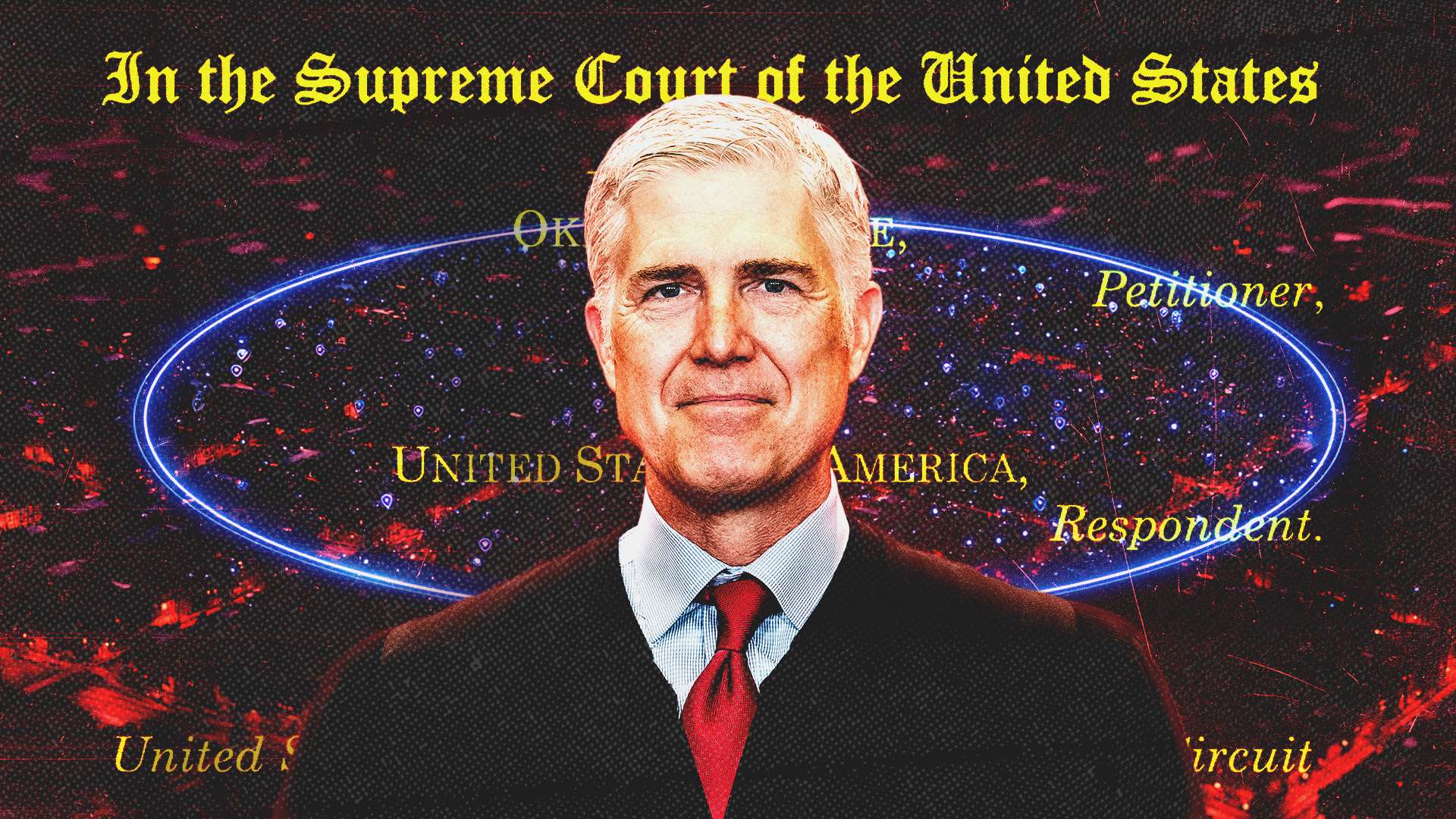
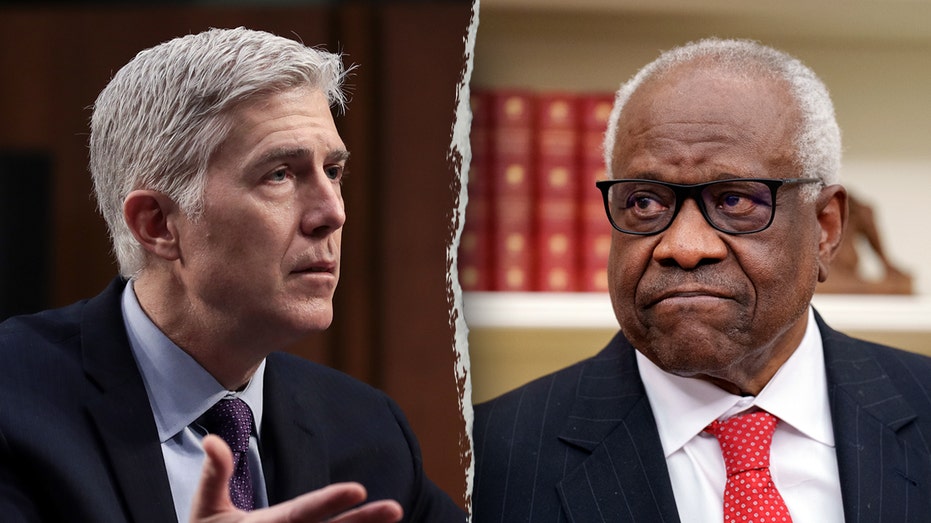
In Chatrie, Neil Gorsuch Reiterates His Critique of 2 Dubious Fourth Amendment Doctrines
Center Right
The justice argues that the "reasonable expectation of privacy" test and the third-party doctrine are indefensible in theory and unworkable in practice.
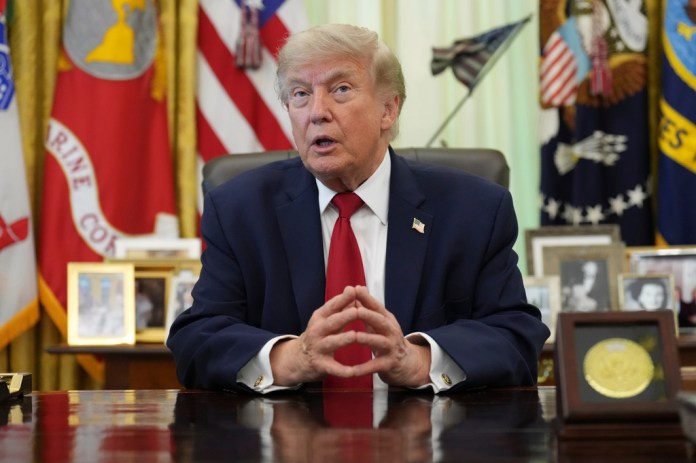
Two of the conservatives on the Supreme Court have sided with the three liberal justices to rule against the president's decision to fire Federal Reserve Governor Lisa Cook while a lawsuit continues.President Donald Trump has been trying to fire Cook since 2025 after she was accused of committing mortgage fraud through evidence gathered from the Federal Housing Finance Agency.'Today’s decision is an unprecedented incursion on the executive branch.'On Monday, Chief Justice John Roberts and Justice Brett Kavanaugh ruled against the president being allowed to fire Cook while the litigation continued. Four other conservative justices dissented."Not only the fact of independence but also the appearance of independence is key to the Federal Reserve’s design," wrote Roberts in the majority opinion.He went on to assert that the president had not followed due process in firing Cook, which he indicated should have included offering an explanation for her removal, allowing her to respond, and setting up a deadline for the response. However, he also said in a footnote that the president could fire Cook if he tried again and followed due process.The president responded in a post on Truth Social."The Cook Lawsuit, having to do with her suitability in sitting on the Board of the Federal Reserve, was sent back by the Supreme Court on a strictly procedural basis," Trump wrote, "we will take appropriate action immediately to make sure that someone who has committed wrongdoing will not be making vital decisions concerning the Welfare of the United States of America!"Roberts said the ruling was necessary to maintain the independence of the Federal Reserve and to assuage the public."Any change in that scheme must come from Congress, not the courts," Roberts continued. "That is why we cannot accept the government’s contentions in this case. To do so would allow the president to remove a member of the Federal Reserve at any time, for any reason, without any notice before, and without any judicial check after.”Justice Clarence Thomas called the arguments for the independence of the Federal Reserve unconstitutional."Today’s decision is an unprecedented incursion on the executive branch," Thomas wrote in the dissent."Many do not share the court’s rosy appraisal of the past century. But if the court prefers an independent Federal Reserve Board, then its issue is not with the president but with the Constitution," he added.RELATED: Warsh approved to replace Powell as Federal Reserve head — and even 1 Democrat supports him Cook responded in a statement Monday that accused the president of acting out of political motivation."It was an attempt to remove me on a manufactured pretext because I refused to bow to political pressure and continued to set interest rates based only on what would best serve the American people," she wrote.She has denied the allegations and has not been charged with any crime.While the president has been demanding that the Federal Reserve lower interest rates, he has backed off on that campaign after some metrics showed inflation climbing to 4%.Like Blaze News? Bypass the censors, sign up for our newsletters, and get stories like this direct to your inbox. Sign up here!
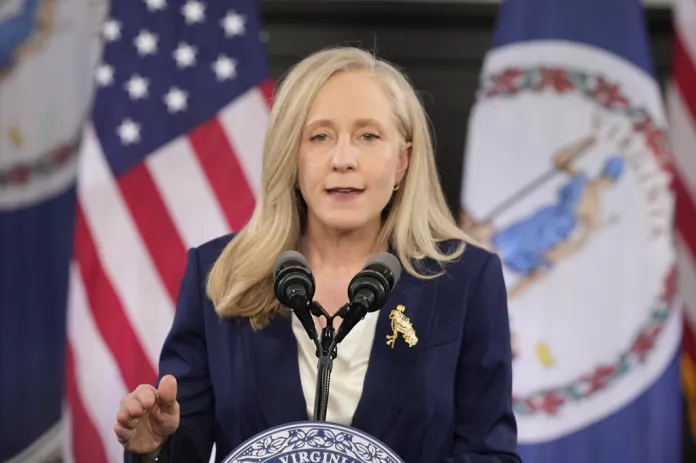
Gov. Abigail Spanberger (D-VA) returned Virginia’s state budget to the General Assembly on Monday with 14 proposed amendments ahead of the state’s fiscal cliff this week. The state’s House of Delegates and Senate will have to act on the amendments to the state’s budget and possibly send it back to Spanberger for her final signature […]
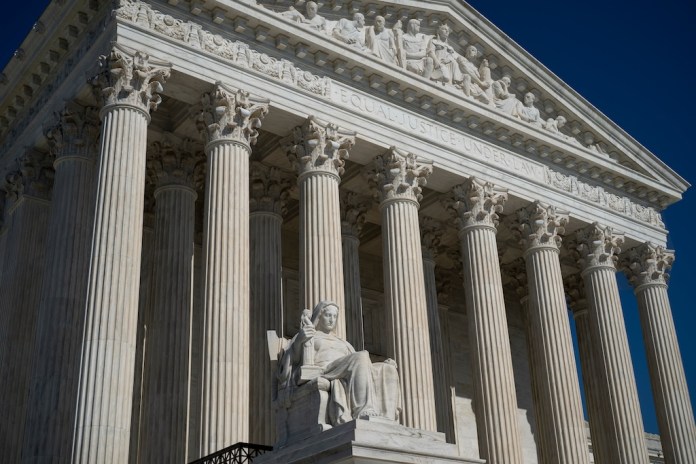
The Supreme Court ruled Monday that law enforcement’s use of a geofence warrant to obtain cellphone location data constitutes a search under the Fourth Amendment, marking a significant privacy ruling while stopping short of declaring the investigative tactic unconstitutional. In a 6-3 decision written by Justice Elena Kagan, the justices vacated a lower court ruling involving Virginia […]
At issue in Trump v Cook is not whether Lisa Cook can appeal her removal, but rather where her position rests while the appeal is underway. Does she work for the govt? Or is she technically removed from govt, pending appeal? The Supreme Court ruled in favor of Lisa Cook remaining in her position as […]
The post Supreme Court 5-4 Ruling Creates Fourth Branch of Government – Trump v Cook appeared first on The Last Refuge.
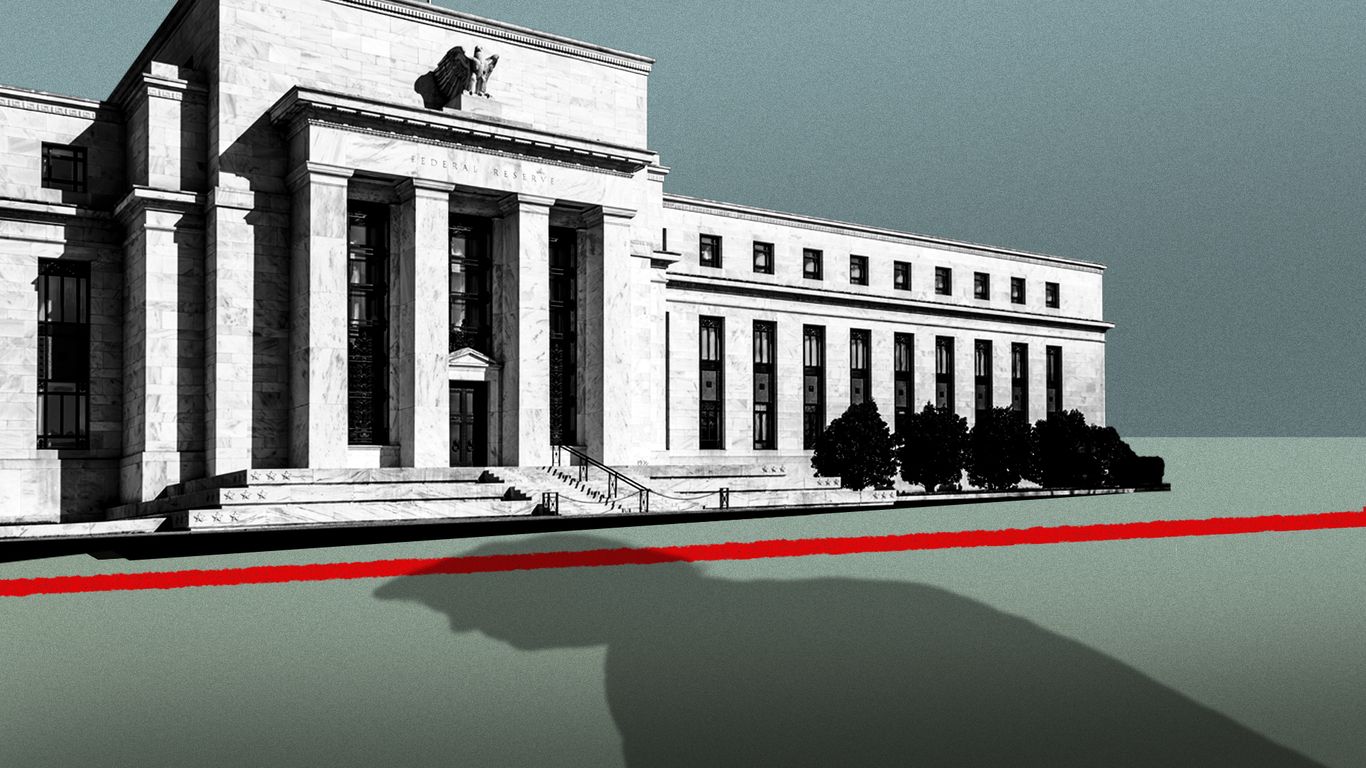
The Federal Reserve is different. That's the upshot of the Supreme Court's rulings Monday morning.Why it matters: President Trump can't fire Fed governor Lisa Cook for now, a 5-4 court majority held, alongside an opinion that offers a sweeping defense of the central bank's independence. But the ruling is narrow enough that Trump and future presidents have latitude to fire Fed governors if they can establish legal cause more carefully than Trump did in the Cook case.The decision came alongside a separate, historic ruling that cleared the way for Trump to fire leaders of the Federal Trade Commission and swept away nearly a century of protections shielding officials at most other independent agencies from presidential removal.Catch up quick: Trump said he fired Cook, whose term is scheduled to extend until 2038, for cause, citing alleged misstatements in her mortgage applications.Courts ruled that she could remain at the Fed as a governor pending resolution of whether that action was legal — which the Supreme Court has now affirmed.Driving the news: "Congress limited the President's powers to remove Governors for good reason," the decision, written by Chief Justice John Roberts, says — namely, the independence of monetary policy."Any change in that scheme must come from Congress, not the courts," Roberts wrote, saying that to accept the government's arguments "would allow the President to remove a member of the Federal Reserve at any time, for any reason, without any notice before, and without any judicial check after."He was joined by Justice Brett Kavanaugh and the court's three liberal justices.What they're saying: "No matter the precise definition of cause, or the scope of our review of any such determination, the President failed to accord Cook the procedural protections to which she was entitled by statute," Roberts wrote."Without such protections, she could not properly dispute the charges the President laid against her.""At a minimum, Cook was entitled to some explanation of the evidence at issue, some avenue for a response, and a deadline by which a response would be due."The big picture: Washington spent much of the past century insulating economic policymaking from election cycles. The Supreme Court on Monday blessed that model for the Fed, but seemingly ripped it apart for agencies overseeing everything from antitrust and consumer protection to labor and communications."If anything more is left of Humphrey's, we overrule it," Roberts wrote in the separate decision overturning the landmark 1935 Humphrey's Executor precedent, which had prevented presidents from firing leaders of many independent agencies without cause.The result is that the White House will wield greater influence over how many of the nation's economic rules are written and enforced — but not, for now, over the setting of interest rates.The intrigue: "This was never about mortgage documents signed years before I became a Federal Reserve governor. It was an attempt to remove me on a manufactured pretext because I refused to bow to political pressure and continued to set interest rates based only on what would best serve the American people," Cook said in a statement."I am grateful for this decision, not for my own sake, but for the sake of the American people, whose economic well-being depends on a central bank that answers to its mission, not political intimidation." What to watch: In a Truth Social post, Trump said the ruling was based on a procedural issue, not the merits, and vowed to "take appropriate action immediately" to renew his effort to remove Cook.
The Supreme Court ruled Monday that the Fourth Amendment protects an individual’s right to privacy when it comes to their phone location data.The justices ruled 6–3 to send a Virginia bank robbery case back to the lower courts for review in light of its decision. In 2019, Okello Chatrie was convicted of robbing a credit union after police saw him using his phone in the security camera footage of the bank. They then used a “geofence warrant,” which compels tech companies to provide law enforcement with data from all devices at a specific place and time, to identify Chatrie.Geofence warrants are regularly used, and let the government demand location data and records from anyone near a crime scene without needing to identify an individual target.Government lawyers argued that Chatrie did not have a “reasonable expectation” of privacy, since he had willingly shared his location with Google.But the Supreme Court rejected that argument. Justice Elena Kagan wrote the opinion for the majority, with conservative Justice Brett Kavanaugh and Chief Justice John Roberts joining the court’s liberals.“A cell-phone user is not to be viewed as sharing private information with third parties—which then can be freely passed on to the government—just by doing the ordinary things cell-phone users do,” Kagan wrote.Justice Sonia Sotomayor concurred, writing, “even short-term monitoring” of a person’s physical movements can provide “a wealth of detail about [his] familial, political, professional, religious, and sexual associations.”The ruling is a win for data privacy, and will make it harder for the federal government to access personal information stored in the cloud without getting a specific warrant.
Anti-abortion groups are urging the White House and congressional Republicans to permanently block Planned Parenthood from receiving Medicaid reimbursements before a temporary funding prohibition expires Saturday. President Donald Trump signed the One Big Beautiful Bill Act into law on Independence Day last year, temporarily preventing Planned Parenthood from receiving roughly $800 million in annual Medicaid […]