Conservatives must reclaim human rights leadership
Center Right
For decades, Democrats and progressives have sought to claim human rights as their own. They depicted conservatives as Cold War-obsessed, uninterested in either freedom or democracy. For many liberals, the Cuban Revolution was about human rights. So too were the Sandinistas in Nicaragua. Every Latin American dictator was a Republican friend; every revolutionary was an […]
Attempting to destroy Israel has brought defeat and disaster to every nation that tried; normalizing relations with Jerusalem has proved a boon to every country that signed the Abraham Accords.
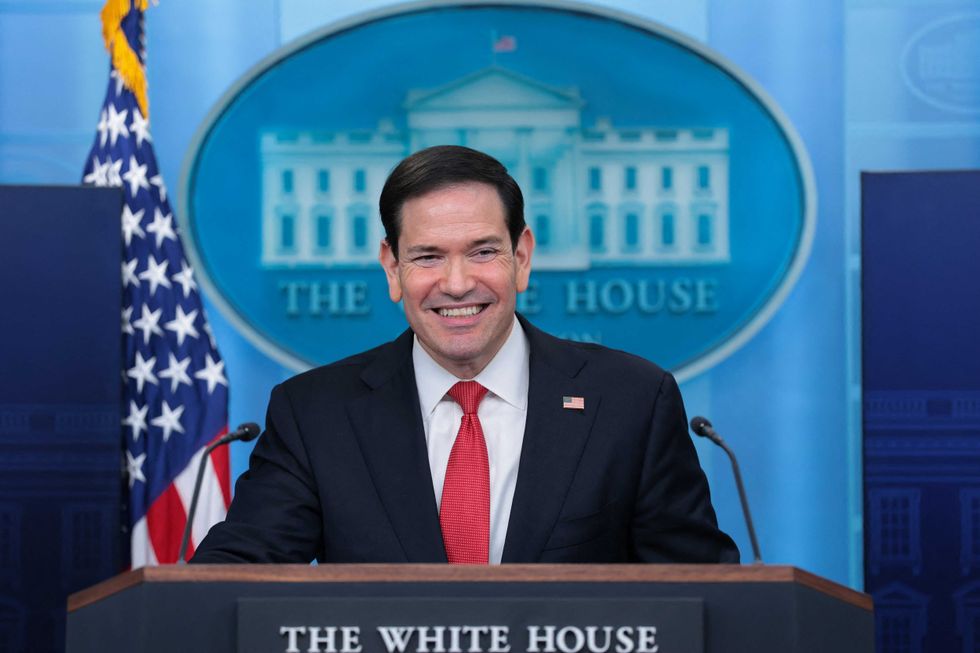
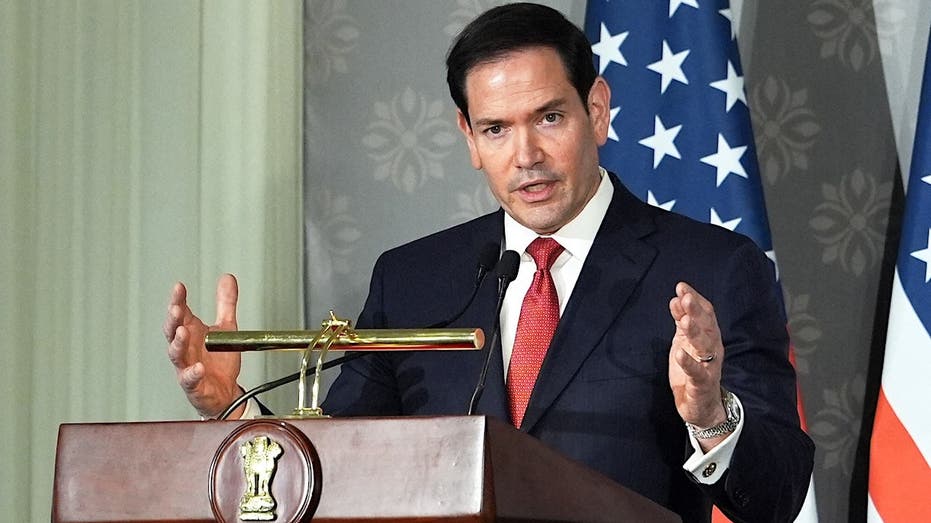
In recent months, there has been growing discussion of Secretary of State Marco Rubio’s presidential aspirations for 2028, with many speculating that he may be better positioned for a run rather than Vice President JD Vance, who was widely assumed heir-apparent until his political stock began dwindling as of late. But while support for the former has grown, not everyone is so optimistic about Rubio, with one conservative insider saying his leadership would result in “unmitigated disaster.”Speaking with the American Conservative, far-right commentator Ann Coulter explained why she’s in the “Never Rubio” camp. She began by acknowledging the buzz around him, saying, “You’ve seen it all over. For one thing, Trump was polling his donors. And as I mentioned briefly in the article, donors have the worst political judgment. And they’re all, ‘Oh, Rubio, Rubio, we love him!’”As evidence of this, she cited a party she recently attended in Palm Beach — home to President Donald Trump’s Mar-a-Lago resort — where she said she was the “only non-billionaire at the table.” Talking over the political future with these people, she claimed, was so disillusioning that she went home and wrote a book chapter entitled “I wrote this chapter when I realized how stupid rich people are,” because, she said, they have “the worst political judgement.” “I think the donors are smitten with anyone who goes around throwing around terms like ‘Sharia’ and ‘the Sunni’ and ‘the Caliphate’ and this and the other thing, because they are so separated from the concerns of ordinary people,” said Coulter. “And it makes both the half-wits like Rubio and his donors feel like big intellectual global strategists, striding the globe, rearranging things. But every time they rearrange things, it’s an unmitigated disaster.”In the same talk, Coulter also delved into Trump’s fight with Representative Thomas Massie (R-KY), who was just beaten in a primary by a MAGA-minded candidate backed by the president. Many have pointed out that this was a mistake that could end up losing the general election to the Democrats in November, and Coulter seemed to agree, admitting, “This Massie thing is the worst of Trump for various reasons.”Should Ed Gallrein, the Trump-approved candidate who beat Massie, win in November, says Coulter, the district will have gone from having who she called “the smartest member of Congress” to “the dumbest.” This happened, she said, because of the “Trump cult.”“There were tape recordings of these Massie rallies,” said Coulter, “and a guy stood up and said he opposed Massie. And Massie was magnificent. He talked to him for 15 minutes. He was cheerful. He was nice. But the guy’s main argument was, ‘Um, yeah, OK, I didn’t vote for war, but Trump knows more than any of us. He knows stuff you don’t know. He knows everything. Why don’t you just defer to him?’ This is a cult. This is absolutely a cult.”
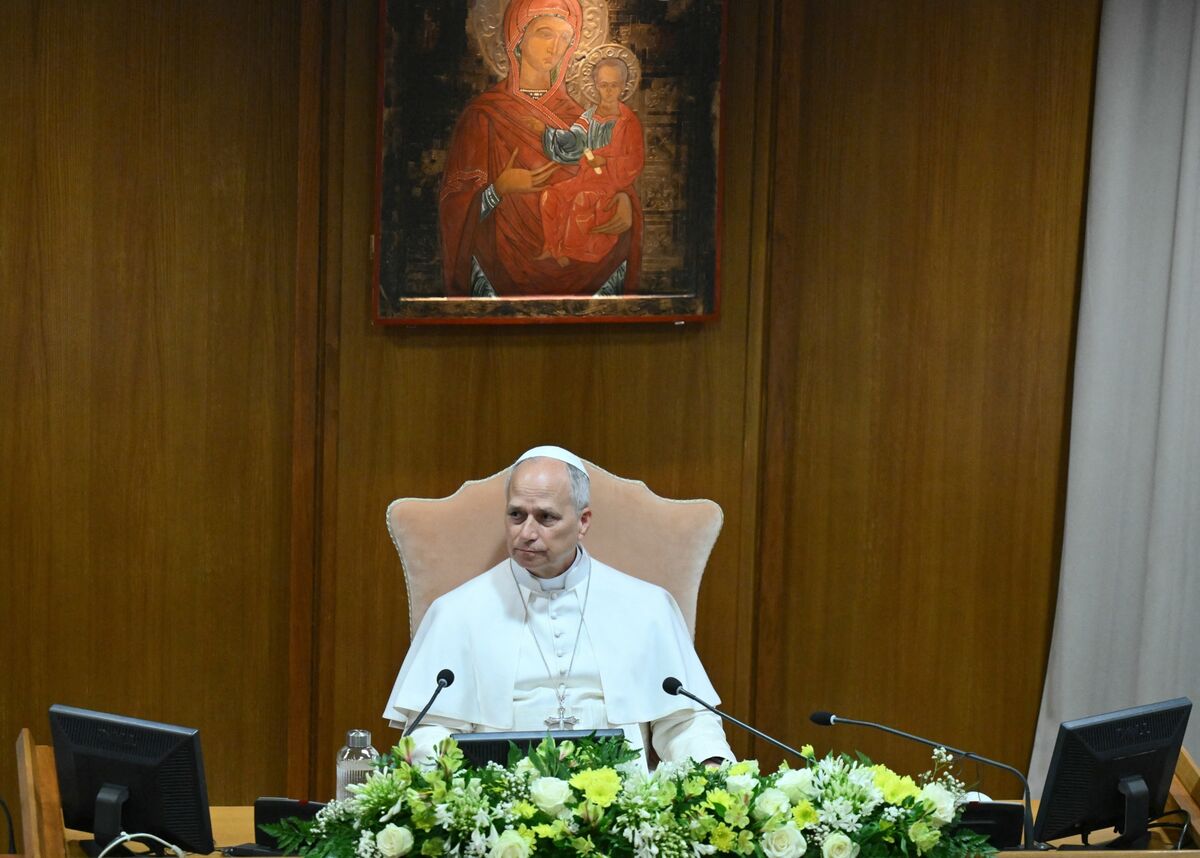
Pope Leo XIV issued the most significant document of his pontificate on Monday to address the sweeping impacts of the digital revolution and emerging technologies such as […]
Pope Leo XIV said artificial intelligence should be “disarmed” to protect humanity from its dangers, adding his voice to a heated debate over the extent to which governments should regulate a technology that is reshaping the world.
The fallout from Louisiana v. Callais has been nothing short of tragic, with terrible echoes of the past. As Reconstruction ended in 1877, states in the South either killed, expelled, or used other means to force out Black legislators. Over the last two weeks, freed from abiding by Section 2 of the 1965 Voting Rights Act, Southern states have rushed to redraw their district lines to ensure that members of Congress elected by Black voters can’t win reelection. We are in a new era of American democracy, particularly for Black Americans. The Republican Party now views Democratic Party electoral wins and policy success as an existential crisis that it must prevent by any means necessary. Crushing Black political power is therefore essential to the GOP, since African Americans overwhelmingly support the Democratic Party. And the current Supreme Court, more than any in decades, has not only removed virtually all constraints on policies that might negatively affect African Americans but actively looks to outlaw any public policy that might benefit Blacks. This era demands a new framework for Black politics—fresh strategies, tactics, leaders, and goals. We need a “Double Front” approach. And we should be clear-eyed: Even before Callais, the existing models of Black politics were growing stale. It’s worth explaining when and how Black politics lost its effectiveness. There has never been a singular Black political movement or African American ideology. Booker T. Washington and W.E.B. Du Bois famously quarreled. Du Bois’s own views shifted over the course of his life. The reality of the civil rights activism of the 1950s and ’60s was more complicated and messy than beautiful Martin Luther King speeches and smartly organized boycotts. But after the civil rights victories of the 1960s, a clear Black politics emerged and predominated for five decades. Aspiring Black leaders, who had earlier led from the pulpit or protests, sought and won political office, most commonly becoming either mayor or member of Congress in heavily Black areas. A network of Black organizations, such as the National Urban League and the NAACP, focused less on the mass protests of the civil rights era and more on behind-the-scenes lobbying and collaborating with those Black officials in office. Though they varied considerably, these organizations often became synonymous with a single famous leader, such as Jesse Jackson and Al Sharpton. And these leaders were often treated by the media and politicians as spokespeople for the entire Black population. These politicians, groups, and leaders aligned tightly with the Democratic Party, viewing it as the only vehicle to advance Black political goals. The results of this approach have been uneven. On the one hand, African American politicians became increasingly powerful within the Democratic Party, gaining committee chairmanships, the mayor’s office in some of America’s largest cities, Cabinet and judicial appointments, and finally, in Barack Obama, the party’s presidential nomination. These elected officials delivered major policy victories to Black Americans and the country as a whole, from local economic empowerment of Black communities to the Affordable Care Act. On the other hand, African Americans became a “captured minority,” the term invoked by Princeton political scientist Paul Frymer. Democratic Party officials knew that Black voters would back them no matter what, so they had little incentive to push hard for policies and programs that would help African Americans in particular. Electoral pressures led the Democratic Party to set an agenda that would appeal to swing voters in swing states—a very non-Black constituency.As the Democratic Party became increasingly concerned that advancing Black concerns turned off white voters, Black Democratic politicians and prominent activists faced a choice: advance in the party by downplaying and sidelining Black concerns, or advocate Black interests at the expense of their careers. Many chose the former. Contrary to conservative pundits who claim that he stoked racial conflict, Obama actually spoke far less about racial issues than his Democratic predecessors. Prominent activists shifted from pressuring Democratic politicians to being very defensive of them. Sharpton and others negotiated with mayors, presidents, and corporations, but grew unaccountable to Black America at large—operating more like celebrities than community activists. Over time it became difficult to distinguish the policies of Black and white mayors, as both were beholden to the police and corporations in their cities and thereby unwilling (and often lacking any real power) to advance policies to help rank-and-file Black Americans. The Congressional Black Caucus for a time earned its self-given moniker, the “Conscience of the Congress,” pushing the U.S. in radical directions, whether on enforcing civil rights or in the fight against apartheid in South Africa.
Two hundred fifty years ago this summer, our Founding Fathers created a new nation, as President Abraham Lincoln put it, “conceived in liberty and dedicated to the proposition that all men are created equal.” This Memorial Day, we should remember those who made the ultimate sacrifice and made its unlikely existence possible. America’s success wasn’t […]