Three people who observed federal immigration enforcement during the Trump administration’s sometimes-violent surge said in a federal lawsuit filed Friday the Department of Homeland Security illegally recorded them and revoked their status in the department’s trusted traveler programs.The suit, filed in the Southern District of California, says the administration violated a federal privacy law, administrative law and the First Amendment by targeting people who observed and protested aggressive immigration enforcement, including during the deadly operation in Minneapolis in January.The Electronic Privacy Information Center, a legal group that advocates for privacy issues related to technology, is also a plaintiff in the case.Amid a nationwide surge of immigration enforcement that has included federal agents shooting and killing protesters, observers and immigrants, opponents “did what anyone is supposed to do when they disagree with government action: They exercised their First Amendment rights” by assembling, protesting and recording DHS agents’ activity in public, the suit says.“In response, DHS decided to record the Americans who were peacefully observing its agents,” the suit says.Officers with the DHS agencies Immigration and Customs Protection and Border Patrol killed two observers, Renee Good and Alex Pretti, in Minneapolis in incidents 17 days apart in January.‘Driven home by ICE’ICE and Border Patrol agents used facial recognition technology, license plate readers and other technology to identify protesters and observers. The agents would then use that information in efforts to intimidate and retaliate against protesters, the suit says.Federal immigration officers addressed many legal observers by name, despite having never spoken to them. In Minnesota, legal observers tailing DHS agents in a car would commonly be led back to their own home addresses, according to the suit.“The experience … is so widespread that Minnesota residents have coined a term for it: being ‘driven home by ICE,’” the suit said.The practice shows that DHS is no longer following its own 2023 policy on facial recognition, the suit says. The department quietly removed the policy from its website — omitting it even from a set of archived pages — during President Donald Trump’s first month back in office, the suit says.The complaint argues that amounted to a policy change, which DHS did not conduct through the process agencies must follow under the Administrative Procedure Act.The department also retaliated against protesters and observers by revoking their status in DHS trusted traveler programs TSA Precheck and Global Entry, the suit says.Nicole Cleland, a Minnesota woman who is one of the individual plaintiffs in the suit, said Global Entry status was revoked three days after an encounter with a Border Patrol agent whom she was following at a safe distance, according to the suit.Chilling rightsThe suit alleges DHS’ actions have had a chilling effect on First Amendment-protected activity.Cleland has stopped observing DHS operations for fear of further retaliation, according to the suit.The two other individuals who brought the suit, Jacquelyn Ivey of South Carolina and Anna Walker of California, said they experienced “fear, anxiety and emotional distress” following their interactions with DHS officers.The suit also mentions activity in Maine, North Carolina and Chicago.DHS responseIn response to a request to DHS for comment, a spokesperson for Customs and Border Protection, which administers Global Entry, said trusted traveler status can be denied for “inability to demonstrate low-risk traveler status.”“Global Entry or other CBP Trusted Traveler Program memberships are not revoked because someone exercises their First Amendment rights,” the spokesperson wrote. “Membership may be denied or revoked for reasons such as criminal activity (including pending charges or warrants), violations of customs or immigration laws, or inability to demonstrate low-risk traveler status.”The spokesperson added that travelers whose Global Entry is denied or revoked can ask for additional review. A Global Entry ombudsman provides “additional oversight” of some cases, the spokesperson said.A denial of Global Entry is not an impediment to travel, they wrote.DHS did not respond to questions about its policies for recording or using facial recognition on observers.
Warning in a new piece for The Hill about the potential to supercharge President Donald Trump's abuses and fraud, a former federal director urged Congress to oppose the nomination of Todd Blanche, due to his aiding of "the most corrupt president in the nation’s history."Previously serving as Trump's personal attorney prior to his White House return, Blanche was first appointed to serve as Deputy Attorney General before being elevated to acting Attorney General after the exit of Pam Bondi. His time in the administration has been marked by scandal and controversy, from his involvement in the botched release of the Epstein files to his support of Trump's "slush fund" lawsuit settlement, but he has managed to impress the president, who nominated him to lead the Department of Justice as the proper Attorney General.William S. Becker is a climate action activist who previously served for over a decade as the Department of Energy's central regional director, as well as a special assistant to the department’s assistant secretary of energy efficiency and renewable energy. On Monday morning, he published a new piece for The Hill sounding the alarm about Blanche, warning that he has aided in corruption by Trump that would make Richard Nixon's misdeeds look like "child's play" and strongly urged Congress to reject his nomination."As deputy attorney general, Blanche proved that he will not only tolerate Trump’s lawlessness but also participate in it," Becker wrote. "He has openly violated Congress’s bipartisan law requiring the release of all Epstein files. He has collaborated with Trump’s scheme to reward Jan. 6 rioters with millions of dollars in compensation for their prosecution and convictions related to Trump’s effort to steal the 2020 election."He continued: "Blanche has collaborated to make the department Trump’s personal weapon of retribution with specious and malicious charges against the president’s perceived enemies. The Brennan Center for Justice says grand juries have refused to indict Trump’s targets at least 18 times. Courts or prosecutors have aborted 16 grand jury subpoenas, along with nearly half the cases against protesters and immigrants for alleged assaults of law enforcement officers. Courts have dismissed 16 lawsuits that sought state voter data and thousands of misdemeanor charges against migrants, quashed nine subpoenas that tried to force hospitals to turn over records on gender-affirming care, and dropped at least 79 cases related to ICE protests."Becker also noted that Blanche has had a hand, alongside Bondi, in the massive purge of talent from the DOJ, with around 5,000 staffers being fired or pushed out under their watch, creating a "toxic and ethically challenged" environment. Blanche's push for the charges against former FBI Director James Comey, which accuse him of threatening Trump's life by sharing the "86 47" seashell photo on social media, has also been criticized as an effort to chill dissent that is right out of "the authoritarian playbook.""Those who most covet the job of attorney general may not be worthy to have it," Becker concluded. "The best candidates are willing to resign from the department in its defense. The best outcome would be for Blanche’s nomination to die in committee."
President Donald Trump is joining the growing chorus of Republicans calling on Senate Majority Leader John Thune (R-SD) to forgo an August recess to pass the SAVE America Act in a recent social media post. “John Thune should not allow the United States Senate to ‘leave town’ until it passes The Save America Act or, […]
A long-time political strategist is detailing two main issues that are connecting most with voters as candidates are now less than 100 days away from the 2026 midterm elections. Speaking to The New Republic's Greg Sargent for the Monday podcast, Democratic strategist Andrew Bates explained that one consistency is how different the economy is in 2026 compared with 2024. During the 2024 election, Trump was promising lower inflation, lower grocery prices and lower gas prices. He claimed that increasing tariffs would help pay down the national debt because other countries would be paying the tariffs. Americans now understand that none of that was true. "Trump was promising that immediately, quote-unquote, he would lower costs, and tariffs were a critical way he said he would do this. Then people lived through them," said Bates. "And now, like you were talking about, because prices went up across the board, they’re extremely unpopular, and more tariffs are the opposite of what voters want, including a lot of Republican voters.""So it’s something that Democrats, wherever they fall within the ideological spectrum of the party, have been unified in calling out as something that is going to hurt everyday people. It’s also powerful that the tariff revenue goes to fund the tax breaks for billionaires and monopolies, which are also very unpopular," he added. Trump also claimed to be "pro-worker" and "pro-Made in America," but under his leadership, manufacturing jobs have declined due to his tariffs."And in 2024, Republicans were saying, this is how we bring manufacturing back. But now people have lived through the opposite. It’s also been very painful for people in rural areas," Bates explained. Farms are taking a big hit as tariffs are hurting the costs of farming equipment, and Trump's trade war has alienated international buyers of American products and crops. "And that’s a huge hit to farming communities, because over a fifth of American crops are usually exported," said Bates. Sargent said that the president may not be aware of it, but top White House allies made it very clear that there's no winning message on tariffs. He cited two such allies who explained the disaster to Politico. “If it’s not focused on affordability, it’s not helpful.” Tariffs will be reflexively seen as a “bad thing” by voters. The other Republican commented, “Any conversation about tariffs, unless it’s reducing them, is a bad conversation for Republicans.”It all comes while a second problem from Republicans is in the background, and that's "people have had to live through seeing this crowd abuse their power in ways that make all the problems they voted to end worse," said Bates. "And you can’t get away from it. You’re reminded every single time you go to the grocery store, or every time you need to put gas in your car."It isn't merely the tariffs, but the war in Iran, which has raised gas prices, abuse by ICE agents and Trump's lavish spending on rebuilding parts of Washington, historic landmarks and hundreds of millions of dollars on a "maxed out" private presidential plane that only Trump will use and leave the White House with."And you’re offended when you see folks in Washington making billions of dollars personally off of you, talking about how one of their highest priorities is building a ballroom, and that they don’t think about everyday people’s finances—that’s a direct quote. And especially when your representative, who’s supposed to fight for your community’s interests and for your interests, is instead selling out to those people and becoming a more corrupt establishment than anything that has existed before in our lifetimes—that’s the sort of thing that can bring about a sea change in public opinion. And it’s why you are seeing the most anti-incumbent mood since at least 2006," Bates closed.
Views and opinions expressed are solely those of the author. President Donald J. Trump and the top Senate Republican are on a collision course that could deepen […]
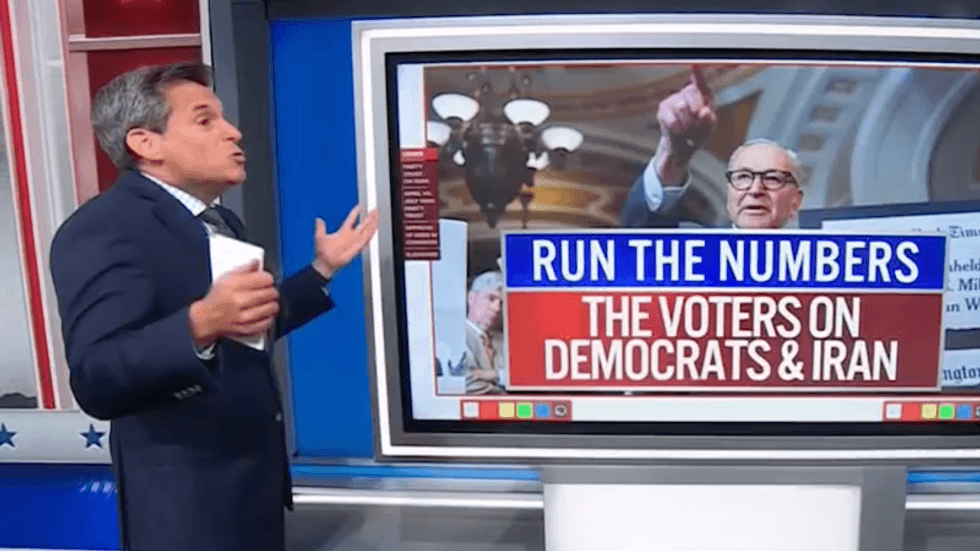
CNN's John Berman was left momentarily speechless by new polling data on President Donald Trump's war in Iran.New polling data presented by the network's Harry Enten suggests Democrats have failed to capitalize on public unease over the 80-year-old president's handling of the Iran conflict, and Berman expressed surprise by the findings."The president's approval rating is sagging, the war in Iran is widely unpopular, so you'd think that Democrats, you might think that Democrats in Congress could see some kind of boost in the polls on this subject," Berman said. "You might think that, but you'd be wrong ... Man, I'm tongue-tied because actually these numbers surprise me. I was looking at them, and I am surprised that they are like this."Two separate polls released this month found Republicans holding a narrow edge over Democrats on the question of who is more trusted to handle Iran policy, Enten said. A CNBC poll found Republicans ahead by two points, and a CBS News poll released just a day later showed the identical two-point advantage."Now, one poll is one thing, but you put the two of them together, and you can see that the American people, simply put, are not buying what Democrats are selling on Iran," Enten said. "They still trust Republicans more. Even if you look at President Trump's approval ratings on the subject, and they're negative, too, but yet Republicans and Trump still more trusted than Democrats are."More striking, Enten said, is the direction of movement over time. A Washington Post-Ipsos poll from April had shown Democrats slightly ahead on Iran trust, by two points. Since then, the numbers have flipped in Republicans' favor — suggesting that as the war has dragged on, public trust has shifted toward the GOP rather than eroded, defying expectations that prolonged conflict would benefit the opposition party."The Democratic Party in the minds of the American public are weak, weak, weak," Enten said.Net approval ratings for Democrats in Congress hovered around negative 40 points in late February, among the lowest levels ever recorded for the party. That unpopularity, Enten suggested, may be undercutting Democrats' ability to convert dissatisfaction with Trump into political trust for themselves, even among some Democratic-leaning voters who remain unhappy with their own party's direction heading into the fall elections. - YouTube youtu.be
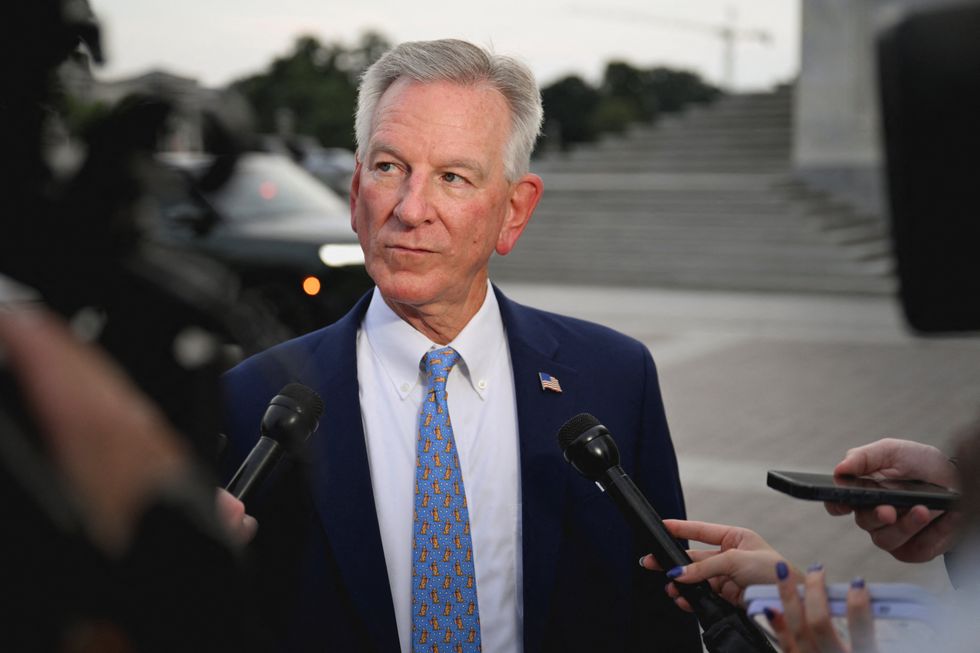
There’s a hypothesis I can’t shake after years of observations.Alabama Republicans are getting bad at politics.So far, that hasn’t threatened their hegemony. The party controls all state offices; holds seven of the state’s nine congressional seats and enjoys supermajorities in the Alabama Legislature.For that, the GOP can thank an opposition that for the better part of 16 years has been weak, underfunded and divided. It’s like watching a high school baseball team take the field against a sixth-grade rec squad whose coaches are screaming at each other.No need for brilliant skill. Swing the bat and jog the bases while the ball rolls past the fielders and toward the outfield fence.But playing weak opponents can weaken your grasp of the fundamentals. And two developments this month felt like unforced errors.A pair of Republican congressmen — Gary Palmer of Hoover and Robert Aderholt of Haleyville — went out of their way to announce their support of a federal bill that would ban transgender women from joining the Daughters of the American Revolution.If your reaction to that sentence was “huh?” well, it was mine too. I hate to describe what’s happening, because it implies there’s a good-faith disagreement that requires the mediation of Congress. There isn’t. It’s just another instance of bigots demanding the imposition of bigotry.Here’s a summary. Leaders of the Daughters of the American Revolution said in 2023 that they would welcome transgender people who meet their membership requirements. As is the now-tedious inevitability, a few gonad obsessives lost their minds. Earlier this month, about 60% of the delegates at a DAR conference (called a “Continental Congress”) voted to keep the policy. The people who lost now want Congress to intervene.Good for the DAR for preserving common decency. There is zero issue with transgender people being in the organization. A responsible official might turn away from the hate and toward issues like grocery prices, healthcare costs and the quality of education.Yet Palmer and Aderholt consider this issue just as important as those, if not more so. They think this niche obsession is a winner. Maybe with Alabama’s identity-obsessed, lickspittle conservative media. The rest of us may properly scratch our heads.Then there’s Tommy Tuberville’s stampede toward data centers.The Republican gubernatorial nominee told Alabama sheriffs that he opposed statewide moratoriums on data centers; that concerns about their community impacts were “bullcrap” and that China drove opposition to them. He stuck with this argument (and the ludicrous Chinese connection) in later comments to a Huntsville TV station.Tuberville was taking his cues from President Donald Trump, who attacked New York for creating a statewide moratorium on data centers. The U.S. senator has always played Smithers to Trump’s Burns, so that’s not surprising.But it’s one thing for Tuberville to make the case for data centers in his read-the-assignment-minutes-before-class kind of way. Politics 101 demands that you acknowledge the widespread concerns the projects are sparking in Alabama, over power consumption and environmental effects.Here’s a non-exhaustive list of Alabama communities that have seen strong local opposition to data centers or moved to ban them: Bessemer. Pinson. Wilsonville. Cullman. Birmingham. Mobile. Leeds. Homewood. Fairfield. Nationwide, more Americans oppose having data centers in their neighborhoods than support them.This is not manipulation by a foreign government. These are citizens in an ostensible democracy voicing their concerns. A sensible politician would not antagonize people packing town halls and organizing against data centers.Yet Tuberville feels comfortable not only dismissing the critics, but impugning their motives. Even in a place like Cullman, not known for green politics or liberal ideas. If the Republican gubernatorial nominee thinks data centers are the future, he has to acknowledge the concerns. You won’t make data center opponents more comfortable with the facilities by calling them stooges.In the DAR example, we have a willful ignorance of Alabama’s needs. In data centers, we have an open opposition to them. And in both, there’s a seeming disconnect between the politicians and the voters.But this isn’t the only example from Team Red. There was the odd move to rename the Gulf of Mexico 15 months after Trump likely forgot that he ever raised the issue. Or responding to outrage over Alabama’s high power bills by kneecapping the state’s electric regulatory commission. Or the all-Republican Supreme Court confidently ending IVF treatments in the state without considering the political consequences. In each case, you see a party paying more attention to donors or its weird obsessions than what’s happening beyond them.I doubt this will lead to any profound change in November. The Republicans’ institutional advantages are significant.