Supreme Court upholds FCC’s fines against Verizon, AT&T
Center
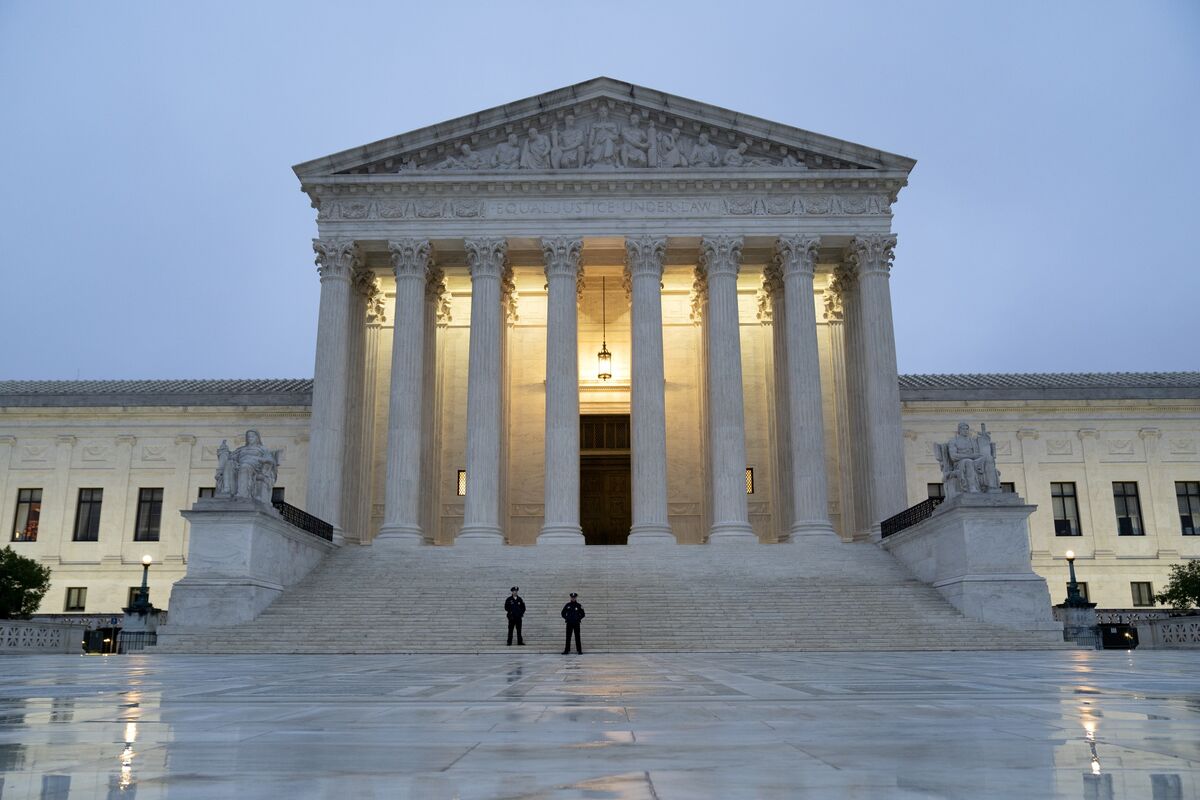
The Supreme Court rejected Verizon and AT&T’s constitutional challenge to massive fines imposed by the Federal Communication Commission (FCC) in an 8-1 vote on Thursday. Chief Justice John Roberts ruled the companies are not entitled to a jury trial to contest the fines. Related to the use of customers’ location data, they amount to a combined more than $100 million. The Seventh Amendment…
The US Supreme Court reinforced the Securities and Exchange Commission’s power to recover illegal profits in a case that centered on one of the agency’s most potent enforcement tools.
The US Supreme Court ruled that telecommunications companies can’t immediately demand a jury trial when hit with a Federal Communications Commission fine, while saying the carriers don’t have to pay penalties right away.
A visual roundup of a Supreme Court term marked by politically charged disputes, including tests of presidential power, LGBTQ rights and U.S. election laws.
An interesting May 22 order from the court in the Justin Fairfax child custody trial, Fairfax v. Fairfax (Judge Timothy…
The post Court Refuses to Release Auto-Generated Transcript in Justin Fairfax Child Custody Trial, Citing AI Transcription Errors appeared first on Reason.com.
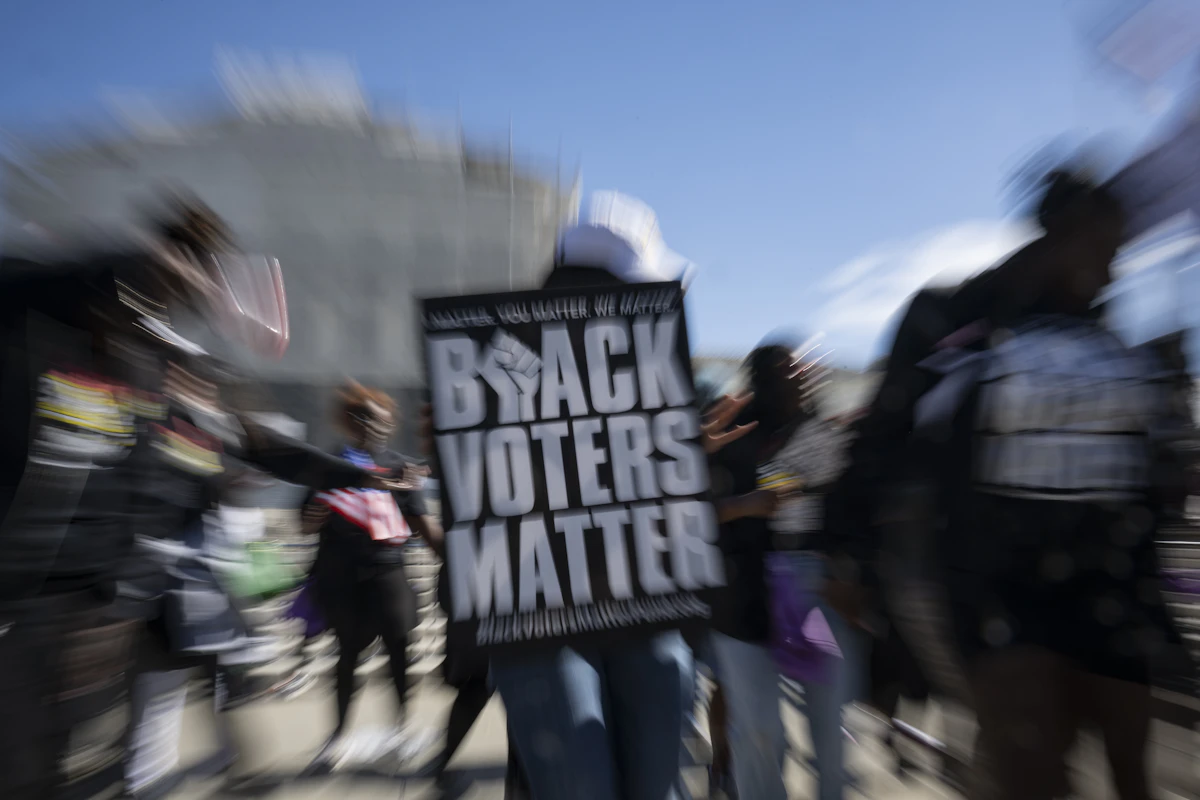
The Supreme Court handed down a bombshell order on Tuesday night that made racial gerrymandering effectively impossible to challenge in court, expanding upon last month’s decision in Louisiana v. Callais to eliminate the last vestiges of the Voting Rights Act of 1965—and with it, the primary mechanism for protecting multiracial democracy in the American South.Tuesday’s 6-3 order in Allen v. Milligan, which was technically unsigned, allows Alabama—and, in the future, other states—to enact legislative maps even if a federal court rules that they were enacted with racially discriminatory intent. This decision goes well beyond the court’s ruling in Callais, which focused on VRA claims under Section 2 about gerrymandered maps with a racially discriminatory effect.The decision gives carte blanche to Southern state lawmakers to eliminate majority-Black districts as soon as they feasibly can—or, in Alabama’s case, even if it is not actually feasible or practical. (More on that later.) In 1957, the Supreme Court unanimously ordered Southern states to desegregate their schools “with all available speed.” In 2026, the court’s conservative majority is demanding the elimination of Black electoral power in the South on the same time scale.“In addition to being wrong on the merits, the Court’s decision inflicts two grave harms on the public,” Justice Sonia Sotomayor wrote in her dissent. “It debases the democratic process by upending Alabama’s entire election in the name of permitting Alabama to discriminate against Black Alabamians. It also corrodes the rule of law by rewarding Alabama’s gamesmanship and outright defiance of court orders.”Allen v. Milligan may sound familiar because we have been here before. The Supreme Court already heard the case as a Section 2 challenge to Alabama’s post-2020 congressional districts in 2023. Chief Justice John Roberts and Justice Brett Kavanaugh joined with the court’s three liberals to uphold a district court ruling that required Alabama to draw a second majority-Black congressional district.Though the decision was a surprise victory for voting-rights groups, given the Roberts Court’s hostility to the VRA, there were also warning signs lurking beneath the surface. The majority opinion by Roberts merely stated that the district court had “faithfully applied the court’s precedents” while going out of its way to endorse those precedents.“The concern that §2 may impermissibly elevate race in the allocation of political power within the States is, of course, not new,” Roberts concluded. “Our opinion today does not diminish or disregard these concerns. It simply holds that a faithful application of our precedents and a fair reading of the record before us do not bear them out here.” In hindsight, the ruling reads more like a stay of execution than a grant of clemency.Let us take stock of how we got here. Conservatives have long sought to limit the VRA’s power. In the 1980 case Mobile v. Borden, the Supreme Court held that a “facially neutral” voting practice only violates Section 2 if it is enacted with discriminatory intent. While that may have been relatively easy to prove in the Jim Crow era, Congress also intended to root out more subtle and insidious forms of racially discriminatory voting practices.To that end, Congress amended the VRA in 1982 to reverse the Supreme Court’s ruling and specifically prohibit laws that had a discriminatory effect, regardless of intent, under Section 2. The high court accepted Congress’s vote-dilution framework in the 1986 case Thornburg v. Gingles and laid out a multi-part test to determine when and how racial-gerrymandering claims could succeed. (Borden and Gingles did not involve racial-gerrymandering claims per se, but the impact on them is identical.)Since Roberts and Justice Samuel Alito joined the high court in 2005, the Supreme Court has grown steadily more hostile to the Voting Rights Act. In 2013, the court’s conservative majority struck down the VRA’s preclearance formula in Shelby County v. Holder because the justices thought it was outdated and violated the “equal sovereignty of the states,” a bespoke principle to which the court has never returned. That ruling freed many jurisdictions, mostly in the South, from seeking preapproval from federal courts or officials before changing their voting laws. A wave of voting restrictions soon followed.In the 2021 case Brnovich v. Democratic National Committee, the court took aim at Section 2 as applied to state voting laws. Alito, writing for the court, threw up a wave of new constraints on Section 2 claims to state election laws. Transmuting Fox News talking points into the law of the land, he even claimed that states could overcome Section 2 challenges to voting laws by invoking the phantasmal threat of voter fraud. “The majority creates a set of extra-textual exceptions and considerations to sap the Act’s strength, and to save laws like Arizona’s,” Justice Elena Kagan wrote in her dissent.
Former Milwaukee County Circuit Judge Hannah Dugan urged a federal judge this week to toss out her conviction on obstruction charges for helping an illegal immigrant evade arrest last year, as part of a last-ditch effort before she is sentenced. U.S. District Judge Lynn Adelman, an appointee of former President Bill Clinton, heard arguments in […]