An interesting May 22 order from the court in the Justin Fairfax child custody trial, Fairfax v. Fairfax (Judge Timothy…
The post Court Refuses to Release Auto-Generated Transcript in Justin Fairfax Child Custody Trial, Citing AI Transcription Errors appeared first on Reason.com.
Views and opinions expressed are solely those of the author. Republicans may want to keep the champagne on ice because any celebration of the California gubernatorial primary […]
This story is part of a series of monthly snapshots from the Washington Examiner, titled Midterm Countdown, gauging the state of the 2026 election cycle. The 2026 election is shaping up to be another test of how much “candidate quality” matters to voters, and the answer could very well decide which party controls Congress next year. Democrats […]
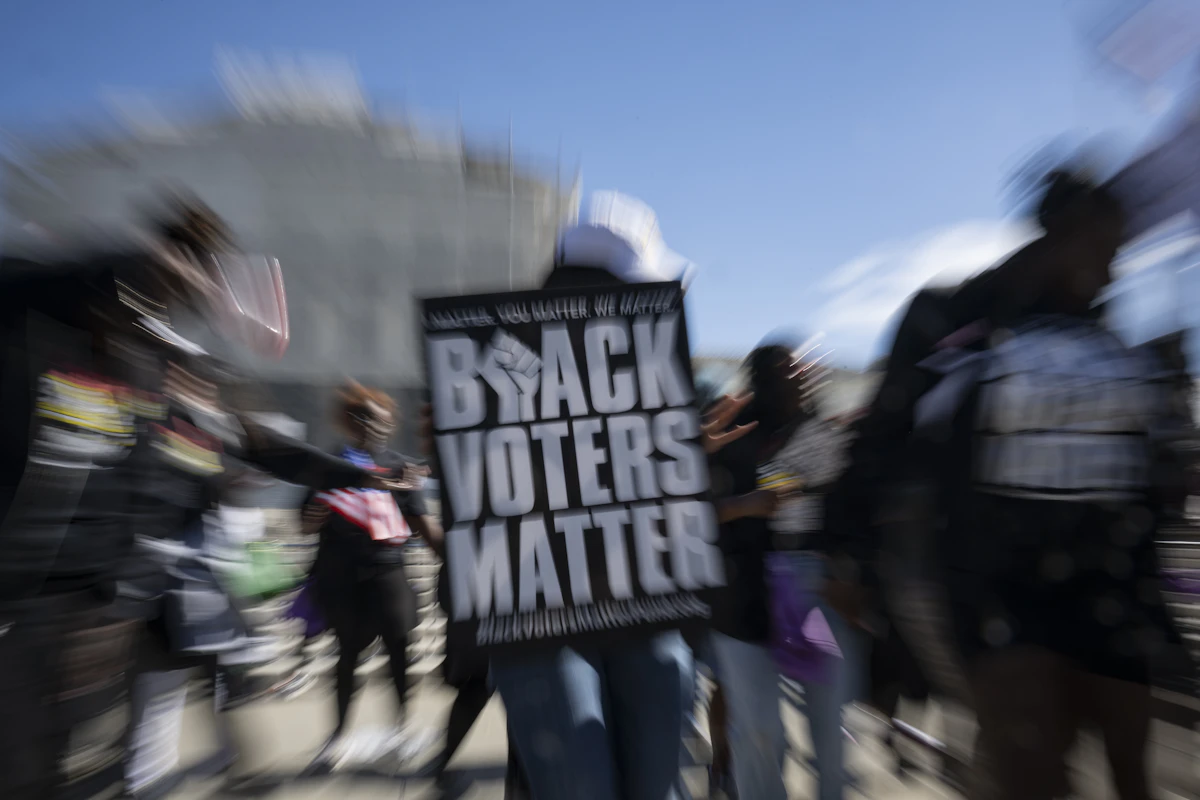
The Supreme Court handed down a bombshell order on Tuesday night that made racial gerrymandering effectively impossible to challenge in court, expanding upon last month’s decision in Louisiana v. Callais to eliminate the last vestiges of the Voting Rights Act of 1965—and with it, the primary mechanism for protecting multiracial democracy in the American South.Tuesday’s 6-3 order in Allen v. Milligan, which was technically unsigned, allows Alabama—and, in the future, other states—to enact legislative maps even if a federal court rules that they were enacted with racially discriminatory intent. This decision goes well beyond the court’s ruling in Callais, which focused on VRA claims under Section 2 about gerrymandered maps with a racially discriminatory effect.The decision gives carte blanche to Southern state lawmakers to eliminate majority-Black districts as soon as they feasibly can—or, in Alabama’s case, even if it is not actually feasible or practical. (More on that later.) In 1957, the Supreme Court unanimously ordered Southern states to desegregate their schools “with all available speed.” In 2026, the court’s conservative majority is demanding the elimination of Black electoral power in the South on the same time scale.“In addition to being wrong on the merits, the Court’s decision inflicts two grave harms on the public,” Justice Sonia Sotomayor wrote in her dissent. “It debases the democratic process by upending Alabama’s entire election in the name of permitting Alabama to discriminate against Black Alabamians. It also corrodes the rule of law by rewarding Alabama’s gamesmanship and outright defiance of court orders.”Allen v. Milligan may sound familiar because we have been here before. The Supreme Court already heard the case as a Section 2 challenge to Alabama’s post-2020 congressional districts in 2023. Chief Justice John Roberts and Justice Brett Kavanaugh joined with the court’s three liberals to uphold a district court ruling that required Alabama to draw a second majority-Black congressional district.Though the decision was a surprise victory for voting-rights groups, given the Roberts Court’s hostility to the VRA, there were also warning signs lurking beneath the surface. The majority opinion by Roberts merely stated that the district court had “faithfully applied the court’s precedents” while going out of its way to endorse those precedents.“The concern that §2 may impermissibly elevate race in the allocation of political power within the States is, of course, not new,” Roberts concluded. “Our opinion today does not diminish or disregard these concerns. It simply holds that a faithful application of our precedents and a fair reading of the record before us do not bear them out here.” In hindsight, the ruling reads more like a stay of execution than a grant of clemency.Let us take stock of how we got here. Conservatives have long sought to limit the VRA’s power. In the 1980 case Mobile v. Borden, the Supreme Court held that a “facially neutral” voting practice only violates Section 2 if it is enacted with discriminatory intent. While that may have been relatively easy to prove in the Jim Crow era, Congress also intended to root out more subtle and insidious forms of racially discriminatory voting practices.To that end, Congress amended the VRA in 1982 to reverse the Supreme Court’s ruling and specifically prohibit laws that had a discriminatory effect, regardless of intent, under Section 2. The high court accepted Congress’s vote-dilution framework in the 1986 case Thornburg v. Gingles and laid out a multi-part test to determine when and how racial-gerrymandering claims could succeed. (Borden and Gingles did not involve racial-gerrymandering claims per se, but the impact on them is identical.)Since Roberts and Justice Samuel Alito joined the high court in 2005, the Supreme Court has grown steadily more hostile to the Voting Rights Act. In 2013, the court’s conservative majority struck down the VRA’s preclearance formula in Shelby County v. Holder because the justices thought it was outdated and violated the “equal sovereignty of the states,” a bespoke principle to which the court has never returned. That ruling freed many jurisdictions, mostly in the South, from seeking preapproval from federal courts or officials before changing their voting laws. A wave of voting restrictions soon followed.In the 2021 case Brnovich v. Democratic National Committee, the court took aim at Section 2 as applied to state voting laws. Alito, writing for the court, threw up a wave of new constraints on Section 2 claims to state election laws. Transmuting Fox News talking points into the law of the land, he even claimed that states could overcome Section 2 challenges to voting laws by invoking the phantasmal threat of voter fraud. “The majority creates a set of extra-textual exceptions and considerations to sap the Act’s strength, and to save laws like Arizona’s,” Justice Elena Kagan wrote in her dissent.
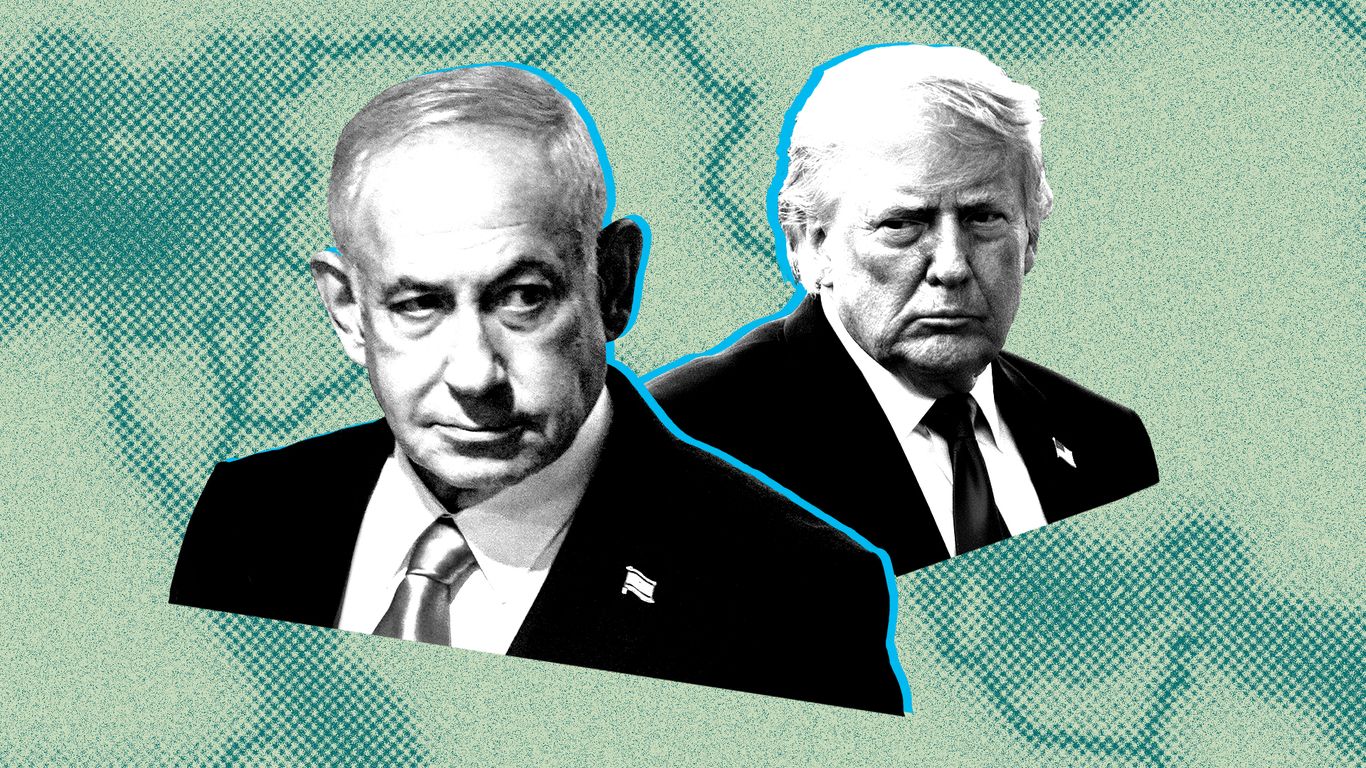
Israeli Prime Minister Benjamin Netanyahu's recent spat with President Trump over Lebanon underscored how his military objectives, and possibly his political survival, are dependent on a U.S. president who doesn't share his appetite for escalation.Why it matters: Trump and Netanyahu have coordinated very closely on Iran and speak almost daily. But officials on both sides have been cognizant that there could be a point in time when the allies' interests and objectives diverge. Some in Netanyahu's camp worry that time is now.Netanyahu himself said Tuesday that it was an "open question" as to whether he and Trump were aligned on how the war with Iran should end.The big picture: With an election expected by October, Netanyahu hasn't delivered on his promise to destroy Hamas or his plans for regime change in Iran, and he's under immense criticism at home over the ongoing Hezbollah attacks. Every time a siren near the border heralds an incoming drone or missile, Netanyahu faces domestic pressure to respond.It was in that context that he vowed to conduct major strikes on Hezbollah targets in Beirut — before being forced into retreat by an angry Trump, who cares far less about Lebanon than a deal with Iran.Driving the news: When Trump chastised Netanyahu in a call on Monday and pulled the brakes on the Beirut strikes, he also kicked up a political firestorm in Israel.Rivals and even some hawkish government allies claimed Netanyahu had made Israel an American "vassal," or surrendered Israeli sovereignty to Trump.The Trump-Netanyahu call came after Iran threatened to abandon the negotiations with the U.S. over Israel's actions in Lebanon and to launch missiles at Israel. "It was a terrible phone call. Trump really hammered Bibi. He demanded that he immediately back down from the plan to strike Beirut in order to not blow up the situation in Lebanon — and through that, the negotiations with Iran," an Israeli source said.What they're saying: Netanyahu didn't deny that Trump had called him "crazy" or claimed he'd been in jail without Trump's help. Instead, the prime minister told CNBC he and Trump had argued before but always maintained their close partnership. Similarly, Trump confirmed Axios' reporting about the call to the NY Post while adding that he likes Netanyahu and has worked well with him.Between the lines: While the call may have been just a blip in their personal relationship, their differences over the Iran endgame are more stubborn.Two senior U.S. officials told Axios that while Trump wants to end the war, Netanyahu seems to want to resume it."Sometimes Bibi doesn't know when to stop," one of the U.S. officials said.The fact that Netanyahu quickly abandoned the plan to strike Lebanon, and moved to clean up any perception of a rift, underscored the degree to which Netanyahu's military maneuvers and political standing are subject to Trump's influence. Zoom in: Netanyahu is concerned the tense call is a prelude for further U.S. limitations on Israel's freedom of operations in Lebanon, an Israeli source who speaks regularly with the prime minister and his close advisers said.The source said Netanyahu fears the U.S. will apply much stricter criteria to Israeli strikes in Lebanon — not just Beirut — before giving its "green light."What to watch: On Wednesday, after two days of talks between Israeli and Lebanese diplomats in Washington, the two countries announced a plan for a full ceasefire, contingent on steps from Hezbollah.It was not immediately clear whether the Shia militia would accept the new terms.If a stable ceasefire isn't reached and Hezbollah continues firing at Israel, Netanyahu might be able to convince Trump to allow him to bomb Beirut after all.Trump said on Wednesday that he's trying to separate the conflict between Israel and Hezbollah from the war with Iran, and thinks a deal with Iran could be reached as early as this weekend.The bottom line: Netanyahu is skeptical of restraint in Lebanon and of a deal with Iran, and both are politically toxic for him. U.S. officials have worried he might try to undermine their diplomacy on both fronts.What he can't afford to do, however, is openly split with Trump four months before an election.
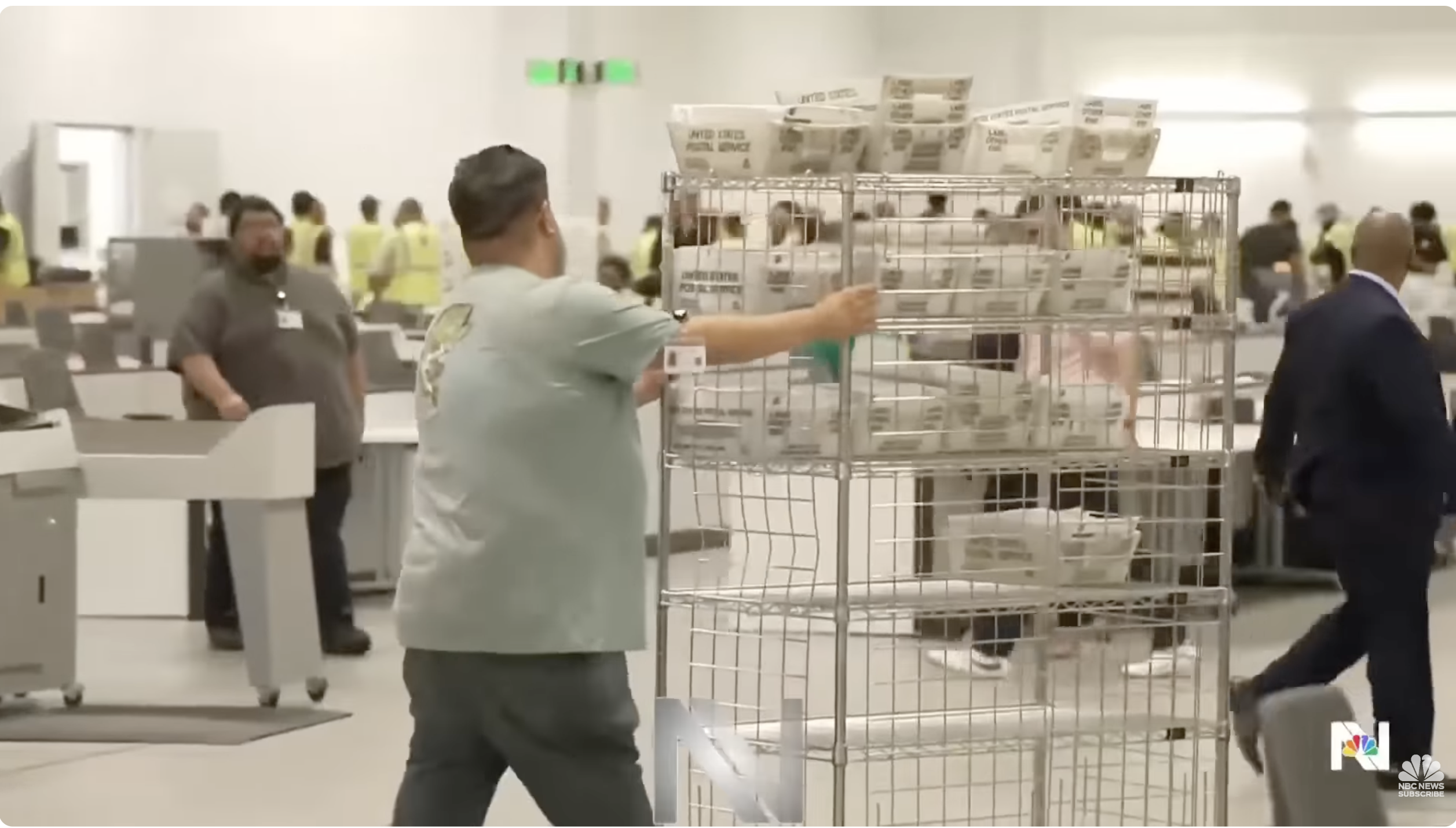
California’s primary elections were held on Tuesday, June 2, yet, over 24 hours later, the state still has not finished counting votes in any of its elections. Moreover, according to the most recent available updates, none of the state’s federal primaries has exceeded 60% of the votes counted. The lethargic pace of vote counting has […]