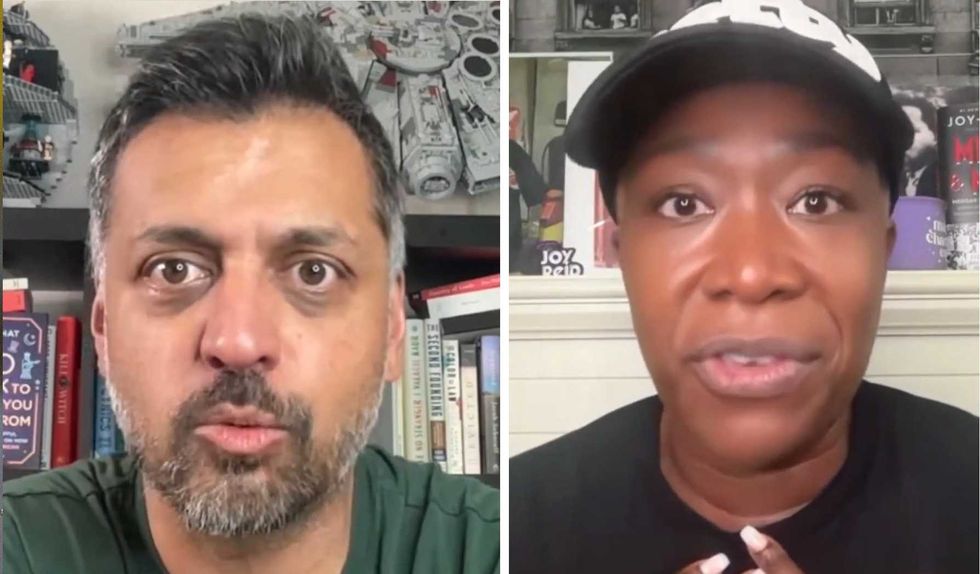
Racism is an act of self-destruction, warns podcaster Wajahat Ali and independent reporter Joy Ann-Reid. But that destruction extends to everything around them when they manage to grab the levers of power.“I mean there's a big hole in the White House. The lawn where they built that ugly UFC ring is now brown. They've destroyed the Jackie Kennedy garden. [President] Donald Trump is supposed to be a builder but he physically destroyed D.C.,” said Reid. “And then that the poor pathetic little fair that he had, his little world's fair with the fake arch made of plastic. And they painted it. America right now is a laughingstock. I think we created 57,000 jobs last month. That is sad. It's a sad birthday.”But this is the mess that comes of a nation that “refused to acknowledge and uproot its dark sin of white supremacy,” said Ali. “We whitewashed our history books, made heroes of racist traitors, and decided to elect the most incompetent, corrupt vulgarian after electing the first Black president.”“Refusing to learn our lesson, we re-elected Trump, even though we could have had a competent Black woman as President. Now? America is turning into a s——hole,” Ali lamented. “Just look at the Reflecting Pool as a tragic example of our downfall. Take a trip to Washington, D.C., and see the absolute mess that is the White House. Our infrastructure is collapsing, our economy is ailing, and our public health is deteriorating. Measles, death, gun violence, and suicide are on the rise. But it doesn’t matter. White supremacy will destroy everything, including itself, instead of sharing power. It will burn everything down.”“The right wing is not satisfied with just having physically destroyed the country,” said Reid. “[They] destroyed the morale of the country on our birthday where we're sad and pathetic and can't even pull off a world's fair.”The Supreme Court, meanwhile, barely protected birthright citizenship with a six-to-three vote when all the justices had to do was read the Constitution and see that if you're born here, you're a citizen, said Ali.With the war on birthright citizenship and MAGA cries to sterilize brown immigrants, Reid said MAGA and Trump are laboring for a very specific kind of America.“If they were successful at removing everyone who looks like you and me — all the Blacks, all the browns, all the Muslims all the AAPI, all the Latinos — if they got their way, you know what America would look like? It would look like Trump’s pathetic American state fair,” said Reid. “That was a place where there were no Blacks. There were no gays. There were no brown people. It was just MAGA white folks. The one’s who weren’t broken by [Trump’s] economy, who could afford to get on a plane or drive to DC with these gas prices. It was an estimate that the first day was like a 1,000 people — only tens of MAGA could even afford to go there. … [because] they are the poor. They are broke. They're bored. And they're boring.”“There was no musical entertainment,” Reid raged. “That cultural anti-phenomenon that we saw at that pathetic Trump celebration supposedly of America’s birthday and Donald Trump — that is what's left when you get rid of all of us. If you really get rid of people of color then American culture is like sad Europe.”“Like a crusty, crusty mayo sandwich that has been left in the sun for two days,” added Ali.“One-hundred percent,” confirmed Reid. “You'd get no Janet Jackson, no Michael Jackson, no Prince, no Whitney Houston, no Aretha Franklin, no jazz, no gospel, no hip-hop. What do you actually have? What is your culture? What is this white culture that you're trying to preserve at all costs, at the cost of your own economy?”Ali added that even MAGA doesn’t like MAGA America.“When they move to the Southern states where do they move to when they move to Texas? Austin! When they move to Tennessee, they move to Nashville,” said Ali. “Even MAGA influencer] Nick Fuentes was like ‘yeah, I don't want to really move to a red state. So, they know that their mayo sandwich is s——. They know their potato salad sucks. They know their chicken is dry and has no spice. They know that they're bland and pasty and that they have no culture and no rhythm.”
President, in latest AI-generated social media post, targets prominent celebrities who have spoken out against himDonald Trump on Thursday posted an AI-generated social media video portraying himself as a doctor who claims to have cured some of his most prominent celebrity critics – including Rosie O’Donnell – of the fictional condition “Trump derangement syndrome”.Outside the AI fantasy, O’Donnell said her assessment of the president remained unchanged. In a statement, she offered her own diagnosis: “He’s quite ill-and getting worse daily. The 25th amendment exists for exactly this reason. Remove. Impeach. Convict.” Continue reading...
Conservative pundit Megyn Kelly took a shot at President Trump’s family for what she characterized as benefiting personally from his presidency. “I don’t feel great about our leaders. I’m not going to lie,” Kelly said on an episode of her podcast and YouTube show this week. “I’m like, I’m disappointed with some aspects of the…
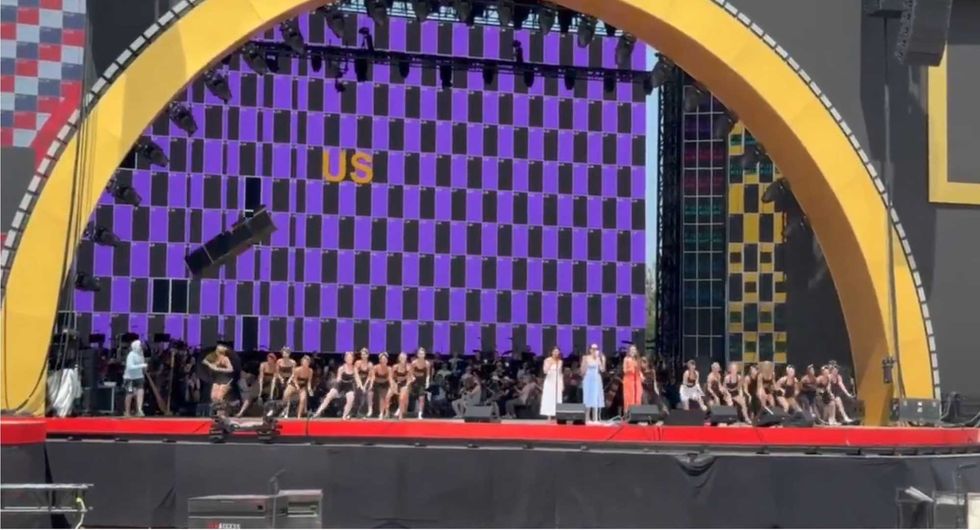
A large panel fell seemingly dozens of feet from above onto the stage during a rehearsal for a performance at an event for President Donald Trump’s Freedom 250, according to video posted by attorney Aaron Parnas.“The stage is falling apart at the rehearsal for Freedom 250’s July 4th celebration,” Parnas wrote.After the panel fell, someone can be heard on the video saying, “I was waiting for something like that to happen.” Critics blasted the administration while others issued warnings.“This is incredibly dangerous stuff,” wrote journalist Ryan Grim. “Trump cutting safety corners with stage building is the kind of thing somebody can genuinely be prosecuted for if someone dies, which is not uncommon if you slap it together like this. This equipment is deadly when falling from those heights.”“Literally a miracle no one was hurt here,” noted journalist Philip Lewis.“In all seriousness, that actually looks really dangerous for the performers. It’s scary how unsafe this all seems,” observed journalist Pablo Manríquez.“The sheer incompetence of this administration is really rather astonishing. Everything these people touch is shoddily done. This era is replete with evidence that experience and professionalism actually matter,” wrote author Jennifer Erin Valent.“If there was ever a metaphor for how historians will look back at Trump’s presidency at this moment in time, it’s this,” wrote health care consultant and National Organization for Women vice president Melanie D’Arrigo.“The Freedom 250 rehearsal stage falling apart is the perfect analogy for the Trump administration,” The Lincoln Project commented.“Glad everyone’s ok — it’s also hard to imagine a better metaphor for the current state of [America] than this,” wrote the progressive media outlet The Tennessee Holler.“Trump’s state fair is *literally* falling apart,” remarked liberal political commentator Harry Sisson.One commenter added, “Those performers are incredibly lucky. That falling piece of debris looked heavy, sharp and came down at incredible speed.”Trump’s Freedom 250 July 4th event is also besieged by a massive heat wave enveloping part of the country.“U.S. Capitol Police have already restricted Thursday night’s rehearsal for ‘A Capitol Fourth Concert’ to essential personnel, posting on X that they came to the decision after consulting with the Capitol’s Office of the Attending Physician,” The New Republic reported.“For safety reasons, the public will not be able to attend tonight’s rehearsal concert,” the Capitol Police’s post read. “Everyone is sorry for any inconvenience this may have caused. The National Weather Service is forecasting an extreme heat watch with temperatures exceeding 100 degrees.”
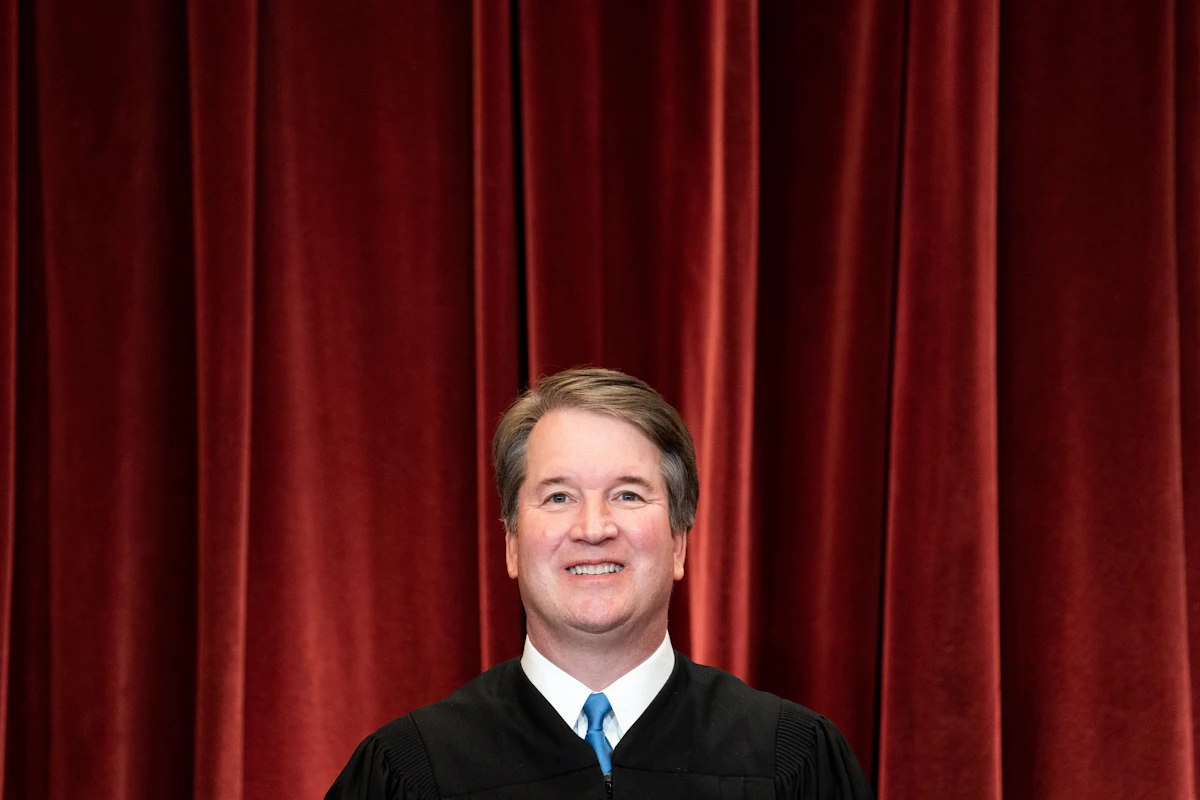
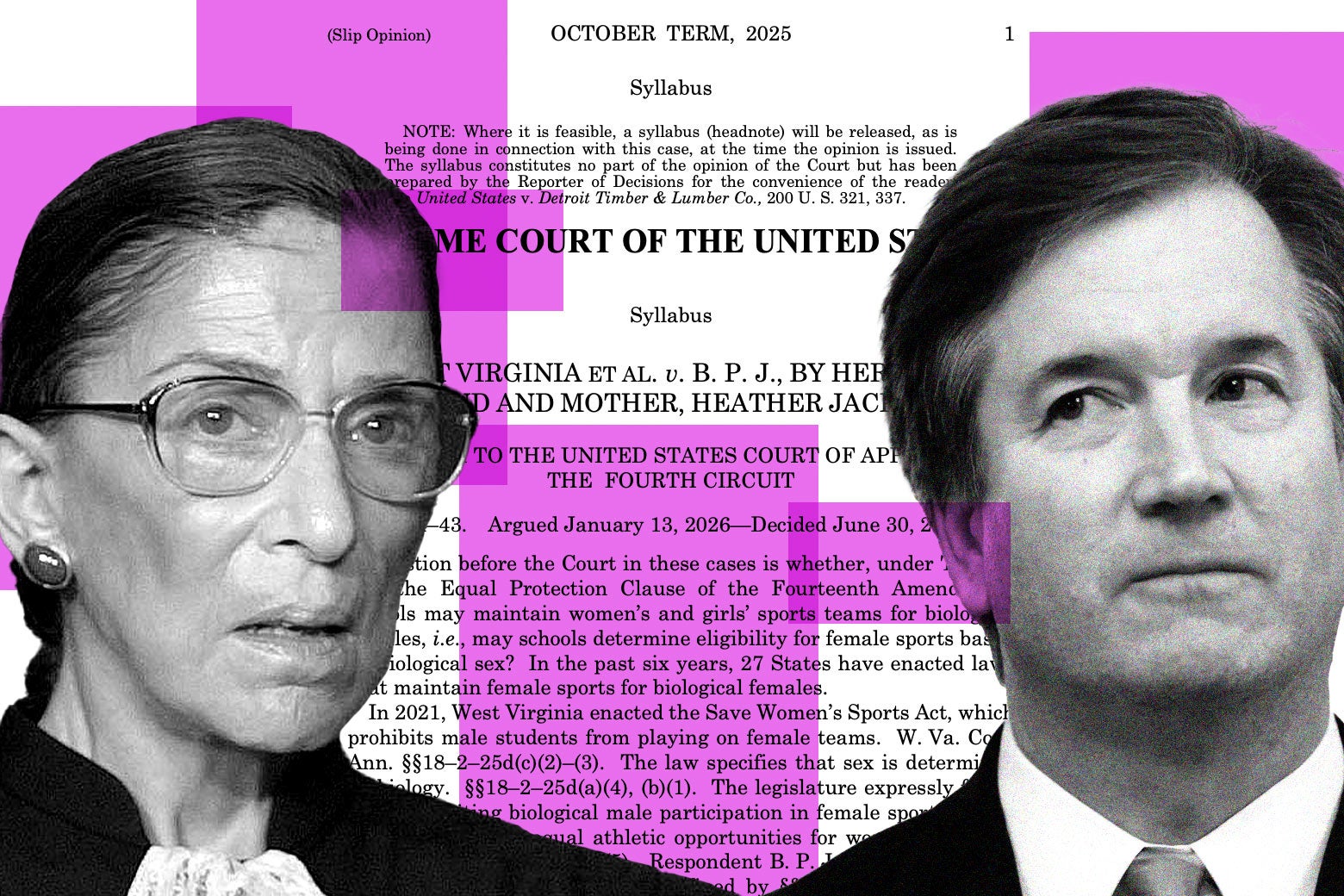
The Supreme Court’s ruling this week on birthright citizenship in Trump v. Barbara totaled approximately 194 pages. I wrote earlier this week about the various positions that each of the justices took. But it is worth dwelling for an extra moment on the unusual position taken by Justice Brett Kavanaugh in just 10 strange pages.Unlike the rest of his colleagues, Kavanaugh took the position that Trump’s executive order was constitutionally permissible but statutorily illegal. In other words, the Fourteenth Amendment’s citizenship clause did not block Trump’s effort to curtail birthright citizenship, but an act of Congress that used identical language did.At a very superficial level, this might sound sensible and moderate by implicitly inviting Congress to address the situation. Kavanaugh certainly positions the opinion—and himself—as such. On closer inspection, it might be the most dangerous and extreme view of U.S. citizenship to be articulated by the justices this week.To understand Kavanaugh’s position, a brief sketch of the other justices’ views is necessary. Last January, Trump issued an executive order that instructed federal agencies to not recognize the U.S. citizenship of children whose parents were undocumented immigrants or living in the United States on temporary visas. A group of plaintiffs sued, arguing that this violated the Fourteenth Amendment’s citizenship clause.That clause reads as follows: “All persons born or naturalized in the United States, and subject to the jurisdiction thereof, are citizens of the United States.” In the 1898 case United States v. Wong Kim Ark, the Supreme Court ruled that the son of two Chinese immigrants in San Francisco had acquired U.S. citizenship at birth solely by virtue of being born on American soil. The “subject to the jurisdiction” exception was narrowed to a handful of situations that rarely apply today.In Tuesday’s ruling in Barbara, the justices essentially took four separate positions. Five of them took what can be described as the consensus view. Americans had inherited the rule of birthright citizenship from the English common law, Chief Justice John Roberts explained in his majority opinion. Dred Scott v. Sandford’s holding that people of African descent were ineligible for U.S. citizenship was a violation of that rule, and the Fourteenth Amendment’s citizenship clause restored and entrenched the original understanding.Two of Roberts’s fellow conservatives, Justices Clarence Thomas and Neil Gorsuch, took a different view. Thomas affirmed Wong Kim Ark as correct but argued a person’s domicile status—or, more specifically, that of their parents—also determined whether that person had U.S. citizenship at birth. Since Trump’s executive order was lawful in at least some circumstances, like birth tourism, the two justices rejected the facial challenge to its constitutionality.At the same time, both justices signaled that even if their domicile-focused view had prevailed, it would not grant total victory to the Trump administration. Thomas and Gorsuch concluded that children of temporary visa holders would not be eligible, and their respective dissents largely focused on that aspect of the order. But both justices wrote that they would not necessarily reach the same conclusion for children of undocumented immigrants, especially if they had lived long-term in the U.S.The third position was adopted solely by Justice Samuel Alito, who argued that the clause “confers citizenship on only those children who, at birth, owe allegiance solely to this country.” He argued that Wong Kim Ark should be read much more narrowly by the court since, in his view, it showed “little respect for precedent.” Instead, Alito leaned heavily on phrasing in the Civil Rights Act of 1866, which only extended U.S. citizenship to those “not subject to any foreign power,” a narrower phrasing than the clause that was ratified three years later.Even then, Alito ultimately concluded that Wong Kim Ark was correctly decided. The Chinese Exclusion Acts had made it impossible for Chinese immigrants to be naturalized, so Wong’s parents faced a different threshold under the clause. “By establishing domicile, they had done everything within their power to express their desire and intent to become Americans,” Alito explained.“Wong Kim Ark is therefore best understood as holding that people who are lawfully present here, establish the United States as their intended permanent home, and do everything within their power to become United States citizens can be seen as no longer subject to any foreign power,” Alito argued.That brings us, at last, to Kavanaugh. He voted with the majority to strike down the order on different grounds from those of Roberts and the other four justices in the majority. Kavanaugh said that he found the constitutional issue to be “far more complicated” than the statutory one.