Truthout
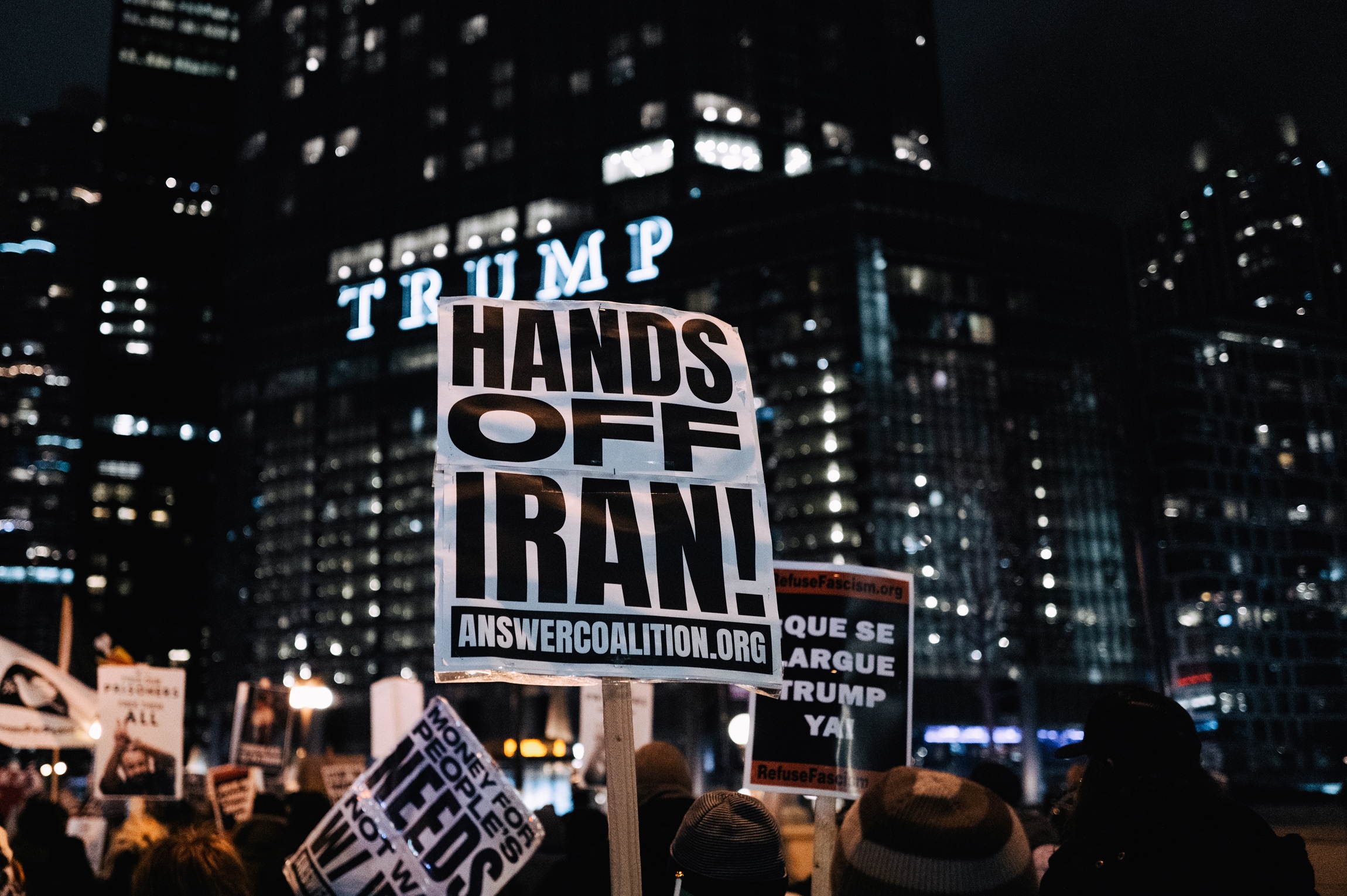
Trump Attacks GOP Lawmakers After House Passes Bipartisan Iran War Resolution
Despite Trump calling the vote “unpatriotic,” nearly 7 in 10 Americans back ending the war in Iran as soon as possible.
Far Left

"I don't think he's looking at this in grand strategy terms with respect to the Middle East," John Bolton said.
Despite Trump calling the vote “unpatriotic,” nearly 7 in 10 Americans back ending the war in Iran as soon as possible.
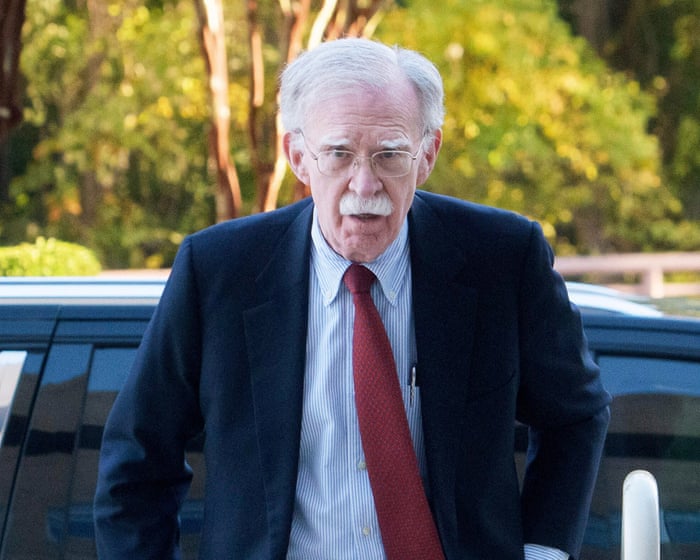
Justice department filed charges against Trump’s former adviser in 2025 as part of onslaught against president’s criticsUS politics live – latest updatesSign up for the Breaking News US newsletter emailJohn Bolton, the former US national security adviser who left Donald Trump’s first administration and became a staunch critic of the US president, will reportedly plead guilty over mishandling classified documents.The US Department of Justice (DoJ) filed federal charges against Bolton in October 2025, one of a string of Trump critics against whom it secured criminal charges in a matter of weeks. Continue reading...

Trump’s former national security adviser, who later publicly criticized the president, is set to plead guilty and pay a fine under the agreement.

The 1970s oil-shock playbook needs an update: The inflation costs remain, but the employment risks appear far smaller than they did 50 years ago.Why it matters: As the Iran war continues, there are early signs of renewed strength in the labor market.If energy disruptions pose less of a risk to jobs, the challenge for central banks shifts from managing stagflation risks to guarding against renewed price pressures.That's the takeaway from new Federal Reserve Bank of Boston research that finds an oil shock the size of what the Iran war has produced would push inflation materially higher while having essentially no effect on national employment.What they're saying: "The U.S. economy's vulnerability to oil shocks has not been eliminated, but rather reconfigured," economists wrote in the report. "Oil shocks may now pose less of a challenge for monetary policy, allowing policymakers to focus more on the greater risk to inflation."Driving the news: The researchers estimate that the U.S.-Iran conflict generated a 33% oil price shock — a magnitude that is historically significant, though not unprecedented.The U.S. economy is now structured differently than past energy crises, allowing it to absorb a shock of that magnitude with far less damage to national employment.But with a smaller hit to growth and employment, there is less downward pressure on prices to counteract rising energy costs.The Boston Fed estimates that if an oil disruption like today's hit during the mid-1970s, it would lift the Personal Consumption Expenditures Price Index by 2.2 percentage points and reduce national employment by 1.8 percentage point.What to watch: The oil shock is estimated to create relative winners and losers across the country, with oil-producing states faring better than oil-importing regions — differences that can leave an economic mark for as long as two years after the initial hit.The Boston Fed estimates that employment growth in Texas would be roughly 1.7 percentage point higher than in the average state 12 months after the shock. Massachusetts, meanwhile, would see employment growth run about 0.4 percentage point below average.Those effects extend beyond jobs: Home price growth in Texas would outpace the average state by roughly 1.8 percentage point, while Massachusetts would trail by about 0.4 percentage point.The intrigue: The inflation effects of the shock are already evident in economic data, as well as in anecdotes gathered across Fed districts.The Beige Book, a collection of anecdotes from the 12 Fed regional banks, described energy costs tied to the Middle East conflict as the "primary driver of inflationary pressures," with spillovers into shipping, groceries and fertilizer.Yet employment showed little change across 11 of the Fed's 12 districts, and most described a "low-hire, low-fire" labor market.The bottom line: Energy producers don't appear to view the price spike as durable, potentially limiting one of the channels through which oil-producing states benefit from higher energy prices.Dallas Fed contacts reported "limited appetite to increase activity even amid sharply higher oil prices," reflecting a view that the impact of the conflict is "likely to be too short-lived to spur new capital investment," according to the Beige Book. Emily Peck contributed reporting.

The former national security adviser was indicted on 18 charges of retaining or disseminating classified information.

The former Trump national security adviser plans to plead guilty to a count of illegal retention of classified information, which could result in a fine and possibly prison time of up to five years.

A federal grand jury indicted John Bolton, former national security adviser to President Trump, on 18 counts last year.

Former National Security Adviser John Bolton is set to plead guilty to mishandling classified materials, CNN reported Thursday citing anonymous sources. Bolton has agreed to pay a […]