Live updates: US, Iran back off attacks; Trump heads to Michigan to tout manufacturing
Source: The Hill News · Bias: Center
Summary
The U.S. pulled back on its daily strikes on Iran over the weekend to both give more time for negotiations and conserve munitions. President Trump is “giving it a little bit of room,” Mike Waltz, United Nations ambassador, said Sunday. Reports also bubbled up over the weekend that the U.S. campaign in the Strait of Hormuz…
Live updates: US, Iran back off attacks; Trump heads to Michigan to tout manufacturing
Center
The U.S. pulled back on its daily strikes on Iran over the weekend to both give more time for negotiations and conserve munitions. President Trump is “giving it a little bit of room,” Mike Waltz, United Nations ambassador, said Sunday. Reports also bubbled up over the weekend that the U.S. campaign in the Strait of Hormuz…
White House officials and insiders are growing increasingly worried that President Donald Trump may soon move forward with an idea they fear could “plunge the U.S. and global economy off a steep cliff,” Zeteo reported Sunday, and one that could be executed “as soon as within the coming days.”Trump’s idea, as he told Axios last week, was to stage a “massive attack” on Iran and reignite the conflict in a bid to bring Tehran back to the negotiating table on terms more favorable to Washington. However, “practically everyone in Trump’s inner circle” believes Trump’s plan is doomed to fail, Zeteo reported after speaking with multiple White House insiders.“Terrible f------ idea,” one White House adviser told Zeteo regarding their thoughts on Trump’s plan, speaking on the condition of anonymity.“Trump has no f------ way out,” a senior administration official told Zeteo, also speaking on the condition of anonymity.A third White House official, also speaking anonymously, told Zeteo there was "almost no scenario where Americans don't die" if Trump moves forward. And yet, despite the apparent consensus among Trump’s inner circle that further escalation would be unwise, one major "problem” persisted.“[The vast majority of Trump’s most senior advisers are] too scared to just say it to the president,” a U.S. official told Zeteo, also under the condition of anonymity. “No one is just telling Trump this won’t work… They soft-sell it or tone it down when they talk to the president about this, when what they all should be doing is telling him that none of this is going to work and it will destroy everything he’s worked for.”The White House insiders’ fears were further supported by recent reporting from The New York Times about a secret meeting on Friday between Trump and his top advisers, during which the majority of those close to Trump advised against intensifying attacks on Iran.
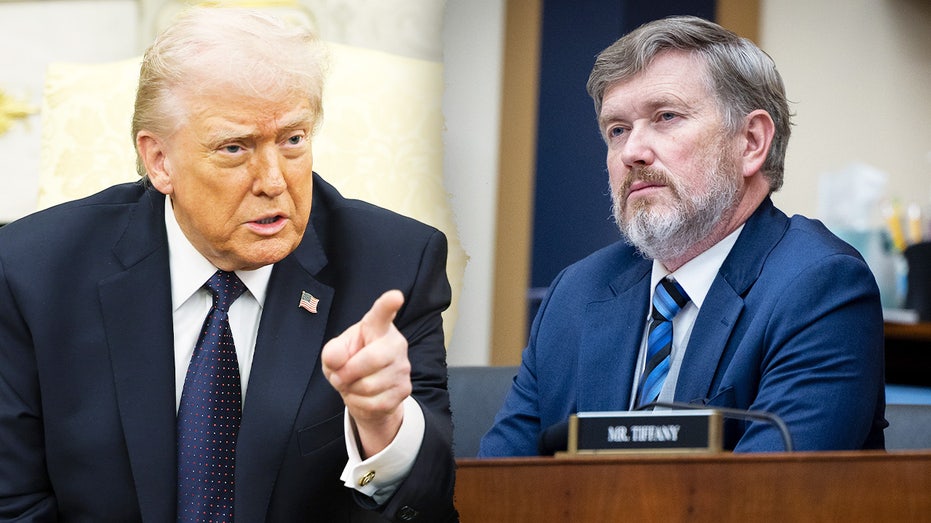
Thomas Massie accused President Trump and Secretary Hegseth of violating the War Powers Resolution, joining Democrats in a resolution to sue over the Iran war.
During the run-up to President Donald Trump’s election in 2024, he told his followers that “mass deportations” were on the way. Now, while the immigration crackdown has undoubtedly been one of his most visible policies, many in the MAGA movement are beginning to say they were “intentionally misled,” arguing that Trump isn’t doing enough to deliver on his xenophobic campaign promises. This is according to the conservative publication the Dispatch, which asserts that “a vocal part of his base is beginning to publicly break with the administration over immigration enforcement.”While the Trump administration has pursued “maximalist enforcement for more than a year — with deadly consequences — while also claiming the deportation campaign is prioritizing the ‘worst of the worst’ criminals” and that “its enforcement policies have resulted in a record-high number of deportations,” “the agency has stopped releasing the underlying data that would substantiate — or possibly undermine — its claims.” Now, says the Dispatch, “a vocal contingent of mass-deportation activists don’t believe the topline numbers coming from DHS and argue the administration is failing to honor Trump’s promise to deport millions of people.”“I’m confused, I’m frustrated, and quite frankly, I’m angry because I believe we’re being intentionally misled,” said Mark Morgan, a former Customs and Border Protection (CBP) acting commissioner and Immigration and Customs Enforcement (ICE) acting director during Trump’s first term. Morgan is involved in the Oversight Project, “an activist group lobbying for mass deportations that recently sued the administration to get access to enforcement data DHS used to publish regularly.”Since Trump entered office, the White House has stopped releasing detailed immigrant arrest data via platforms like the ICE website, which used to be updated quarterly. Instead, DHS now puts out simple topline totals asserting hundreds of thousands of deportations along with millions of self-deportations. Currently the agency claims that more than 2 million undocumented immigrants have left the country. “Significantly,” notes the Dispatch, “this number was not based on actual records DHS has of millions of people leaving. DHS cited a Center for Immigration Studies researcher’s analysis as the source of the initial number, but has not explained how it has calculated the subsequent increases; the researcher, Steven Camarota, told The Dispatch last fall that how DHS has used the estimate doesn’t add up.”Deportation lobbyists accuse the White House of fudging the numbers by including removals that were not previously considered deportations, like those turned away at airports due to visa paperwork issues or those apprehended while attempting to cross the border. As a result, “Immigration hard-liners in the House sent a letter to DHS last month requesting detailed data releases, citing conflicting reports on the numbers of deportations and the lack of transparency in how the agency is calculating self-deportations.”While earlier in the month, DHS released data indicating that immigration arrest levels have reached the highest of the term, peaking at 1,400 per day in July, according to the Dispatch, “after more than a year of DHS circulating unsubstantiated and conflicting data, deportation hawks seem unimpressed and disinclined to believe the numbers.” As Mike Howell, president of the Oversight Project and head of the Mass Deportation Coalition, pointed out last week, the 356,000 removals claimed by the administration in 2026 “includes exits and removals other than from interior deportations. ‘The numbers are also strikingly out of step with press releases claiming deportations cresting one million and self-deportations exceeding 2 million,’ he added.”Other MAGA figures have expressed similar disappointment. According to the Dispatch, “Tomi Lahren, a Fox commentator, dedicated her podcast show last week to criticizing DHS for fudging the numbers and producing underwhelming results. Deportation advocates like Lahren and Howell argued that even taking the latest 356,000 figure at face value ... it’s still a far cry from the expectations set by Trump during the 2024 campaign when he promised the largest deportation campaign in history that would remove millions and millions of people from the country.”
Amid the ongoing and deeply unpopular war against Iran, foreign policy analyst Trita Parsi floated an ominous theory Monday suggesting that the United States could soon be dragged into a second war.Parsi’s warning came just days after Iran’s Foreign Ministry claimed Ukraine had struck an Iranian shipping vessel in the Caspian Sea, killing one and injuring others. Ukrainian President Volodymyr Zelenskyy acknowledged that Ukraine had carried out strikes in the Caspian Sea that included “vessels used in military cargo shipments involving Iran.”As to how Ukraine’s recent strikes could drag the United States into a second war, Parsi laid out his theory clearly in a statement published Monday on Substack.“Ukraine is not trying to just enter the war with Iran. Rather, it appears it is trying to merge the Ukraine war with the Iran war,” Parsi, the co-founder of the Quincy Institute for Responsible Statecraft, wrote.“Why? Because if these two wars merge, Ukraine will be a belligerent in the Iran war and America will be a belligerent in the Ukraine war. That is, the US will no longer just be arming Ukraine, but also actively and openly fighting Russia with US personnel.”Furthermore, Parsi alleged that Zelenskyy had sought to pull the United States into a hot war with Russia “since 2022.” Similar allegations were floated in 2022 after Zelenskyy pressed NATO to impose a no-fly zone over Ukraine. Zelenskyy’s request was denied, with then-NATO Secretary General Jens Stoltenberg warning that doing so could spark “a full-fledged war in Europe.”“The only way to implement a no-fly zone is to send Nato fighter planes into Ukraine’s airspace, and then impose that no-fly zone by shooting down Russian planes,” Stoltenberg said at the time.Zelenskyy lashed out at NATO after it had rejected its request, accusing NATO leadership of having given “the green light for further bombing of Ukrainian cities and villages.”Ukraine is not trying to just enter the war with Iran. Rather, it appears it is trying to merge the Ukraine war with the Iran war.Why? Because if these two wars merge, Ukraine will be a belligerent in the Iran war and America will be a belligerent in the Ukraine war.That is, the US will no longer just be arming Ukraine, but also actively and openly fighting Russia with US personnel. That is the key objective Zelensky has tried to achieve since 2022... - Trita ParsiRead on Substack
Former CNN anchor Jim Acosta issued his “friends in the press” a blistering rebuke Monday for having missed a “golden opportunity” to stand up to President Donald Trump, one he attributed to “cowardice.”In a video published on his Substack, Acosta chastised journalists who attended the White House Correspondents’ Dinner on Friday, most of whom sat quietly as Trump hurled broad attacks on the media and individual journalists.“What we saw at the White House Correspondents’ Dinner the other night was an absolute monstrosity. Donald Trump got up on stage, and he went after the free press,” Acosta said.“He targeted individual journalists as political enemies. He celebrated the fact that the oligarchs are taking over the networks. And the people in the audience just sat there in this stunned silence.”Among the many targets of Trump’s attacks on the press during his WHCD speech was Acosta’s former CNN colleague Kaitlan Collins. After having just won an award for Excellence in Presidential News Coverage Under Deadline Pressure, Collins was attacked by Trump for not smiling enough. Trump also said Collins shouldn’t have won the award and called her reporting “fake.”“A depressed, distraught, despondent, whatever you want to call it, but it was not at all an adequate reaction to what he was saying,” Acosta said. “This was a golden opportunity for people in that room to stand up to a wannabe dictator and walk out of that room! And I hate to say it, but I just think that my friends in the press, they just blew it!"Acosta continued, “The American people could see it and it crystallized what is, I think, a real problem that we have in this country right now. And that is that the legacy and corporate media in this country, it’s just broken.”'They Just Blew It!' Jim Acosta Destroys Trump WHCD Rant — Rips Press Corps For Sitting There And Taking It by Jim Acosta'An Absolute Monstrosity!'Read on Substack
Miles Taylor, who served as a senior Homeland Security official under the first Trump administration, warned Monday that President Donald Trump has spent years indulging in "nuclear fantasies," and that recent developments suggest Trump may be edging closer to acting on them.“Between Trump’s unchecked brinksmanship, possible nuclear proliferation to new countries, and broken treaties, you have a radioactive cocktail being stirred on the international stage,” Taylor wrote in an analysis published Monday on his Substack. “Add in the unresolved war with Iran, and you get the picture of a president who’s just one mood swing away from putting his finger on the proverbial red button.”Taylor recalled that during Trump's first term, the president "fantasized quite openly to advisers about wanting to blow up bombs," prompting then-Defense Secretary James Mattis to order Homeland Security officials to prepare contingency plans for a potential nuclear strike on American soil.Taylor pointed to Trump's recent comments to Axios, in which the president said he was "close" to ordering a "massive attack" on Iran – rhetoric Taylor compared to Trump's April warning that "a whole civilization will die tonight."Compounding the concern, Taylor noted, was the administration's new nuclear energy deal with Saudi Arabia, which omits standard safeguards giving international inspectors expanded access to nuclear sites. A former International Atomic Energy Agency official said “the U.S. should never have agreed to enrichment without a really strong inspections regime,” Taylor noted.Taylor also cited the Bulletin of the Atomic Scientists, which in January set its Doomsday Clock at 85 seconds to midnight, the closest to midnight it has ever been in its 79-year history.“So why does he keep doing this? Why does the president of the United States keep circling back to the most dangerous machinery humans have ever built?” Taylor mused. “I can’t tell you his answer for sure. But based on close study of the man, I can give you my best guess. Donald Trump has spent his entire presidency on a power quest, always hunting for the next most powerful thing he can do. And nuclear weapons are at the top of that list.”Why does Trump keep toying with nuclear bombs? I think I know why. by Miles TaylorThe president has terrified close advisers with the prospect of nuclear escalation. Now, he's spreading his radioactive dreams overseas.Read on Substack
President Donald Trump made numerous promises to voters on the 2024 campaign trail, and according to a new report from The Hill, one of his biggest is still a complete flop, over a year and a half into his second term.As the Monday morning report noted, Trump repeatedly pledged to bring down costs during his reelection bid, at a time when the rising cost of living was, as it still is, the top issue on voters' minds. At one point, he claimed that he would be able to make significant cuts to the cost of energy prices, adding that he could accomplish the goal in 18 months at the most."Under my leadership, the United States will commit to the ambitious goal of slashing energy and electricity prices by half, at least,” Trump said at a campaign rally. “We intend to slash prices by half within 12 months, at a maximum, 18 months."Now, a few days past the 18-month mark of his second term, The Hill's report explained that he has not just failed to lower energy prices, but they are now getting worse under his watch."However, average household electricity prices for the first five months of 2026 were about 12 percent higher than the same period in 2024, significantly outpacing inflation," the report detailed. "While gasoline fluctuated during the Biden administration, prices are now about 60 cents higher than they were at this time in 2024, averaging $4.11 per gallon on Friday, according to AAA."Mark Wolfe, executive director of the National Energy Assistance Directors Association, spoke to The Hill about these trends and explained that energy costs are having a notable impact on the overall cost of living for Americans. Giving one example, he noted that oil remaining at around $100 per barrel for a year could cost the average family an extra $800 annually. Energy prices are also unique in their ability to raise prices across a number of other critical industries."They have higher costs of gasoline to run their car," Wolfe said. "Food costs will increase on the margin because trucks need to deliver groceries. If you use heating oil to heat your home, the cost will be higher ... On heating oil and gasoline, it’s a direct result of the war. It’s pushing up prices and creating this instability in the market."Rising electricity costs, the outlet noted, are a more "complicated" situation, with Thomas Rowlands-Rees, head of Global Power Markets Analysis at BloombergNEF, saying that “we’re getting to a point where the bill is coming” for power grid upgrades, which cannot be pinned on any presidential administration in particular. Wolfe, meanwhile, was critical of Trump for creating major roadblocks for renewable energy, which could help stabilize electricity prices at a historically volatile time."It’s a problem for any incumbent,” GOP strategist Keith Naughton told The Hill, offering a forecast for the party's fate in the midterms. “Anything that’s raising prices is going to be a challenge for whoever’s in office."
President Donald Trump is facing a dramatic reversal on the issue that helped secure his 2024 win, according to CNN chief data analyst Harry Enten.In October 2024, a plurality of voters, 44 percent, believed Trump would improve their financial situation, compared with 38 percent who expected to be worse off, but that dynamic has flipped sharply. Current polling shows 58 percent of voters, nearly three in five, now say Trump is making them financially worse off, while the share saying he's made them better off has collapsed from 44 percent down to just 13 percent."These are absolutely devastating numbers," Enten said. "The issue that got Trump re-elected, now the voters absolutely turn against him."The shift extends to broader perceptions of the economy. In November 2024, just 42 percent of Americans, well under half, said the economy was getting worse. That figure has since jumped to 59 percent, while only about one in five now say conditions are improving. With inflation and the economy widely expected to be the top issue in the midterms, Enten said, those numbers present a serious problem for Republicans heading into the fall."That's an equation that does not work out to success," he said.Historically, Trump's standing looks especially weak. According to a CBS poll, his net economic approval rating is 30 points underwater at this point in his second term — worse than George W. Bush's numbers heading into the 2006 midterms, a comparison Enten noted has not historically boded well for the president's party.The economic anxiety comes as Trump pushes for interest rate cuts and has installed a new Federal Reserve chair. But prediction markets aren't betting on it happening soon. According to Kalshi, there's less than a 1 percent chance the Fed cuts rates at its meeting this week, and only about a 19 percent chance of a cut at all this year.The bottom line, Enten said, is that the public and financial markets alike currently see little reason to expect the economic relief Trump has promised. - YouTube youtu.be