Live updates: Rubio, Mullin return to Hill; Bass awaits runoff opponent in LA race
Center
One of the busiest primary election nights in the cycle yielded some upset wins and changes of fortune. It’s too early to call the full fields for California governor and Los Angeles mayor, though incumbent Mayor Karen Bass secured a spot in the runoff. Full results could take days. In Iowa, businessman Zach Lahn beat Rep.…
Former Milwaukee County Circuit Judge Hannah Dugan urged a federal judge this week to toss out her conviction on obstruction charges for helping an illegal immigrant evade arrest last year, as part of a last-ditch effort before she is sentenced. U.S. District Judge Lynn Adelman, an appointee of former President Bill Clinton, heard arguments in […]
The Senate on Wednesday voted to start considering a package to fund immigration enforcement agencies after weeks of delay while Republicans pushed back on the White House’s $1.8 billion “anti-weaponization fund.” The 53-46 vote kicks off hours of debate, followed by a series of unlimited back-to-back amendment votes before final passage later this week. The…
Senate Majority Leader John Thune (R-S.D.) says he’s “hopeful” that there are enough Republican votes to advance a $72 billion budget reconciliation bill on the Senate floor Wednesday, which would set up a marathon series of votes on amendments likely to last until Thursday morning. “We’re hopeful,” Thune said of advancing the package to fund…
The Trump administration is signaling it will back off its planned $1.776 billion “anti-weaponization” fund. Why the retreat, and what’s next? Plus, there is a sex scandal plaguing a federal judge, with growing calls for her to face additional punishment. Join Legal Affairs Reporter Zach Schonfeld and White House & Legal Affairs Editor Rema Rahman for…
Senate Republicans decided not to allocate federal funds to Donald Trump’s ballroom project in the latest draft of their budget reconciliation bill on Wednesday, in a blow to the president’s architectural takeover of the nation’s capital.Before the $1.8 billion “anti-weaponization fund” overshadowed it, Trump’s ballroom project was the clearest example of how his solipsism was hurting American taxpayers. The White House said the ballroom was needed for security purposes, and initially claimed it would be funded with approximately $200 million from Trump and “other patriot donors.”That number later doubled to $400 million, before ballooning to a $1 billion funding request for White House security—part of which would go toward the ballroom.Despite badgering by Trump that the ballroom was especially needed after a gunman attempted to sprint through a security checkpoint at the White House Correspondents Association dinner at the Washington Hilton in April, using taxpayer money on a ballroom was deemed unnecessary by nonpartisan Senate parliamentarian Elizabeth MacDonough in May. Trump then tried to get MacDonough fired, while his administration submitted court documents claiming the ballroom was somehow “under budget.”Four Republican senators—Bill Cassidy of Louisiana, Susan Collins of Maine, Lisa Murkowski of Alaska, and Thom Tillis of North Carolina—publicly voiced opposition to public money going to the vanity project in May. A larger group inside the GOP were privately against the ballroom, according to five anonymous insiders who spoke with Politico. And most GOP senators were likely worried Democrats would put them on the record about whether they supported public funds going to the ballroom during the filibuster process.Trump’s “anti-weaponization fund” has also recently been discarded after he faced public pressure and legal challenges to it.The Senate began voting to begin discussing their reconciliation bill Wednesday at 2:15 p.m. Eastern Time. The bill’s primary impact would be to fully fund the Department of Homeland security through the end of Trump’s second term.
Senate Republicans removed $1 billion in Secret Service security funding for the White House and President Donald Trump’s yet-to-be-built East Wing ballroom from the party’s immigration enforcement bill, according to new legislative text released Wednesday. The move was in response to Republican opposition over the optics of taxpayers footing the $220 million bill for ballroom […]
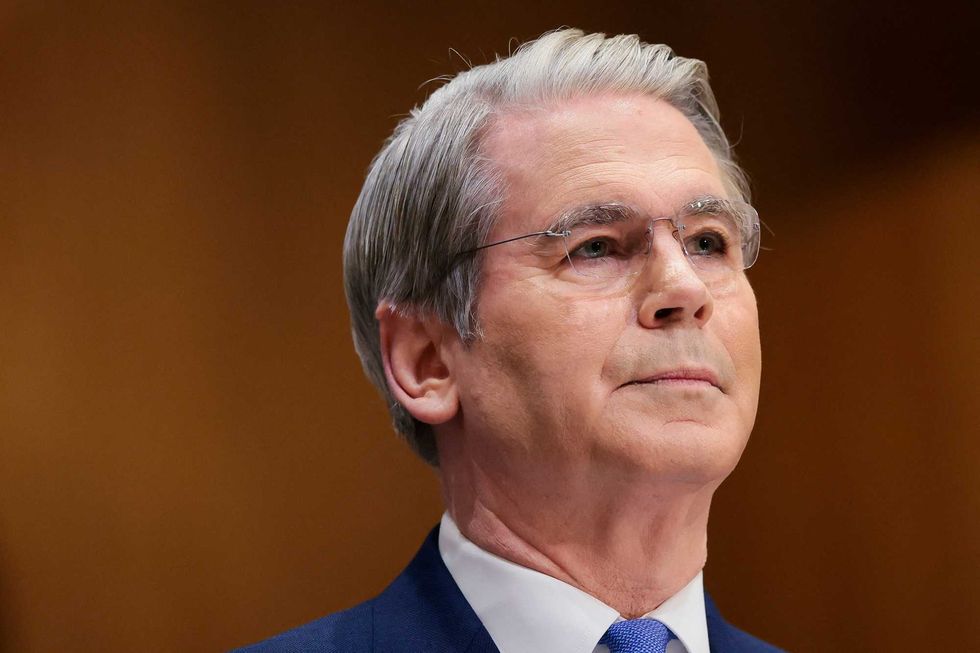
While appearing before the Senate Finance Committee on Wednesday, Treasury Secretary Scott Bessent struggled and failed to justify a recent assertion by his boss, President Donald Trump, leading to a tense back and forth. The exchange began when Senator Maggie Hassan (D-NH) asked Bessent about Trump’s recent assertion that he doesn’t “think about Americans’ financial situation” when considering his conduct regarding the war with Iran. The president made this statement in mid-May — which he later defended as “perfect” — prompting outrage from Americans struggling with rising prices. When asked about the comments on Wednesday, Bessent attempted to dodge, saying, “I believe his remarks were taken out of context.”But Hassan would not be dissuaded so easily, saying, “Here's what he said. He said, quote, ‘I don't think about Americans' financial situation. I don't think about anybody.’ So I'm asking you… Do you think about how the American people are paying more for gas, groceries, and utilities since the president clearly said he didn't? And you speak with the president regularly. Are you trying to tell him the truth about how much costs have increased for the American people?”“Well, senator,” Bessent argued, “I'm going to have to disagree with you on some of that, because I have groceries are going down. Since President Trump took office, food prices — or as many people like to call them, ‘groceries’ — food at home in the statistical data is up 2.5 percent.”“When's the last time you were in a grocery store?” Hassan asked. “Because my husband and I were just in one, and look: the average Granite Stater has paid $3,000 more since Donald Trump took office for basic goods and services. Meanwhile, the country lost 100,000 manufacturing jobs in 2025. So do you tell the president this information or not?”“Again, senator,” Bessent stammered, “The… except for inflation, which is, I believe, going to be a short-term blip, the economic data is very strong. The jobs data has been very strong. The manufacturing has been very strong.”“No, actually that's incorrect,” asserted Hassan. “So let's move on, because what is very clear to me is that neither you nor the president nor this administration are willing to acknowledge how much more people are paying at the gas pump, at the grocery store, in utilities, for health care, for all aspects of American life.”Try as he might, Bessent could not squirm past hard numbers. Hassan is right. When Trump made the controversial statement, the war had been going on for over two months, over the course of which the price of gas rose by roughly 50 percent. The latest numbers show that Americans have spent an extra $500 per household on gas alone since the war began, with Fortune reporting that the war has put a $100 billion burden on taxpayers overall, and prices are not expected to ease for months to come. What’s more, since Trump returned to office, the U.S. has lost between 80,000 and 110,000 manufacturing jobs, while healthcare premiums and other costs have increased precipitously.