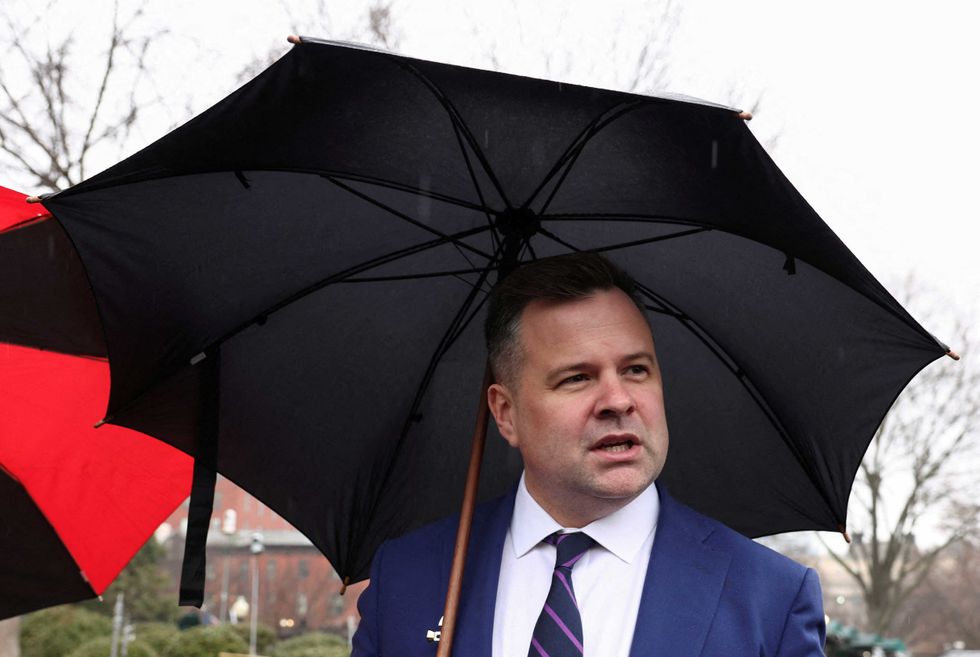
President Donald Trump's controversial new intelligence chief is clearing house, and career officers warn the man swinging the axe doesn't know what he's cutting.Bill Pulte, Trump's loyal acting director of national intelligence, began notifying dozens of intelligence officials of their terminations Thursday, part of a downsizing Trump ordered when he installed Pulte at the office two weeks ago, MS NOW reported Friday. An intelligence official, who spoke anonymously citing fear of reprisal, told the outlet that leadership is targeting workers it believes are "deep state" and accused them of failing to hand up a complete picture of available intelligence.But former officials aren't buying his rationale. Several told MS NOW they had never heard of intelligence officers withholding information from their superiors. "The premise is absurd," one said. Another questioned how Pulte, who ran the federal housing agency and has no intelligence background, could reach such a conclusion within days of arriving.“I have a real question of how he would know this. This isn’t a guy who is familiar with intelligence,” a former official told the outlet. “How is he going to get to the bottom of this and rely on any information with a matter of fidelity? It would be like me taking over a hospital and firing dozens of surgeons in a matter of days.”The cuts follow Pulte's earlier removal of six political appointees who served under his predecessor, Tulsi Gabbard. His arrival has drawn alarm across party lines: he took the post without ever holding a security clearance, and he can stay in the acting role past November's midterms under federal vacancy rules. Critics note his office doesn't collect intelligence of its own, relying instead on the CIA, the NSA and more than a dozen other agencies to supply it.Democrats and some Republicans fear the purge is less about efficiency than about clearing out analysts who might resist Trump's election claims. The ODNI says it is providing "elite, apolitical intelligence that keeps America safe."
Two major polls of the Maine Senate race dropped this week, and they told the same story: The race is incredibly close, and Democrat Graham Platner has real work to do among the working class. He's running an aggressively left-populist, anti-establishment campaign targeting the billionaire class-and boasts lots of blue-collar appeal-but GOP Senator Susan Collins is way ahead among those voters. Why?
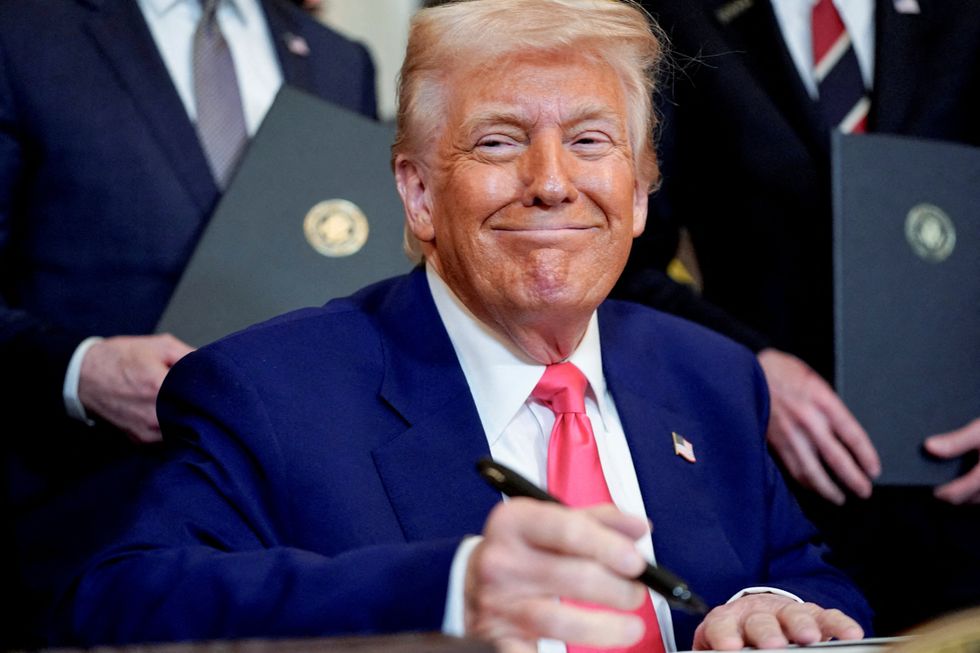
The Trump administration is asking a federal judge to quickly lift her recent ruling against major provisions of a presidential executive order on elections, arguing in an appeal that the court’s action will effectively prevent the government from putting new voting restrictions in place before the November election.This article was originally published by Votebeat, a nonprofit news organization covering local election administration and voting access.Last week, U.S. District Judge Indira Talwani halted President Donald Trump’s efforts to create centralized lists of adult citizens and give the U.S. Postal Service unprecedented authority over who can vote by mail. Her 37-page ruling concluded that the president did not have the constitutional authority to regulate state elections, as his March executive order tried to do.The executive order directed the U.S. Department of Homeland Security and Social Security Administration to create a nationwide list of verified U.S. citizens over 18, and thus presumably eligible to vote in federal elections. It also called on the U.S. Postal Service to create a system to handle and accept mail-in ballots only from voters on preapproved lists.Talwani’s order prevents the federal government from enforcing those provisions of the order against the 24 jurisdictions (23 states and the District of Columbia) whose attorneys general and governors brought the lawsuit in federal court in Massachusetts. The list includes most Democratic-led and swing states, including Arizona, California, Michigan, Nevada, New York, North Carolina, Pennsylvania, and Wisconsin.This week, the Trump administration appealed Talwani’s ruling to the First Circuit Court of Appeals and said it is still proceeding with its efforts to set up the new system for the rest of the states. But it warned that the judge’s order will make it impossible for the U.S. Postal Service to create a bifurcated system for the November election, even if the administration ultimately prevails on appeal. Government attorneys asked Talwani to lift her ban by Monday.The request for a quick decision suggests that the Trump administration may be trying to speed things up so the case reaches the U.S. Supreme Court as soon as possible.“Operationally, it would not be possible for us to put a two-tiered system in place where one set of rules apply to the ballot mail of the Plaintiff States, and another applies to the remaining states,” Steven Monteith, the Postal Service’s chief customer and marketing officer and executive vice president, said in a court filing. “Doing so would cause operational confusion and significantly increase the complexity and efficiency of implementing any final rule.”But the Trump administration’s nationwide efforts to use the Postal Service to regulate who gets ballots also hit a separate legal roadblock this week when another federal judge in Washington, D.C., ruled that the executive order violates a years-old agreement requiring the federal government to ensure voters who request mail-in ballots get them in time to ensure they can be counted.U.S. District Judge Emmet Sullivan concluded that the Trump administration’s plans to send ballots only to voters on preapproved lists breached a 2021 agreement between the Postal Service and the NAACP meant to ensure that the agency prioritized ballot delivery. In contrast to Talwani’s ruling, Sullivan’s decision applies nationwide.“These proposed rules directly undermine commitments that the Postal Service made to ensure mail-in ballots are delivered and counted,” said Anthony Ashton, senior associate general counsel for the NAACP, in a statement.The U.S. Postal Service and Department of Homeland Security did not respond to requests for comment.Dion Nissenbaum is Votebeat’s senior national reporter and is based in Houston. Contact Dion at dnissenbaum@votebeat.org. Votebeat is a nonprofit news organization covering local election integrity and voting access. Sign up for their newsletters here.
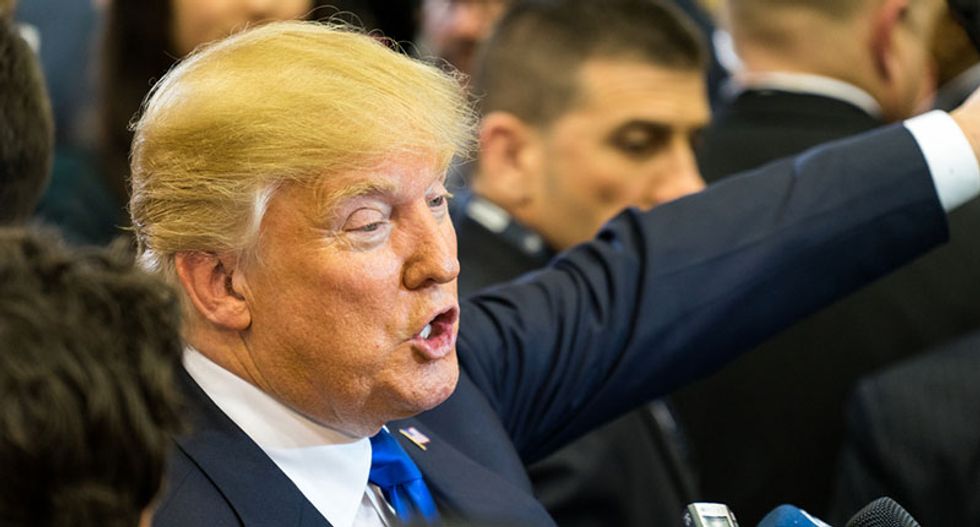
The Trump administration concluded a recent mineral deal with Kazakhstan that, not surprisingly, enriches not only President Donald Trump’s own family but that of his secretary of commerce, Howard Lutnick. Trump’s two eldest sons, part owners of Dominari Securities, are set to profit from the Kazakh tungsten deal. So is Cantor Fitzgerald, the investment firm run by Lutnick’s two sons.As The New York Times pointed out in its investigation of the scheme, “Their sons were soon doing business with partners in a deal that their fathers were negotiating, continuing a pattern of self-enrichment in the second Trump administration that has few precedents in American history.”The phrases “self-enrichment” and “few precedents” are interesting ways of characterizing this latest instance of the administration’s corruption. Isn’t self-enrichment a good thing, in the sense of profiting from your own hard work? By contrast, the article doesn’t mention the word “corruption” at all. Perhaps the Times is worried about getting hit by yet another Trump legal challenge (in October last year, Trump refiled a $15 billion defamation suit against the paper for its coverage of his 2024 presidential campaign).There are indeed several precedents in American history for what Trump is doing. These previous corruption scandals—Credit Mobilier, Whiskey Ring, Teapot Dome—wrecked the reputations of presidents and cast long shadows over American politics. They also helped to produce the kind of safeguards that Trump is now destroying.Foreign policy is a tool by which the administration levies a toll on any entity that has the temerity to be a country other than the United States. As with much of Trump’s disrespect for norms, his corruption has been massive and largely in full view. The two outstanding questions are: Will Trump and company ever be held accountable for their graft and will this corruption have an enduring impact on political institutions in the United States?Tracking the DamageIf scandalous behavior unfolds in full view of everyone, is it still a scandal? “Scandal” suggests something hidden, something whispered about, something revealed. Trump’s actions are full frontal. They are both brazen and matter-of-fact.According to the Trump administration and its extended family, the money skimmed off the top of economic transactions is just smart politics. The administration has endeavored to negotiate every peace deal, trade agreement, investment arrangement, and mineral pact in such a way as to deliver Trump, his family, and their circle of close supporters a good chunk of change.This is Trump’s interpretation of the American dream: Folks would be downright foolish not to profit from their position. All the great tycoons made their money, from railroads to AI, by being in the right place at the right time with the right amount of ruthlessness. In Trump’s case, however, he is using taxpayer money to cover the risk. And most the time, given the terms of the arrangement, there is hardly any risk because Trump is using his presidential power to game the system. That’s what he really means by the “art of the deal.” Trump only deals from a marked deck of cards.The Center for American Progress runs Trump’s Take, which estimates that the president has received a little over $2.6 billion in cash and gifts since he took office in January 2025.The graft is not secret, though sometimes the actual amounts involved are obscured by layers of complex finance. Trump’s recent mandatory financial disclosure offers some details. But thanks to a number of websites, it’s become quite easy to track in real time the growing amount of Trump’s slice of the pie.The Center for American Progress runs Trump’s Take, which estimates that the president has received a little over $2.6 billion in cash and gifts since he took office in January 2025. Much of this money has come from various crypto schemes, including the Trump meme coin, but also such dubious ventures as the documentary about Melania Trump and a number of legal settlements (more colloquially known as shakedowns). Corruption Counter puts the value at $2.2 billion and includes such recent items as the $100 million savings for Trump from the recent effort to bar the Internal Revenue Service from auditing the president. (Courts blocked the overall $1.8 billion “settlement fund,” but the Justice Department is upholding the IRS amnesty.)If you want to keep track just of the crypto deals, the Democrats on the House Oversight Committee maintain the Trump Family Digital Grift Wealth Tracker. Senator Chris Murphy (D-Conn.) keeps his own list, which highlights the insider trading around the Iran War and a defense contract with Dell after the president invested in the company. David Kirkpatrick, at The New Yorker, has been keeping a running total of Trump’s ballooning assets. In January, he updated his total to $4 billion, which details, among other things, the Gulf money flowing into Trump pockets.
Lena Dunham and Jack Antonoff are risking an awkward run-in as they’re both attending Taylor Swift’s star-studded wedding festivities. The exes, who dated from 2012 to 2017, were both spotted arriving to Madison Square Garden Thursday evening for the pop star’s rehearsal dinner ahead of her wedding to Kansas City Chiefs tight end Travis Kelce....