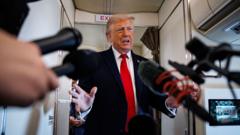
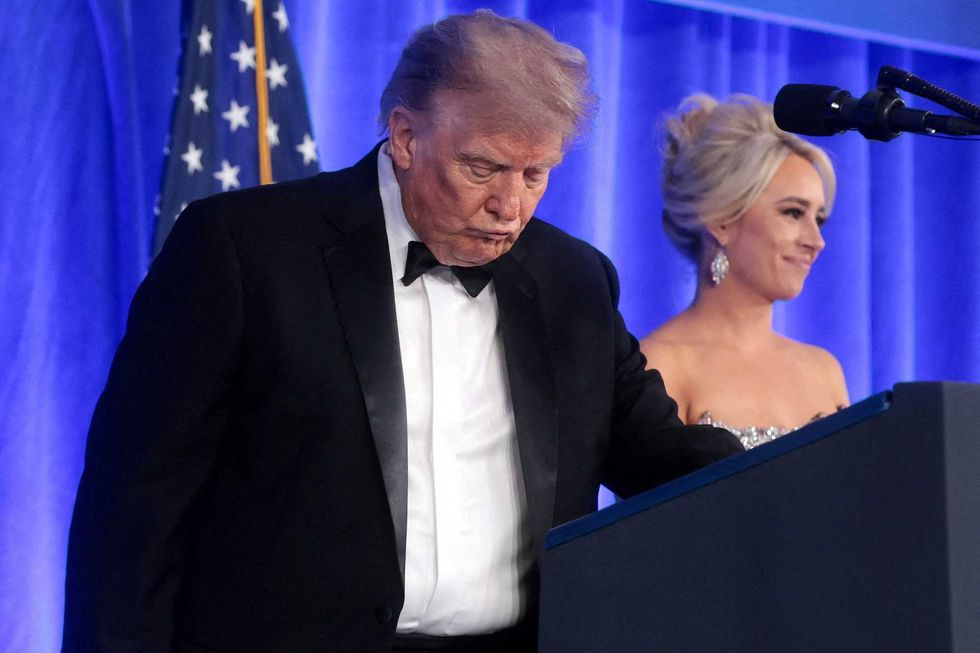
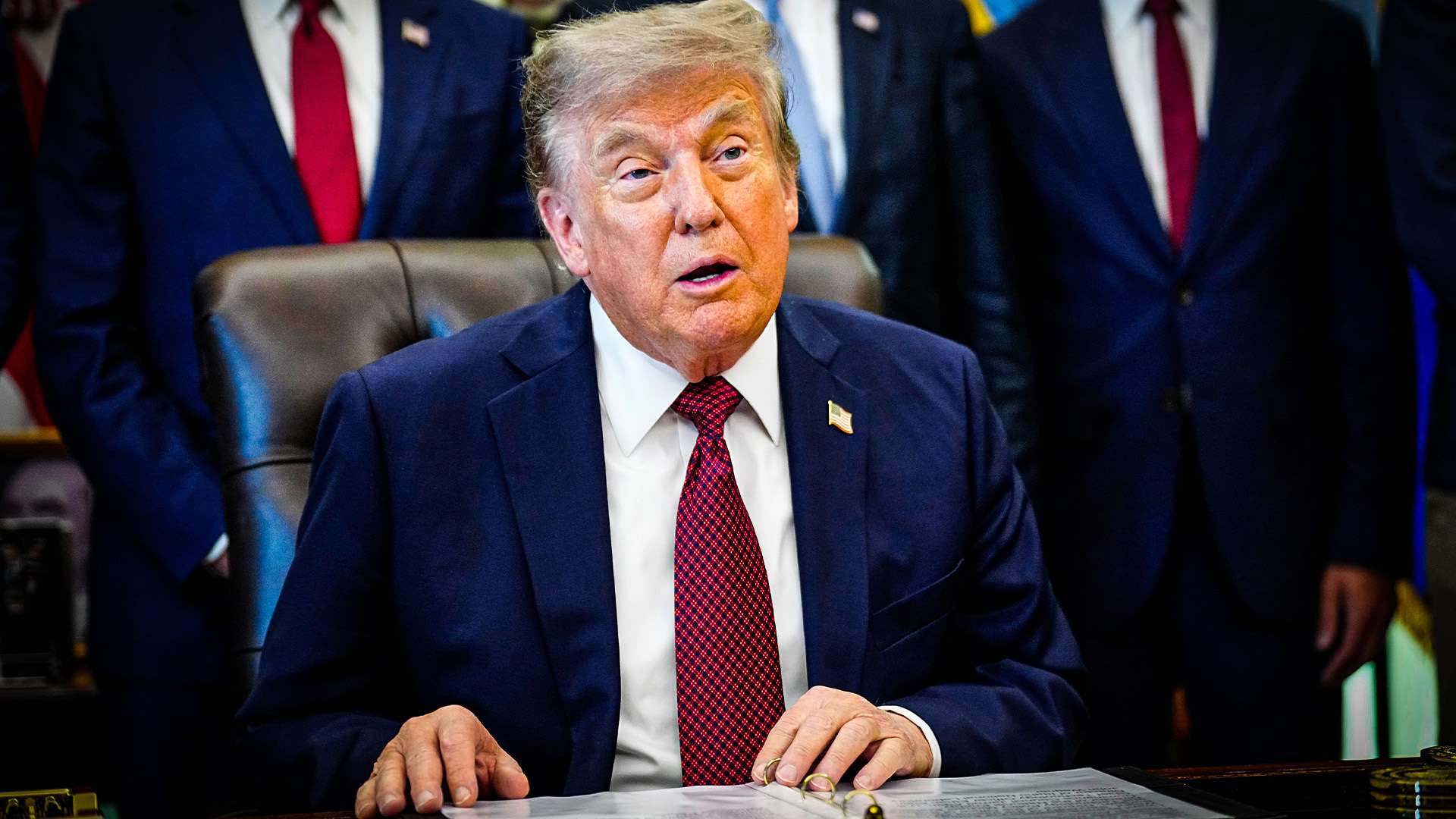
President Donald Trump’s complaints about coverage of his second term from the White House Correspondents’ Dinner last Friday were dismantled on Monday morning.On MS NOW’s “Morning Joe,” co-host Joe Scarborough laid reports about the White House chaos at the feet of Trump, who insisted on Friday that those reports are all “fake news.”“The Iran war, it keeps grinding on and on and on, a war of choice, and as it grinds on, Americans' approval of it collapses by the day,” he stated. “So Friday night, at an event that should have never been held, the president tells a room of reporters not to believe, quote, ‘fake news’ about how that war is going.”“Well, that fake news actually comes from calls inside the house, from the administration, from people who know it was a mistake to go in and there's no good way to get out. So you be the judge of that,“ he added.“But you don't have to judge higher costs, affordability, the president mocking affordability, like with your grocery bill, food prices are now rising at their sharpest pace in 50 years,” he elaborated. “You can read that in the Associated Press. You can read that in a variety of news reports this weekend — but you don't have to. All you have to do is look at your bill. Food at home costs up 33 percent since 2019, against just 6.4 percent growth in the seven years before that. And ground beef is now $6.82 a pound, up 79 percent. Gas prices? They just keep spiraling up, the price of oil spiraling up and war, it drives up fuel and fertilizer prices, and those prices drive up food.”“And it is food that's eating more of your paycheck than at any time since Gerald Ford was president of the United States,” he continued. “So against this backdrop, how did the president spend that same Friday night, not reassuring Americans on the war, not reassuring Americans on the cost of beef or on the cost of gas? No, he spent an hour on the physical appearance of the press corps confronting him, even telling CNN’s Kaitlan Collins on camera that she's attractive but never smiles and seemed to compare her to a trans influencer.” - YouTube youtu.be
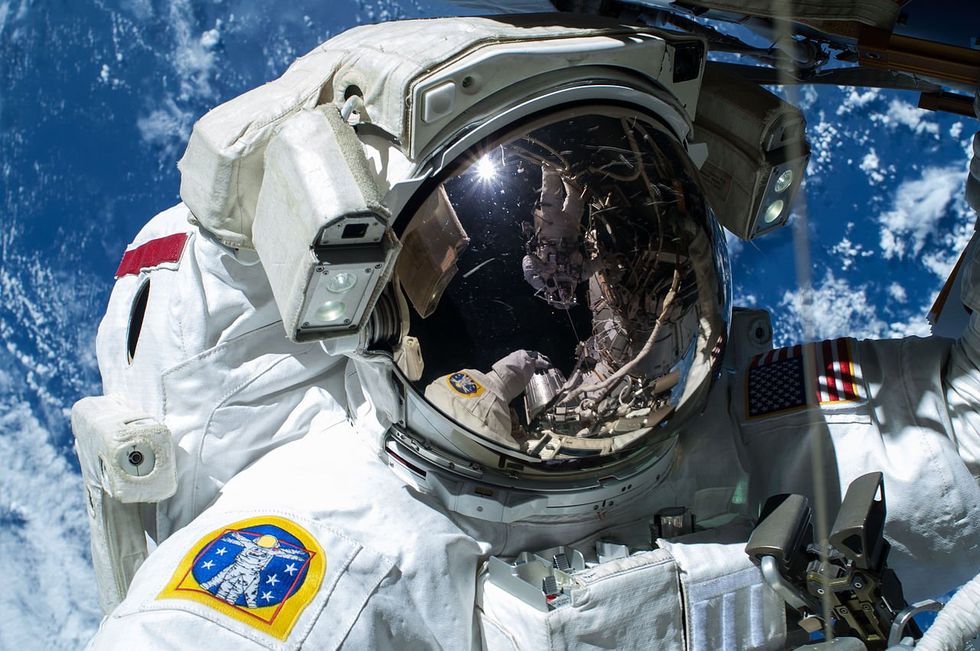
More than 100 retired NASA astronauts just launched a voting campaign that boils down to this: they've seen America from space, and they're scared as hell about what's happening down here.The group, called Astronauts for America, kicked off their "Vote for Freedom" push on July 20 with a blunt message aimed straight at young voters: democracy is under attack, and you need to show up at the polls in November or we're done.Charles Bolden, who ran NASA under President Obama and flew four shuttle missions, didn't mince words. "We may not make it if we don't do something now," he said, pointing directly at what he called Trump's "assault on democratic norms."Bolden warned there's no time left to waste. "We may not have another presidential term to try to make a difference," he said bluntly.So why are a bunch of former space explorers suddenly getting political? Because they've seen something most of us haven't: what America actually looks like from 250 miles up.Astronaut Cady Coleman, who spent six months floating above Earth on the International Space Station, says she didn't see red states or blue states—no borders, no divisions, just one country. That perspective apparently changed everything for her and her colleagues."During my spaceflights, I literally didn't know and never asked about their politics," Coleman said. "But now we're all together, and what we're fighting for is something that's common to all of us—we're fighting for our country, for our democracy."Here's their game plan: hit up about 60 college campuses in swing states and get young people fired up about voting. They're not running as Democrats or Republicans—they're just saying: vote, or democracy dies.Linda Godwin, another veteran astronaut, put it simply: "Right now, we think our country is the mission."They're also planning to grade congressional candidates on whether they actually care about the Constitution. In other words, they're calling out the phonies.Ellen Ochoa, the first Latina in space, nailed it: "A democracy depends on people actually participating. Voting is the single most important thing you can do."The astronauts summed up their entire mission in one line—and yes, it's a callback to Neil Armstrong: "Going to the polls is one small step for you, and one giant leap for our country."With 100 days until the election, the astronauts' message is clear: this isn't politics as usual. It's a fight for the survival of democracy itself.
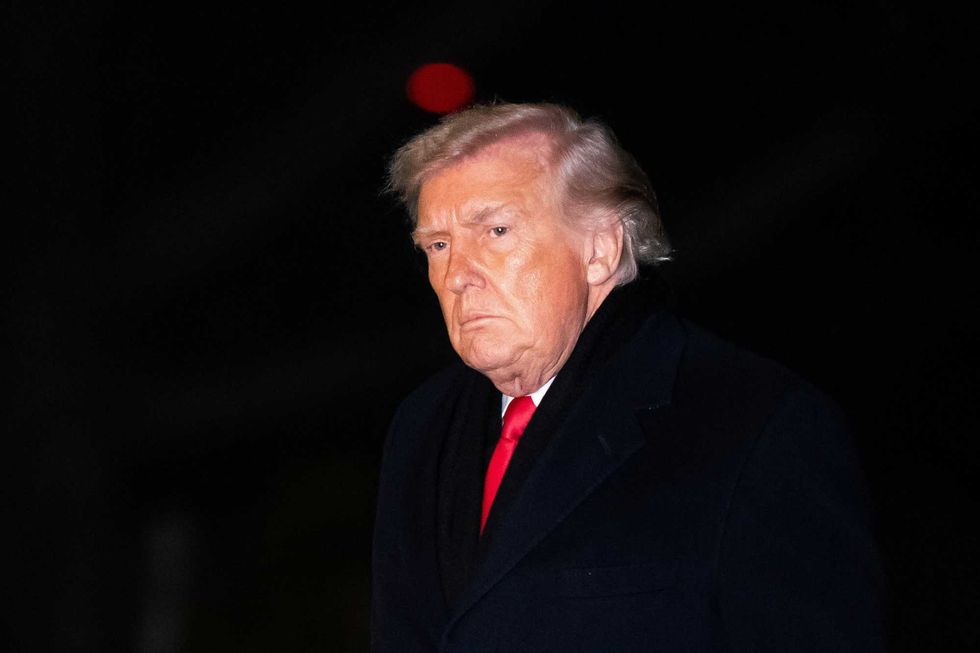
With gas prices back above $4 a gallon and the midterms approaching, Republicans are choosing to defend President Donald Trump's Iran policy rather than distance themselves from it — a bet that could backfire as voters feel the pinch at the pump.Some GOP lawmakers acknowledge the political risk, but few are willing to blame the 80-year-old president for the higher prices or criticize his decision to launch a war against Iran as they make their case to voters heading into the midterm elections, reported MS NOW.“It’s certainly something we’re concerned about,” said Rep. Richard Hudson (R-NC), chair of the National Republican Congressional Committee. “President Trump did the right thing ... We need to support what he’s doing. If that means we have to go to the voters and explain it, so be it.”Hudson insisted the issue had not yet shown up in NRCC polling, but Republicans seem aware that voters are skeptical of the war and its impact on fuel costs.“We’ve got to explain to people that, you know, unfortunately until we get some new leadership in Iran, we’re going to continue to see conflict, which is going to see higher gas prices,” said Sen. Rick Scott, who previously chaired the Senate GOP’s campaign arm.That message may not hold. Some Republicans not seeking reelection were more candid about the risk. Rep. Thomas Massie (R-KY) suggested voters would eventually stop trusting favorable media coverage and start reacting to what they're paying at the pump.“Eventually, I think people’s pocketbooks are going to impose reality on them, and they’re going to quit watching Fox and pay more attention to the gas prices,” Massie said. Rep. Bill Cassidy (R-LA), who like Massie was ousted by a Trump-endorsed primary challenger, was more measured, arguing that solving the affordability problem is good politics.Many rank-and-file Republicans dismissed the price increases as temporary, deflecting blame toward local regulations, alleged corporate price gouging, or the previous administration. Rep. Ted Budd (R-NC) invoked Biden-era gas prices while defending the Iran strikes as necessary. Reps. Tim Moore (R-NC) and Tim Burchett (R-TN) both pointed fingers at oil companies rather than the war.Rep. Troy Nehls (R-TX) dismissed the entire issue as election-season noise. “The only reason you’re talking about gas prices is because we’re a few months away from a general election, and you’re just trying to get people irritated,” he told MS NOW. “That’s what you do.”“We knew it was going to go up," Nehls added, "but it is really temporary.”Vulnerable incumbents took a different tack. Reps. David Valadao (R-CA), Mike Lawler (R-NY) and Brian Fitzpatrick (R-PA) each tried to shift blame toward Democratic energy policy rather than directly defend the war's economic fallout.The polling suggests the political ground is shifting under them. Oil prices jumped roughly 10 percent last week as hostilities continued, and gains Trump had made in approval ratings after an earlier ceasefire have largely disappeared. A Gallup poll found two-thirds of Americans reporting financial hardship from rising gas prices, with majorities saying they're driving less or altering summer travel plans. A Politico poll found most Americans, including a majority of MAGA voters, blame the war for the price spike — and nearly half of those MAGA respondents said it could push them to vote outside their party.Democrats are moving quickly to capitalize. House Democratic Leader Hakeem Jeffries (D-NY) has directly tied the price surge to the war, while Rep. Pat Ryan (D-NY) argued the administration has failed on both of its major promises — lowering costs and avoiding new wars.
Way back in February, and what seems like 10 years ago, I spent a snowy Monday morning in Wisconsin typing to you about the importance of the word inevitable to describe two things I saw coming in November’s monumental elections in the United States of America pitting freedom vs. fascism. It is inevitable Democrats will smash Republicans in November’s midterm elections.It is inevitable that the fascist felon, Donald Trump, will do everything with the power anointed him by his crooked Supreme Court to stop those elections and/or change those results.As we close in on those key elections, which are now but 100 days away, those two statements are holding up remarkably well, and on their way toward a historic collision. January, 2027, will usher in the new year, and reveal what kind of country we will live in going forward. Put starkly in the light of this July day: Will elections matter anymore?Because that is what is on the line right now.There is increasing certainty that a majority of Americans are going to vote for a drastic change in the leadership of our House of Representatives, and for a Senate that is also controlled by the Democratic Party.It is inevitable that Democrats are going to have a very, very good day on November 3. Since 2024, they have flipped 30 legislative seats, and Republicans have flipped zero. There is absolutely no reason to believe their success at the polls will not continue. So why is it important to point out the inevitability of these things happening? Because as sure as I am laying down these inevitable results, Trump and his subservient Republicans inevitably will do everything in their power to attack those elections again, because that is what violent authoritarian regimes do.Come November 4, nobody will be able to say they were surprised by the thrashing Democrats laid on Republicans when it was inevitable it was going to happen all along.In my piece Wednesday, This is the End, I laid out all the trouble Trump is in, and what his inevitable reaction will be to his self-made disaster, typing:“… we know that while Trump has always been a violent man, attacking America is the thing he relishes most ...”In the three days since I published this well-read offering (and thank you), two significant polls have come in, that only buttress my case.A new Marquette Poll released this week revealed that Trump’s approvals are at an all-time worst -18% in Wisconsin. That poll is the gold standard in the Cheese State, and its findings reveal massive trouble for the Republican Party nationally. Why?Because Wisconsin might be the ‘“swingiest” state in the country. As Wisconsin goes, so goes the country …If Trump is polling this bad there, it is inevitable he will be a drag on GOP candidates in close contests throughout the country come November.And while Trump and his Republican Orcs tried to cover their eyes from the Wisconsin Poll, a Fox News poll also dropped later that day, and there wasn’t a thing they could do to shield themselves from that damaging, incoming friendly fire …Rupert Murdoch’s gang topped the lead story on their website published at 6 o’clock sharp Wednesday evening, with this ominous slammer:FOX NEWS POLL: VOTERS WANT MAJOR CHANGE AMID ECONOMIC POLITICAL DISCONTENTHere was the subhead:Latest survey shows Trump approval stuck near record lowYou could almost hear the garish golden chandeliers rattling inside the White House when that poll was dropped like a bomb across America — a poll, by the way, that mirrors the Marquette findings on Trump and his odious party.There were ominous numbers for Republicans all over this poll signaling their inevitable demise, but I’ll share just a few nuggets that thoroughly delighted me:More Democrats (68%) say they are extremely motivated to vote in November than Republicans (57%) by an 11-point margin. By a 25-point spread, more MAGA Republicans (66%) are extremely motivated than non-MAGA Republicans (41%).Voters say Democrats can better handle income inequality (+22 points), healthcare (+21), inflation (+10), the economy (+9), and foreign policy (+7). Republicans hold the advantage on crime (+7 points), while government spending (Democrats +3) and national security (R +2) are more evenly divided. On immigration, the GOP had an 8-point edge in April. Now, Democrats are preferred by one point.If the election were today, 53% of voters would back the Democratic candidate in their House district and 46% the Republican. That 7-point edge is just outside the poll’s margin of error. Democrats were up by 5 points in April. Notably, 53% is the highest percentage either party has received on the generic House ballot in Fox News polling since 1996. So a couple of words on all that:HOLY YOU-KNOW-WHATWith 100 days until the elections, Republicans are in deep, deep trouble, know it, and lack the courage to save even themselves from the orange arsonist and cult leader, who has taken a match to their chances in November.
The announcement of the proposed U.S. agreement to help build Saudi Arabia’s civilian nuclear energy program on July 22, in the midst of the U.S. war on Iran, indicates that both Washington and Riyadh have concluded, from the perspectives of their respective vital national interests, it’s time for a reset of the 80-year-old U.S.-Saudi strategic […]
LANSING, Michigan — Rep. Tom Barrett (R-MI) has made supporting veterans his bread and butter as a first-term congressman from a swing House district in Michigan. Before stepping foot in the halls of Congress, his 22 years in the Army were the near-singular focus of biographical campaign ads. It’s a path often taken by military […]
As Washington assesses the economic and strategic costs of its conflict with Iran, one part of the calculation has received too little attention: A stable, free, and globally connected Iran could become one of America’s most consequential economic and strategic opportunities in the Middle East. The fall of the Islamic Republic and the establishment of […]