Grant cancellations ‘based solely’ on politics: filing
Source: The Hill News · Bias: Center
Summary
{beacon} Energy & Environment Energy & Environment The Big Story Grant cancellations ‘based solely’ on politics: filing Federal green grants canceled last year were selected “solely” based on a state’s political affiliation, the Trump administration said in a recent court filing. Greg Nash In the filing, Department of Energy (DOE) lawyer Jeff Novak said the…
Grant cancellations ‘based solely’ on politics: filing
Center
{beacon} Energy & Environment Energy & Environment The Big Story Grant cancellations ‘based solely’ on politics: filing Federal green grants canceled last year were selected “solely” based on a state’s political affiliation, the Trump administration said in a recent court filing. Greg Nash In the filing, Department of Energy (DOE) lawyer Jeff Novak said the…
New York State Attorney General Letitia James hammers conservative outfits over paperwork errors, but look how kind she is when the Council on American-Islamic Relations, a political ally, flouts state charity and elections law.
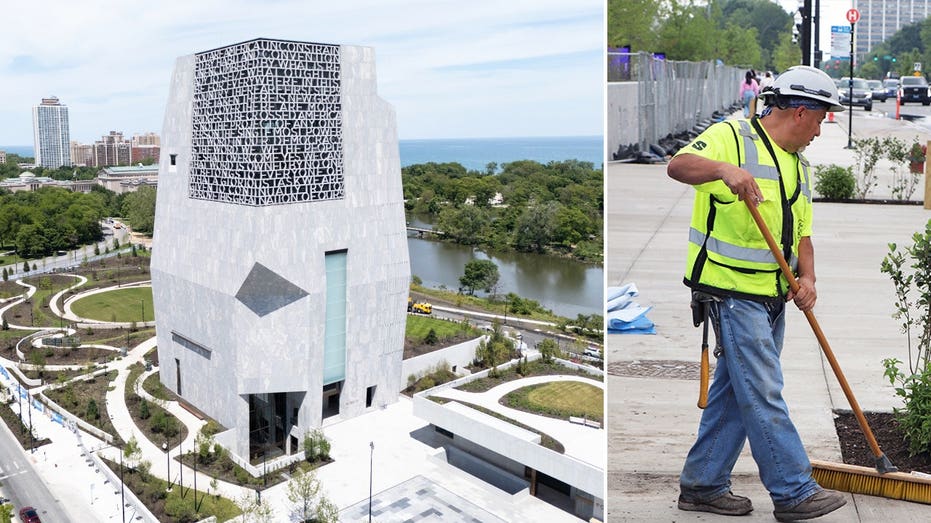
Three subcontractors claim nearly $900,000 in unpaid work on Home Court, the Obama Presidential Center's basketball facility hosting WNBA All-Star events.
America remains deeply divided over whether the 2020 presidential election was stolen from Donald Trump. Millions believe the system failed them, while the media, intelligence bureaucracy, and the left have treated their doubts as something to suppress rather than investigate.The documents released this week by the Trump administration do not close the case. They reopen it — and make the “nothing to see here” narrative indefensible.Start with communist China.The released intelligence reports that approximately 220 million American voter records are in Chinese hands. Tens of millions of records across 18 states were bought, stolen, or hacked and included names, addresses, phone numbers, party preferences, and other sensitive information.A sovereign nation must know that the people selecting its government are its citizens. That does not prove China changed a single ballot, but it does prove Beijing possessed a political targeting asset. When a strategic rival aggregates enormous datasets and applies modern analytics, it gains the ability to identify, target, and influence American voters at industrial scale. The most disturbing disclosure involves the President’s Daily Brief — the president’s most sensitive and consequential intelligence product. In one released email, an official wrote: “We have deliberately massaged our one pending PDB to avoid any direct links to the election.”In a separate internal chat, a counterintelligence official boasted: “I’m basically running a shadow government across the FBI at this point.”The left has spent years ridiculing concerns about a “deep state” as conspiracy theory. These revelations make that ridicule look increasingly like camouflage.Then comes the voting-system reveal.A Cybersecurity and Infrastructure Security Agency report included in the administration’s document release identifies weak access controls, outdated operating systems, flat networks, inadequate monitoring, and legacy remote-access pathways across state and local election environments. During multiple penetration tests and red-team exercises, CISA assessors gained full control of election-office networks within hours or days.Separately, the report cites research involving one ballot-marking system showing that barcode-encoded votes could be altered without changing the human-readable selections displayed to the voter.The release also includes intelligence concerning methods allegedly developed by Venezuela’s Maduro regime to manipulate electronic totals while concealing the changes.Precision matters. A Venezuelan capability is not proof of an American operation. A demonstrated vulnerability is not proof it was exploited. The documents do not establish that American vote totals were secretly changed in 2020.But they demolish the claim that election technology is immune from manipulation. These are computer systems with software, databases, vendors, administrators, updates, and attack surfaces. Compromise must be anticipated and independently detectable.RELATED: America needs an artificial intelligence coalition, not an AI fortress Burcu demir/Getty ImagesA limited Department of Homeland Security review raises another alarm. The White House says it identified approximately 278,000 potential noncitizen registrations. DHS’ public follow-up described more than 250,000 preliminary potential matches in California, New Jersey, Nevada, and Pennsylvania — only four states.No serious person should dismiss numbers of this magnitude. Biden’s certified Georgia margin in 2020 was 11,779 votes. In 2016, Trump carried Michigan and Wisconsin by a combined 33,452 votes — and Michigan, Wisconsin, and Pennsylvania by just 77,744.The media formula — “the documents do not prove vote totals changed; therefore they prove nothing” — is analytical malpractice. Absence of final proof is not proof of institutional innocence.The proper question is whether this new information raises the probability that foreign influence, intelligence suppression, ineligible registrations, or exploitable technology played a larger role in the 2020 election environment than Americans were told — and whether future elections remain at risk.The answer to both questions is yes.That is why Congress must pass the SAVE America Act before November. The House-passed legislation requires documentary proof of citizenship for federal voter registration and photo identification for federal voting.These are basic risk controls. Pew found that 83% of Americans — including 71% of Democrats and 95% of Republicans — support government-issued photo identification. A sovereign nation must know that the people selecting its government are its citizens. A constitutional republic must demonstrate — not merely assert — that its elections are accurate.Congress should stop stalling and pass the SAVE America Act.
Federal green grants canceled last year were selected “solely” based on a state’s political affiliation, the Trump administration said in a recent court filing. In the filing, Department of Energy (DOE) lawyer Jeff Novak said the department came up with a list of 624 grants slated for potential termination. Novak said the White House Office of…
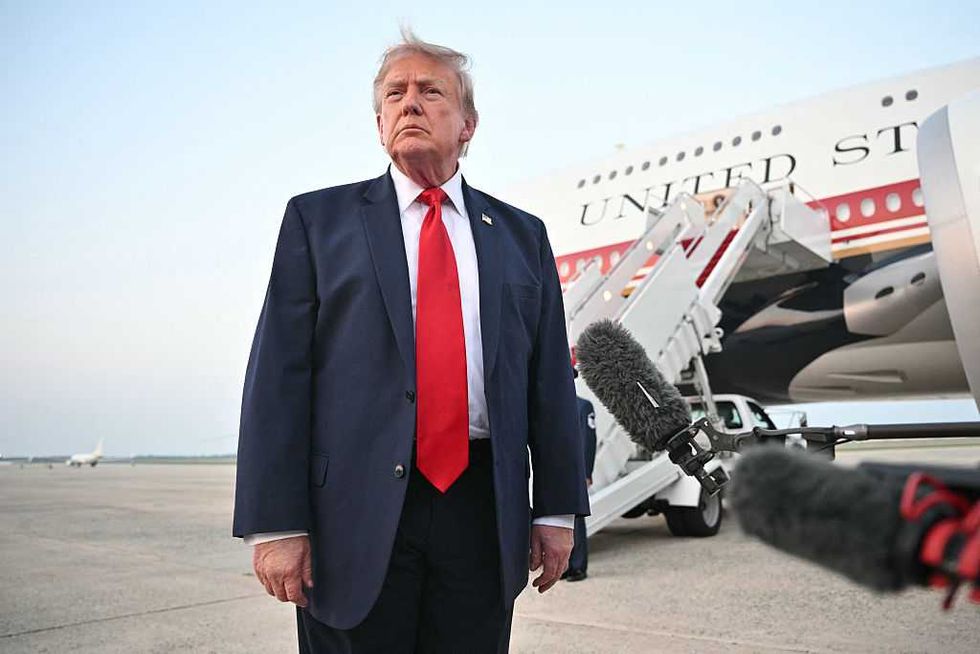
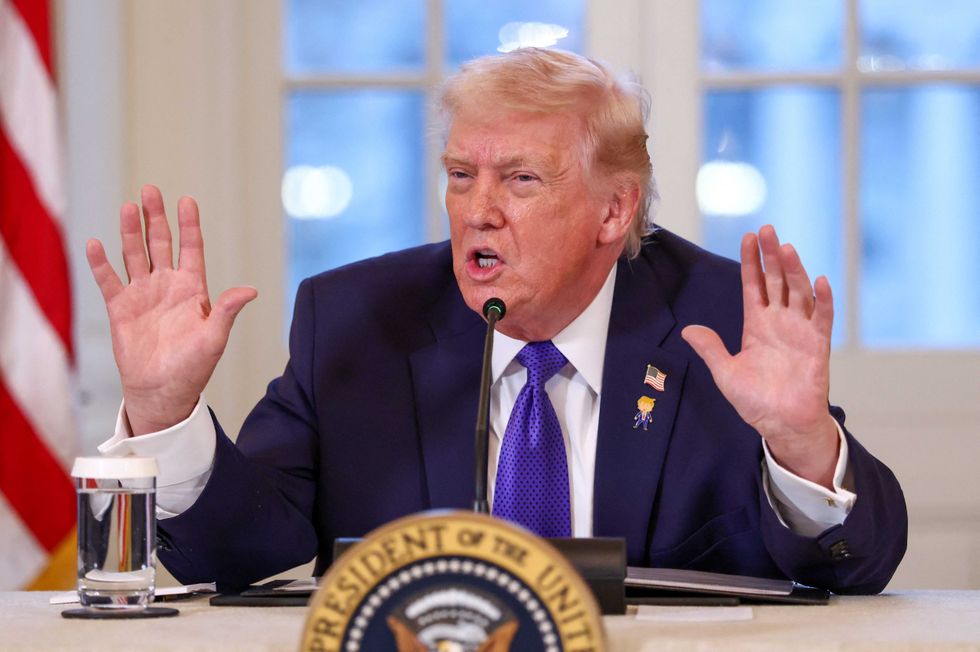
President Donald Trump has already made it clear he plans on rigging the 2026 midterm elections. From trying to implement a multitude of voter suppression measures (like purging voter roles, demanding voter ID, sending troops to the polls, seizing ballot boxes and interfering with mail-in voting) to refusing to give a whit about public opinion, Trump is obviously worried that if the American people have a say, they will put Democrats in control of one or both chambers of Congress.Yet he is not merely doing this to maintain his own personal hold on power. Trump is a man with a plan — the same plan, not coincidentally, that America’s rich and powerful have worked on for more than a century. To better understand this agenda, AlterNet had an in-depth interview with historian Thom Hartmann, whose new book Who Killed the American Dream?: The Greatest Political Crime Ever Told addresses these very topics. While he has plenty of rough words for Trump, Who Killed the American Dream? is far more than just another anti-MAGA book. In great detail, Hartmann lays out how the fascist plutocracy that Trump is trying to make into a literal dictatorship has its roots all the way back in the 19th century.This interview has been lightly edited for clarity and context.MATTHEW ROZSA: First, your book focuses on Santa Clara County v. Southern Pacific Railroad Company, and argues that from this case all the way through Citizens United v. Federal Election Commission, there has been an anti-democratic pattern of the Supreme Court acting like corporations have the same rights as people. Can you elaborate, in layperson's terms, why this jurisprudential assumption has been so toxic?THOM HARTMANN: Sure.For the first, basically, 100 years of the Republic, everybody understood that there were two kinds of persons: natural persons and artificial persons. Natural persons are you and me, human beings — we have protections in the Constitution, and we even have rights specified in the Constitution through the Bill of Rights and the 14th Amendment. Artificial persons were corporations and nonprofits and churches and other kinds of entities that were not human, but had to have some sort of personhood status in order to pay taxes, sign contracts, sue or be sued, open checking accounts, things like that. And that distinction was always quite clear. In 1886, the railroads tried to argue that they were being unfairly taxed between two different counties in California because the tax rates were different, and that this was not equal protection under the law, which is what the 14th Amendment says all persons are entitled to.The court did not rule in their favor, at least with regard to that argument in that case. But the clerk of the court and one of the Supreme Court justices conspired to assert that it had. And that assertion, which was in the headnote of the 1886 decision, kind of lay around like a hand grenade until it was picked up by Lewis Powell in 1978 with the Bellotti v. Baird decision, and then really set off with the Reagan Revolution — John Roberts, the Reagan Justice Department, and then the Supreme Court. I think Citizens United in 2010 is probably the most classic example of it. Now, to more directly answer your question: the reason a corporation can pour money into a politician or a political campaign to get a politician elected who will do their bidding is because the Supreme Court has since ruled that corporations have rights under the First Amendment, and those rights include the right to free speech.But because a corporation doesn't have a mouth, they did this workaround, saying, "Well, its money is the same thing as its mouth, so it can speak with its money." There's another example, under the Fourth Amendment. The Fourth Amendment says the government cannot invade your privacy unless somebody swears before a judge that there's reason to believe you committed a crime. Well, Dow Chemical was illegally venting benzene into the air over one of their chemical factories, and the EPA found out about it and flew an airplane over the factory to photograph it and use it as evidence to stop them. Dow Chemical sued and took it all the way to the Supreme Court, and the court ruled that under the Fourth Amendment, Dow Chemical has privacy rights. So now it's almost impossible for the federal government, or state governments for that matter, to do surprise inspections of factories and polluting facilities, et cetera.Corporations have also claimed rights under the Fifth Amendment, which says you cannot be forced to testify against yourself and that the government can't take your assets without due process of law — that they don't have to admit to crimes in court, they don't have to testify in ways that could hurt them, and that the government can't take their property if they commit crimes.
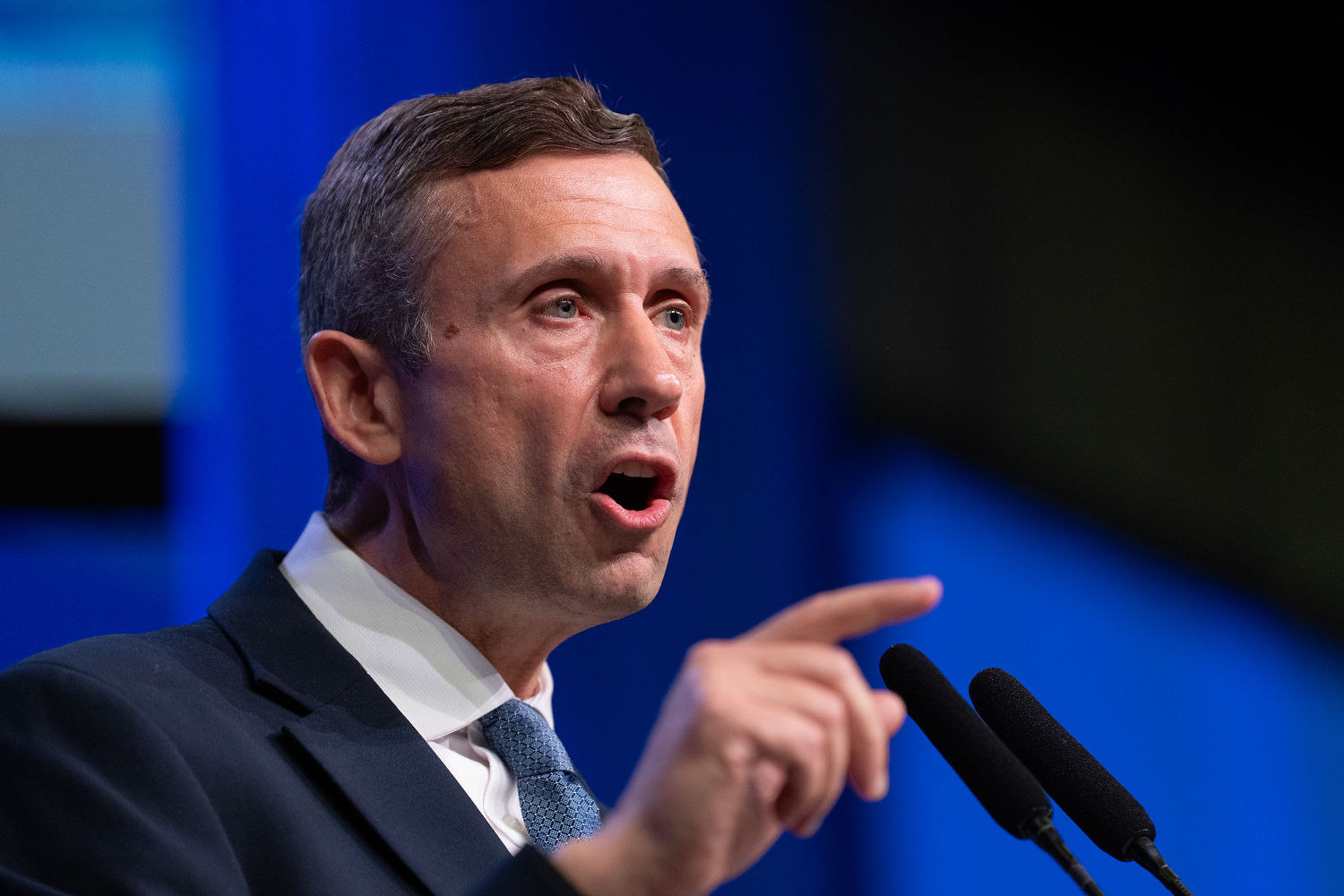
In today’s edition, Ben Kamisar breaks down Democrats’ new presidential primary order. Plus, Kristen Welker explores the political pressure the ongoing Iran war is putting on Republicans.