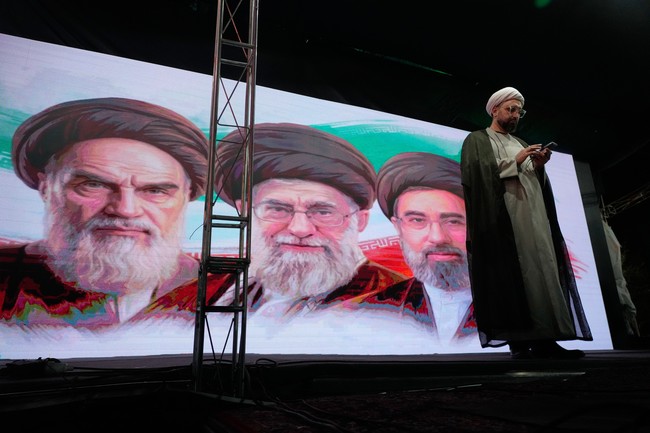
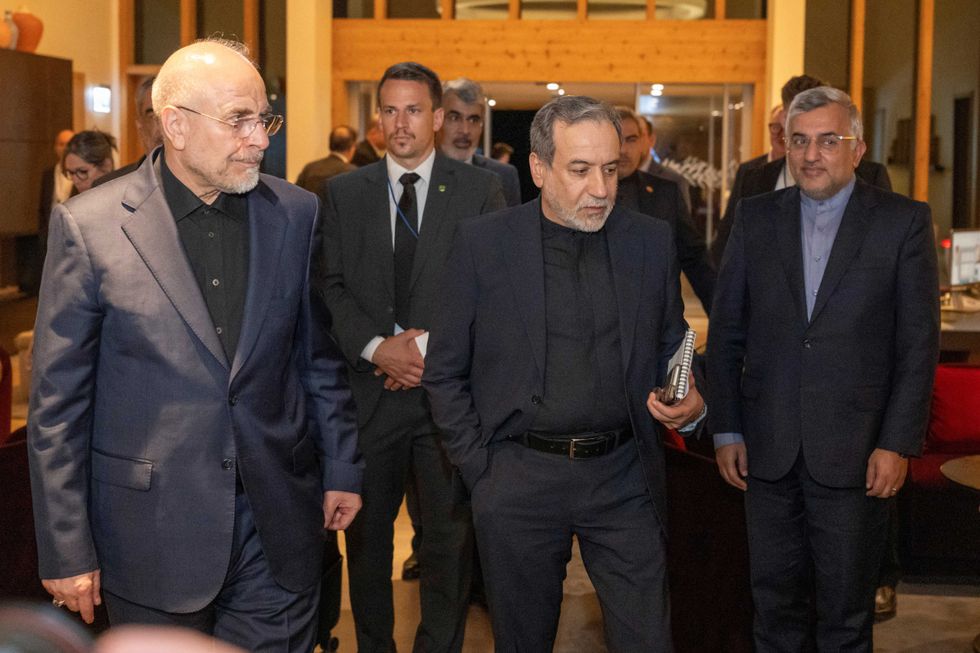
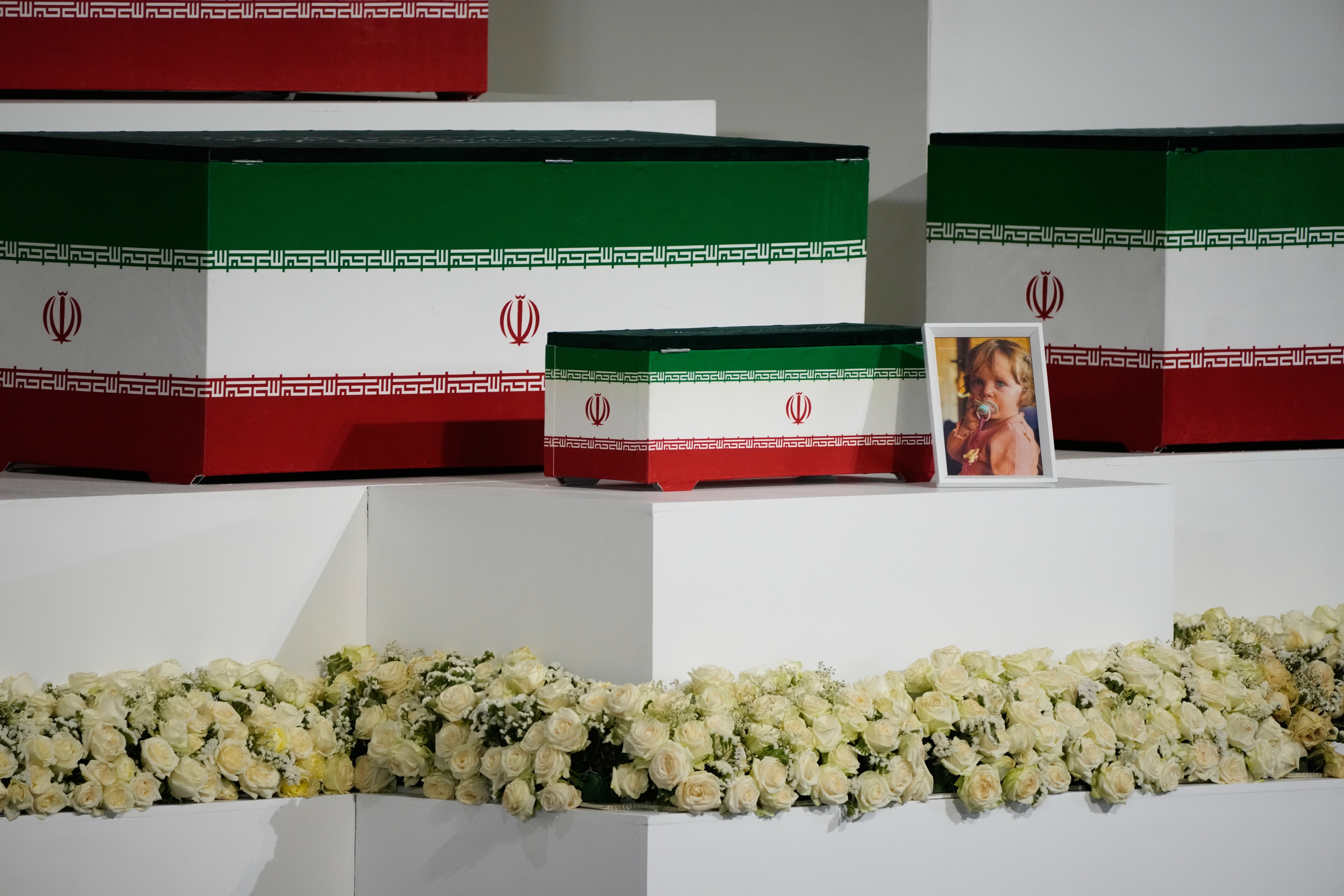
Iran’s Parliament Speaker Mohammad Bagher Qalibaf has warned of an Iranian response if the U.S. and Israel breach the interim peace deal, as Tehran prepares to bury its former supreme leader, Ayatollah Ali Khamenei. “We strongly demand full implementation of the agreements, and if the U.S. and the Zionist regime fail to fulfill their commitments, Iran…
Iran's entire regime made a red carpet entrance to the first of three funeral ceremonies for late Supreme Leader Ali Khamenei — except the dead ayatollah's own son and successor.
Trump administration officials reportedly believed that the Israeli government intended to assassinate Iran’s top negotiators—including the country’s foreign minister—during peace talks with the US in an effort to sabotage diplomatic progress.The New York Times reported Thursday that “American concerns about the targeting of two particular Iranian officials—Abbas Araghchi, Iran’s foreign minister, and Mohammad Bagher Ghalibaf, the speaker of the Parliament—spiked during delicate ceasefire negotiations that began in April.” In response, the US “went so far as to ask other countries in the region to warn Iran about the possibility Israel could target the two officials,” according to the Times, which cited unnamed current and former American officials.The US and Israel have killed dozens of top Iranian officials since launching their illegal joint war in late February. But the allied countries reportedly removed Araghchi and Ghalibaf from their target list in late March, opening the possibility of high-level negotiations to end the war.But Israel remained bent on targeting the negotiators, according to the Times, whose reporting was later corroborated by The Washington Post.The Times detailed one dramatic incident in April, when Ghalibaf was planning to travel to Pakistan’s capital to meet with US Vice President JD Vance:Pakistani fighter jets escorted the Iranian airplanes carrying a delegation of more than 70 Iranians from the border of Iran to Islamabad and back again when the session was over.But on the way back to Tehran, an Israeli security threat emerged.Iran’s security forces notified the plane carrying Mr. Ghalibaf back to Tehran that they had picked up intelligence that Israel planned to attack the plane and that two Israeli fighter jets had entered Iran’s airspace from its western border near Iraq, the two officials said.Mahdi Mohammadi, a senior adviser for Mr. Ghalibaf, who accompanied him to Islamabad, confirmed this account on his social media page. The plane made an emergency landing in the city of Mashhad, Iran’s closest airport to the Pakistani border, and the Iranian delegation traveled some eight hours by land back to Tehran, Mr. Mohammadi and the two officials said.The Post reported that “cracks emerged” between the US and Israeli approaches to the war following Israel’s assassination of top Iranian national security official Ali Larijani in March.“They’ve wiped out everybody,” Trump told reporters in late March, suggesting Israel’s assassination campaign was making it difficult to find potential negotiating partners.Trita Parsi, executive vice president of the Quincy Institute for Responsible Statecraft, wrote in response to the new reporting that “Israel is a state that, on paper, is a US partner, but in reality is so extreme in its obsession to undermine US diplomacy that it even tries to assassinate those the US engages with in crucial negotiations.”“I can’t recall a government as terrified of peace as the one running Israel,” Parsi added.At present, the Israeli government—led by Prime Minister Benjamin Netanyahu—is endangering tenuous US-Iran peace talks with its continued occupation of and assault on Lebanon, which Iran has highlighted as a key factor in the negotiations.Visiting occupied southern Lebanon earlier this week, Netanyahu declared to Israeli troops that “our insistence is that we will not leave... until the threat is removed.”Parsi wrote earlier this week that “beyond his long-standing desire to use American force to subjugate Iran to Israeli domination and achieve a regional balance favorable to Israel,” Netanyahu “now also has stark political and personal reasons to restart the war” with Iran.“The [US and Iran’s memorandum of understanding] has come at a steep political cost for Netanyahu,” wrote Parsi. “His prospects for reelection in October are weaker than they have been in months. Once seen as the Israeli leader uniquely capable of delivering President Trump, he now confronts the prospect that both the war and the ensuing diplomacy will leave Israel in a strategically weaker position—undermining the very case he has made for his leadership.”“And of course,” Parsi added, “if he loses the elections, he will likely spend the next few years in jail, as he will lose his immunity as prime minister and face trial over corruption charges.”The story was published in partnership with Common Dreams, read the original here.
A stream of foreign dignitaries, officials and mourners gathered in Tehran on Friday to pay their respects to Supreme Leader Ayatollah Ali Khamenei, who was killed by U.S.-Israeli airstrikes on Feb. 28 that triggered the war. Pakistani Prime Minister Muhammad Shehbaz Sharif, a key mediator in the U.S.-Iran talks to end the war, joined mourners…
The country's theocracy hopes to see millions flood the streets of the capital beginning Saturday in scenes reminiscent to the burial of the late Supreme Leader Ayatollah Ruhollah Khomeini in 1989.
Everyone knows the song.It’s a warm summer night, the top of the seventh inning has just concluded, and the organ begins to ring throughout the stadium. It’s time to whip out the singing voice for one of America’s most iconic tunes — "Take Me Out to the Ball Game." At a time when baseball fandom was overwhelmingly male-dominated, the character of Katie stands out as an unusual creation for the era.Yet few baseball fans, let alone Americans at large, know the true history behind the 118-year-old symbol of our country’s pastime.To get to the beginning, we must travel back to the time of President Theodore Roosevelt. The year is 1908: The Ford Model T makes its debut in the automobile market; New York City drops the very first New Year’s Eve ball in Times Square; and the Grand Canyon is declared a national monument.The story goes that Jack Norworth was riding a New York subway train when he was inspired by a sign he saw that read, “Baseball Today — Polo Grounds.” Norworth quickly developed the lyrics to the song, with Albert Von Tilzer composing the music.The irony? According to reports, neither of these men had ever been to a baseball game. Norworth did not attend a game until 32 years later in 1940.Norworth and his then-wife Nora Bayes would go on to debut the tune during a vaudeville act at the Amphion Theater in Brooklyn. The song was quickly recorded by multiple different groups, with both the Edward Meeker and the Haydn Quartet versions finding mass success. Although only the chorus is sung at baseball games today, the original song contains multiple verses that tell the story of Katie Casey (later changed to Nelly Kelly by Norworth) — a “baseball mad” fanatic who would rather have her boyfriend take her to the ballgame than to the theater. At a time when women did not even have the right to vote, let alone the fact that baseball fandom was overwhelmingly male-dominated, the character of Katie stands out as an unusual creation for the era.The earliest documented instance of "Take Me Out to the Ball Game" being played at a baseball game was during a Los Angeles high school game in 1934. The song made its Major League debut later that year during Game 4 of the 1934 World Series.Stadium bands began regularly performing the tune during games in the mid-20th century. However, the way baseball fans engage with the song today — singing it during the seventh-inning stretch — was popularized by Chicago White Sox announcer Harry Caray in the 1970s. Caray later brought the tradition to the Chicago Cubs when he became their announcer in 1982. In 2001, "Take Me Out to the Ball Game" was ranked #8 on the "Songs of the Century" list, and later in 2010, Edward Meeker's recording was inducted into the Library of Congress' National Recording Registry.So next time you find yourself indulging in America's pastime, remember to buy some "peanuts and Cracker Jack" so that you can "root, root, root for the home team" — but never forget: "For it's one, two, three strikes, you're out, at the old ball game."Like Blaze News? Bypass the censors, sign up for our newsletters, and get stories like this direct to your inbox. Sign up here!