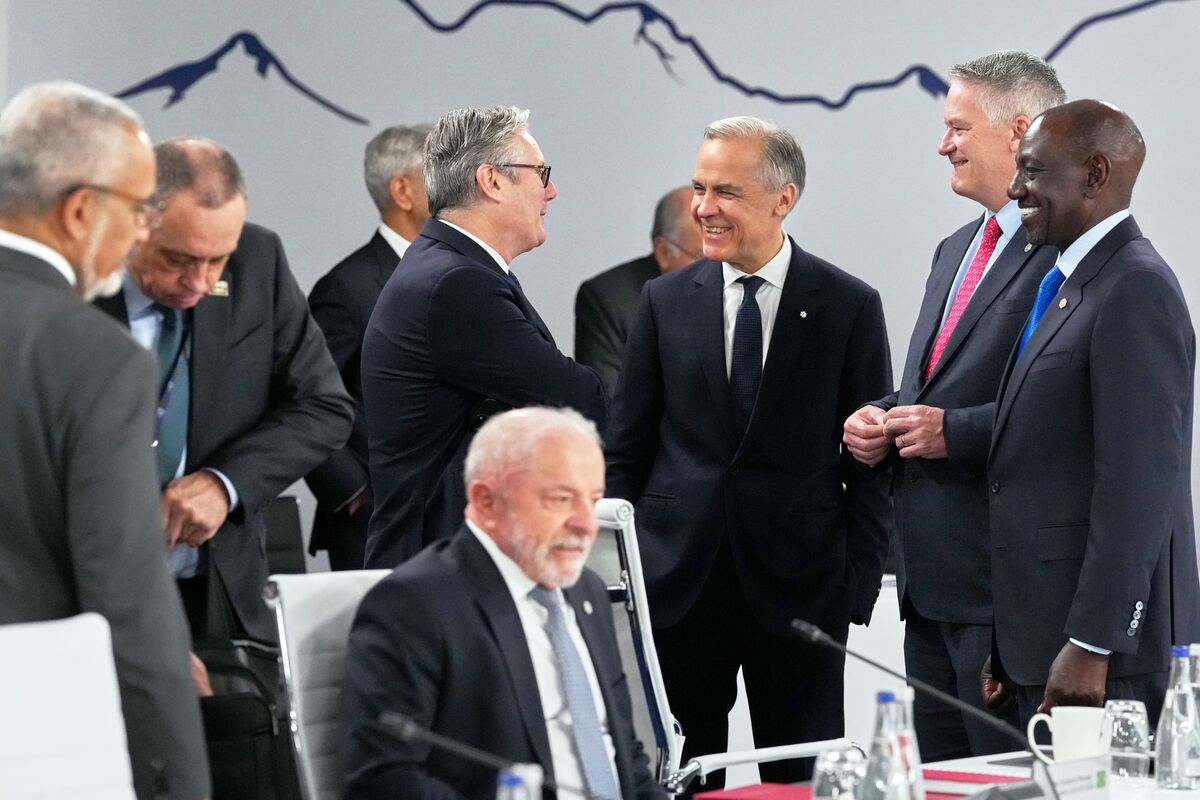
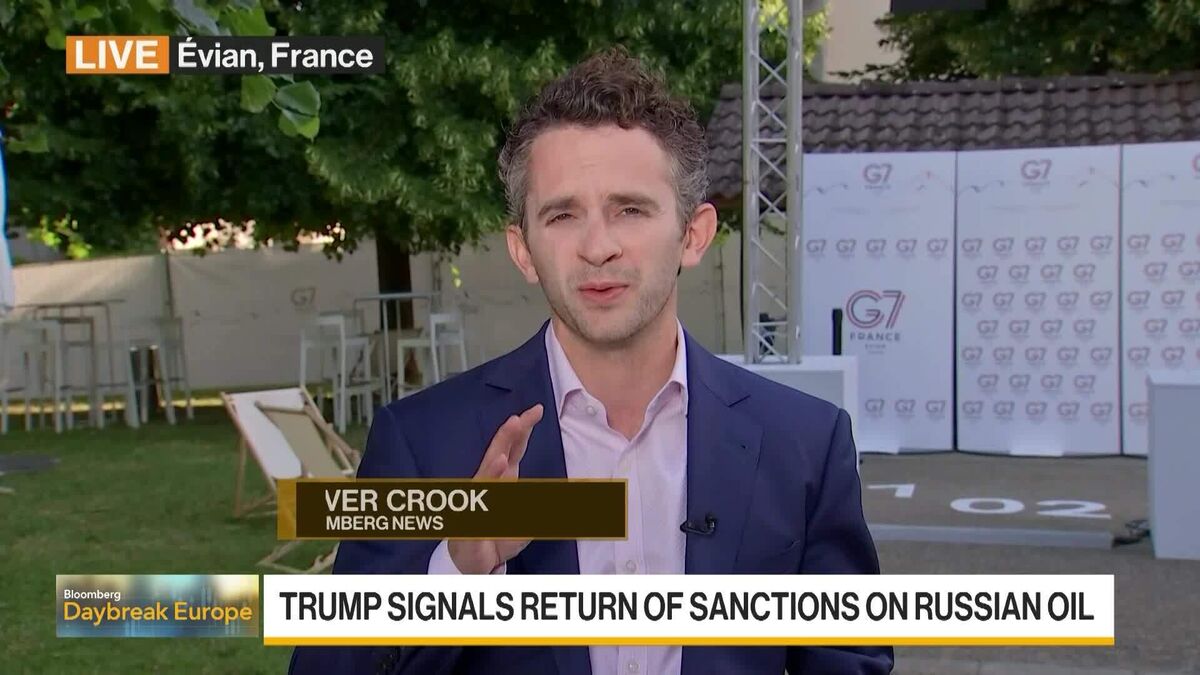
World leaders gathered at this week’s Group of Seven meeting in France see Europe and the US converging in the view that Ukraine’s position is getting stronger, according to officials who asked not to be named as the discussions are private. "Russia should make a deal,” President Donald Trump told reporters Tuesday after having held brief discussions with Ukraine President Volodymyr Zelenskyy earlier in the day. Bloomberg's Oliver Crook reports from Evian. (Source: Bloomberg)
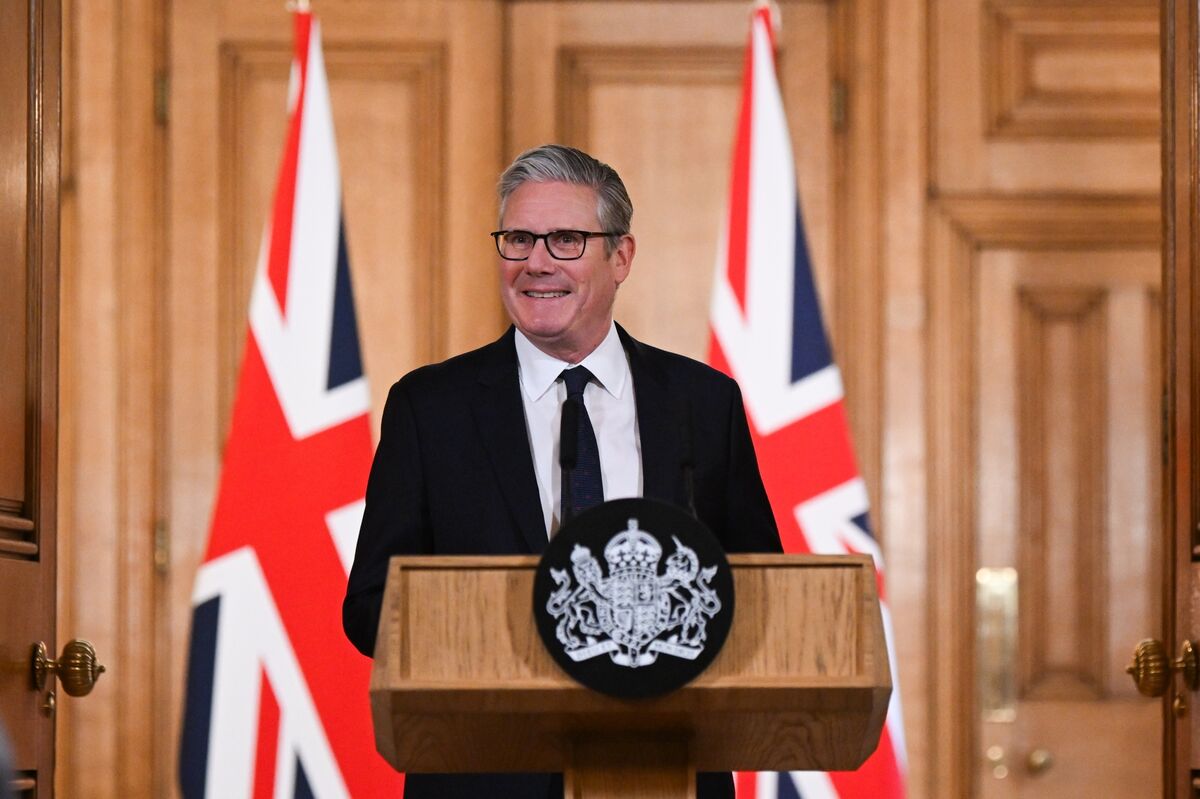
Keir Starmer announced £1.3 billion of investment into the UK in energy and AI projects at the G7 summit in France, as Britain’s premier tries to convey a sense of business as usual even as he faces the prospect of a leadership challenge.
President Trump praised Iranian leaders while slamming his greatest ally in the Middle East, Israel, at the G7 summit on Tuesday. Nancy Cordes has more details.
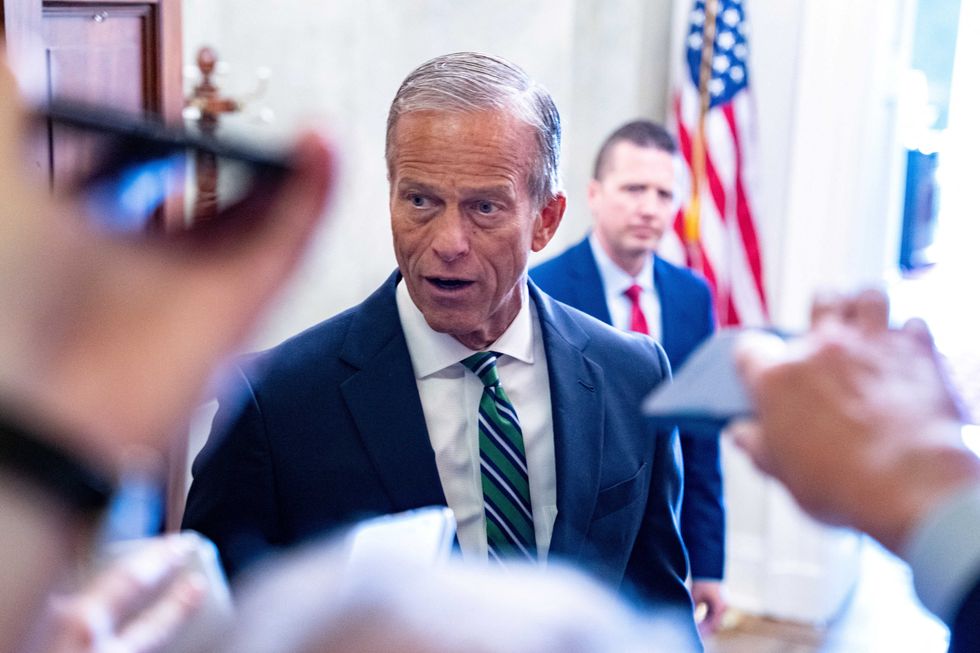
Senate Majority Leader John Thune acknowledged on Tuesday that taxpayers will help foot the bill for President Donald Trump's $600 million White House ballroom.Trump has promised since July 2025 that the project would cost taxpayers nothing. The Washington Post reported Tuesday that internal contractor documents tell a different story.Thune, speaking at a Capitol press conference, didn't dispute it."I do believe that there is certainly some expectation that there would be dollars allocated for that purpose that would go above and beyond the private money that's been raised," he said."There are important security requirements that go with any building project in the White House," Thune continued. "We want to make sure that any additions made down there are completed in a way that ensures that the president and others in his administration are safe and secure."The Post obtained contractor documents showing a March 5 estimate from Clark Construction put the project at $600 million.The taxpayer share breaks down to $155 million from the Secret Service, $149 million from the White House Military Office, and $3 million from the Executive Residence — $307 million in public funds in total.Three weeks after Clark delivered that figure, Trump told Oval Office reporters: "This is taxpayer-free. We have no taxpayer putting up 10 cents."White House spokesman Davis Ingle pushed back Tuesday, saying Trump and donors are funding the ballroom "to the tune of approximately $400 million."Sen. Susan Collins (R-Maine) was among six Republicans who voted during a Senate floor session to require congressional approval before any public or private money could fund the ballroom. She said Trump's original commitment should hold."President Trump indicated that the ballroom was going to be built with private donations," Collins said. "He should keep to that commitment."Three independent contracting experts who reviewed the documents told The Post the costs can't be cleanly separated."I think it's inevitable that it bleeds over. It's one structure," said Stan Soloway, a former Pentagon acquisition official and board chair at the National Academy of Public Administration.
AI researchers and cybersecurity leaders fear the U.S. government is setting a precedent that may discourage American AI companies from building tools that help defenders identify and fix vulnerabilities.Why it matters: In trying to avert an AI hacking crisis, the Trump administration may end up making U.S. cyber defenses weaker, dozens of prominent security leaders warned.Cybersecurity experts are worried about the long tail this ongoing feud will have on American cyber defenses."They've set a precedent that American models can't do defensive security research," former Facebook security chief Alex Stamos tells Axios.Driving the news: Stamos organized an open letter, signed by nearly 150 security leaders, calling on the Trump administration to reverse its move to restrict access to Anthropic's Fable 5 and Mythos 5.Concerns about Chinese access to Mythos and a call from Amazon CEO Andy Jassy reportedly sent the administration into a panic last week after Anthropic publicly released its first Mythos-class model.During the spat, Anthropic brought in a leading zero-day bug hunter — who helped the Defense Department create its bug bounty program and sat on multiple government-led advisory boards — to help assess Amazon's concerns about the security of Fable and Mythos.Now, the administration is casting the security researcher as a "radical Democrat," as my colleagues reported yesterday.Between the lines: The dispute has quickly shifted from a fight over one model to a broader question of whether the government is creating unwritten rules for AI security research.Stamos, who has spoken with the technical staffs involved in the fallout, said the findings Amazon flagged do not appear unique to Anthropic's models.Multiple people familiar with Amazon's concerns said they centered on a jailbreak the company found that allows Fable to write "proofs of concept" — a capability security teams often use to understand and fix vulnerabilities.Katie Moussouris, CEO of Luta Security, said in a detailed blog post yesterday that she saw a copy of Amazon's findings and the issue didn't involve mass exploitation of the model, but rather prompts designed to support defensive security work.Flashback: Before releasing Fable 5, Anthropic said, it worked with both internal teams and outside security researchers to test the model for jailbreaks and other flaws.The company has also argued that "perfect jailbreak resistance is not currently possible for any model provider," so it has focused on making "jailbreaks either narrow ... or very expensive to produce." Threat level: Cyber experts warn that if frontier AI companies fear punishment for models that can identify vulnerabilities, they may now be tempted to strip out capabilities on which defenders already rely.Moussouris noted in an X post that there is no fix that wouldn't render the model less useful for cyber defenders. "No new frontier models can be developed or released if this is the administration's best take," she added. The big picture: Researchers argue the administration's response risks giving adversaries an advantage.Researchers note that Chinese AI developers and government-backed hacking groups are unlikely to abandon similar tools, raising concerns that U.S. defenders could lose access to abilities their adversaries are using."This is closer to China than what I recognize as the United States, and personally I see this as a huge threat to American dynamism," Stamos said.What to watch: The U.S. government is in the process of standing up a vulnerability clearinghouse via the recent AI security executive order that would likely triage reports about jailbreaks, prompt injections and other threats to AI models.But questions linger about how much cybersecurity talent remains in the Trump administration after several White House departures in recent weeks and the sidelining of the nation's top cyber agency.Go deeper: The hidden risk of Trump's Anthropic crackdown
The Trump administration has made exporting American AI a key part of its plans for global AI dominance, but ad hoc policy decisions around the most advanced AI are threatening that effort.Why it matters: A flagship U.S. program designed to boost AI exports could be undermined by the very administration that created it."The government's willingness to arbitrarily and abruptly remove America's best models from all foreign use shows that the strategy behind the AI Export Program is no longer relevant to decision makers in the U.S. government," Dean Ball, a former AI adviser in the Trump administration, told Axios.Driving the news: The Trump administration slapped export controls on Anthropic's newest model Fable 5 due to disagreements over whether it is safe for deployment, causing Anthropic to pull access to it entirely.Administration officials and Anthropic staff continue to hash out their disagreements this week, with no solution yet.The big picture: The American AI exports program is a relatively new initiative that President Trump created in a July 2025 executive order.It's meant to bundle the infrastructure, tools and models into ready-to-deploy AI systems for allies and partners, and has been touted as a key part of the White House's AI policy goals, as Axios has previously reported.Those who are selected for the program will get expedited export control license reviews, prioritized access to U.S. federal credit programs, government-to-government advocacy abroad and dedicated interagency coordination.What they're saying: A tech industry source told Axios that there are "downstream consequences" to using export controls as a means of enforcing tech policy, setting new precedents for future oversight and licensing of tech releases."Fueling perceptions that the US government could disable overseas access to an AI model or system only makes it more difficult to promote American AI exports," the source said. "Global customers will have a harder time committing to purchasing US-made AI."Other tech industry sources told Axios the Anthropic export control issue creates uncertainty by complicating relationships with allies at a time when there is a major focus on exporting U.S. technology abroad. "Given the interconnected nature of the AI tech stack, restrictions aimed at one layer or at one company in the stack can create unintended impacts for other parts of the stack," one of the sources said."It definitely has a flavor of picking winners and losers, and the hope is that the U.S. government, in its efforts to promote American companies abroad, is going to do that consistently across the board, rather than picking up individual companies to prioritize over others," said Paul Lekas, vice president of public policy at the Software and Information Industry Association.Yes, but: Other AI companies looking to participate in the American AI exports program may avoid the problems that have befallen Anthropic. The upside of joining the program hasn't gone away, said Joseph Hoefer, AI principal at Monument Advocacy. But companies will have to build contingencies in case a layer of their "tech stack" suddenly becomes unavailable due to a decision by the administration."This could turn out to be a one-off: a specific action, in a specific situation, that the administration resolves and doesn't repeat," he said.The other side: The White House defended the move as part of an effort to "balance" AI innovation and national security, per spokesperson Kush Desai.The Commerce Department's International Trade Administration did not respond to requests for comment.What's next: Applications for the American AI exports program are due June 30, and how the White House handles its dispute with Anthropic could shape whether companies feel confident participating.
French President Emmanuel Macron and Ukrainian President Volodymyr Zelensky on Tuesday were heard on a live microphone discussing President Trump on the sidelines of the G7 Leaders’ summit in Evian-les-Bains. “Yesterday, we had a difficult discussion in front of the camera,” Macron said of the G7 meeting with Trump regarding the war in Ukraine. The…