The Ebola outbreak spreading throughout Central Africa is the first major outbreak since the Trump administration demolished its global health programs and largely withdrew from the world stage last year. Experts say the absence is palpable. While the U.S. is sending resources and teams of experts overseas, public health and infectious disease experts say President…
President Donald Trump has remained defiant amid a wave of criticism from right-wing figures urging him to resume hostilities with Iran and walk away from peace negotiations, but according to Israeli-American academic and podcast host Shaiel Ben-Ephraim, that pressure may be gaining traction.“I am currently talking to two sources I really respect. They are both telling me that Trump is backing away from the deal with Iran, likely under extreme internal pressure (i.e. Israel and its domestic allies in the US),” Ben-Ephraim wrote in a social media post Sunday on X. “This is a terrifying turn of events.”Washington and Tehran have already “agreed in principle” on a deal to end the U.S. war against Iran, though such a deal has yet to be finalized. Amid reports that the Trump administration was nearing a peace deal, several prominent right-wing figures expressed skepticism, including former CIA Director Mike Pompeo, Sens. Ted Cruz (R-TX) and Lindsey Graham (R-SC), as well as Trump-ally Laura Loomer, who claimed there to be “no such thing as peace with Muslims” and urged the president to “bomb the Iranian regime.”Amid the alleged “internal pressure” being placed on Trump to resume the war against Iran, Bloomberg has reported that the president has also faced significant “outside” pressure to resume the war, including from Israeli Prime Minister Benjamin Netanyahu and billionaire media mogul Rupert Murdoch.On Saturday, Trump said that he would likely come to a final decision on whether to resume hostilities by Sunday, with there being a “solid 50/50” chance that he would authorize the U.S. military to “blow [Iran] to kingdom come.”I am currently talking to two sources I really respect. They are both telling me that Trump is backing away from the deal with Iran, likely under extreme internal pressure (i.e. Israel and its domestic allies in the US). This is a terrifying turn of events.— Shaiel Ben-Ephraim (@academic_la) May 24, 2026
You’ve probably never heard of the term “RCP 8.5” — the highest-emission scenario used by climate scientists to project the planet’s future. But if you’ve read about climate change, you’ve seen the numbers and nightmarish outcomes it produced: 4°C of warming by 2100, sometimes 5°C, sea level rising multiple feet, parts of the planet too […]
Margaret Sullivan, a Guardian US columnist, argues that mainstream media has largely normalized the extraordinary corruption and chaos of President Trump's second term, treating scandals as routine political theater rather than threats to democratic governance.Sullivan catalogs Trump's disturbing behavior and policies: his admission that he's not thinking "even a little bit" about Americans' personal finances during Iran negotiations, his apparent drowsiness in meetings, his unhinged social media posts, and his constant lies about the Iran war. She also points to larger abuses of power including the $1 billion ballroom project and the controversial $1.8 billion "anti-weaponization fund" intended to compensate Trump allies, potentially including January 6 rioters, using taxpayer money.Yet, she argues, these developments receive minimal sustained coverage. Sullivan observes that what would have triggered weeks of headlines and possible impeachment proceedings in previous administrations is now treated as simply "Trump being Trump"—as if his presidency exists outside the normal bounds of journalistic scrutiny. The sheer volume of scandals has created what observers call a normalization effect, where each outrage fades before the next one emerges.The media's failure to maintain consistent scrutiny reflects a broader pattern of editorial capitulation. Major newsrooms have faced criticism for treating Trump's statements and actions with an evenhandedness inappropriate to the gravity of the issues. Cable news networks, in particular, have been accused of balancing coverage between what Trump says and the factual record, effectively granting credibility to false claims through what media critics call "both-sides" journalism. Meanwhile, network evening newscasts have dramatically reduced investigative reporting in favor of shorter segments that struggle to convey the complexity and severity of institutional corruption.Sullivan highlights a stark contrast between media treatment of Trump and his predecessor. One observer noted the irony that journalists helped force Biden from his reelection campaign for being too old, yet ignore that Trump, now 79 and turning 80 next month, displays apparent physical and mental decline that hasn't received comparable scrutiny. During Biden's final weeks in office, cable news devoted extensive coverage to his debate performance and calls for his withdrawal. By contrast, reporting on Trump's fitness for office has remained scattered and episodic, with major outlets declining to launch sustained investigations into the president's cognitive state or capacity to govern.The media's response to the slush fund story exemplifies this pattern. While The New York Times initially led with the story, quoting Citizens for Responsibility and Ethics in Washington calling it "one of the single most corrupt acts in American history," mainstream outlets quickly moved on. NBC's evening news shifted focus to other stories within days, while Fox News offered cursory coverage, primarily amplifying Trump allies like JD Vance. More significantly, few major outlets followed up with investigative reporting on how the fund would function, who would benefit, or the legal mechanisms through which taxpayer money would be distributed to Trump associates.Media analysts have pointed to structural factors driving this coverage failure. Advertising-dependent networks benefit from the viewership that Trump generates, creating perverse incentives to cover him constantly but not critically. Editorial decisions at major outlets have increasingly emphasized breaking news cycles over sustained investigations, making it difficult for newsrooms to maintain focus on a single issue long enough to move public opinion or trigger political consequences.Sullivan identifies what she calls the "flood the zone" strategy—a deliberate technique to overwhelm media capacity for sustained investigation. With constant outrages competing for attention, journalists struggle to maintain focus on any single scandal before the next emerges. Trump threatens Cuba, dismisses Americans' budget concerns, and pursues authoritarian relationships, yet none receives adequate investigation. Critics note that this strategy relies on media outlets' existing bias toward episodic rather than thematic reporting, making sustained coverage of systemic corruption nearly impossible.Sullivan argues that corporate media remains "highly distractible and largely deferential," not entirely unhappy with Trump's presidency because it generates constant outrage and viewership. Studies of cable news during Trump's second term show that major networks devote significant airtime to Trump-related stories while devoting proportionally less time to investigative reporting or policy analysis.
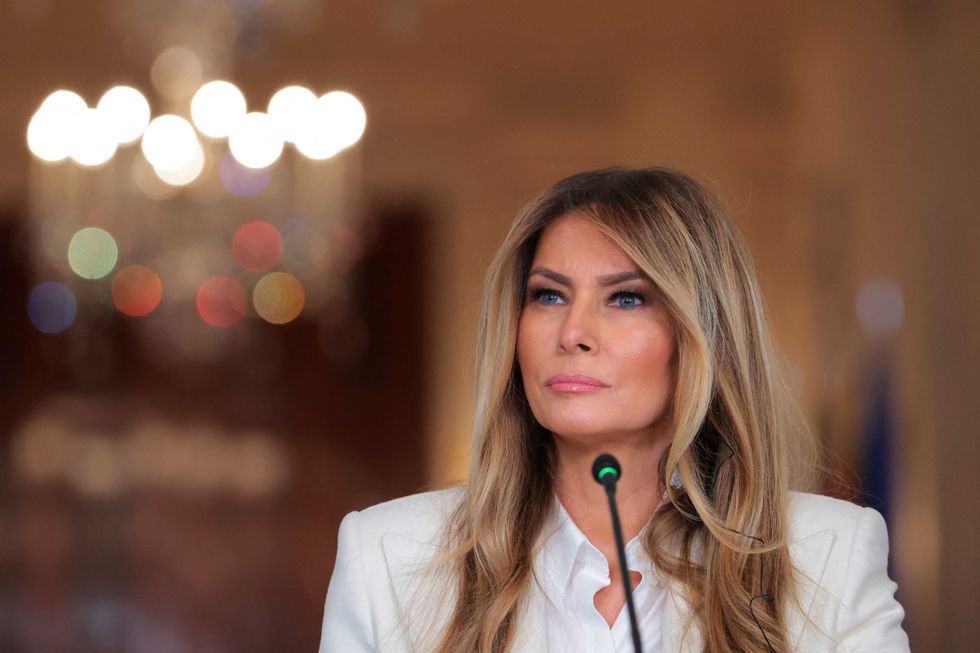
Trump biographer Michael Wolff remains unfazed after a MAGA-appointed federal judge tossed his lawsuit against Melania Trump on Friday."She may have actually effectively ruled against the Trumps without saying so," Wolff said in a podcast episode on Saturday, referring to the federal judge who dismissed his suit against Melania. "Kicking the case out of federal court by default puts it back into state court, which is what we wanted in the first place."Wolff sued the first lady last year after her lawyers threatened him with a defamation lawsuit because he connected her to Jeffrey Epstein.On Friday, New York-based U.S. District Judge Mary Kay Vyskocil, a Trump appointee, accused Wolff in a scathing opinion of trying to go around the standard legal process by pre-emptively suing Melania instead of defending himself against her lawsuit."I mean, we knew from the beginning, when we drew a Trump judge in federal court in the Southern District in New York, that that was problematic," Wolff said. "She was in this incredibly awkward position of having to decide a case directly involving the president's family."According to Wolff, he filed his lawsuit in a New York state court, but Melania's lawyers moved it to federal court. Vyskocil then determined that Melania is a Florida resident."One of the ways you get to be a federal case is if the parties are from two different states," the New York-based Wolff explained. "This is an important point because if the judge found that she doesn't live in Florida, then it would not have been a federal case."Wolff said he would have preferred to see the case play out in a New York state court because of "what are called anti-SLAPP laws, which is to say that you can't use threats of libel to intimidate people."From what he can tell, Melania "lives in New York" and "never effectively moved out of Trump Tower."He added, "This is and has always been, from our side, a free speech case. It's not about money."
Democrat Senator Chris Van Hollen got roasted for celebrating a federal judge's decision to drop the criminal case against MS-13 gang member Kilmar Abrego Garcia.
The post Democrat Sen Van Hollen Roasted For Celebrating Obama Judge’s Decision to Drop Criminal Case Against MS-13 Gang Member Kilmar Abrego Garcia appeared first on The Gateway Pundit.