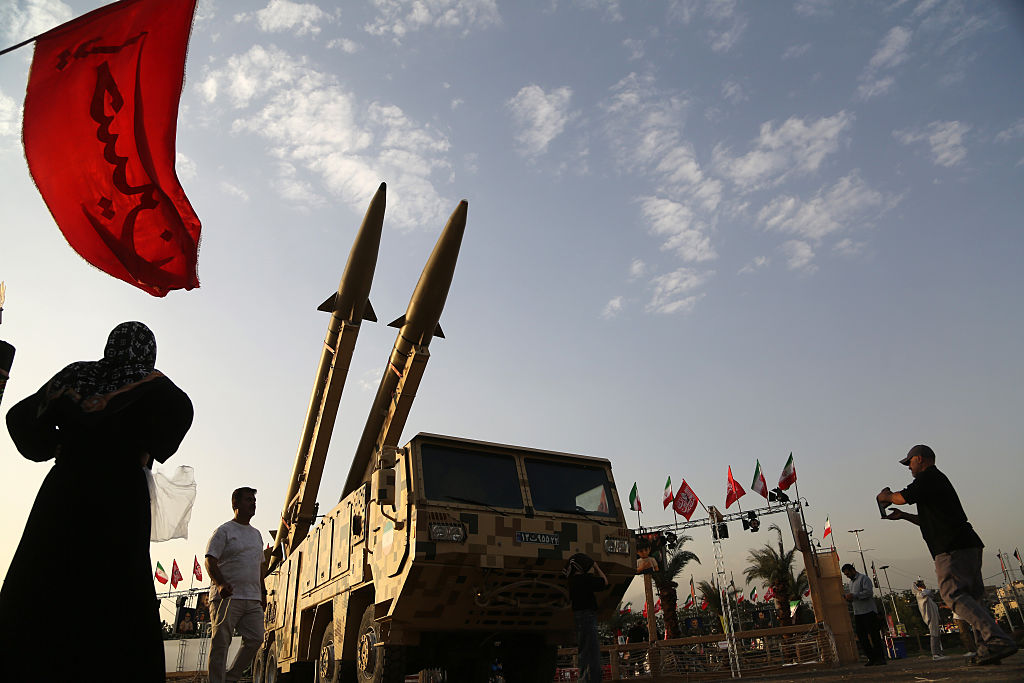
Iran has disrupted global energy supplies and imposed costs on the United States and its allies, but it is not clear how it can remain in a permanent state of war.
Iran has disrupted global energy supplies and imposed costs on the United States and its allies, but it is not clear how it can remain in a permanent state of war.
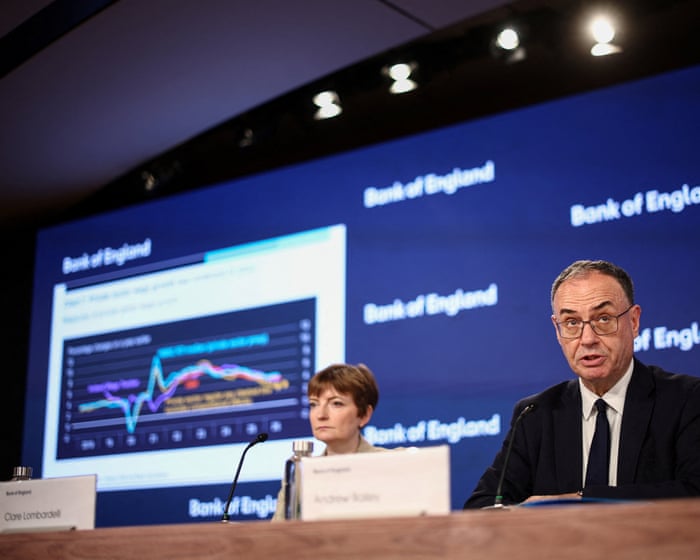
Live, rolling coverage of business, economics and financial markets as three members of monetary policy committee vote to raise ratesThat German GDP reading has indeed contributed to the wider eurozone hitting expectations – and then some.The eurozone economy grew by 0.4% in the second quarter of 2026, according to the preliminary reading from Eurostat – defying the gloom caused by the US-Israeli war on Iran. Continue reading...
U.S. economic growth dropped to 1.5 percent in the second quarter, down from a 2.1 percent annual rate in the first three months of the year, the Commerce Department’s Bureau of Economic Analysis reported Thursday. Economists were expecting a GDP growth rate of 1.8 percent, but thanks to President Trump’s Iran war, disastrous tariffs (including new tariffs levied on more than 50 countries last week), and cuts to government spending, we are, once again, not doing as well as Trump claims.“Americans are feeling gloomy: consumer confidence remains in the doldrums as households worry about rising costs,” The Economist reports. “Although annual inflation slowed to 3.5 percent in June from 4.2 percent in May, thanks largely to a temporary fall in petrol prices, renewed fighting has since pushed oil prices higher again.”Regular gasoline came in at an average of $4.22 a gallon in the second quarter, a dramatic increase from less than $3 a gallon before the U.S. and Israel began the war on Iran in February. Now that the shaky U.S.-Iran ceasefire is dead, Americans are bracing, once again, for painful prices at the gas pump. These latest figures reaffirm that the main concern right now for Americans is cost—of just about everything. Even Fox News recognizes that voters are unhappy with Trump’s economy and want “major change.” And by “major change,” we do not mean more tariffs. Plus, the Federal Reserve opted to hold interest rates steady for a fifth consecutive meeting on Wednesday. New Fed chairman Kevin Warsh acknowledged that there’s no quick fix to ease the cost of living, telling reporters there is no “magic wand” to bring prices down. In other words, Americans are getting the worst of both worlds: an economy that’s slowing down while prices keep climbing.But of course, in Trump’s own words, he “doesn’t think about Americans’ financial situation” when making decisions about the war in Iran.
Bloomberg Daybreak Europe is your essential morning viewing to stay ahead. Live from London, we set the agenda for your day, catching you up with overnight markets news from the US and Asia. And we'll tell you what matters for investors in Europe, giving you insight before trading begins.
On today's show, US 30-year treasury yields hit their highest since 2007 after the Federal Reserve held interest rates for the fifth straight meeting. The hold raised doubts about Chairman Kevin Warsh's commitment to tackling inflation.
Samsung reported a 250-fold jump in profit at its semiconductor arm, easily beating expectations. Microsoft’s cloud unit grew at the fastest clip in four years.
Today's guests: Jean-François Decaux, JCDecaux, Co-CEO; Ellie Henderson, Investec, Economist & Olivier Blum, Schneider Electric, CEO (Source: Bloomberg)
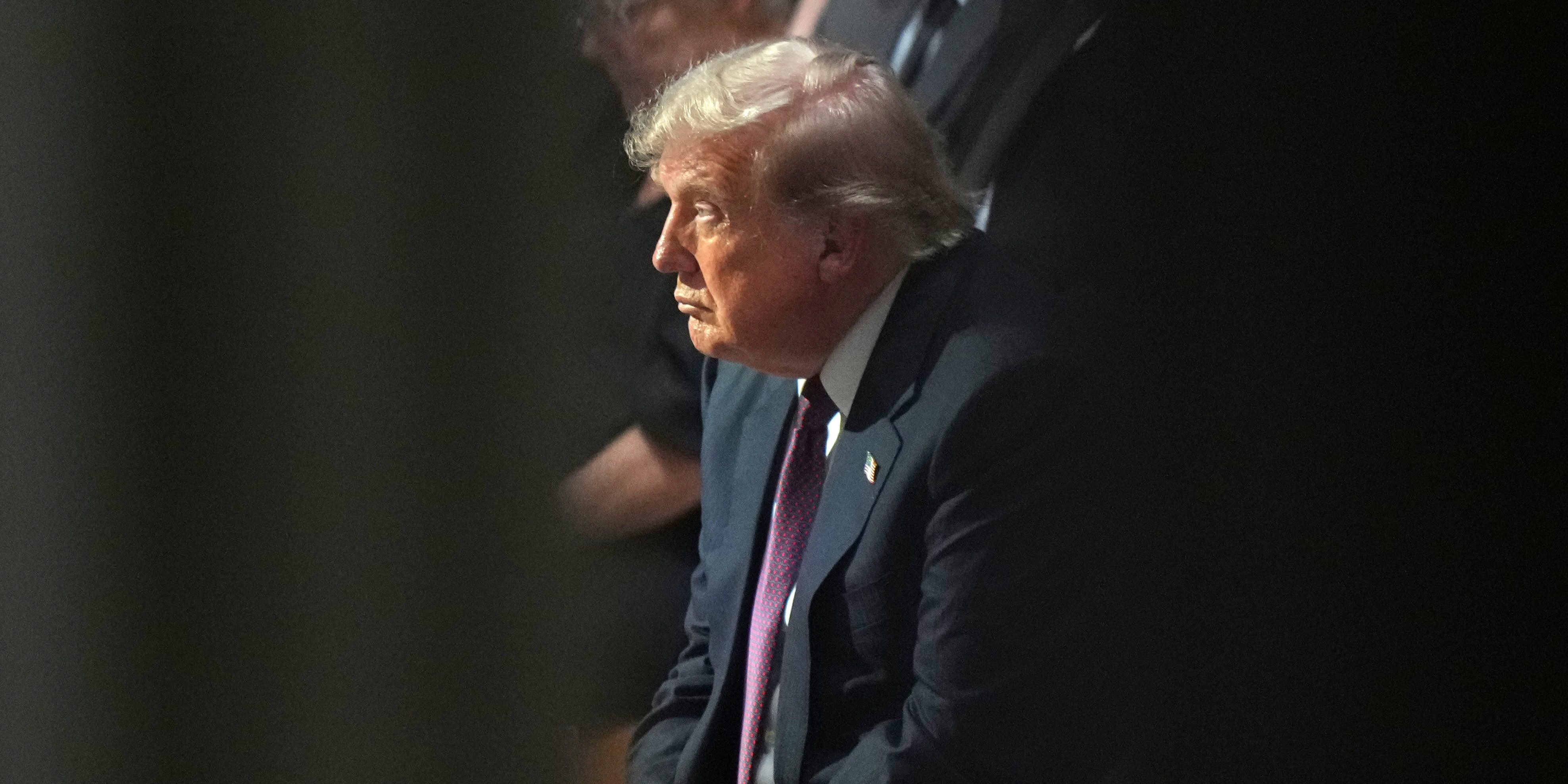
Trump’s latest war is wrapped up in his egocentric narcissism and his me, me, me world.
The post Donald Trump and Wars of Choice appeared first on The Intercept.
The United States launched major strikes against Iran Thursday morning after President Donald Trump vowed to hit the regime “very hard” as retaliation for a surprise attack on American forces in the region earlier in the week. It comes as a new poll shows 72% of Americans disapprove of the president's handling of Iran. NBC’s Gabe Gutierrez reports for TODAY.
New polling shows that about two-thirds of Americans say the U.S.-Israeli conflict in Iran is not worth fighting. The Associated Press-NORC Research Center survey, released Thursday, found 64 percent of U.S. adults believe the ongoing fighting is not worth the risks. Another 33 percent said the opposite. Majorities of Democrats and independents, at 87 percent…
Data: China's General Administration of Customs; Chart: Matt Phillips/AxiosThe Iran war has revealed China's enormous power over global oil prices, thanks to its position as the world's largest buyer. Why it matters: China's reaction to the oil shock — by substantially withdrawing from buying on world markets — helped prevent the worst of the price spikes that experts thought would follow from the effective closure of the Strait of Hormuz.Catch up quick: After the U.S. and Israel launched the war on Feb. 28, Chinese crude oil imports dove as prices spiked. At first, the decline in imports didn't surprise analysts. (China has long been known as a price-sensitive buyer.) Yes, but: Few expected that China could maintain this low level of oil buying without deeply damaging its domestic economy. But as the war approaches its sixth month, China has done just that.By the numbers: Through June, Chinese oil imports remain down over 40% from the previous year. "I guess the surprise has been just how low Chinese demand can go," said Michal Meidan, head of China energy research at the Oxford Institute for Energy Studies. "But it's been low without impairing the well-functioning of the economy." How it works: Chinese policymakers have pulled several levers to mitigate the impact of the decline in oil imports, Goldman Sachs analysts say. Chinese officials tapped into domestic reserves of coal, oil and natural gas for supplies. They boosted usage of coal and renewables, where it is less reliant on imports. And China took advantage of its giant fleet of electric vehicles, reflected by the fact that "despite much lower gasoline consumption, traffic congestion remained relatively stable," Goldman analysts say.Big picture: Broadly speaking, analysts say that China has taken such steps almost exclusively for the benefit of its domestic economy. But the benefits of those decisions — basically lower global oil prices — have been broadly shared. What they're saying: "China has been a key player in helping the global economy navigate this crisis," Reid I'Anson, a Houston-based economist at global commodities and shipping consulting firm Kpler, tells Axios."They are the major swing demand setter in the global oil market, for sure," says Jane Nakano, senior fellow in the Energy Security and Climate Change Program at the Center for Strategic and International Studies."China has drastically reduced its net imports of fossil fuels, effectively acting as a shock absorber for global energy prices through reduced demand," Goldman Sachs analysts wrote in a report last week. Caveat: China isn't the only reason that the world economy was able to deal with the energy supply disruptions of the war.Rich nations released large amounts of oil from their own strategic reserves.And U.S. energy companies drastically boosted exports to meet global demand.Connect the dots: Still, China's energy policy — and its ability to keep global prices in check — could be a valuable asset, as it positions itself as a source of stability, often in contrast to current U.S. leadership."China is doing this for China, fundamentally," said Ruby Osman, a senior policy advisor on China at the Tony Blair Institute for Global Change. "But obviously it's not unhelpful for China that it has become a global public good."What we're watching: Any hints that Chinese buyers are flocking back to global markets. Early indications suggest a bit of a bounce in July purchases.
Yet another popular musician slammed the Trump administration for using their work without their approval, per reports.According to reporting by The Hollywood Reporter, folk-pop star Noah Kahan responded to a social media post by the White House that used his song "American Cars.""Would never approve of my music being used in support of you or this administration," Kahan responded on Instagram. Kahan's response has received more than 45,000 likes. The White House Instagram post no longer has any music.The social media post, which went on multiple White House accounts, was about an event in Michigan for autoworkers."Made in America is BACK," the post read. "For decades, globalists sold out Michigan autoworkers, shipping jobs overseas and gutting Detroit’s factories. Every president before Trump promised to stop it."Trump has repeatedly been shut down and slammed after using popular artists' work without their permission. Over the weekend, pop star Katy Perry took to X to say she was "appalled" to see that the Trump administration had "weaponized" her song "Firework" for a video of military violence. Her response led to a MAGA meltdown and upset some Trump officials.The estate of late music legend Leonard Cohen refused to let Trump play "Hallelujah" at the Great American State Fair. A slew of musicians who were listed as part of a concert lineup for Trump's America250 festivities similarly dropped out or denied that they had agreed to play.The Hollywood Reporter noted that Celine Dion, Kesha and Tom Petty have also joined the "long list" of artists who have called out Trump for using their music without permission.