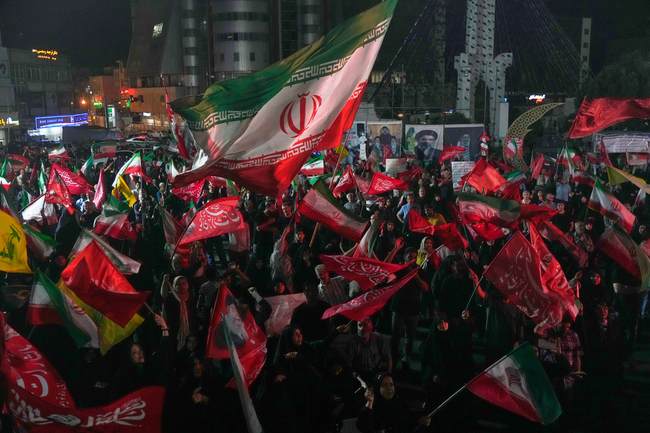
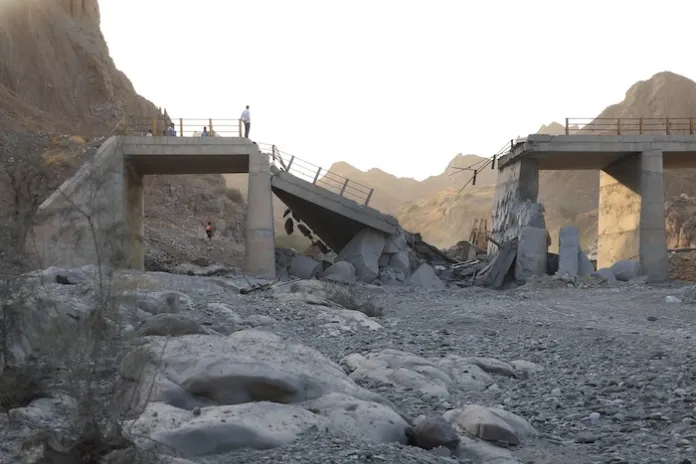
US Strikes Iran in Wake of Surprise Attack on American Forces
Source: NBC News Politics · Bias: Center Left
Summary
The United States launched major strikes against Iran Thursday morning after President Donald Trump vowed to hit the regime “very hard” as retaliation for a surprise attack on American forces in the region earlier in the week. It comes as a new poll shows 72% of Americans disapprove of the president's handling of Iran. NBC’s Gabe Gutierrez reports for TODAY.
US Strikes Iran in Wake of Surprise Attack on American Forces
Center Left
The United States launched major strikes against Iran Thursday morning after President Donald Trump vowed to hit the regime “very hard” as retaliation for a surprise attack on American forces in the region earlier in the week. It comes as a new poll shows 72% of Americans disapprove of the president's handling of Iran. NBC’s Gabe Gutierrez reports for TODAY.
Republican John Cornyn says he will not back nomination without written confirmation $1.8bn slush fund is deadTodd Blanche’s hopes of becoming US attorney general seemed to be in jeopardy on Wednesday after the Department of Justice did not provide written assurances to a key Republican senator that a $1.8bn slush fund was dead.The US Senate judiciary committee postponed a vote scheduled for Thursday on whether to advance Blanche’s nomination. Continue reading...
Live, rolling coverage of business, economics and financial markets as three members of monetary policy committee vote to raise ratesThat German GDP reading has indeed contributed to the wider eurozone hitting expectations – and then some.The eurozone economy grew by 0.4% in the second quarter of 2026, according to the preliminary reading from Eurostat – defying the gloom caused by the US-Israeli war on Iran. Continue reading...
U.S. economic growth dropped to 1.5 percent in the second quarter, down from a 2.1 percent annual rate in the first three months of the year, the Commerce Department’s Bureau of Economic Analysis reported Thursday. Economists were expecting a GDP growth rate of 1.8 percent, but thanks to President Trump’s Iran war, disastrous tariffs (including new tariffs levied on more than 50 countries last week), and cuts to government spending, we are, once again, not doing as well as Trump claims.“Americans are feeling gloomy: consumer confidence remains in the doldrums as households worry about rising costs,” The Economist reports. “Although annual inflation slowed to 3.5 percent in June from 4.2 percent in May, thanks largely to a temporary fall in petrol prices, renewed fighting has since pushed oil prices higher again.”Regular gasoline came in at an average of $4.22 a gallon in the second quarter, a dramatic increase from less than $3 a gallon before the U.S. and Israel began the war on Iran in February. Now that the shaky U.S.-Iran ceasefire is dead, Americans are bracing, once again, for painful prices at the gas pump. These latest figures reaffirm that the main concern right now for Americans is cost—of just about everything. Even Fox News recognizes that voters are unhappy with Trump’s economy and want “major change.” And by “major change,” we do not mean more tariffs. Plus, the Federal Reserve opted to hold interest rates steady for a fifth consecutive meeting on Wednesday. New Fed chairman Kevin Warsh acknowledged that there’s no quick fix to ease the cost of living, telling reporters there is no “magic wand” to bring prices down. In other words, Americans are getting the worst of both worlds: an economy that’s slowing down while prices keep climbing.But of course, in Trump’s own words, he “doesn’t think about Americans’ financial situation” when making decisions about the war in Iran.
Bloomberg Daybreak Europe is your essential morning viewing to stay ahead. Live from London, we set the agenda for your day, catching you up with overnight markets news from the US and Asia. And we'll tell you what matters for investors in Europe, giving you insight before trading begins.
On today's show, US 30-year treasury yields hit their highest since 2007 after the Federal Reserve held interest rates for the fifth straight meeting. The hold raised doubts about Chairman Kevin Warsh's commitment to tackling inflation.
Samsung reported a 250-fold jump in profit at its semiconductor arm, easily beating expectations. Microsoft’s cloud unit grew at the fastest clip in four years.
Today's guests: Jean-François Decaux, JCDecaux, Co-CEO; Ellie Henderson, Investec, Economist & Olivier Blum, Schneider Electric, CEO (Source: Bloomberg)
As Trump’s tariffs and his war with Iran drive up prices of everything from oil to steel, you’d think big American corporations would be screaming bloody hell. Presumably, Trump’s tariffs and war are squeezing their profits just as they’re squeezing the wallets of average Americans.To the contrary, corporate America is quietly encouraging both Trump’s war and Trump’s tariffs. Why?One possibility is they’re raking in money off the war as defense contractors and suppliers. Some surely are, but this can’t account for the acquiescence if not outright support by most big American corporations that have nothing to do with the defense-industrial complex. Another possibility is they don’t want to p--- off Trump, fearing his retaliation. But if they were really concerned about the negative effects of Trump’s war and his tariffs on their bottom lines, surely they’d be using their armies of lobbyists and piles of campaign contributions to stop his war and his tariffs. After all, that’s what the armies and piles are for. There’s a much simpler explanation for corporate America’s silence if not encouragement. In point of fact, both Trump’s war and Trump’s tariffs are helping their bottom lines. Trump’s war and his tariffs are allowing domestic U.S. producers to raise their prices to match the elevated prices of imports. And those who aren’t directly affected are using the higher import costs as excuses to raise their prices, too.Presto! — corporate profits have exploded, and their stock prices have soared. But American consumers are getting shafted. Both Trump’s war and his tariffs are pushing up prices for a vast range of goods and services. The result is a massive redistribution of income and wealth from American consumers to big American corporations. This is the story of the American political economy under Trump that’s rarely if ever told, but it’s critical to understanding why Trump has been getting away with his war in Iran and his tariffs without much political opposition. Start with oil. Brent crude is now selling for $90.05 a barrel. If the war drags on it could push crude prices much higher, especially if it further depletes oil inventories, and spreads to Houthi militants starting a naval blockade in the Red Sea and to other Gulf states.Oil prices are set globally. As global supplies dwindle, oil prices rise across the board — including prices charged by domestic U.S. producers. They’re enjoying a huge windfall. With crude oil prices averaging $95 a barrel between March and June — up from about $66 before the war — ExxonMobil, Chevron, ConocoPhillips, and Occidental Petroleum have collectively raked in some $31 billion in earnings for the second quarter of this year, according to FactSet estimates. That’s up from about $12 billion for the same period last year. These windfall profits have helped boost Big Oil’s stock prices. Big Oil’s investors and executives (who are paid partly in shares of stock) have done wonderfully well. But American consumers are bearing the burden, as gas prices once again soar past $4 a gallon, a dollar more than they were before Trump started his war on February 28. So is it any wonder that Big Oil isn’t criticizing Trump’s war, and is quietly rooting it on?Or consider steel. Trump imposed steel tariffs of 50 percent in March and June 2025. These tariffs have driven up steel prices in the United States. The tariffs have been a boon to American steelmakers, who have raised the prices they charge their American customers to match the higher prices now charged for steel from abroad. As a result, leading American steel producers like Nucor and Steel Dynamics report significant year-over-year earnings increases.Nucor’s profits in the second quarter of 2026 were $1.16 billion, up from $603 million a year earlier. Steel Dynamics has reported a second-quarter income of $534.1 million, nearly double its net income compared to the same period last year. A third U.S. producer, Cleveland-Cliffs, earned $97 million in the second quarter of this year (before interest, taxes, depreciation, and amortization), compared to a loss of $213 million last year, and the firm anticipates doubling earnings next quarter. Who’s bearing these higher costs? American consumers of steel — in the prices of everything we buy that contains steel (such as cars and appliances). The Producer Price Index (a widely used proxy for input costs) for steel mill products is now sitting at its highest point since May 2023. American-based producers that utilize oil and steel have been able to pass those costs on to their customers without harming their profit margins. Some corporations that don’t depend on oil or steel have used the higher import costs as excuses to raise their prices, too. Hence, Trump’s war and Trump’s tariffs are wins for corporate America. Profit margins are up, the value of shares on the stock market are up. Shareholders are happy.
John Cornyn and Thom Tillis accused the nominee for attorney general of refusing to put on paper his promise to kill aspects of the deal he cut to settle President Trump’s suit against the agency.
Former President Barack Obama endorsed Democratic Iowa state Rep. Josh Turek for U.S. Senate as the candidate runs against Trump-backed Republican U.S. Rep. Ashley Hinson.