European NATO allies have mostly replaced the assets that the US has cut from its rescue plans in case of a war in Europe, Deputy Supreme Allied Commander Europe Sir John Stringer said in an interview.
Major American corporations that benefited from tax cuts enacted last year by President Donald Trump and congressional Republicans are donating to the campaigns of GOP lawmakers who made the windfall possible.A report published Friday by Unrig Our Economy spotlights seven House Republicans who voted for the sprawling and unpopular GOP budget package, which extended tax breaks for corporations and wealthy Americans while inflicting unprecedented cuts on Medicaid and federal nutrition assistance—with disastrous consequences for millions of low-income families across the country.Rep. Mariannette Miller-Meeks (R-Iowa), one of the lawmakers featured in the new report, has received campaign donations from corporate PACs representing 3M, Amazon, Walmart, AT&T, and other companies that collectively received billions of dollars in tax breaks from the Republican law, which restored a provision allowing businesses to immediately write off new investments.Amazon saw its US income taxes fall by more than half last year due to the GOP law, even as the company’s profits grew. Unrig Our Economy noted that Amazon, whose PAC donated thousands to the Republicans spotlighted in the new report, has an effective federal tax rate of 1.37% following enactment of the budget law.Miller-Meeks, who has received at least $57,000 in donations from the PACs of companies that benefited from the 2025 law, issued a statement Thursday bragging about supporting “the largest tax cuts in American history,” not mentioning that the benefits will disproportionately flow to profitable corporations and the richest people in the country.“Thanks to the Republican tax law, corporations are receiving tax breaks, House Republicans are getting campaign cash, and working families are getting stuck with the bill,” the report states.Another Republican lawmaker featured in the report, Rob Bresnahan of Pennsylvania, received $2,500 in campaign donations from the PAC of FirstEnergy, which reaped $500 million in depreciation deductions thanks to the GOP tax law.“Bresnahan voted to give FirstEnergy hundreds of millions in tax breaks even after the company raised utility prices for his constituents,” Unrig Our Economy’s report observes.The report also points out that Bresnahan “owned stock in every single one” of the companies who contributed PAC money to his campaign following passage of the Republican budget package last summer.“This comes after Bresnahan has already faced scrutiny for dumping stock in Medicaid providers and selling off bonds in Pennsylvania hospitals before voting to slash Medicaid and put rural hospitals at risk,” the report notes.Leor Tal, Unrig Our Economy’s campaign director, said in a statement that “one year ago, House Republicans ripped away healthcare and food assistance from millions of Americans, so that corporations could get massive tax breaks.”“Now, many of those companies are dishing out PAC money to the Republicans listed in this report,” said Tal. “Republicans in Congress sold out many of their own constituents to help corporations get even richer. It’s time that House Republicans step up, do the right thing, and start fighting for working Americans—not giant corporations.”
Secretary of War Pete Hegseth reportedly pulled the plug on plans to reduce U.S. troop counts in Europe, The Wall Street Journal reported. Hegseth’s plans were cancelled […]
The Department of Labor's latest economic report revealed concerning trends despite a declining unemployment rate of 4.2%. Job creation fell sharply to just 57,000 over three months, down from 129,000 in the previous report, according to the survey released Thursday morning. CNN senior business reporter David Goldman highlighted red flags in specific sectors: nursing jobs added only 22,000 over the past year, compared to 38,000 the previous year, while hospitality hiring experienced significant decline despite multiple cities hosting World Cup games. "That is something that we need to watch," Goldman said.He noted economists expect future revisions to clarify the numbers. "I think, and there are a number of economists who are smarter than me who think, that this might change as we get those revisions in the future months, because this is kind of defying logic and defining what we can see with our own eyes," Goldman said.Watch the video below. Your browser does not support the video tag.
Today, Marta Norton, chief investment strategist at Empower, discusses the underwhelming June jobs report and that means for the Fed's next move. Then, Stuart Paul, Bloomberg Economics US and Canada economist, talks oil prices and what a permanent toll on the Strait of Hormuz would mean for oil prices. Plus, Robin Wenzel, head of the Wells Fargo Agri-Food Institute, breaks down the cost of fourth of July barbeque and where americans are feeling pinched at the grocery store. Finally, 'Bloomberg Business of Sports' co-hosts Vanessa Perdomo-Maglione and Randall Williams, discuss the United States' World Cup win over Bosnia-Herzegovina in the round of 32 and how a controversial red card may cost the US its leading scorer in the next game. (Source: Bloomberg)
With the U.S. hosting the World Cup, there have been plenty of anecdotes about a booming tourism economy in host cities — Scotland fans drinking Boston bars out of beer, for example.But no World Cup hiring bump is evident in the June employment data.By the numbers: Leisure and hospitality employment fell by 61,000 jobs in June. That's the category that includes restaurant and hotel employment and is most sensitive to tourism trends.The report also sharply revised down what had been first reported as a huge surge in May employment in the sector — to 40,000 jobs added from 70,000.Of note: The month-to-month numbers are volatile, reflecting both sampling error and the vagaries of seasonal adjustment processes. But even over slightly longer time frames, there also is not much to see.The leisure and hospitality sector has shed an average of 9,000 jobs in the last three months. It gained an average of 13,000 jobs monthly in the 12 months before that.The intrigue: It's worth watching whether a World Cup bump shows up in the local economies in other ways, including retail sales and local tax receipts.Employment data for metro areas in June will be released later in the month.The bottom line: "Many had forecast additional hiring needed to support the draw of travelers from abroad and within the U.S. flocking to World Cup venues," Jim Baird of Plante Moran Financial Advisors wrote in a note. "That either didn't materialize or was more than offset by losses elsewhere."
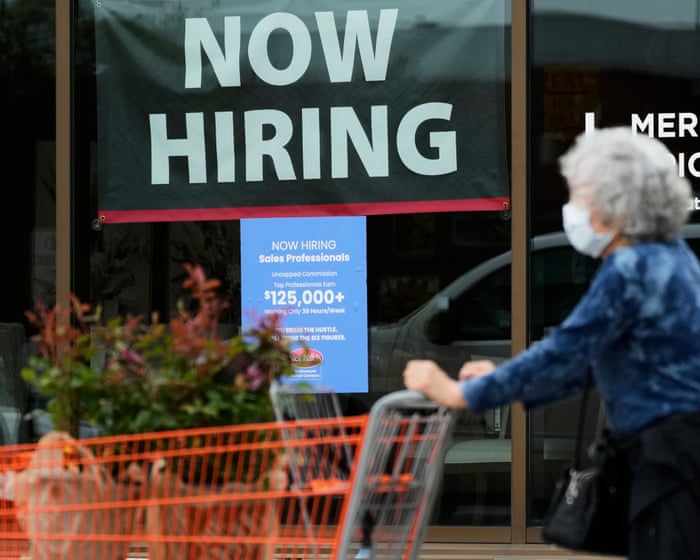
The country’s unemployment rate dropped slightly to 4.2% as US job growth also slowed for the monthSign up for the Breaking News US newsletter emailUS job growth slowed in June as employers added 57,000 new jobs – just about half of what economists had predicted – and the Bureau of Labor Statistics revised its figures from the past two months down by a total of 74,000.The country’s unemployment rate dropped slightly to 4.2%, but the number of unemployed people changed little, according to the latest data, as 720,000 people left the labor force. The bureau revised the unexpectedly high May figures from 172,000 new jobs to 129,000, and revised the April figures from 179,000 to 148,000. Continue reading...