MLS ready to ‘take it from here’ after World Cup’s massive USMNT ratings
MLS does not view the stateside World Cup craze as something still to come, but as momentum the league believes it has already been building for years.

With the U.S. hosting the World Cup, there have been plenty of anecdotes about a booming tourism economy in host cities — Scotland fans drinking Boston bars out of beer, for example.But no World Cup hiring bump is evident in the June employment data.By the numbers: Leisure and hospitality employment fell by 61,000 jobs in June. That's the category that includes restaurant and hotel employment and is most sensitive to tourism trends.The report also sharply revised down what had been first reported as a huge surge in May employment in the sector — to 40,000 jobs added from 70,000.Of note: The month-to-month numbers are volatile, reflecting both sampling error and the vagaries of seasonal adjustment processes. But even over slightly longer time frames, there also is not much to see.The leisure and hospitality sector has shed an average of 9,000 jobs in the last three months. It gained an average of 13,000 jobs monthly in the 12 months before that.The intrigue: It's worth watching whether a World Cup bump shows up in the local economies in other ways, including retail sales and local tax receipts.Employment data for metro areas in June will be released later in the month.The bottom line: "Many had forecast additional hiring needed to support the draw of travelers from abroad and within the U.S. flocking to World Cup venues," Jim Baird of Plante Moran Financial Advisors wrote in a note. "That either didn't materialize or was more than offset by losses elsewhere."
MLS does not view the stateside World Cup craze as something still to come, but as momentum the league believes it has already been building for years.
The Department of Labor's latest economic report revealed concerning trends despite a declining unemployment rate of 4.2%. Job creation fell sharply to just 57,000 over three months, down from 129,000 in the previous report, according to the survey released Thursday morning. CNN senior business reporter David Goldman highlighted red flags in specific sectors: nursing jobs added only 22,000 over the past year, compared to 38,000 the previous year, while hospitality hiring experienced significant decline despite multiple cities hosting World Cup games. "That is something that we need to watch," Goldman said.He noted economists expect future revisions to clarify the numbers. "I think, and there are a number of economists who are smarter than me who think, that this might change as we get those revisions in the future months, because this is kind of defying logic and defining what we can see with our own eyes," Goldman said.Watch the video below. Your browser does not support the video tag.
If no one truly knew how good the U.S. national team was before the World Cup started, then no one had even the slightest clue of how good its defense was.
Portugal won its Round of 32 World Cup matchup against Croatia on July 2 in dramatic fashion. After falling behind 1-0, Portugal tied things up on a Cristiano Ronaldo penalty in the second half, then scored what ended up being the game-winning goal in the fourth minute of stoppage time. Goncalo Ramos celebrates scoring the...
Today, Marta Norton, chief investment strategist at Empower, discusses the underwhelming June jobs report and that means for the Fed's next move. Then, Stuart Paul, Bloomberg Economics US and Canada economist, talks oil prices and what a permanent toll on the Strait of Hormuz would mean for oil prices. Plus, Robin Wenzel, head of the Wells Fargo Agri-Food Institute, breaks down the cost of fourth of July barbeque and where americans are feeling pinched at the grocery store. Finally, 'Bloomberg Business of Sports' co-hosts Vanessa Perdomo-Maglione and Randall Williams, discuss the United States' World Cup win over Bosnia-Herzegovina in the round of 32 and how a controversial red card may cost the US its leading scorer in the next game. (Source: Bloomberg)
World Cup watch parties in Santa Clara and the San Francisco Bay Area brought fans together for the United States vs. Bosnia-Herzegovina match, where the U.S. earned a 2-0 win to reach the Round of 16.
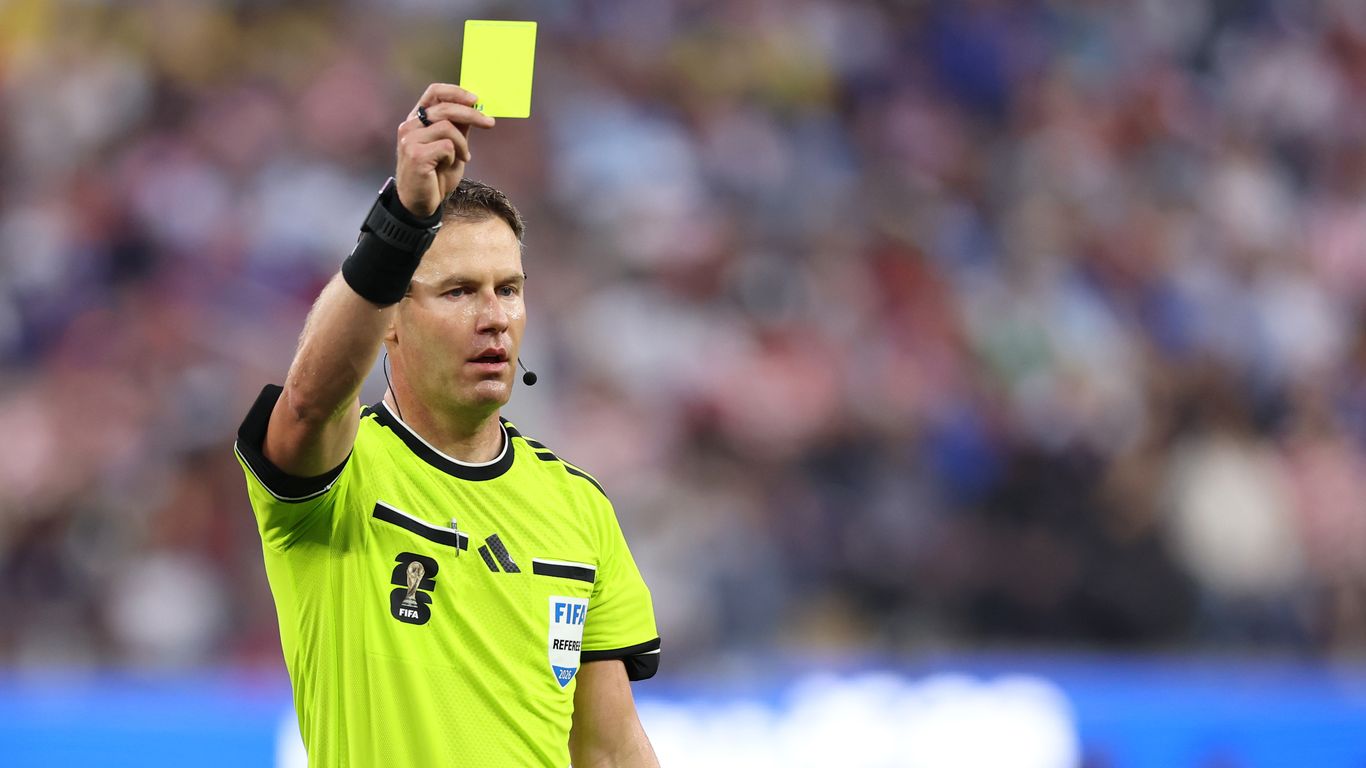
The job market entered the summer with less momentum than looked to be the case just a month ago.Why it matters: Call it a yellow card for the labor market. Thursday morning's employment report doesn't undo three months of stronger hiring, but it does warn that the rebound is less durable than first thought.Hiring has remained concentrated in a handful of industries, leaving fewer opportunities for Americans looking to switch jobs or reenter the workforce.What they're saying: "June's jobs report put a damper on the fireworks, coming in well below expectations and pointing to a labor market that's more fizzle than sparkle," Glassdoor chief economist Daniel Zhao wrote Thursday morning.Driving the news: Payrolls rose by 57,000 in June, roughly half the gains that economists expected. New revisions also show that hiring was weaker than expected over the previous two months, with payroll employment revised down by a combined 74,000 jobs.Payroll gains averaged 111,000 over the past three months, down from 164,000 in May. That's well above the 33,000 pace a year ago, but suggests that the labor market's spring rebound has faded.Zoom in: Fewer Americans were working in June, and fewer were looking for work — a combination that mechanically pushed the unemployment rate down a tick to 4.2%. Household employment fell by 507,000, while roughly 720,000 people left the labor force in June, driving the participation rate down 0.3 percentage point, to 61.5%.Fewer prime-age workers, those between 25 and 54, were working or looking for a job in June: The participation rate slid 0.6 percentage point, the biggest one-month decline outside the pandemic in at least a decade.The big picture: Slower hiring, downward revisions, weaker labor force participation and a narrower mix of industries creating jobs leave economic policymakers with a more difficult question than they faced a month ago.It's unclear whether the uneasy mix of labor market factors in June was a blip or the start of a slower labor market phase.One notable exception to the report's softer tone was wages. Average hourly earnings rose 0.3% in June — the second consecutive month of acceleration — and 3.5% from a year earlier, though slower hiring in lower-paying industries may have lifted the average.What to watch: Federal Reserve chairman Kevin Warsh said last month that the labor market's three-to-six-month trend mattered more than any single jobs report, while noting that the job market had been "moving in a good direction."Financial markets' outlook for the Fed barely budged after the report. One weaker report is not enough to push off expectations that the central bank might have to raise interest rates to contain too-high inflation.Traders now see a roughly 78% chance of at least one rate hike by year-end, down only modestly from about 83% before the jobs report, according to CME FedWatch.