Trump says it's time for Iran to "pay the price" as U.S. announces new strikes
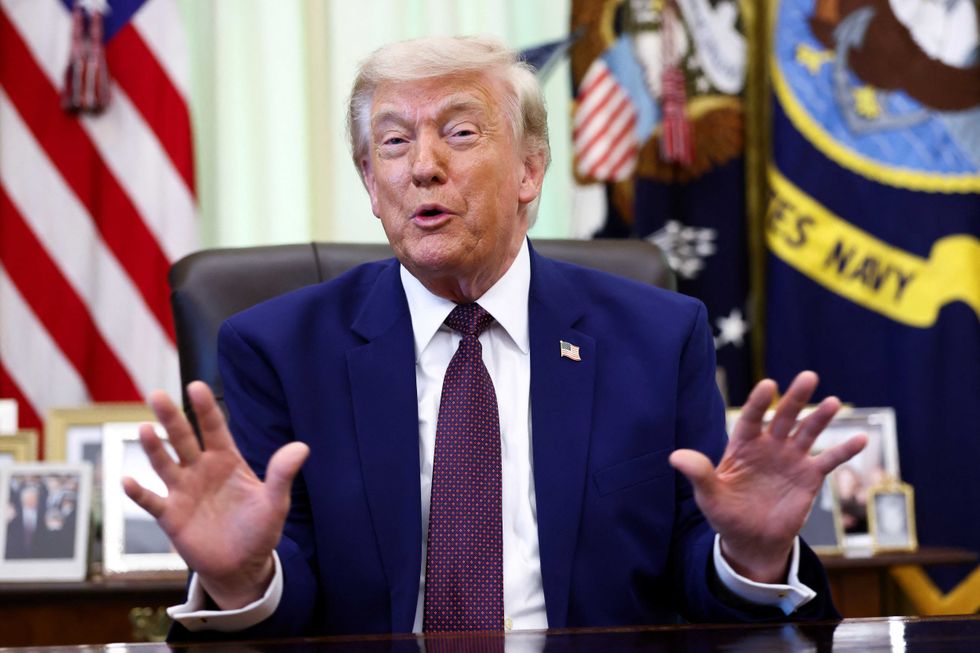
The U.S. military said it launched new attacks on Iran on Wednesday, with President Trump saying it's time for the regime to "pay the price." Ed O'Keefe reports.

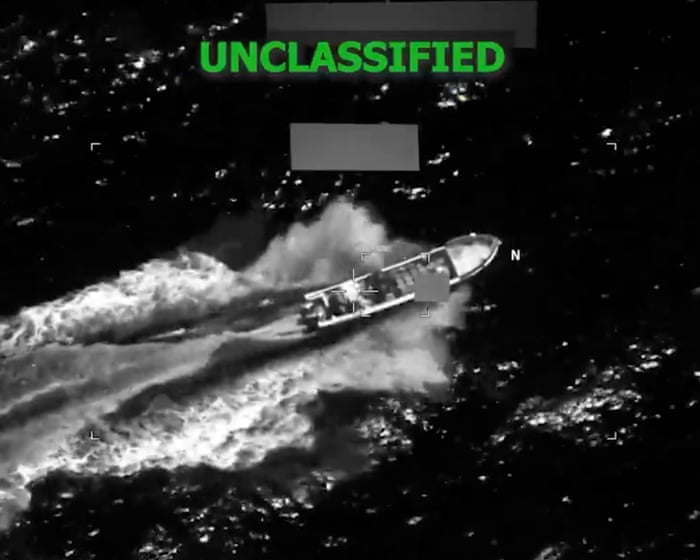
President Trump has expanded military operations across multiple regions during his second term, with U.S. forces targeting drug-smuggling boats in the eastern Pacific even as American and Iranian officials pursue a peace deal.Why it matters: Trump's expanding military operations are testing whether his America First doctrine can accommodate a growing U.S. military footprint overseas.Andrew Latham, a political science professor at Macalester College in Minnesota, tells Axios that Trump "launched these campaigns because he sees military force differently from the way the Bush-era foreign policy establishment saw it."It's not about refashioning societies into America's image, Latham says. Instead, it fits Trump's view of politics: "threats are personal, borders matter, weakness invites contempt, and force is useful when it produces a visible result."What they're saying: "All of President Trump's actions have put America First and made our homeland safer," White House spokesperson Anna Kelly said in a Sunday-evening email."There is nothing more America First than eliminating the threat of a nuclear Iran, stopping illicit drugs from entering our country, and killing terrorists who want to murder Americans."Here's where Trump has sent the U.S. military:Latin America and surrounding watersOn June 3, at the direction of #SOUTHCOM commander Gen. Francis L. Donovan, Joint Task Force Southern Spear conducted a lethal kinetic strike on a vessel operated by Designated Terrorist Organizations. Intelligence confirmed the vessel was transiting along known narco-trafficking… pic.twitter.com/wCHvnSJf3O— U.S. Southern Command (@Southcom) June 4, 2026 An estimated 207 people have died in U.S. strikes on suspected drug-trafficking boats in the Caribbean and eastern Pacific since September, when the Trump administration announced it had killed 11 members of the Tren de Aragua drug cartel near Venezuela.The latest: U.S. Southern Command said Wednesday night that a strike on a vessel in the eastern Pacific had killed two people it described as "male narco-terrorists."SOUTHCOM announced three deaths from a boat strike in the same region last weekend.In Caracas in January, the U.S. military captured Venezuelan leader Nicolás Maduro. Maduro pleaded not guilty to charges including narco-terrorism conspiracy and is in pre-trial detention in New York.What we're watching: There's been a military buildup near Cuba in recent weeks as Trump presses for political change, though Axios' Marc Caputo reports the president would prefer a peaceful transition.Middle EastThe Middle East has been a key focus of Trump's military operations — retaliatory airstrikes on Houthi rebels in Yemen in March 2025, killing a key ISIS leader in Iraq during the same period, and striking ISIS targets in Syria in December.The U.S. has twice attacked Iran during Trump's second term. Zoom in: In June 2025, Trump directed U.S. forces to join Israel in bombing Iran during a 12-day war that targeted Iranian nuclear sites.In February, U.S. and Israeli forces again launched strikes, and Tehran responded with retaliatory attacks against American allies across the Middle East.The U.S. and Iran have since clashed in the Strait of Hormuz, as negotiations to end the war continue.AfricaSomalia was the first country the U.S. military struck after Trump returned to office. Operations there have continued, with at least 63 joint airstrikes targeting ISIS and al-Shabaab this year.U.S. and Nigerian officials have cooperated in striking ISIS targets on several occasions.Trump cited the persecution of Christians in Nigeria as a justification for the strikes, though Nigerian officials say Islamic extremist groups are also attacking Muslims.The bottom line: Trump "ran against endless wars, failed occupations, democracy-promotion, and the habit of spending American blood and treasure on other people's political fantasies," Latham says."Blowing up a target connected to drugs, terrorism, or Iran's nuclear program can be sold as homeland defense. The difficulty begins when the strike is no longer a strike but a campaign," he says. "America First can justify a sharp use of force. It has a much harder time justifying drift."Go deeper: Trump allies renew Greenland, Canada takeover talk
The U.S. military said it launched new attacks on Iran on Wednesday, with President Trump saying it's time for the regime to "pay the price." Ed O'Keefe reports.
President Donald Trump has put himself in a "weak" position in his war against Iran, the conservative Wall Street Journal editorial board wrote in an analysis published on Wednesday."For nine weeks, the cease-fire has let Iran dictate events in the Gulf," wrote the board. The way things have progressed, they argued, Iran itself "gets to start each 'skirmish' — shooting at U.S. forces, U.S. allies, or commercial ships — and then decide when the exchange ends," all while attacking Israel through its Hezbollah proxies in Lebanon and using the conflict there as "an excuse to stall talks with the U.S."Through all this, the board wrote, Trump has downplayed Iran's offensives, calling fire on U.S. troops "a trifle," an Iranian bombing of a Kuwaiti airport “not a big deal,” and even saying something almost identical about the Iranian downing of an Apache helicopter.Ultimately, wrote the board, "Mr. Trump limited Israel’s strikes and previewed his own in public. When the U.S. says 'proportional,' Iran hears 'weak.' Offering the regime such forward guidance signals that Mr. Trump still fears a return to war" — all of which tells Iran they have wide latitude to continue violating the ceasefire with minimal to no response from the U.S. military."Mr. Trump won’t want to hear it, but he has been dancing to Iran’s tune," the board concluded. "He will have to break from it or go down as losing the war politically despite the early military gains."This comes as the latest round of talks to resolve the war fail, and new economic data shows inflation surging again as the Strait of Hormuz and much of the world's oil shipping remain blocked.
A new report on Wednesday showed inflation rising 4.2 percent in May, marking its highest level in three years and underlining how hard the Iran war is hitting consumers. The Labor Department report is unwelcome news for President Trump and the GOP in an election year where affordability is the dominant issue. Democrats were already…
Sen. Richard Blumenthal (D-CT) confronted North Dakota U.S. District Court Judge Daniel Mack Traynor during his 8th Circuit Court of Appeals confirmation hearing, after Traynor repeatedly refused to directly answer who won the 2020 presidential election. When Blumenthal asked the straightforward question, Traynor claimed it was political controversy and inappropriate for a sitting judge to address, citing Justice Ketanji Brown Jackson's precedent. Blumenthal pressed further, demanding Traynor state as fact who received more votes, but Traynor continued deflecting his answer. Blumenthal accused Traynor of using a scripted response dictated by the White House, arguing he was protecting the President's election lie by refusing to acknowledge a simple fact. Blumenthal said, "Everybody in this room knows the answer. You're unwilling to state it." The exchange highlighted Trump-nominated judges' coordinated avoidance of confirming basic electoral facts during Senate confirmation hearings.Watch the video below. Your browser does not support the video tag.
Iran announced it was closing the Strait of Hormuz to all vessels after the United States launched strikes on “multiple targets” on Wednesday evening. “From this moment on, due to insecurity in the region, the Strait of Hormuz is declared closed to the traffic of any type of vessel, including oil tankers and commercial vessels, […]
The Wall Street Journal is arguing that one detail matches its reporting about President Donald Trump's connection to Jeffrey Epstein.In a new legal filing, lawyers for Dow Jones, the company that owns the Wall Street Journal, argued that Trump "cannot" dispute that a signature appearing on a typewritten note and a sketch of a naked woman sent to Epstein resembles his own.Trump sued the Wall Street Journal over an article about a book of letters compiled for Epstein's 50th birthday in 2003. He alleged that the paper defamed him by noting that the letter and sketch bear his signature. Earlier this year, a court accepted the Journal's motion to dismiss because Trump couldn't prove actual malice in the article. Trump was able to revive a defamation claim, but Dow Jones's lawyers are again seeking to dismiss Trump's lawsuit in their new legal filing.The defense lawyers are telling the court to throw out Trump's lawsuit because "the article is true." After the Journal reviewed the letter and sketch with Trump's signature, Epstein's estate released the "Birthday Book" to the House Oversight Committee in September."The article is true because the description of the letter 'bearing Trump's name' in the article is an entirely accurate description of the letter as it appears in the Birthday Book," the filing read. "The article states that the Journal 'reviewed' the letter before publication and described its contents in detail (which exactly match the contents of the letter released by Congress)," the legal filing argued, adding that Trump doesn't even dispute the resemblance of his signature to the one in the birthday book "because he cannot."
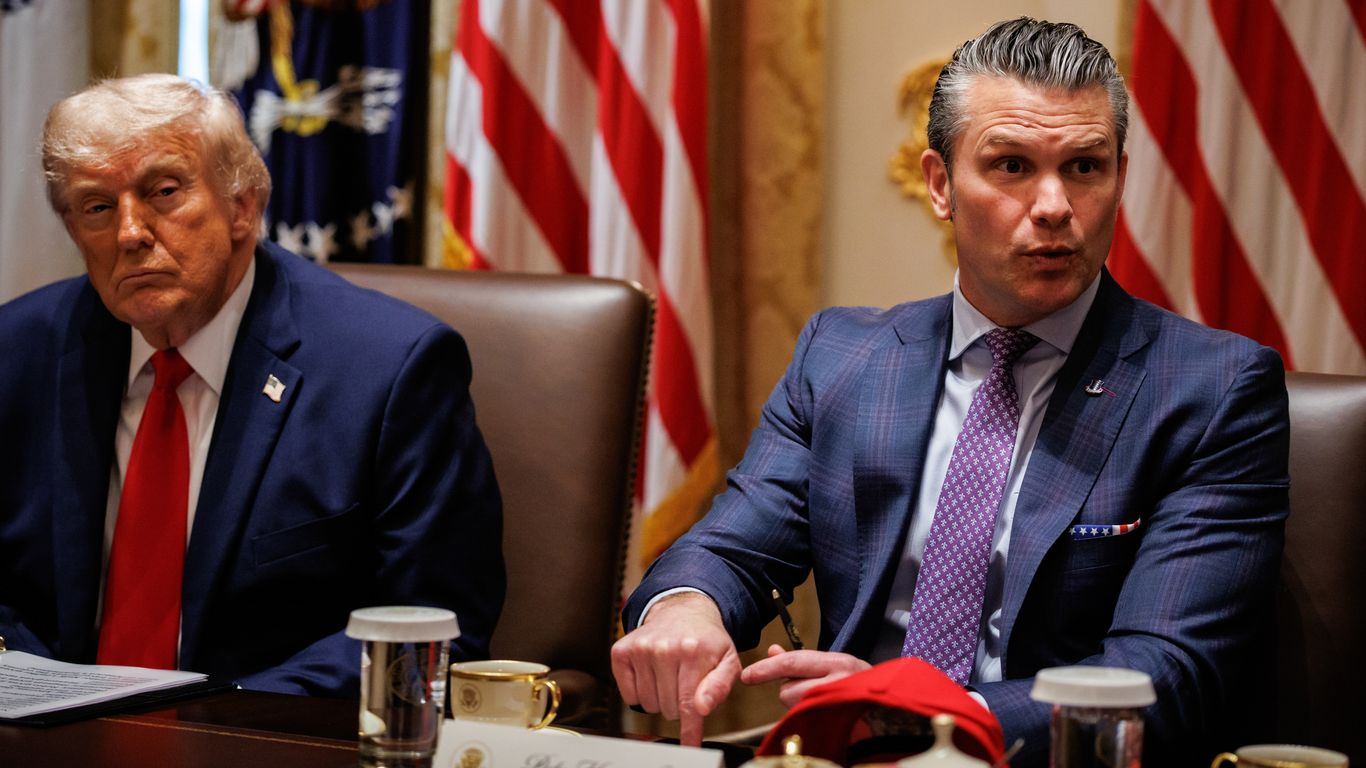
The U.S. military began launching another round of strikes Wednesday evening against multiple targets in Iran, less than an hour after Defense Secretary Pete Hegseth warned that forthcoming attacks would be “strong and clear.” The U.S. Central Command (Centcom) began launching strikes at 5:15 p.m. ET at President Trump’s direction, it said. “The strikes are…