Source: US news | The Guardian · Bias: Center Left
Summary
Wildfires in Europe, Russian missile strikes in Kyiv, the cockroach protests in New Delhi and the World Cup final – the past seven days as captured by the world’s leading photojournalistsWarning: this gallery contains images some readers may find distressing Continue reading...
Wildfires in Europe, Russian missile strikes in Kyiv, the cockroach protests in New Delhi and the World Cup final – the past seven days as captured by the world’s leading photojournalistsWarning: this gallery contains images some readers may find distressing Continue reading...
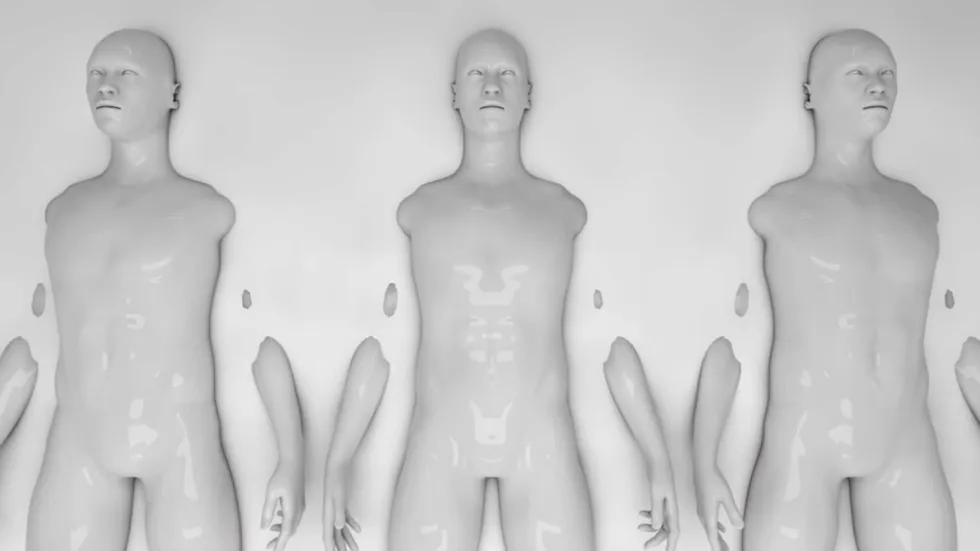
Social media's magicians spent decades perfecting the art of slicing human attention into advertising revenue. Is the next step on the corporate road map farming human tissue for spare parts?The tech is there, or almost there. The ideas have percolated for decades. All it takes, it seems, is the will.The concept of individual self-ownership becomes entirely obsolete.An early pitch deck for R3 Bio, a quiet biotech startup operating out of California, laid out a vision that makes classic horror fiction look rather mild. The company’s leadership, reports suggest, engaged in internal discussions regarding the production of brainless, nonsentient human bodies designed for the explicit purpose of organ harvesting, pharmaceutical testing, and eventual commercial deployment.They christened these biological monstrosities "organ sacks."The terminology speaks volumes to the moral framework seizing imaginations in the contemporary tech executive class. When a team of researchers and engineers looks at the human form and sees an inconveniently conscious container for marketable kidneys, the line between medical innovation and factory farming disappears completely.Executives at R3 Bio floated plans to reprogram monkey cells, cultivate complete organ systems, and engineer these living biological constructs to be intentionally primitive enough to bypass federal ethical guidelines.But this isn't some sudden Silicon Valley obsession. The ambition to redesign human biology has been gathering momentum worldwide for years.They have a dreamIn October 2022, biotech investors gathered in Zurich to debate the commercial viability of synthetic biology, openly celebrating the day human biology would be fully decoupled from traditional ideas of personhood. The attendees viewed the human body as an inefficient piece of legacy software requiring a total architectural overhaul. It was only a matter of time before the idea caught on.Scientists at R3 Bio defended their research behind the usual wall of righteous PR speak, insisting their work aims to end the chronic shortage of donor organs and cure terminal illnesses. They publicly insist that full-scale human organ fabrication remains outside their current operational scope and that their public website reflects a commitment to safe, traditional cell therapy.But the problem runs deeper than what R3 Bio says it is or isn't doing today. It's what history tells us can happen when scientific ambition outruns consent, oversight, and basic human dignity.The playbook never changes. In 1951, researchers extracted cancer cells from Henrietta Lacks without her knowledge or consent, creating the HeLa cell line that generated billions in profit for pharmaceutical giants while her family struggled to pay medical bills. The medical establishment transformed a living human being into a self-sustaining corporate product, establishing a precedent that today's biotech firms are eager to scale up to the entire human torso. There is an enormous amount of money to be made. And where the fevered dreams of high-tech immortality are concerned, human morality has a troubling habit of turning negotiable.RELATED: Anti-aging mogul's next act? He'll harvest organs from his own clone L-R: Bridget Bennett/Bloomberg/Getty Images; Aldara Zarraoa/Getty ImagesA society grounded in the belief that human life possesses inherent dignity treats the human body as an inherently sacred structure rather than a machine assembled from interchangeable parts. The secular technocracy reigning in Northern California views the human body as a collection of meat components that can be optimized, monetized, and swapped out.Death of the selfThe transition from healing the sick to manufacturing customized human vessels happened while everyone was distracted by social media algorithms. Engineers want to replace a failing heart, grow an artificial liver in a vat, construct a brainless body to house the spares, and call the whole process market efficiency. The language of human medicine was completely swallowed by the inhumane jargon of auto repair.This mechanistic worldview demands that every biological boundary be erased in the name of efficiency and infinite growth. If a brainless body exists as a legal product, the entity owning the patent exercises total property rights over a human biological shell. If a corporation can copyright the genetic sequence of a custom-grown torso, the concept of individual self-ownership becomes entirely obsolete.Tech elites frequently talk about death as a minor coding error awaiting a software upgrade. They invest billions in longevity protocols, upload schemes, and cellular rejuvenation, completely convinced that their wealth entitles them to bypass mortality itself.
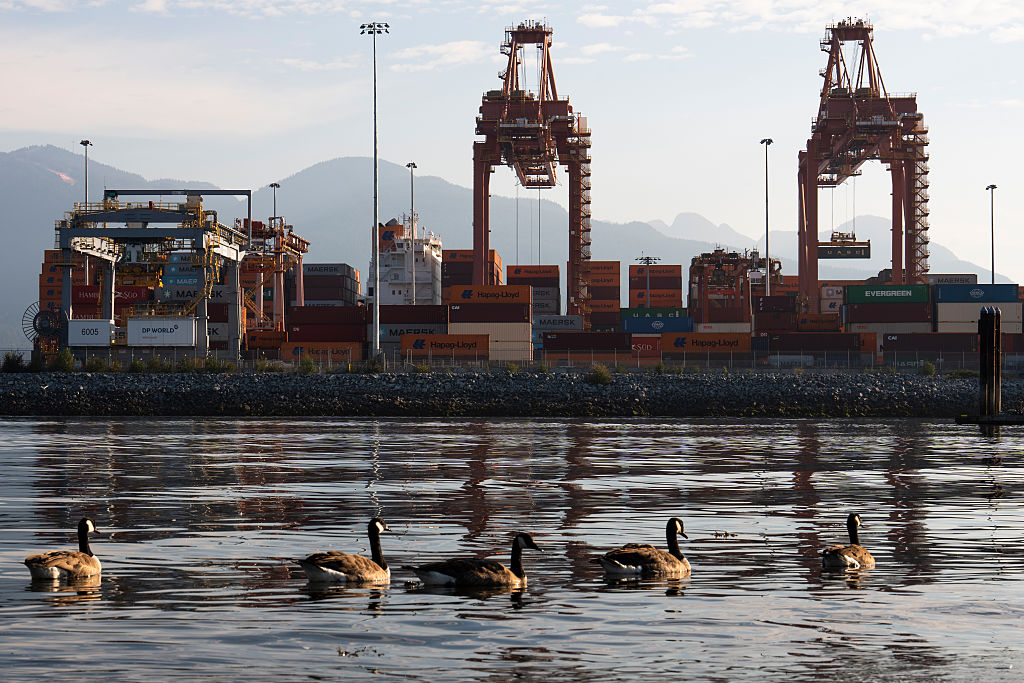
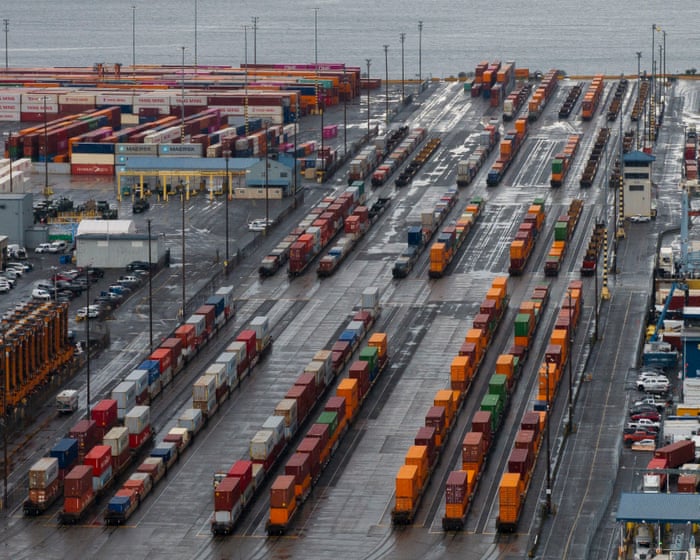
Forced labor is a problem, especially in the US, where prisoners are coerced to work for pennies – or nothing at allUS politics live – latest updatesDon’t believe the Trump administration’s rationale for its new volley of tariffs against everybody.The new levies, ostensibly to punish countries for failing to do enough to curb forced labor, switched on at 12.01am on Friday, to coincide with the expiration of a temporary 10% blanket duty that Donald Trump imposed in February, ostensibly to protect the United States from a balance-of-payments crisis. Continue reading...
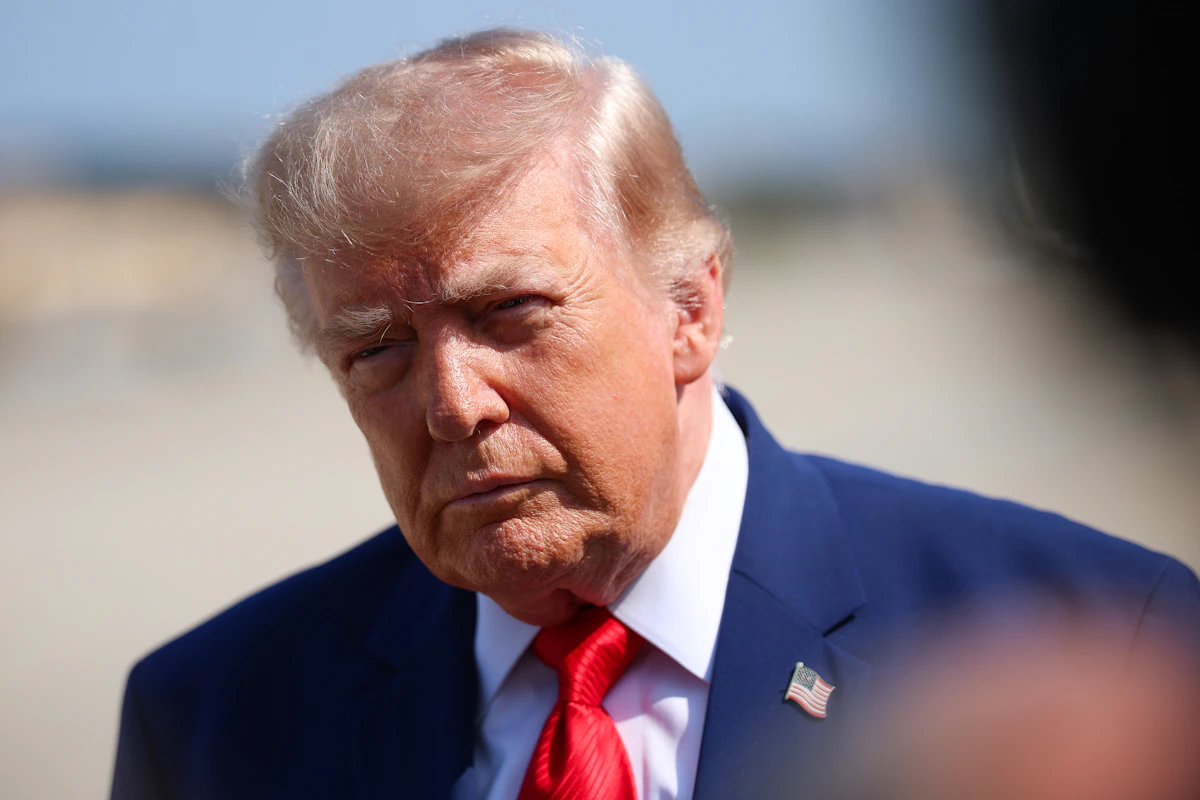
President Trump’s justification for his latest round of tariffs has angered foreign leaders. The White House on Friday instituted tariffs between 10 and 12.5 percent on 60 countries around the world by citing Section 301 of the Trade Act of 1974, which allows import duties to be placed on countries that use forced labor. But U.S. trading partners have slammed the move, with Australian Trade Minister Don Farrell calling them “completely unjustified.”“We believe that amongst all of the countries in the world Australia does take the issue of slavery, modern slavery, seriously, and will continue to do that,” Farrell said.New Zealand Prime Minister Christopher Luxon called the tariffs “extremely disappointing,” and said that the U.S. did not have the evidence to say that his country uses slave labor.“Tariffs are not the way—they drive up costs and uncertainty for businesses,” he wrote in a post on X.European Union foreign policy chief Kaja Kallas took offense to the allegations of forced labor, saying that their labor laws are better for workers than those of the U.S. “If you compare our labor laws to the ones of the United States, I mean we have, people have paid vacations, we have very good conditions, labor conditions for our employees, so it’s not really grounded,” Kallas said.Japan’s Chief Cabinet Secretary Minoru Kihara said, “It is regrettable that the measure imposes tariffs on the grounds of non-existence of measures banning imports of goods made by forced labor, even though Japan’s industry and trade are in line with international rules.”It’s pretty clear that the Trump administration is simply trying to use any legal justification for its tariffs that will avoid being overturned by the courts this time, unlike the president’s last attempt. Forced labor is still a problem internationally, but Trump has not presented any specific evidence of any business in these 60 countries having a slavery problem.
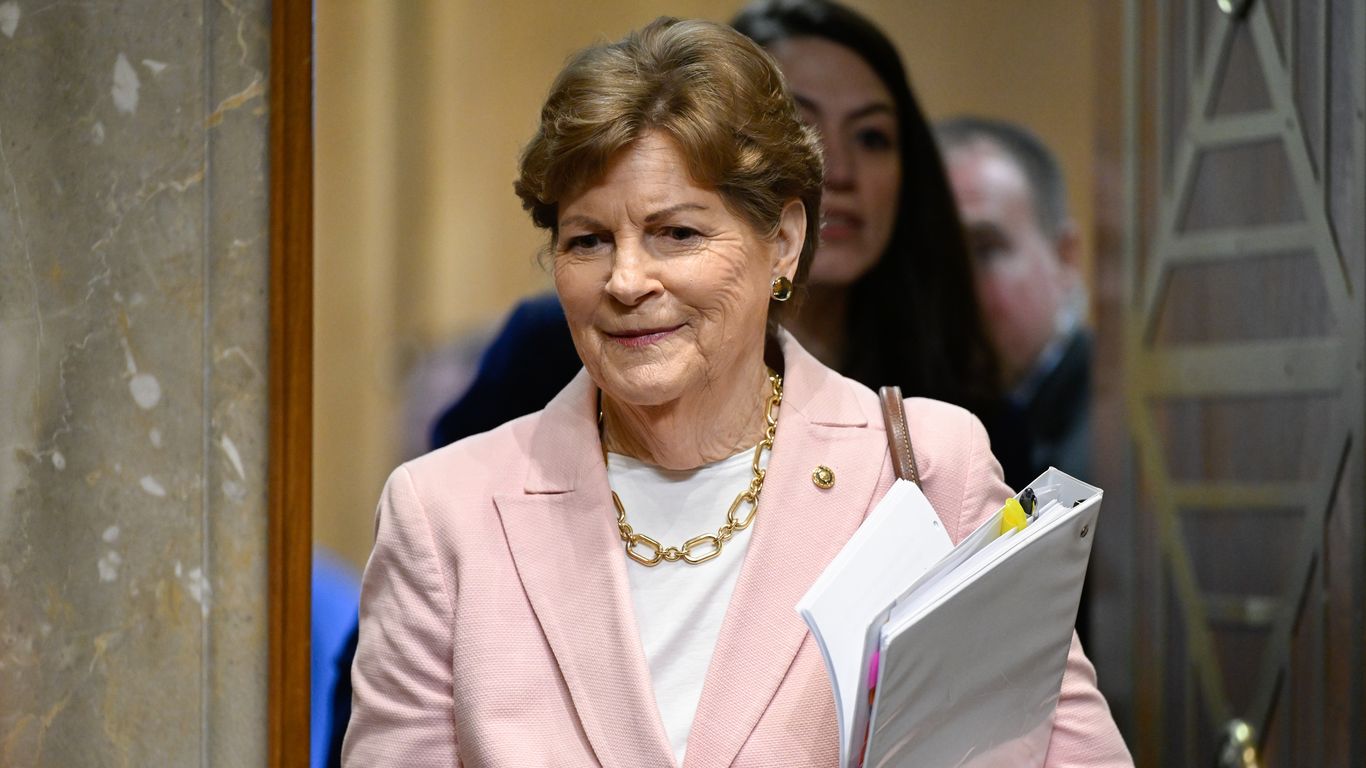
Democrats are indicating to their Republican counterparts that they are prepared to vote as early as next week on a Russia sanctions package that includes an 11th-hour demand from President Trump that the bill also include Iran, according to people familiar with the matter.Why it matters: It would mark a rare bipartisan breakthrough on legislation to help end the war in Ukraine in a Senate that has spent much of the year engaged in partisan combat.It also would show that Majority Leader John Thune (R-S.D.) and Minority Leader Chuck Schumer (D-N.Y) can work together weeks before Election Day — a dynamic that could prove critical as the Senate works to avoid a third government shutdown this year. Tuesday's Capitol memorial for Sen. Lindsey Graham (R-S.C.) will serve as an emotional backdrop to the Senate's consideration of the bill he spent his final days trying to shepherd across the finish line."I'm optimistic we'll be able to move forward soon," Sen. Jeanne Shaheen (D-N.H.), the ranking member on the Senate Foreign Relations Committee, said."Ukraine has the momentum on the battlefield, and the Kremlin's position is increasingly precarious. It is vital that we move as quickly as possible." Zoom out: The bill, which has more than 60 cosponsors, has been revised twice since Graham's sudden passing on July 11.First, senators lowered the overall rate of secondary tariffs from 500% to 100% and narrowed the scope of the bill, allowing Trump to tariff no more than five countries.In one of his last acts, Graham secured the Trump administration's blessing for the deal, according to his Senate colleagues.'This is a big effing deal," Sen. Richard Blumenthal (D-Conn.) said, quoting Graham.Then, on July 19, Trump demanded that the legislation be expanded."Republicans should add Iran to the Russian Sanctions Bill. That's what Lindsey wanted to do, and it was going to happen," he said on Truth Social.Zoom in: At first, there was confusion about what Trump actually meant, but senators appear to have addressed his concerns by including noncontroversial sanctions on Iran that were set to expire at the end of the year.On Thursday, Thune indicated that his conference was comfortable with the Iran additions."I think everybody's fine with it, because we would do it anyway," Thune said.The other side: Some Democrats oppose the overall notion of giving Trump another tool to impose tariffs. They may attempt to slow consideration of the bill, but they don't have the numbers to derail it."The problem with the Russian sanction bill — because I very much support Ukraine — is that Trump is doing everything he can to just expand his reach into tariffs, and that's what he lives for," said Sen. Ron Wyden (D-Ore.)."I think Leader Thune is getting ready to start moving procedurally. People have asked me, and I said I'm not giving up any procedural rights right now."The bottom line: Thune and Schumer still need to reach a time agreement on the sanctions legislation.But with Thune indicating the crypto bill — the CLARITY Act — won't get finished this work period, the Senate may have more floor time to consider the legislation and pay tribute to their late colleague.
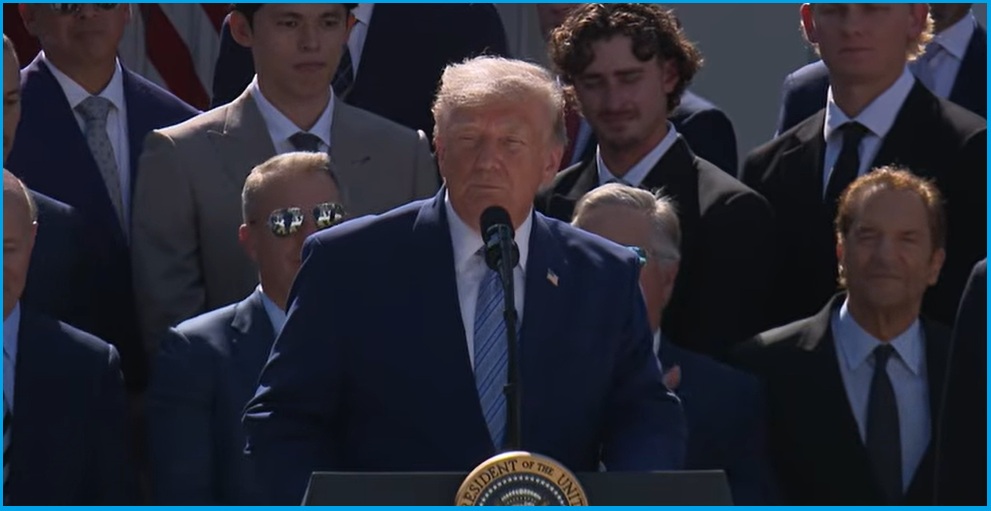
Earlier today President Trump welcomed the 2025 World Series Champion LA Dodgers to the White House to honor their championship victory. WATCH: . Posted in Big Government, Celebrations, Donald Trump, President Trump, Press Secretary - Trump
The post President Trump Welcomes the LA Dodgers, 2025 World Series Champions appeared first on The Last Refuge.