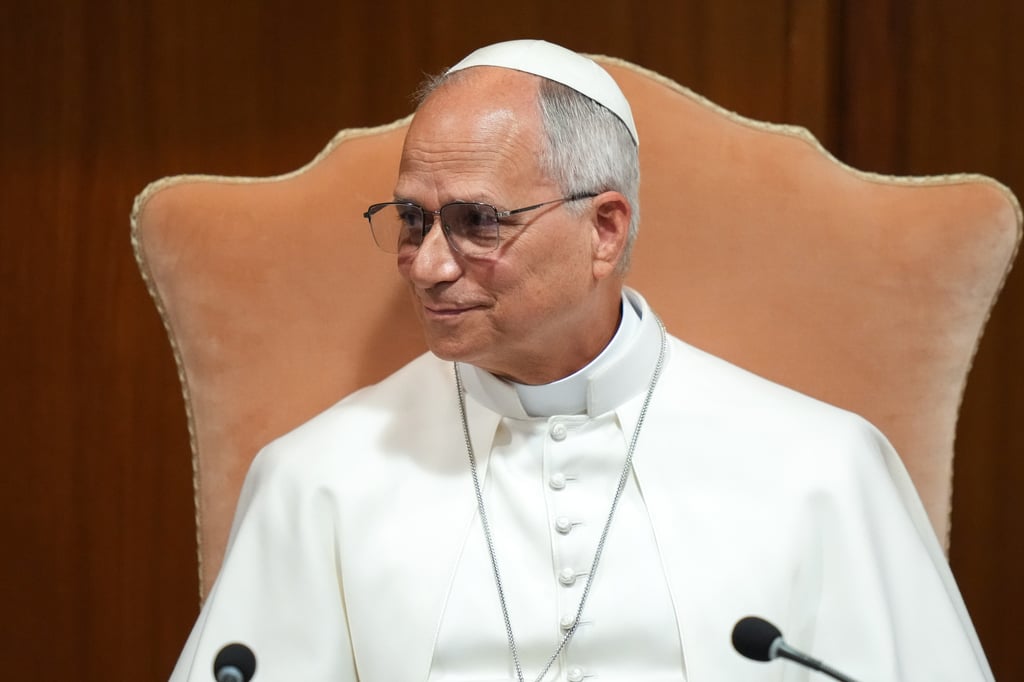
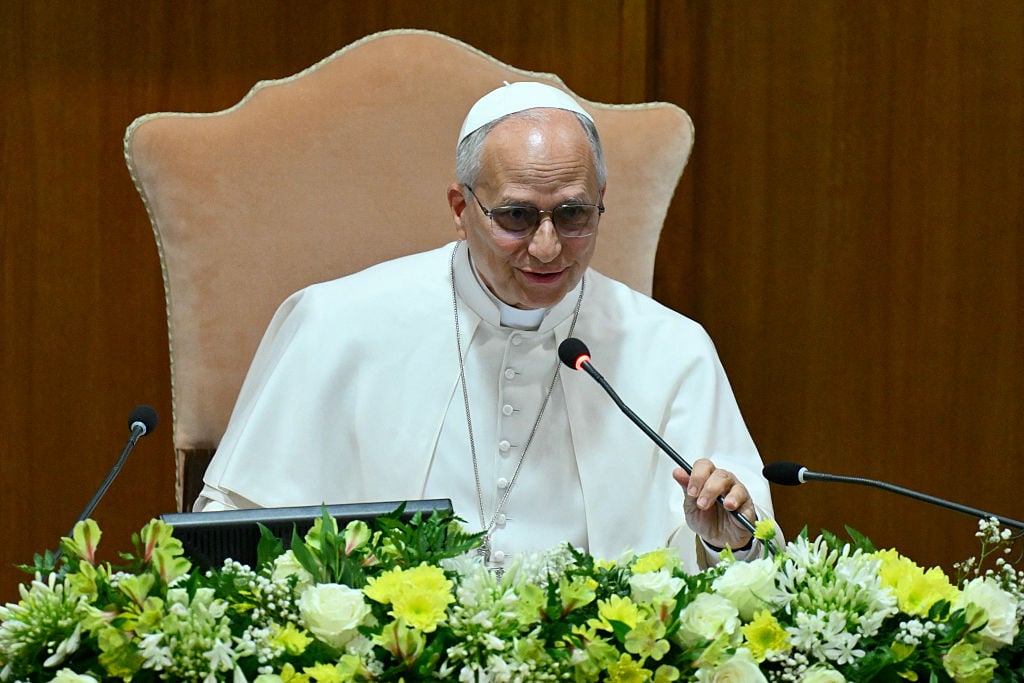
Leo XIV's "Magnifica Humanitas" never mentions Donald Trump. But on autonomous weapons, regulation, and more, it reads like a point-by-point rebuttal of his AI agenda.
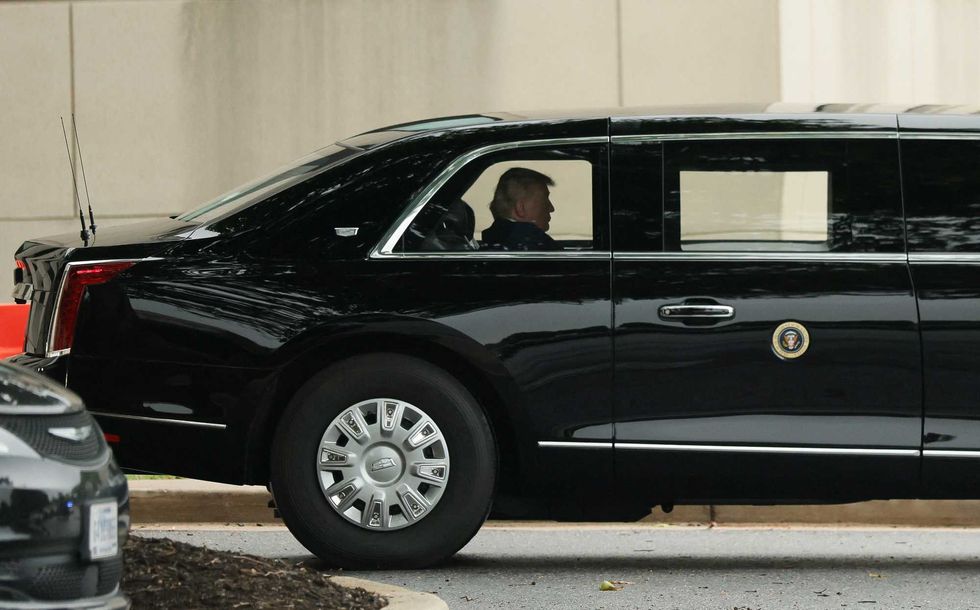
President Donald Trump emerged from his surprise medical visit to Walter Reed Medical Center Tuesday bragging of "perfect" health — but onlookers weren't so sure.Top of the concerns was the length of time the president spent at the medical facility — a duration some said did not suggest a routine visit.Trump posted an optimistic message on his Truth Social platform following his appointment, the third in a year."Just finished my 6-month physical at Walter Reed Military Medical Center. Everything checked out PERFECTLY. Thank you to the great Doctors and Staff! Heading back to the White House," Trump wrote. But that didn't stop political and media experts from questioning the president's health status."At this point I’m convinced Trump approaches presidential health updates the same way he approaches golf scores, election maps, and crowd sizes: not merely healthy… the healthiest anyone has ever been in the history of health," Brian Allen, podcast host and a political commentator with more than 301,000 followers, wrote on X."Trump says he has completed his 'physical' at his 3rd hospital visit in 13 months and 'everything checked out PERFECTLY.' If you believe this, I’ve got a bridge to sell you," Democratic influencer Harry Sisson, who has more than 390,000 followers, wrote on X."Here is Trump’s schedule today, including a visit to Walter Reed for most of the day. Color me skeptical - a routine physical doesn’t last more than half the day. This should be a top story, imagine if it were Biden!" Author and activist Amy Siskind, who has more than 440,000 followers, wrote on X."President Trump just arrived back at the White House after having a visit to Walter Reed Medical Center. I wonder what they will find this time, and what excuses Trump and his doctors will make," Ed Krassenstein, liberal commentator with more than 1 million followers, wrote on X.Here is Trump’s schedule today, including a visit to Walter Reed for most of the day. Color me skeptical - a routine physical doesn’t last more than half the day. This should be a top story, imagine if it were Biden! pic.twitter.com/qHUVwzJN31— Amy Siskind 🏳️🌈🇺🇸 (@Amy_Siskind) May 26, 2026
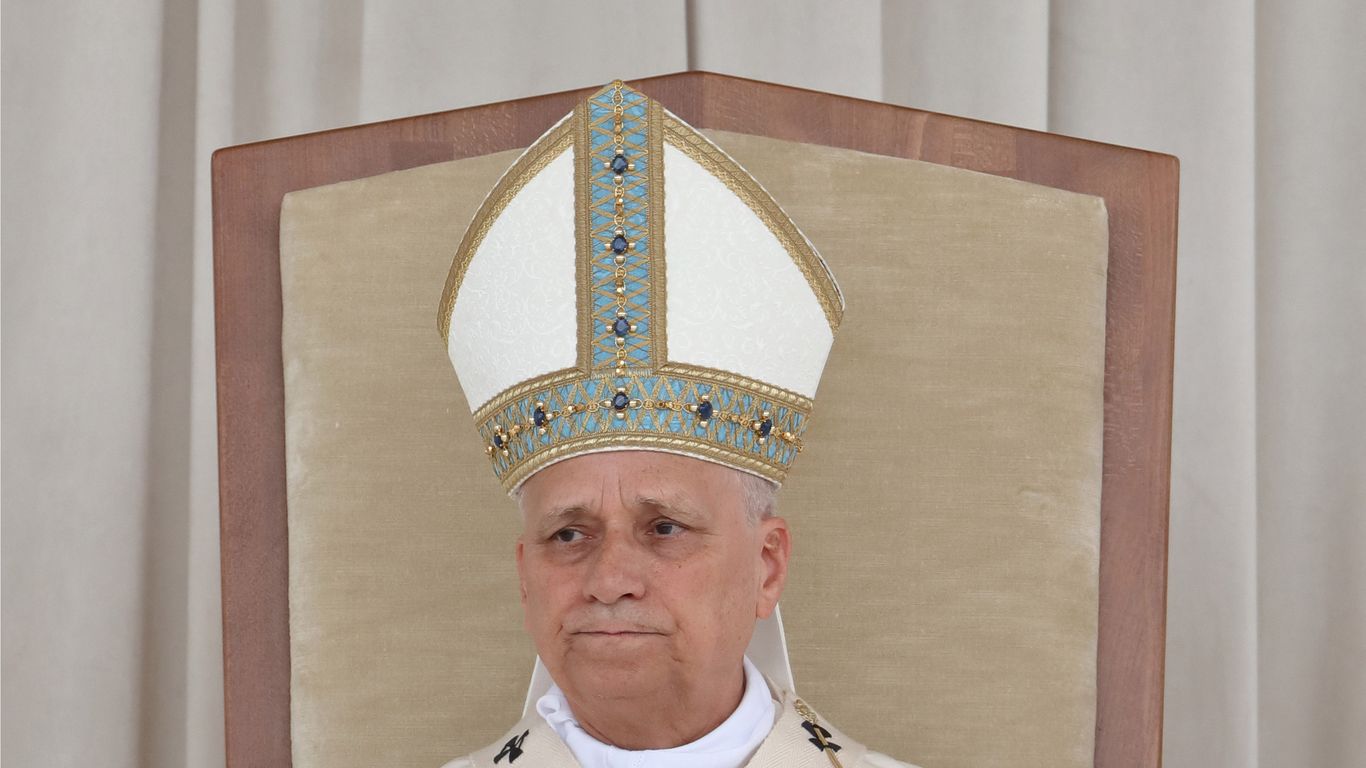
Pope Leo XIV is warning that the artificial intelligence race could become a new Tower of Babel — a dazzling human achievement that concentrates power, weakens truth and turns people into data points.Why it matters: The long-awaited document, Magnifica Humanitas ("Magnificent Humanity"), signals that the Vatican is aggressively positioning itself as a central moral authority in the global tech debate.Driving the news: The Vatican released Leo's first encyclical on Monday, which he signed at St. Peter's on May 15, 2026, in the second year of his pontificate.It was signed exactly 135 years after Leo XIII's Rerum Novarum, the landmark 1891 encyclical that became the foundation of modern Catholic social teaching during the Industrial Revolution.Zoom in: The pope's core message in his stark, 43,000-word warning is that AI can be useful, but it is not neutral. He said AI systems carry the values of the people and institutions that design, finance, train and deploy them — especially when they decide who gets a job, credit, public services or reputational standing.Leo gave the following warnings: AI can erode human judgment by offering instant answers that weaken creativity, discernment and the patience needed to seek truth.AI can simulate care without relationship, making vulnerable users mistake artificial empathy for genuine human connection.AI can deepen inequality because data, computing power and regulatory influence are concentrated among a small number of actors.AI can destabilize democracy by amplifying disinformation and blurring the line between fact and fiction.AI can make war easier by speeding up lethal decisions and distancing humans from responsibility. Leo's starkest line: "No algorithm can make war morally acceptable."What they're saying: "Pope Leo has announced himself as one of the leading figures in AI ethics now with this document," Meghan Sullivan, director of Notre Dame's Institute for Ethics and the Common Good, tells Axios.Sullivan said Leo's AI encyclical is likely to be remembered as one of the major documents in Catholic history.Mirela Oliva, a philosophy professor at the University of St. Thomas, tells Axios that Leo's encyclical should be read less as a rejection of AI than as a call to shape the "AI era" around human dignity."The pope is calling for new guidelines for AI, and these new guidelines are rather to be developed from the bottom up rather than top down."What we're watching: Dan Rober, a Catholic Studies professor at Sacred Heart University, tells Axios the encyclical's biggest impact may be whether Leo's language starts shaping AI regulation debates.Rober said that Leo's warnings about children, screens, AI platforms and people using chatbots as therapists or substitutes for friendship could resonate well beyond Catholic circles.
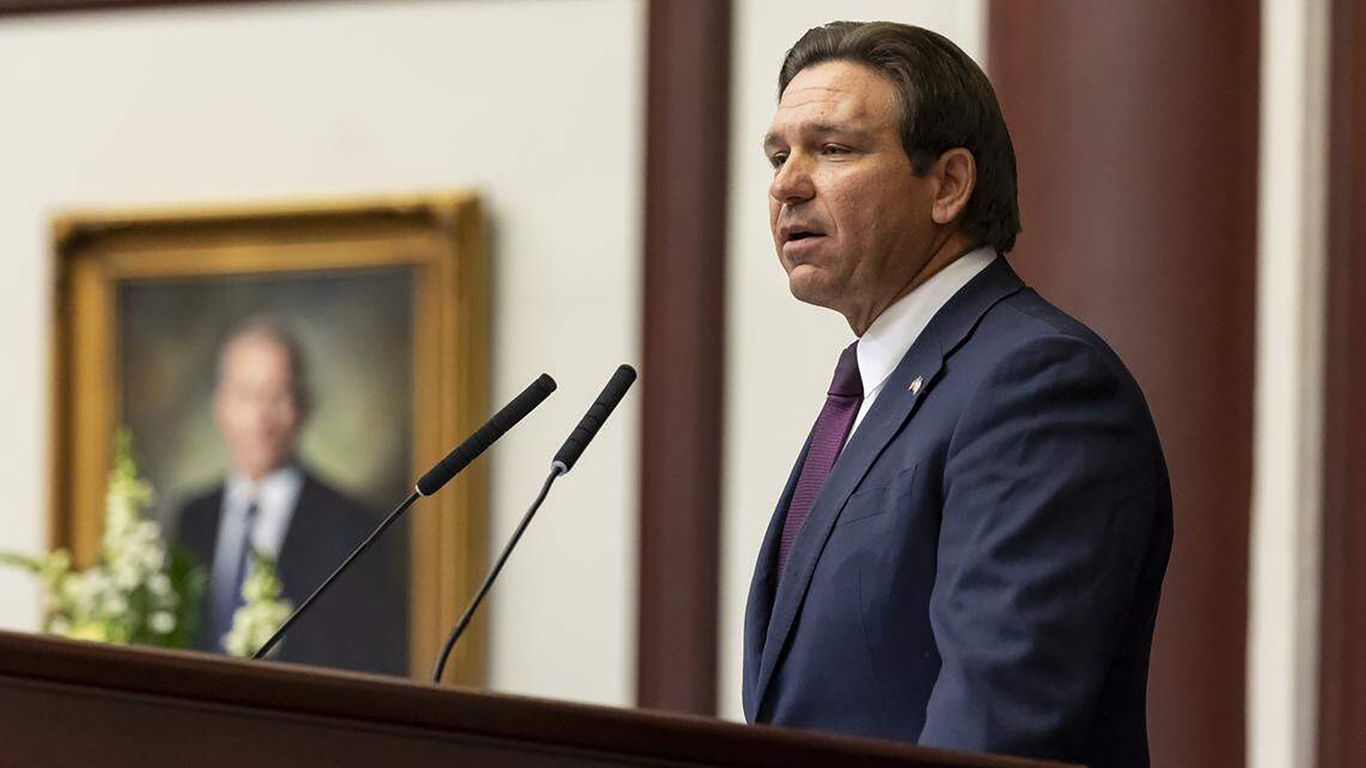
A Florida judge kept Gov. Ron DeSantis' new congressional map alive Tuesday, allowing the state to implement a Republican-friendly plan while three state lawsuits continue.Why it matters: The national redistricting fight is a race to pre-write who controls Congress before voters ever see a ballot. Control of the U.S. House could turn on seats manufactured in state capitals as part of a mid-decade redistricting war started by President Trump.In 2010 nearly 63% of Florida voters approved a ban on partisan gerrymandering, but DeSantis' general counsel told lawmakers the state doesn't have to abide by that ban.The latest: The ruling by Leon County Circuit Judge Joshua Hawkes, a DeSantis appointee, keeps DeSantis' map in place while the lawsuits continue and election officials prepare for the 2026 races.The fight likely ends at the Florida Supreme Court, where DeSantis appointed six of seven justices and all seven were appointed by Republican governors.Hawkes found plaintiffs had not shown a substantial likelihood of success, writing that mapmaker Jason Poreda's use of partisan data was circumstantial evidence, not direct proof of illegal intent.He said forcing Florida back to its 2022 map on a rushed record would be improper, especially with the state's election machinery already underway and the primary less than three months away.The big picture: DeSantis' map lands in a national redistricting fight that is moving fast and mostly in Republicans' direction.The U.S. Supreme Court strengthened GOP arguments against race-conscious districts.Virginia's pro-Democratic gerrymander was struck down by its state Supreme Court. Louisiana is expected to convert one of its two Black Democratic seats into a Republican seat. Tennessee has already eliminated its last Democratic, Black-majority seat.Flashback: DeSantis already remade Florida's congressional map once.In 2022, he vetoed the Legislature's map, pushed lawmakers to pass his own and helped produce a delegation of 20 Republicans and just eight Democrats.This year, his office drew the replacement map, sent it to lawmakers and provided Axios a version colored red and blue by partisan performance.Catch up quick: All three state lawsuits challenging DeSantis' map have been consolidated before Hawkes.At Friday's hearing, plaintiffs leaned on DeSantis' mapmaker Jason Poreda's statements that he drew the map "not having to comply with the Fair Districts Amendment" and used "partisan data" for "every district."DeSantis first unveiled the map to Fox News by pointing to Florida's shift from a Democratic voter registration advantage "to a 1.5 million Republican advantage."GOP state Rep. Tom Fabricio posted on X: "Done correctly, this will strengthen Republican seats, help keep a GOP majority in Congress to advance solid policies and stand up to the woke left."The other side: The state argued the court has no power to block the map and that changing maps this close to an election would confuse voters.That timing argument has an obvious tension: The state is defending a map enacted months before the primary.Although the Fair Districts Amendment bans any districts "drawn to favor or disfavor" a political party, the state argued plaintiffs had to prove the Legislature, not just the person who drew the map, was biased.The state doesn't argue the map improved districts' compactness or other requirements under the Fair Districts Amendments. But it says the map was roughly comparable on those metrics.What's next: Plaintiffs already filed notices of appeal, and the lawsuits will continue to trial.Judge Hawkes wrote the challenge "is more geared toward the 2028 or 2030 election cycles than the 2026 election cycle."The bottom line: DeSantis' efforts to upend Florida Democrats' districts looks likely to hold for at least the 2026 election.This article has been updated with more comment from Judge Joshua Hawkes and further context.
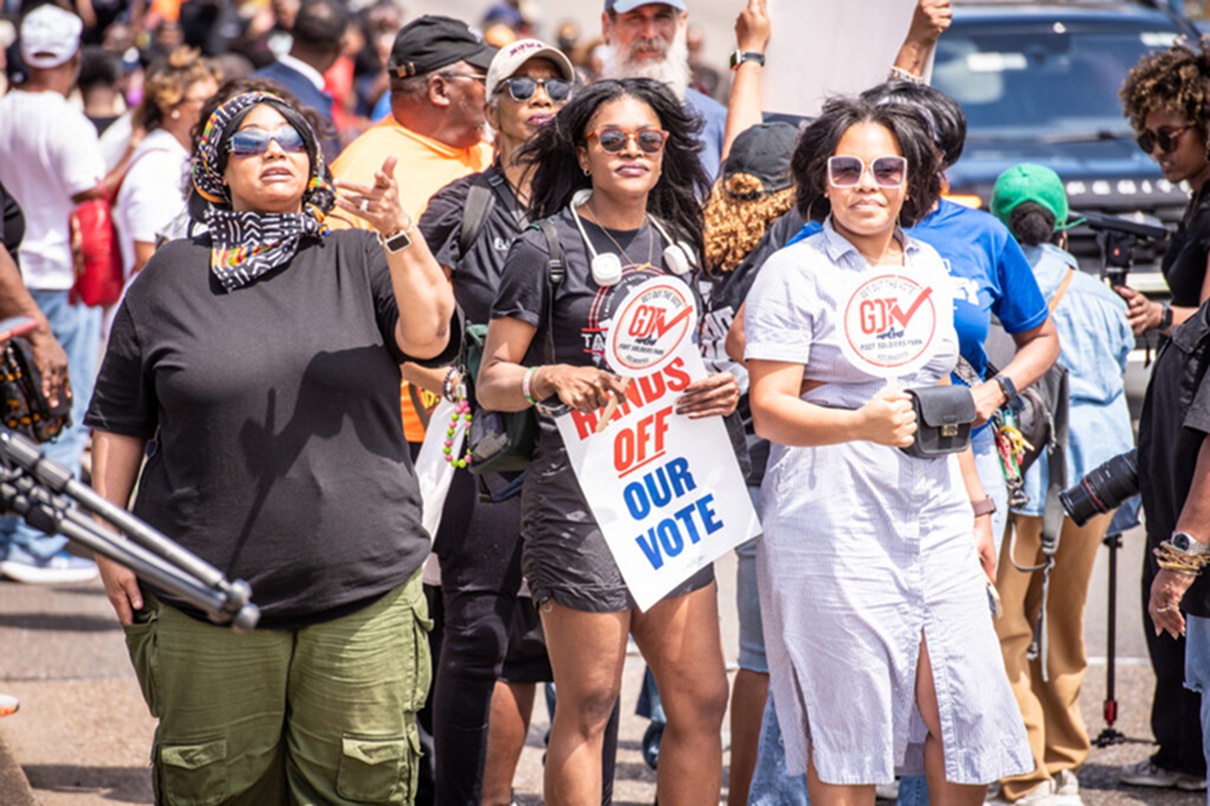
A panel of federal judges blocked Alabama from using a GOP-drawn congressional map that would eliminate one of the state’s majority-Black districts. NBC News’ Gary Grumbach reports on how the case could soon be decided by the Supreme Court.