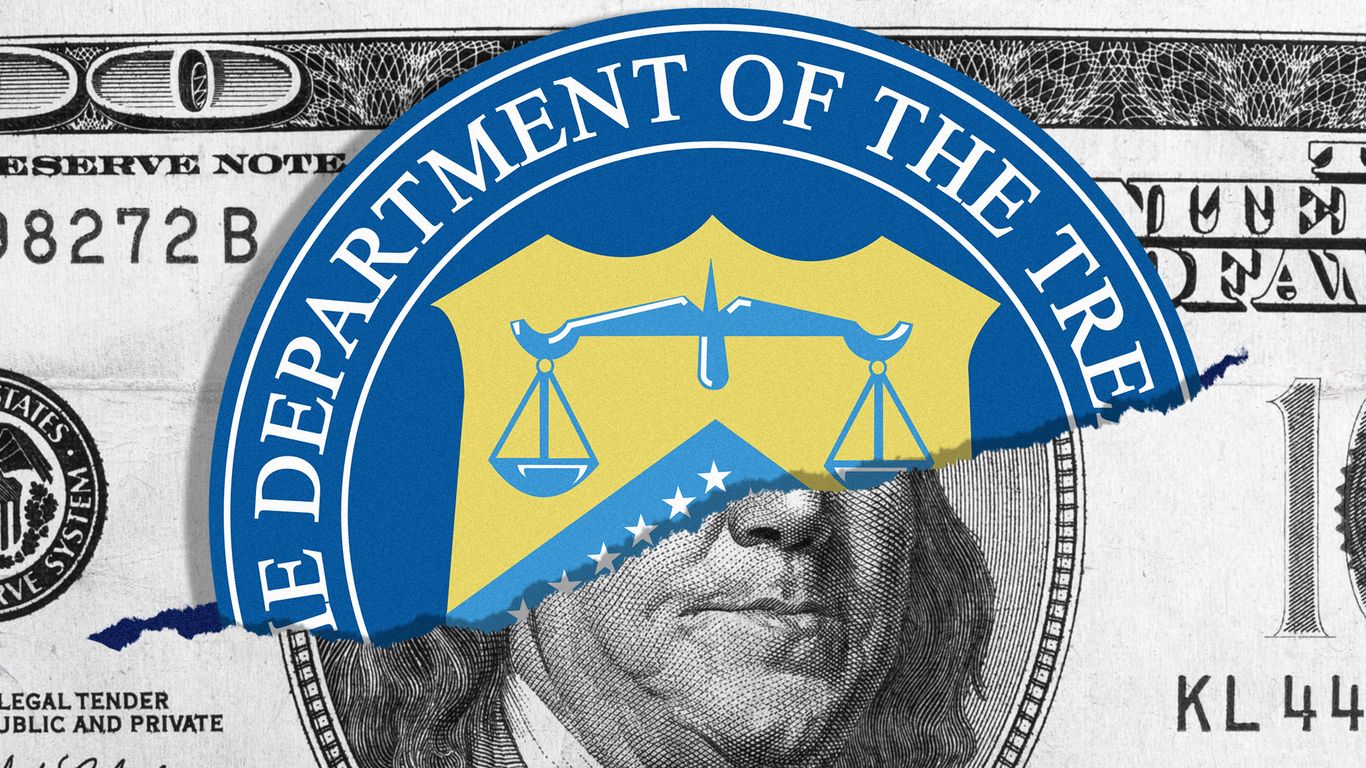
How a swap line for Persian Gulf allies would break with the past
Source: Axios · Bias: Center Left
Summary
If the United States gets into the business of providing dollar liquidity to the United Arab Emirates and other Persian Gulf states battered by the Strait of Hormuz's closure, it will amount to a novel use of an old power.The big picture: The Federal Reserve used swap lines with foreign central banks as a key tool to calm global financial disruptions in periods of stress, starting in the early days of the global financial crisis in 2007. They were driven by Fed leaders' belief that dollar funding shortages worldwide risked blowing back to the U.S. banking system and economy.The potential use to backstop Gulf states carries a more explicit geo-strategic role: seeking to reward and bolster key allies in the region.Kevin Warsh, in his Fed chair confirmation hearing this week, explicitly noted "international finance" as an area where the Fed ought not be strictly independent, implying greater collaboration with the executive branch on use of swap lines.Catch up quick: Treasury Secretary Scott Bessent confirmed Wednesday that "many of our Gulf allies have requested swap lines" and seemed receptive to their use.The Treasury itself has an Exchange Stabilization Fund of around $218 billion that it can deploy to intervene in foreign exchange markets.The Fed, by contrast, has a theoretically unlimited balance sheet it can use to make dollar liquidity available worldwide, via other, trusted central banks. At the peak in December 2008, swap line usage neared $600 billion.Between the lines: If the Fed were to extend swap lines to Gulf states like the UAE, Qatar and Bahrain, it would entail a quite different logic from previous uses of the tool.Flashback: The 2008-era swap lines were extended to other G7 central banks (European Central Bank, Bank of Japan, Bank of England and so on) and those of smaller rich countries with tight ties to the U.S. (Switzerland, Sweden, Denmark).They were eventually expanded to a small number of emerging markets (Mexico, Brazil, South Korea) which had both significant economic importance to the U.S. and, in the view of Fed officials, trustworthy central banks and other economic institutions.In transcripts of closed-door Fed policy meetings from 2007-2008, since released, geopolitical considerations are not an explicit part of the calculus. Rather, the emphasis was on the potential for dollar disruptions in those markets to redound to the U.S. economy.The bottom line: In the past, swap lines have been an instrument of U.S. dollar dominance driven by systemic fears for U.S. financial stability and exposure of the U.S. banking system — not an effort to help allies in a gnarly global conflict.Go deeper: Why Gulf countries are seeking dollar help
Related Coverage
- James Carville breaks with famous ‘It’s the economy, stupid’ slogan because of Trump (Right — Latest Political News on Fox News)
- NATO Leaders Will Meet for Key Summit in Turkey After Trump Puts Freeloading Allies on Blast (Far Right — The Gateway Pundit)
- Look past partisanship, and celebrate 250 years of freedom (Right — New York Post)
- Dem-run city urges residents to snitch on those who break out sparklers on the 4th (Far Right — BizPac Review)
- Billionaire Trump ally melts down in spat with pope: ‘Working for Chinese communists” (Far Left — Raw Story)
- Senator John Fetterman Reveals the One Thing That Would Make Him Leave the Democrat Party (VIDEO) (Far Right — The Gateway Pundit)
- Wannabe-governor Xavier Becerra’s campaign probed by watchdog investigating Gavin Newsom’s wire-wearing ally (Right — New York Post)
- Here’s what America’s allies are doing to celebrate our 250th birthday (Center Right — Washington Examiner)
Daily Analysis
Read the full Parallax Pulse for April 24, 2026 — an AI-powered analysis of how Left and Right media covered the biggest stories this day.
More Headlines From April 24, 2026
- Justice Department Calls for Expansion of Federal Death Penalty (Center)
- DOJ Drops Fed Probe, Clearing Way for Warsh | Balance of Power: Early Edition 4/24/2026 (Center)
- After 2 failed votes, Mike Johnson unveils new plan to extend key U.S. spy powers (Center)
- Bolton lambasts US-Iran peace talks: ‘Nowhere close to a deal’ (Center)
- Trump Talks Up Iran Blockade as Israel-Lebanon Truce Extended (Center)