Why Democrats Should Stop Obsessing About the 2028 Primary Calendar
Source: The New Republic · Bias: Left
Summary
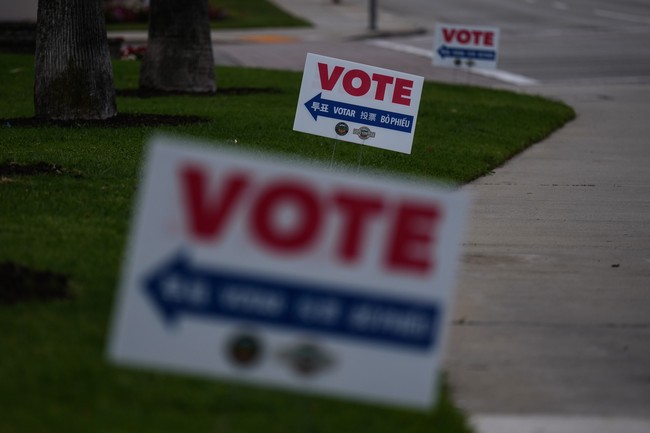
Top Democratic National Committee officials met this week to determine the order of the party’s 2028 primaries, and on Friday voted to keep South Carolina as the first state on the calendar. Michigan, Nevada, and New Hampshire are also slated to hold early primaries, although the full DNC must still ratify the decisions of the Rules and Bylaws Committee when it meets next month. But the process to set the primary calendar has been extremely contentious, with various factions in the party debating which states should go first and Black officials suggesting that Black voters would feel dissed if South Carolina had been moved back. This is all nonsense; much ado about little. It doesn’t really matter which state(s) vote first. The eventual Democratic nominee will have to win voters across racial, class, and geographic lines. All factions in the party will be heard. And the primary calendar likely will have no impact at all on the 2028 general election.For decades, political journalists like me have focused obsessively on the Iowa caucuses and the New Hampshire primary, traditionally the first two contests in the presidential nomination process. So obviously the winners of those early races go on to win, right? Not quite. In the last six competitive Democratic presidential primaries (1992, 2000, 2004, 2008, 2016, 2020), the winner of the Iowa caucuses eventually won the nomination four times (Al Gore, John Kerry, Barack Obama, Hillary Clinton). That’s a bit more than half the time—hardly a guarantee of victory. The New Hampshire victor is just two for six (Gore in 2000, Kerry in 2004). Bill Clinton, and then Joe Biden almost three decades later, won the nomination after losing both states. Since South Carolina became one of the earliest voting states in 2008, all the winners there (Obama, Hillary Clinton, Biden) have gone on to win the nomination. But that isn’t because all of their rivals dropped out after South Carolina. Rather, South Carolina showed that those three candidates had strong support among Black voters, which was then replicated throughout the South, helping them amass a huge advantage in delegates. So looking at that history, we don’t need to worry that South Carolina will alone determine the Democratic nominee. The early states aren’t likely to choose the same candidates. If they do, as 1992 and 2020 showed, later states might override those early results. Also, the Democratic Party these days emphasizes that it has a slate of several early primaries, trying to ensure the first or first two don’t overwhelm the process. So in 2020, even as Pete Buttigieg and Bernie Sanders did very well in Iowa and New Hampshire, the results in the other two other states, Nevada and South Carolina, were closely watched too. Biden’s strong showings in the latter two helped catapult him to the nomination. This emphasis on the entire slate of early primaries also means the calendar doesn’t give any one candidate that much of an advantage. Kamala Harris will probably be strong in South Carolina, a state with a lot of center-left African Americans like her, but might lose in New Hampshire to Buttigieg, whose base is college-educated white voters. The early states are diverse enough that either different candidates will win them or one person will rightly become a huge front-runner for the nomination by winning four or five contests in places that are demographically and geographically distinct from one another. The primary calendar also doesn’t matter for the general election, despite the claims of people who should know better. David Axelrod, who was a top adviser on Obama’s presidential campaigns, wrote on X this week, “Dems would be wise to pick states to start the process that will be swing states in ’28. Candidates spend a lot of time in these early states and it lays an organizational foundation to compete in the fall. SC won’t be a swing state.” Hmm. There is no research showing that having an intense primary in a state helps a party win there in the general election. And it’s easy to disprove Axelrod’s argument. The Democrats won Iowa in November 2012 after not having a competitive primary, then lost the state in November 2016 and November 2020, after the party’s presidential candidates held dozens of events across the Hawkeye State during primary season. South Carolina has remained red, while Georgia has become purple, even though the former is a huge part of the nomination process and the latter isn’t. What if … primaries and general elections are completely different contests whose results aren’t connected to one another? So if the order that the states vote in doesn’t tell us much about who will win the primary or the general election, doesn’t it at least show which groups the party cares about most? Not really. If you are a Black political operative or Black Democratic official in South Carolina, having the first primary in your state is a coup.
Related Coverage
- Trump DESTROYS the Press and Democrats at the WHCD. And Boy, the Media Couldn't Handle It! (Right — PJ Media)
- Leftist Judges Again Block Trump’s Efforts to Stop Cheating in Elections (Right — PJ Media)
- Worse Than Graham Platner? Troubling Personal Questions Emerge for Maine’s New Democrat Nominee for Senate – And He May Be Ineligible to Run (Far Right — The Gateway Pundit)
- ‘Like Graham Platner but worse’: GOP group vows $42,000,000 campaign against last-minute replacement Democrat (Far Right — BizPac Review)
- ‘No Kings’: Without Statewide Vote, Democrats Anoint Troy Jackson to Replace Graham Platner, Open Convention with Performative ‘Land Acknowledgment’ (Far Right — The Gateway Pundit)
- WSJ editorial board rips Trump over tariff ‘obsession’ (Center — The Hill News)
- Troy Jackson secures Democratic nomination for Maine Senate seat after chaotic primary race (Center Left — US news | The Guardian)
- Jackson formally clinches Democratic nod to take on Collins in Maine Senate race (Center — The Hill News)
Daily Analysis
Read the full Parallax Pulse for July 24, 2026 — an AI-powered analysis of how Left and Right media covered the biggest stories this day.
More Headlines From July 24, 2026
- WATCH LIVE: President Trump to Make Announcement on American Nuclear Innovation – 3 PM ET (Far Right)
- California's Prison Reform Experiment Worked. The State's Crime Rate Has Fallen by 27% in 15 Years. (Center Right)
- Drones have created a new energy security landscape (Center Left)
- Watch live: Trump takes center stage at White House correspondents’ dinner (Center)
- Pennsylvania governor declares LeBron James Day as 76ers set to sign NBA star (Center)