Who Owns the Declaration of Independence?
Source: The New Republic · Bias: Left
Summary
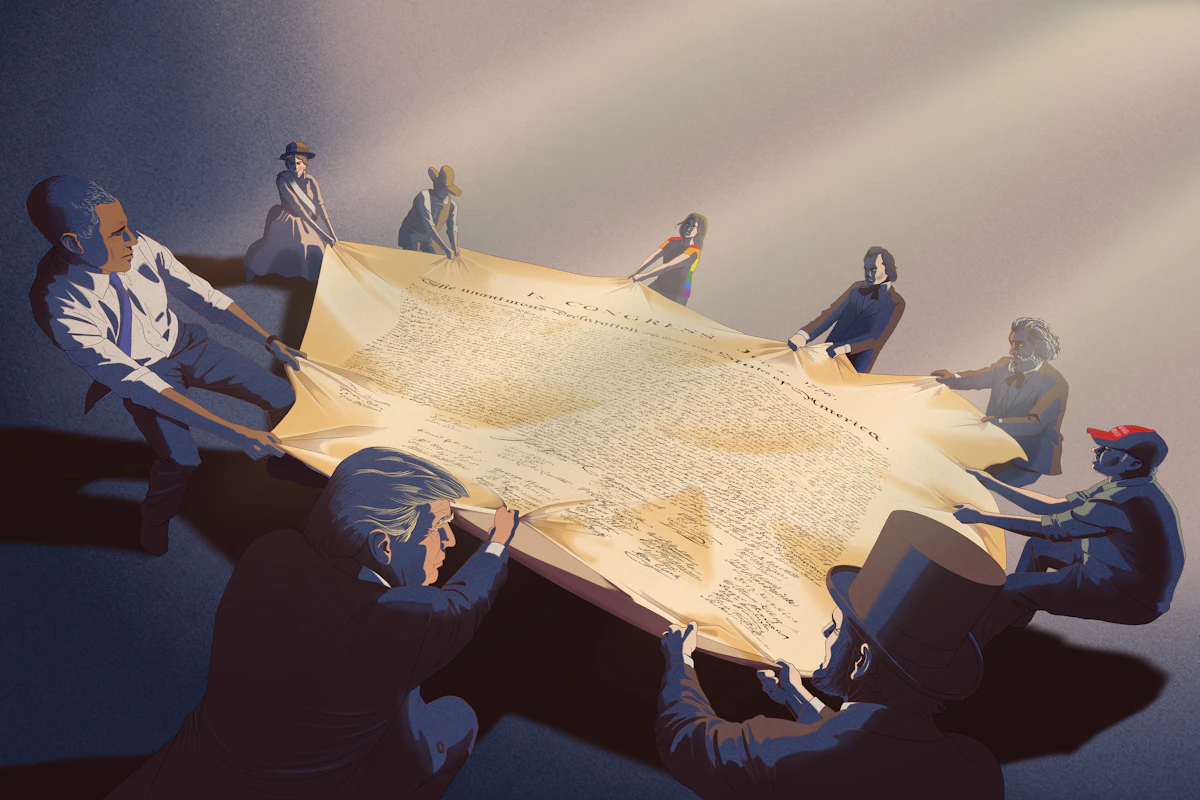
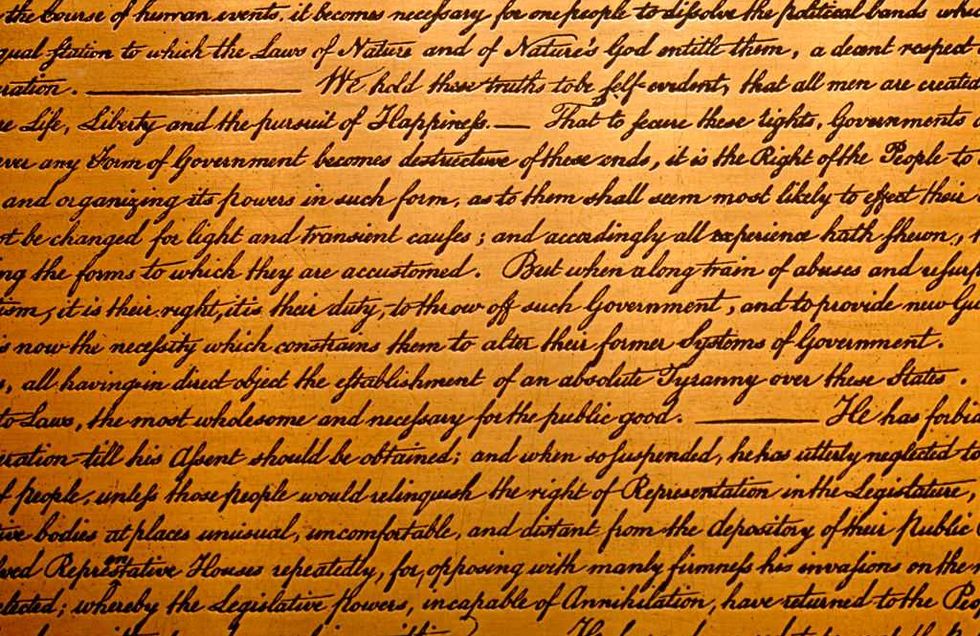
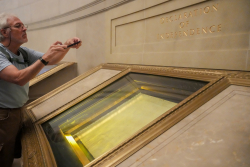
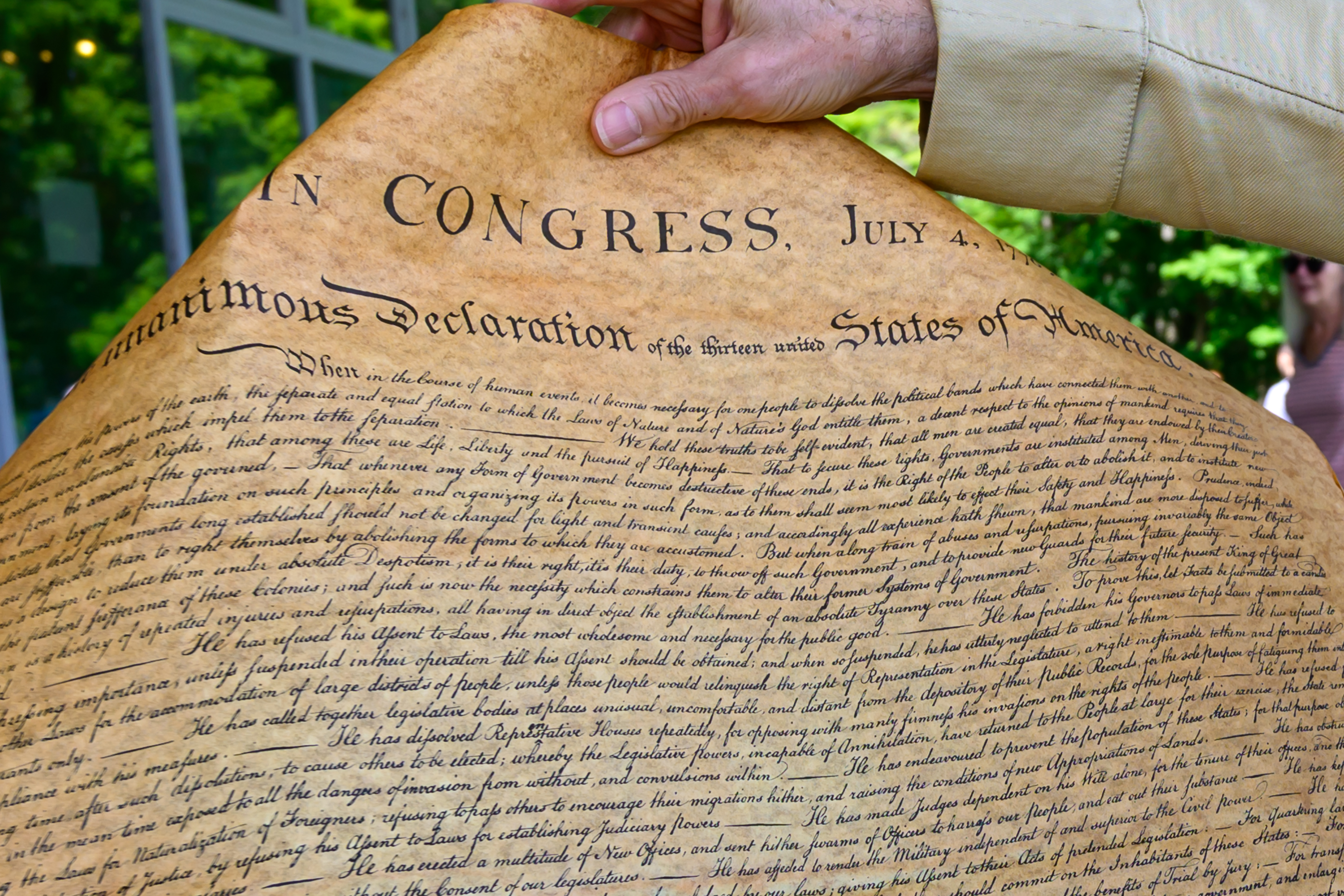
Last year, The Atlantic reported that President Donald Trump had queried advisers about putting the delicate original copy of the Declaration of Independence on display in the Oval Office. “Trump’s request alarmed some of his aides, who immediately recognized both the implausibility and the expense of moving the original,” The Atlantic’s Ashley Parker and Michael Scherer wrote. “Displayed in the rotunda at the National Archives Building in Washington, D.C., it is perhaps the most treasured historical document in the U.S. government’s possession.”Trump eventually settled for displaying a copy, but the document has clearly been on the administration’s mind—perhaps predictably so, given the semiquincentennial celebrations Trump will soon preside over. It was announced in April, for instance, that a limited edition of passports this year would feature John Trumbull’s iconic painting of the draft declaration’s presentation to Congress alongside the text of the declaration—with Trump’s portrait overlaid on top of it, naturally.Trump has spent much of his second term symbolically grasping for the kind of monarchical deference most Americans believe the declaration was written to reject. In February 2025, for instance, the White House posted on social media an image of Trump wearing a crown and captioned it “LONG LIVE THE KING.” But substantively, the depravity of this administration’s policies has mattered more and angered more. And in surveying them, more than a few commentators, some here at The New Republic, have noted that the transgressions of Trump’s presidency bear an uncanny resemblance to the very grievances against Britain listed in the declaration. Trump’s unilateral demolition of federal agencies and programs, the biographer Stacy Schiff and Mother Jones’s David Corn and Tim Murphy have written alike, certainly recall the declaration’s charge that King George III had “refused his Assent to Laws, the most wholesome and necessary for the public good.” The charge that George III had “endeavoured to prevent the population of these States; for that purpose obstructing the Laws for Naturalization of Foreigners” also works as a précis of the administration’s immigration policy. “Cutting off our Trade with all parts of the world,” “imposing Taxes on us without our consent,” “transporting us beyond Seas to be tried for pretended offences”—as Schiff writes, “for many who read the litany today, the resonance is unmistakable.”The text of the declaration is the arena we return to, time and again, to debate America’s purpose and American identity. In recent decades, its self-evident truths have been flattened into truisms—innocuous clichés, available to all, that commit our leaders to vanishingly little.True as all this may be, one needn’t refer to the Declaration of Independence for reasons why Trump is unfit to govern. And the declaration did more than separate us from the impetuous king about whom it offered a handy list of complaints. Exactly how much more, of course, has been contested throughout our history—the text of the declaration, it might be said, is the arena we return to, time and again, to debate America’s purpose and American identity. In recent decades, its self-evident truths have been flattened into truisms—innocuous clichés, available to all, that commit our leaders to vanishingly little. Those who signed it 250 years ago understood the possibility that they had condemned themselves to death. Today, the Declaration of Independence is the safest, most sterile ground in American rhetoric. But it needn’t be. The declaration and its history are instructive because they offer us reasons not only to resist would-be kings, but to make our own claims against the systems that foist would-be kings upon us. The declaration, even today, can be read as an invitation to a task that presses upon us as or more urgently than the cause of independence did: to “alter or to abolish” the systems destroying our country and our world.As the conflict that would eventually be called America’s Revolutionary War began—and as many Americans today would likely be surprised to learn—the overwhelming consensus even among America’s patriot leaders, a radical minority of the Colonial population, was that British parliamentary monarchy remained the greatest system of government ever devised, and that King George III bore little to no responsibility for the Colonial policies that had angered them. It was wayward parliamentarians, “wicked Ministers and evil Counsellors,” John Jay had written to mainland Britons on the First Continental Congress’s behalf in the fall of 1774, who had trampled on the colonists’ rights as British subjects, and the remedy was a return to the British constitutional order as the colonists understood it, not a break from it.And in a pattern that seems to recur throughout American history, delegates were sent to the Continental Congress with explicit and futile instructions to heal the growing divide any...
Related Coverage
- Heat wave cancels some DC Independence Day celebrations (Center Right — Washington Examiner)
- Historian dismisses Trump Independence Day rhetoric as 'Red Scare idiocy' (Far Left — Raw Story)
- The Declaration of Independence wasn’t really complaining about King George, and 5 other surprising facts (Center — NewsNation)
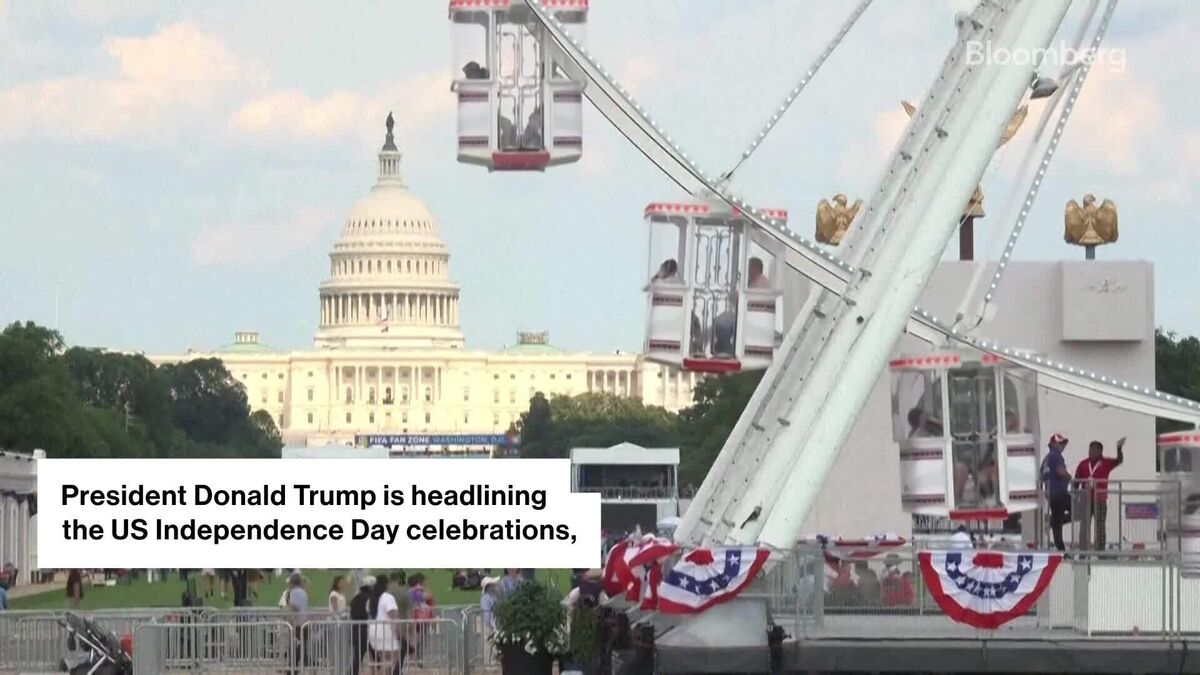
- Trump Seeks to Put Himself Center Stage for US Independence Day (Center — Bloomberg Politics)
- USPS unveils Declaration of Independence stamps for America 250 (Center — The Hill News)
- The Declaration is not a relic. It is a warning. (Right — Blaze Media)
- Who Owns the Declaration of Independence? (Center Right — RealClearPolitics - Homepage)
- The Anti-Indigenous Slur in the Declaration of Independence Speaks Volumes (Far Left — Truthout)
Daily Analysis
Read the full Parallax Pulse for July 4, 2026 — an AI-powered analysis of how Left and Right media covered the biggest stories this day.
More Headlines From July 4, 2026
- Sunday shows preview: After America 250, GOP shifts focus back to Trump’s agenda (Center)
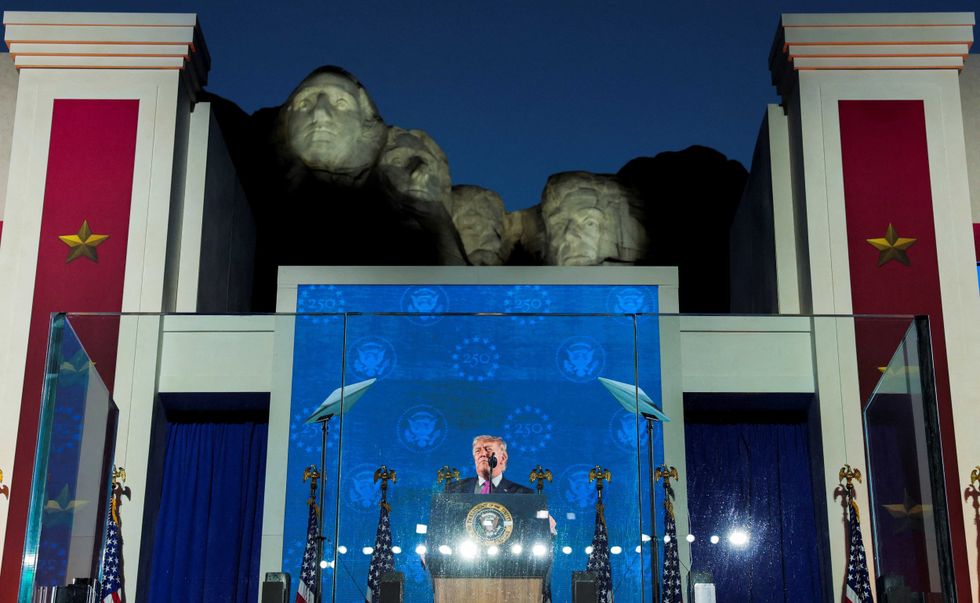
- Trump does Mt. Rushmore flyover, warns America communism threatens again (Far Right)
- Two Americas: Mamdani and Trump give speeches ahead of Independence Day (Center Right)
- In Mount Rushmore speech, Trump veers from U.S. exceptionalism to warnings about communism (Center)
- Dr. Sebastian Gorka on America’s 250th Celebration — “The Love of Country is Back, and We are Celebrating it Today in a Very, Very Big Way” (VIDEO) (Far Right)