The Declaration of Independence wasn’t really complaining about King George, and 5 other surprising facts
Source: NewsNation · Bias: Center
Summary
Americans may think they know a lot about the Declaration of Independence, but many of those ideas are elitist and wrong, as historian Woody Holton explains.
The Declaration of Independence wasn’t really complaining about King George, and 5 other surprising facts
Center
Americans may think they know a lot about the Declaration of Independence, but many of those ideas are elitist and wrong, as historian Woody Holton explains.
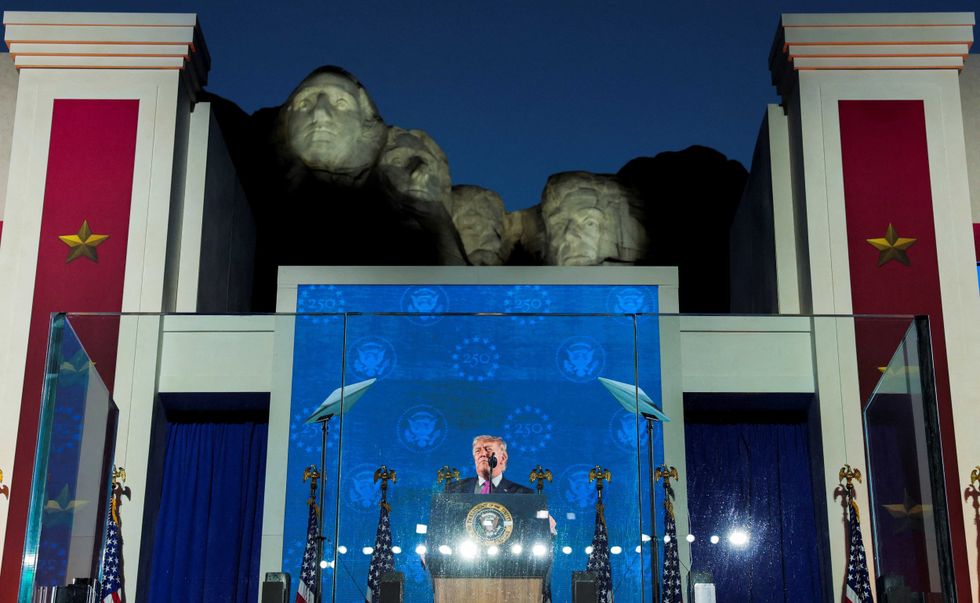
A presidential historian slammed Trump's Independence Day speech as nothing more than "Joe McCarthy Red Scare idiocy."During an appearance on MS NOW on Saturday, Doug Brinkley tore into the speech that Trump gave in front of Mount Rushmore to kick off the Independence Day weekend. In particular, Brinkley found it "deeply offensive" that Trump would spend time warning about communists because of recent primary victories by democratic socialists."It was just Joe McCarthy red scare idiocy because he's out there talking about this communist menace as if it's the early Cold War years," Brinkley went off. "It's just what he wants the Republicans to run on in this election cycle." MS NOW anchor Alex Witt agreed, adding, "When the president says, 'America will never become a communist country,' I was thinking to myself, 'Well, who said it was going to anyway?'"Brinkley compared Trump's speech to "McCarthy starting to have his list in Wheeling, West Virginia, waving it, that they are infiltrators all over." McCarthy famously tried to root out alleged communists during a period called the Red Scare.Trump's speech was "utter nonsense," Brinkley continued, while admitting that "politicizing" is "natural in our days."However, he optimistically viewed most Americans "watching on Main Street" as having the "spirit" of "a red, white and blue blast, and let's have a barbecue, let's see some family, see some friends, and then we'll get on to the bickering of politics during Monday or Tuesday."He also suggested, "I think our inclination for this weekend should be to try to transcend Donald Trump's rhetoric and just sort of block it out for 48 hours."
This article is part of Upstream, The Daily Wire’s new home for culture and lifestyle. Real human insight and human stories — from our featured writers to you. *** You’ve probably seen the viral slogan that pays homage to one of the finest displays of all-American spunk in our history. The phrase “Americans: We’ll cross ...
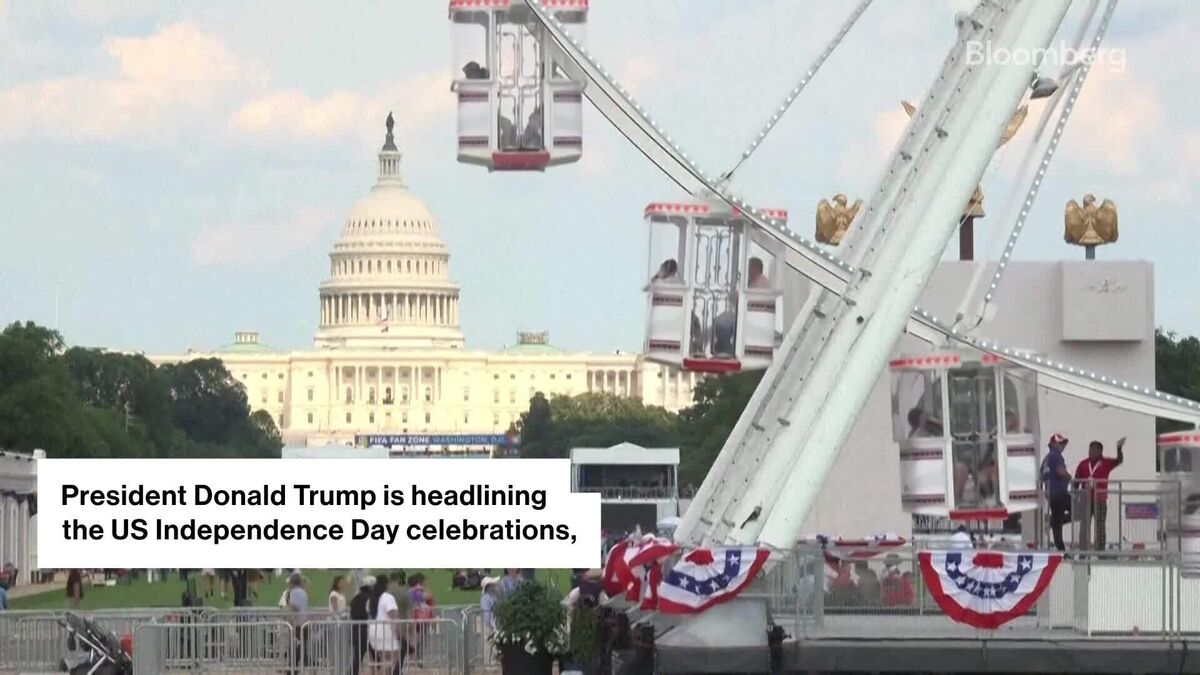
President Donald Trump will headline US Independence Day celebrations on Saturday with a speech and a show that seek to place him at the center of the nation’s 250th anniversary. (Source: Bloomberg)
The United States Postal Service (USPS) on Saturday unveiled a new commemorative stamp honoring the Declaration of Independence as the nation celebrates the U.S.’s 250th anniversary. The Declaration of Independence Forever stamp, issued in panes of 20, features a vertical design in red, white and blue set against a deep navy background. The year “1776”…
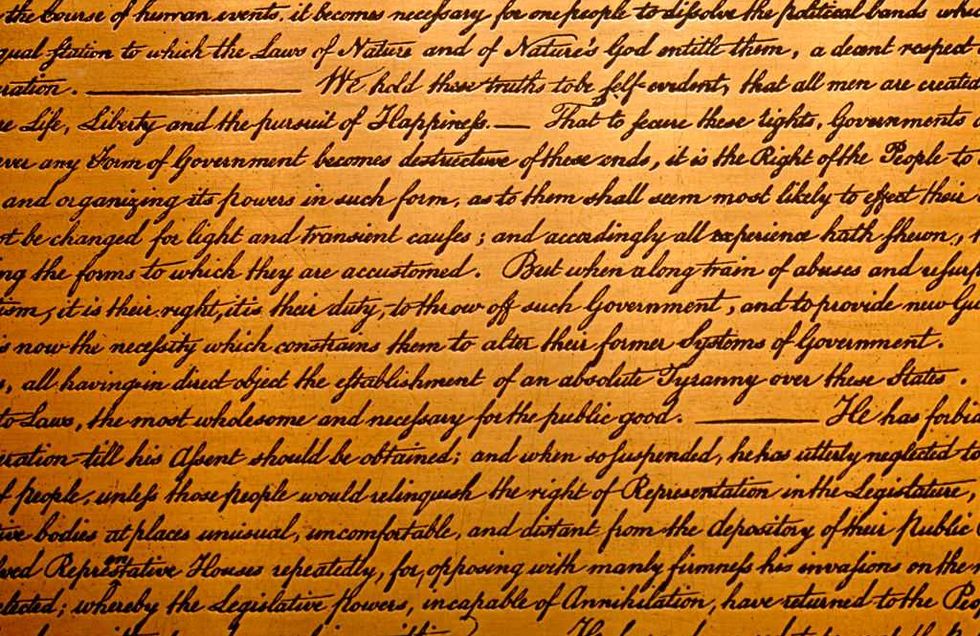
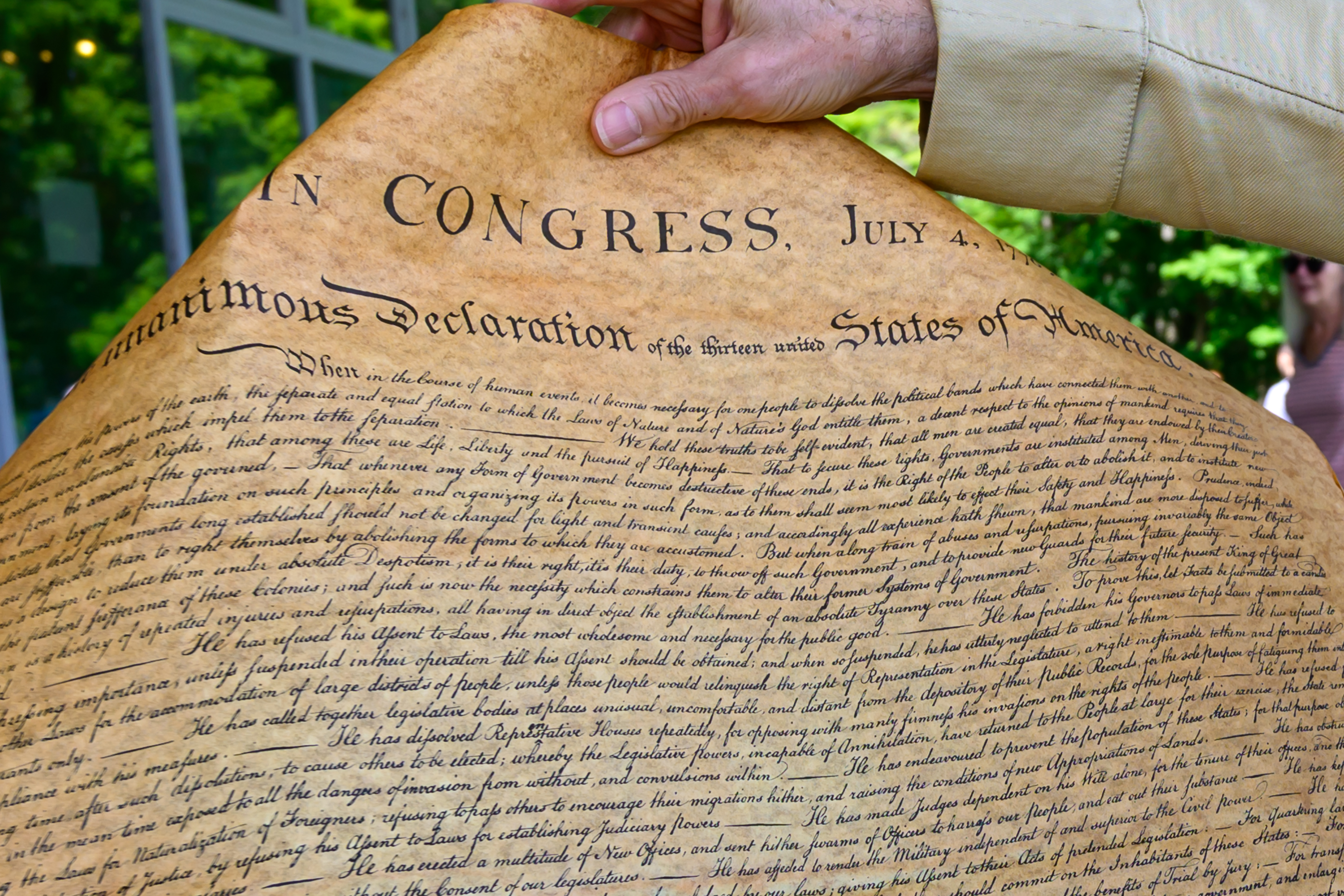
A century ago in Philadelphia, July 5, 1926, Calvin Coolidge gave America the speech it needed on its 150th birthday. He did not flatter the country. He did not scold it. He reminded Americans that the Declaration was not a museum piece or a political slogan, but a spiritual document rooted in permanent truths. On our 250th birthday, his warning looks less like history than prophecy. Read this excerpt slowly. Then ask whether we still believe it. Editor's note: This excerpt has been edited and condensed.We meet to celebrate the birthday of America. The coming of a new life always excites our interest. Although we know in the case of the individual that it has been an infinite repetition reaching back beyond our vision, that only makes it the more wonderful. But how our interest and wonder increase when we behold the miracle of the birth of a new nation. It is to pay our tribute of reverence and respect to those who participated in such a mighty event that we annually observe the 4th day of July.Whatever may have been the impression created by the news which went out from this city on that summer day in 1776, there can be no doubt as to the estimate which is now placed upon it. At the end of 150 years, the four corners of the earth unite in coming to Philadelphia as to a holy shrine in grateful acknowledgment of a service so great, which a few inspired men here rendered to humanity, that it is still the preeminent support of free government throughout the world.No advance, no progress can be made beyond these propositions.It is not so much, then, for the purpose of undertaking to proclaim new theories and principles that this annual celebration is maintained, but rather to reaffirm and reestablish those old theories and principles which time and the unerring logic of events have demonstrated to be sound.Amid all the clash of conflicting interests, amid all the welter of partisan politics, every American can turn for solace and consolation to the Declaration of Independence and the Constitution of the United States with the assurance and confidence that those two great charters of freedom and justice remain firm and unshaken. Whatever perils appear, whatever dangers threaten, the Nation remains secure in the knowledge that the ultimate application of the law of the land will provide an adequate defense and protection.It was not because it was proposed to establish a new nation, but because it was proposed to establish a nation on new principles, that July 4, 1776, has come to be regarded as one of the greatest days in history.Great ideas do not burst upon the world unannounced. They are reached by a gradual development over a length of time usually proportionate to their importance. This is especially true of the principles laid down in the Declaration of Independence. Three very definite propositions were set out in its preamble regarding the nature of mankind and therefore of government. These were the doctrine that all men are created equal, that they are endowed with certain inalienable rights, and that therefore the source of the just powers of government must be derived from the consent of the governed.If this apprehension of the facts be correct, and the documentary evidence would appear to verify it, then certain conclusions are bound to follow. A spring will cease to flow if its source be dried up; a tree will wither if it roots be destroyed. In its main features the Declaration of Independence is a great spiritual document. It is a declaration not of material but of spiritual conceptions.Equality, liberty, popular sovereignty, the rights of man — these are not elements which we can see and touch. They are ideals. They have their source and their roots in the religious convictions. They belong to the unseen world. Unless the faith of the American people in these religious convictions is to endure, the principles of our Declaration will perish. We can not continue to enjoy the result if we neglect and abandon the cause.We are too prone to overlook another conclusion. Governments do not make ideals, but ideals make governments. This is both historically and logically true. Of course the government can help to sustain ideals and can create institutions through which they can be the better observed, but their source by their very nature is in the people. The people have to bear their own responsibilities. There is no method by which that burden can be shifted to the government. It is not the enactment, but the observance of laws that creates the character of a nation.RELATED: 1776, not 1608: What the Supreme Court got wrong on birthright citizenship Bettmann/Getty ImagesAbout the Declaration there is a finality that is exceedingly restful.
In Philadelphia, extreme temperatures forced the cancellation of some events, including the city’s big parade and a ceremonial pitching of George Washington’s field tent.