What’s the Matter With JD Vance?
Source: The New Republic · Bias: Left
Summary
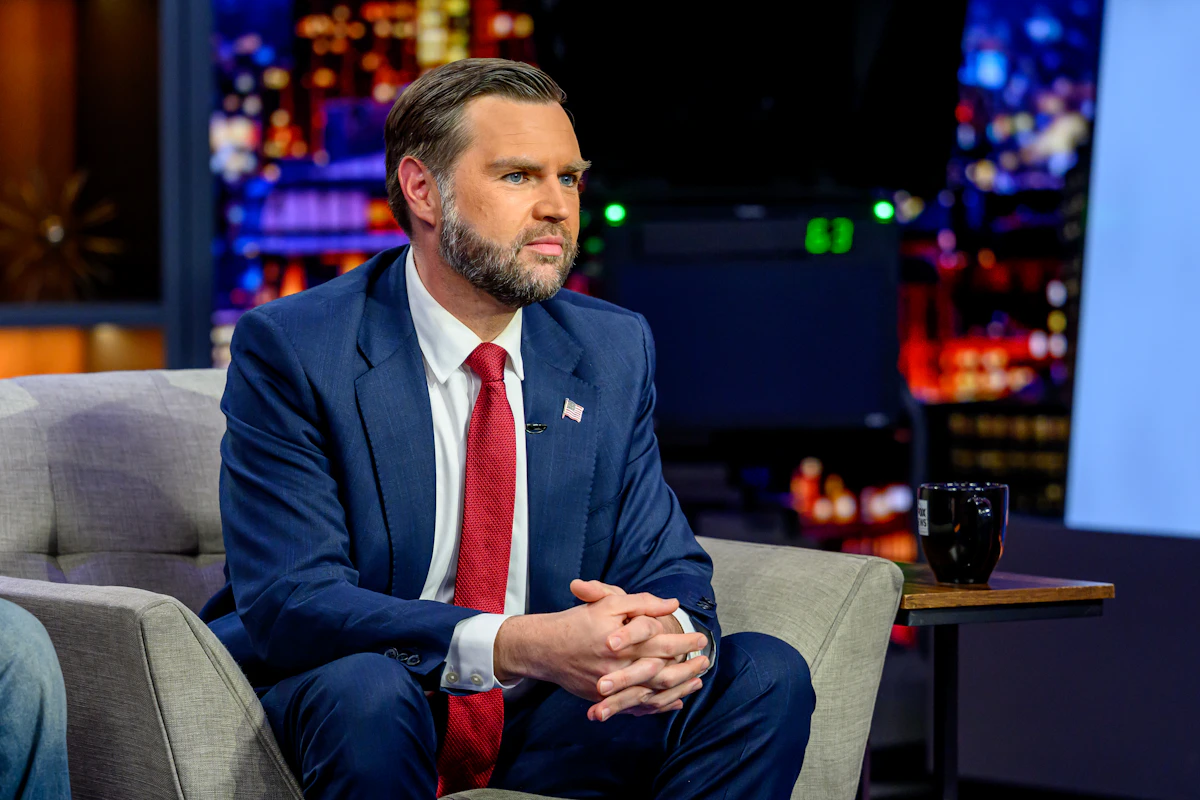
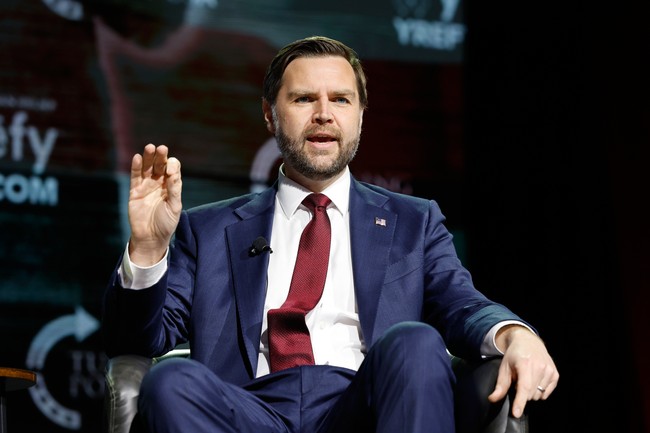
The first chapter of JD Vance’s Communion: Finding My Way Back to Faith, is titled “What’s the Matter with JD Vance?” It’s a reference to Thomas Frank’s 2004 What’s the Matter With Kansas?, but it’s also a fine question in and of itself, a question one asks with increasing urgency the further one gets in the book. On its face, Communion has all the hallmarks of the standard Politician Book: the kind of thing one writes in preparation for a presidential run, where one tells (or retells) one’s life story, confesses some flaws and puts one’s heart on one’s sleeve, while also making a case for why America is the greatest country on earth and offering a bold vision for its future alongside a smattering of policy proposals.And yet. There is something deeply the matter here with JD Vance, and with this book. Reading Communion requires a strange leap of faith, a leap across a chasm into some alternate universe—several, actually. For in order to make sense of this book, one must be able to pitch one’s mind into a world where the Donald Trump of the past six years somehow doesn’t exist, a world where Christianity is somehow an entirely different religion than is generally manifested in American culture and politics, and a world where JD Vance himself is another person entirely. At times one feels as though one is actually reading Whitney Streiber’s Communion, the 1987 blockbuster about extraterrestrial contact, the content here so entirely alien to the world we now inhabit.On its surface, the story Vance wants to tell is a familiar one, and a simple one, about “how a guy like me, who was raised Christian but considered himself an atheist for a time, came back to the faith.” Raised in Appalachia, he was surrounded by Christians for whom faith was simply a way of life. Poor, socially conservative, the adults of Vance’s childhood found community and kinship here; as a child, he came to see that “God loved us, that He demanded our best but would forgive our worst.” What’s clear is that from an early age, he saw religion not just in terms of faith but in terms of community, and as a way of bringing people together by creating structure to one’s life and forging bonds. “Christianity wasn’t just a ‘belief’ to us. It wasn’t a judgment we arrived at after evaluating the evidence. It was a practice, a way of life.” There’s a fair amount of nostalgia here, but such is memory.Reading Communion requires a strange leap of faith, a leap across a chasm into some alternate universe—several, actually. By the late 1990s, however, the community was deep in the Left Behind era of eschatological fundamentalism that Vance saw as increasingly irrelevant to the poverty and need around him. At the same time, social issues like abortion that had always been present began to take a bigger prominence. His turn to atheism, he writes, was fueled in no small part by the Terry Schiavo case of the early 2000s, when social conservatives across the country rallied to keep a functionally brain-dead woman in Florida from being taken off life support despite her husband’s wishes. “As tragic as Schiavo’s case was,” he writes, “it seemed like a genuinely freak occurrence in a world filled with overlooked tragedy. It felt to me like our pastors spoke in abstractions about family values, while glossing over the divorce and family instability that had wrecked my family and community. They worried about the unborn, but ignored the abuse, neglect, and struggles in homes like mine.”That growing sense of disconnect, along with losing his grandmother and joining the Army, led to his break: “What paved my path to atheism wasn’t books or ideas, it was sadness and a sense of betrayal.” What characterizes these pages, though, is less sadness than an emotion that comes to define Vance in these pages: rage. He comes to see expressions of religion as increasingly hypocritical and phony, performative and insulting. “All the fervor, all the overwrought emotion, infuriated me,” he writes. “I was sick of it and skeptical that it did a bit of good.” He is “furious,” “enraged”; like his 2016 book, Hillbilly Elegy, this is a story of an angry young man.From there, Vance tells the story of his rise, through the military, and then on to Ohio State University and Yale Law School. It’s a period in which, as Vance describes it, he cared little for religion and was focused entirely on escaping the economic precarity of his youth and of reaching the brass ring. “I didn’t care about God’s will. I cared about my own. I cared about winning, about never having to worry about money again, and having the type of job that commanded respect.” It’s another theme he returns to over and over again: “I wanted to win for winning’s sake,” he says later. When he was an atheist he was mercenary, empty inside, determined to get ahead at all costs. Striving.Two people at Yale will change his life.
Related Coverage
- Vance: Rep. Ocasio-Cortez will lead Democrat presidential race in 2028 (Far Right — One America News Network)
- J.D. Vance Hates Milton Friedman (Center Right — Reason.com)
- Air Force major cuffed in uniform on Capitol steps demanding Trump and Vance's removal (Far Left — Raw Story)
- Vice President JD Vance Says There's a Silver Lining to the Birthright Citizenship Ruling (Far Right — Townhall)
- Vance says Democrats headed toward communism: ‘This is not raising taxes a little bit’ (Center — The Hill News)
- Vance warns US could resume war: ‘That’s kind of up to the Iranians’ (Center — The Hill News)
- Vance Says US Is Worried About 'Nuclear Issue' With Iran (Center — Bloomberg Politics)
- Vance Calls Out Amy Coney Barrett For Striking Down Trump’s Executive Order on Birthright Citizenship (VIDEO) (Far Right — The Gateway Pundit)
Daily Analysis
Read the full Parallax Pulse for June 19, 2026 — an AI-powered analysis of how Left and Right media covered the biggest stories this day.
More Headlines From June 19, 2026
- (VIDEO) AAG Harmeet Dhillon Opens Civil Rights Investigation into Major League Baseball Following Religious Discrimination Against Christian Ball Players (Far Right)
- Iran declares victory in deal with US, while hard-liners push for tougher terms (Center)
- Fox Business Host Turns the Tables Fast After Ro Khanna Tries to Attack the SAVE America Act (Right)
- Mystery surrounds JD Vance's dash to Switzerland as world holds breath for Iranians to confirm peace deal (Right)
- Louisiana Nurse Practitioner Sentenced to 7 Years for $12 Million Medicare Fraud (Far Right)