Inflation tops 4% for the first time in 3 years on spike in gasoline prices
Inflation has surged to its highest level in more than three years since the U.S. and Israel launched their war on Iran, triggering a surge in gasoline prices.

Every year, the panel overseeing the trust fund for Social Security and Medicare publishes its annual financial report. And every year, its members make clear that the programs’ reserves will be exhausted by the time Gen X retires – meaning they will no longer be able to pay full scheduled benefits by the mid-2030s.While many media outlets cover this news as a one-day story, this year’s report should be seen as a much more ominous warning. The latest projection, released on June 9, 2026, is that the Social Security trust fund will be depleted by 2032, at which point incoming revenue can pay only about 78% of scheduled benefits. For the 1 in 5 Americans who receive Social Security, that means a potential across-the-board benefit cut of roughly 22% unless Congress acts.What makes this year’s warning especially troubling is that the deterioration isn’t driven by a temporary downturn but by deeper demographic and policy changes: Fewer expected births, lower immigration, slower growth in the workforce and reduced future revenue from the taxation of Social Security benefits.The fundamental challenge, though, has been obvious for years. There are too few current and future workers to support the growing number of retirees. And now, there are fresh headwinds that make the math even more daunting. Record debt levels and elevated interest rates are reducing the fiscal resources available for lawmakers to implement solutions, while declining immigration and birth rates mean that the supply of current and future workers is even smaller than previously projected.These pressures don’t mean Social Security will disappear. It will always exist as long as workers and employers pay into the program. But for anyone who expects to retire starting in the early 2030s, the potential for a cut to benefits is real. As a scholar of public finance, I argue that this looming deadline recalls the crisis policymakers faced in the early 1980s. Once again, the issue of reform is about to move from a distant worry to an immediate political problem. And failure to reach a bipartisan compromise will bring both economic pain and political damage. Fresh pressuresIn 1983, President Ronald Reagan and House Speaker Tip O’Neill struck their historic bipartisan compromise to extend the life of the program by raising taxes and the eligibility age. This time, the challenge will be far harder.To start with, the federal government now carries a much higher debt burden, topping 100% of annual GDP, compared to about 35% in the early 1980s. And the Congressional Budget Office projects large deficits adding to that debt in the coming decades, with the annual budget shortfall rising from US$1.9 trillion in 2026 to $3.1 trillion in 2036 under current tax and spending laws. Public debt is projected to rise to 120% of GDP by 2036, leaving less and less fiscal room to patch Social Security.Servicing that debt is also becoming more expensive. Although the Federal Reserve trimmed interest rates in 2024 and 2025, the cost of borrowing remains elevated as concerns over inflation grow, exacerbated by oil price spikes and the crisis in the Strait of Hormuz. Markets now expect the Fed to hold rates steady for a while, and some investors are betting it may even raise them later this year.The demographic picture is also unforgiving. Baby boomers continue to retire, Americans are living longer, and birth rates have fallen sharply. Since 2007, the U.S. birth rate has fallen by 23% and has remained below replacement level for years. The result is fewer future workers paying payroll taxes, even as the number of retirees grows. A final factor is immigration. While other aging countries have turned to immigration to shore up public finances and revitalize their labor force, the U.S. has taken the opposite approach. According to the U.S. Census Bureau, net migration to the U.S. is estimated to have fallen by 2.4 million between 2024 and 2026, amid the Trump administration’s crackdown on unauthorized migrants and its efforts to discourage green card applications. The new report referenced these challenges, noting that lower immigration and fertility estimates will have “a negative projected effect on Social Security’s financial status.” It also addressed the effects of the massive policy bill that President Donald Trump and the Republican Congress pushed through in 2025, which among other things cut the income tax that retirees pay on Social Security benefits. The near-term economic changes of that legislation will “have a positive effect,” the report said, but in the longer run it will also weaken the program’s finances.A slow-motion crisisIt’s important to remember that before the 1983 deal was sealed, Social Security was far closer to insolvency than it is today. The program was nearing the point where it could no longer pay full benefits on time.
Inflation has surged to its highest level in more than three years since the U.S. and Israel launched their war on Iran, triggering a surge in gasoline prices.
Possible Republican cuts to Social Security was too controversial of an issue for one member of Congress to handle. Republican Representative Rob Wittman of Virginia was asked by Meidas Touch outside of the Capitol Tuesday about House Speaker Mike Johnson’s rumored plans to cut Social Security, and he immediately tried to pretend he couldn’t answer the question. Wittman grabbed his phone and started an imaginary conversation, with his phone screen clearly showing that he wasn’t on a call. Rep. Rob Wittman (R-VA) faked a phone call for roughly 90 seconds after being asked about Speaker Mike Johnson’s comments regarding potential Social Security cuts.The phone's screen remained visible, with his cheek inadvertently tapping different parts of the display. pic.twitter.com/y3ST5AX651— MeidasTouch (@MeidasTouch) June 10, 2026Wittman fully committed to his bit, ignoring follow-up questions and pretending to discuss a fictional appointment while walking by cars for over a full minute. When his “call” ended, he proceeded to leave the Capitol grounds. It’s not the first time Wittman has faked a phone call to avoid speaking with reporters, as he did the same thing to Drop Site News reporter Julian Andreone last week. Oh hey! He did this to me & @DropSiteNews last week! https://t.co/lR40fjKNw1 pic.twitter.com/kGs69cL9Ec— Julian Andreone (@JulianAndreone) June 10, 2026On Monday, Johnson said in a radio show appearance that “entitlement programs like Medicare, Medicaid, and things like Social Security” need to be “adjusted and fixed,” which appears to indicate that cuts are coming. Ken Martin, the chairman of the Democratic National Committee, attacked Johnson on X, saying “Republicans have a plan to cut Social Security, Medicare, and Medicaid—after already passing the largest healthcare cut in history. Higher costs, less healthcare. That’s what Republicans are running on this November.” In response, Johnson accused Democrats and the media of fearmongering, claiming that Republicans are the only ones doing anything about fraud and abuse. But the GOP’s record, particularly during President Trump’s second term, shows that they have no misgivings about cutting programs like Medicare or Social Security. If they retain control of Congress after November, those cuts are almost certainly coming.
A fund used to support Social Security retirement benefits is expected to expire in 2032, according to a new trustees report released by the Social Security Administration Tuesday.The new expiration date for the Old Age and Survivors Insurance fund, or OASI fund, is three months earlier than what the SSA projected last year. The change comes as a result of President Donald Trump’s “One Big Beautiful Bill,” which was passed in July 2025. The bill lowered the ordinary income tax rate on Social Security benefits, which supports the funds.Seventy-one million people receive monthly Social Security payments. The AARP, a nonprofit representing older Americans, determined that Social Security provides 43 percent of seniors with a majority of their income. “Congress needs to act,” AARP CEO Myechia Minter-Jordan wrote in a statement. “Americans have worked hard and paid into Social Security their entire lives, and they deserve to count on it when they retire. No family should see any cuts to what they’ve earned in Social Security.”Social Security isn’t being scrapped anytime soon, but the OASI fund provides it with a serious amount of its money; if the fund is allowed to expire, 12 percent of retirement benefits will be lost. Social Security for one person would be cut $500 per month, on average, and in 29 states, losses would be even greater, according to research from the Committee for a Responsible Federal Budget.Congress can move money around to fill the funding gap and even combine the OASI fund with other funds. But merging funds just means taking money directed toward one set of recipients and giving it to another—certainly not a permanent solution.While Trump has promised both on the campaign trail and in office not to cut Social Security benefits, his largest policy bill is poised to do exactly that. His administration is also pursuing legislation that would cut off disabled Americans from their SNAP benefits, after abandoning similar plans last year due to media backlash.
President Donald Trump boasted that Iran has been "completely defeated" as the U.S. trades strikes with the Middle Eastern nation.U.S. Central Command announced Tuesday evening that it had conducted "self-defense strikes" in response to the downing of an Army helicopter the previous day, which prompted Trump to threaten a response, and he rejected Iran's claims that the strikes had disputed the diplomatic process by violating the ceasefire."Iran’s Military is a complete and total mess," Trump posted Wednesday morning on Truth Social. "Much of it, like their Navy and Air Force, doesn’t even exist anymore – They have been completely defeated. Iran is all talk and no action. The Bully of the Middle East is DEAD!!!""They’ve taken too long to negotiate a deal that would have been great for them, now they will have to pay the price!!!" the president added, appending the post with his full name.
Democrats have worked desperately to defund or at least hinder President Donald Trump's crackdown on illegal immigration and mass deportation campaign. Their efforts have proven again to be in vain.Last summer, congressional Republicans circumvented the various obstacles presented by their leftist colleagues, using budget reconciliation to pass the One Big Beautiful Bill Act, which included $75 billion in new funding for U.S. Immigration and Customs Enforcement and tens of billions more for other agencies within the Department of Homeland Security.'All that Democrats have achieved by their shutdown is a useful reminder to the American people of their support for open borders.'The war over immigration policy and funding heated up in subsequent months, featuring a pitched battle in which Democrats partially shut down the DHS for 75 days, only to then unconditionally surrender, passing funding for the DHS in the wake of the longest government shutdown in its history.On Tuesday, Democrats were dealt another significant defeat.Days after it was passed by the U.S. Senate in a 52-47 vote, the Secure America Act went to a vote in the House. Ahead of the vote, the White House said in a statement, "The Secure America Act puts an end to Democrats’ political games by fully funding ICE and Border Patrol through President Trump’s term and providing the resources needed to keep our border secure, combat human trafficking, stop the flow of deadly drugs, dismantle criminal cartels, and enforce America’s immigration laws."RELATED: Republicans took ICE hostage — then bragged about saving it Kent NISHIMURA/AFP/Getty Images"It is imperative that Congress immediately passes the Secure America Act to fully fund these critical components," said DHS Secretary Markwayne Mullin. "It has been more than 100 days since congressional Democrats defunded ICE and Border Patrol in a radical attempt to protect violent criminal illegal aliens and undermine President Trump’s highly successful border security agenda."House Minority Leader Hakeem Jeffries (D-N.Y.), among the Democrats who futilely signaled their opposition to the bill, stated, "As if ripping health care and nutritional assistance in the One Big Ugly Bill wasn’t enough, Republicans have now come back for more to give ICE and Donald Trump’s violent mass deportation machine another $70 billion blank check with no oversight, no accountability, and no guardrails.""As Democrats, we rise in strong opposition to this Republican scheme. Waste of taxpayer dollars," added Jeffries.To Jeffries' chagrin, the Secure America Act passed in a 214-212 party-line vote.This funding bill will allocate $38 billion to ICE, $26 billion to Customs and Border Protection, and $5 billion in additional funding to the DHS through September 2029.Following the vote, House Speaker Mike Johnson (R-La.) emphasized that "Washington Democrats gained **NOTHING** from their RECKLESS CRUSADE to return our country to OPEN BORDERS and UNFETTERED MASS MIGRATION. Republicans will ALWAYS stand with America's law enforcement." "All that Democrats have achieved by their shutdown is a useful reminder to the American people of their support for open borders and keeping criminal illegal immigrants in American communities — policies that have been soundly rejected by the American people over and over again," wrote Johnson. "We hope this episode serves as a future reminder to Democrats that when they shut the government down, they will receive less than nothing in return."President Trump is set to ratify the Secure America Act in the Oval Office on Wednesday.Like Blaze News? Bypass the censors, sign up for our newsletters, and get stories like this direct to your inbox. Sign up here!
This live blog is now closed.Graham Platner shrugs off scandals to win Maine Democratic Senate primaryTrump-backed Pamela Evette and Alan Wilson head to runoff in South Carolina GOP governor raceSign up for the Breaking News US emailThe polls have closed in Maine, and we can report that Graham Platner, the Democrat expected to win his party’s nomination for US Senate, has received at least one vote: from Stephen King, who announced on social media that he voted for the candidate.Platner’s chief competitor, Maine governor Janet Mills, had suspended her campaign citing lack of funds, but there was a late push from some out-of-state Democrats for voters to supports Mills after Platner was accused by a former romantic partner of having been physically abusive to her on two occasions between 2013 and 2015.Collins, 73, will now face off against the presumptive Democratic nominee, Graham Platner, a 41-year-old marine veteran and oysterman with no national political experience and a controversial past. Despite dredged-up racist, sexist and homophobic online posts – and a now-covered-up tattoo that resembled a Nazi symbol – Platner continues to amass a rare kinetic energy that has seen hundreds of Mainers flock to town halls across the state to hear his gravelly voiced excoriation of Washington. His rise ultimately forced the state’s two-term governor, Janet Mills, to suspend her primary bid, citing dwindling financial resources.Platner’s youth and outsider profile have created a sense that Maine – a state with the oldest and whitest population in the country – may be ready for a change in political leadership. There’s a prevailing sense of “we like her, and she’s been good for Maine, but it’s time for somebody new or younger”, one former state Republican official, granted anonymity to speak candidly about the race, said of Collins. The senator’s campaign spokesperson did not respond to the Guardian’s request for comment about her performance to date. Continue reading...
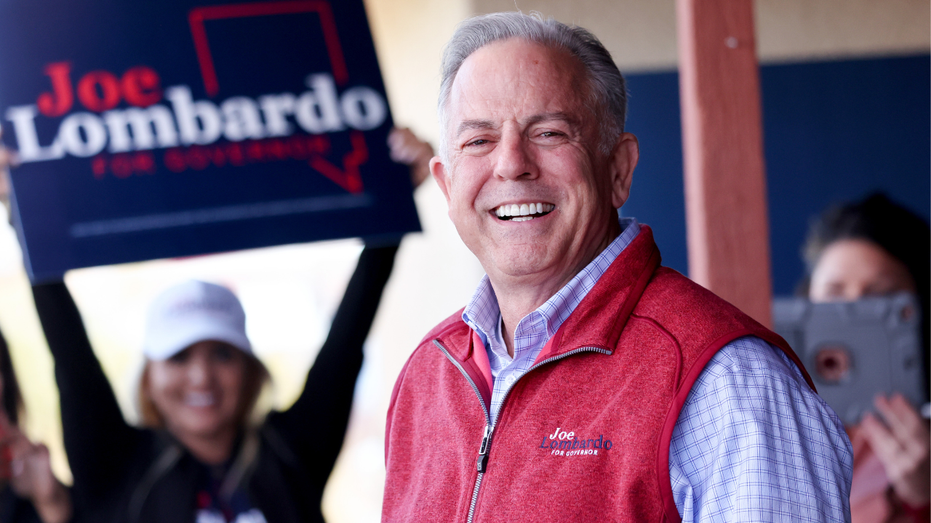
Nevada Gov. Joe Lombardo wins the Republican primary for a second term, defeating six GOP challengers to advance to the general election in November.
Sen. Susan Collins wins Maine GOP primary unopposed as she seeks a sixth term, facing Democrat Graham Platner in a crucial Senate majority battle.