Inflation tops 4% for the first time in 3 years on spike in gasoline prices
Source: NPR Topics: News · Bias: Center
Summary
Inflation has surged to its highest level in more than three years since the U.S. and Israel launched their war on Iran, triggering a surge in gasoline prices.
Inflation tops 4% for the first time in 3 years on spike in gasoline prices
Center
Inflation has surged to its highest level in more than three years since the U.S. and Israel launched their war on Iran, triggering a surge in gasoline prices.
During the ritzy WHCD redo Friday, the back-patting association doled out awards to reporters for stories fiercely critical of Trump, including his past association with late sex predator Jeffrey Epstein
The first round of August Social Security payments for retirees, now capped at $5,181, will be issued in 17 days. When will payments arrive? Retirees born on or before the 10th of a month will receive this payment on Wednesday, Aug. 12. The second round will go out on Aug. 19 to those born between […]
The U.S. and Iran militaries did not exchange fire overnight Saturday, breaking a streak of 13 consecutive days of tit-for-tat strikes over alleged violations of a ceasefire agreement signed last month. A spokesperson for the country’s health ministry confirmed there were no new attacks in a Saturday social media post. “It seems our dear Iran…
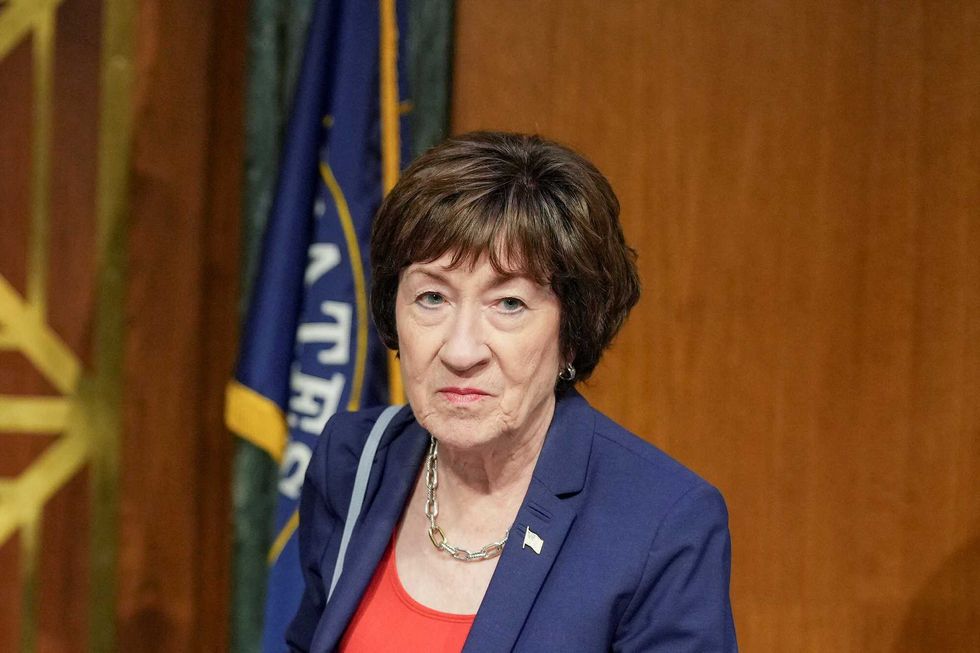
Maine Democrats on Saturday overwhelmingly nominated Troy Jackson, a former state Senate president and logger by trade, as their party’s nominee to challenge longtime Republican incumbent Susan Collins in November’s high-stakes US Senate election.“Well, thank you, Maine,” Jackson, 58, said after securing the votes of 566 of 571 delegates during Saturday’s special Democratic convention at Cross Insurance Center in Bangor. “Today we turn the page, today this becomes a general election campaign, and today we win the work of defeating Susan Collins in November.”“For nearly 30 years, Collins has told Maine that she is ‘concerned’,” Jackson said, referring to the 73-year-old incumbent’s go-to word when President Donald Trump and Republicans attack rights and justice. “She was concerned while she rubber-stamped Trump’s Medicaid cuts and gutted our healthcare.”“She’s concerned when she cut taxes for corporations and the wealthy,” he continued. “Concerned when she confirmed justices who overturned Roe v. Wade. And really tragically, she was concerned when she gave [US Immigration and Customs Enforcement] billions to terrorize our neighbors and murder people in the streets with no accountability.”“But concern does not lower the costs of groceries or gas,” Jackson said. “Concern does not keep our monitoring wards of rural hospitals like down in Lincoln County open. Concern does not restore all the rights that she’s taken away. Maine does not need another six years of concern. We need someone with courage. We need a fighter, and we need a senator who remembers exactly who sent them to Washington.”“So if you’ve ever been ignored, underestimated, pushed around, or told that you have to wait your turn while the rich cut the line, I’m asking you to stand with us in this campaign,” he continued. “If you believe in your heart that healthcare is a right, stand with us. And if you believe that workers deserve power, stand with us. And if you believe our freedoms are worth defending, stand with us.”“And if you believe that Maine deserves a senator who will fight like hell for working-class people, well, stand with us,” Jackson added. “We have a party to unite, we have a movement to build, and we have a senator to defeat.”Jackson’s improbably rapid rise followed former Democratic nominee Graham Platner’s withdrawal from the race earlier this month amid allegations of sexual assault and abusive behavior. Supporters of Platner’s progressive platform warned at the time that they would not back a replacement candidate who did not share the same pro-worker, anti-war agenda.While Collins spokeswoman Blake Kernen called Jackson a “low-energy version” of Platner, Maine Democrats decided the fifth-generation lumberjack fit the bill.“The working class has been left behind and forgotten about,” Shelly Mountain, a former Aroostook County Democratic Committee chairwoman and Jackson delegate at the convention, told NBC News. “He is definitely working class and always—has always—been a champion for the working class.”Progressive politicians, advocacy groups, and labor organizations cheered Jackson’s nomination, with Sen. Elizabeth Warren (D-Mass.) saying that “he’s ready to fight for working people and flip this seat.”International Association of Machinists and Aerospace Workers (IAM) president Brian Bryant said Saturday that “Troy Jackson knows firsthand what it means to work hard for a living and fight for a better future for working families.”“Throughout his career, he has stood shoulder-to-shoulder with union members and working people, never backing down from a challenge when workers’ rights were on the line,” he added. “He represents the strength of a people-powered movement focused on fairness, opportunity, and economic justice. Troy has our full support as he heads to the general election.”
An iconic harbor restaurant In Orange County has promised to leave the recipe for its signature cocktail before they close their doors for good, as longtime fans mourn the upcoming closure.