Trump’s Staggering Humiliation in Iran
Source: The New Republic · Bias: Left
Summary
There were two ways to read Donald Trump’s unprecedented threat on Tuesday that Iran’s “whole civilization will die” if the Strait of Hormuz was not opened by 8 p.m. Eastern time. The first was that the president was threatening to drop a nuclear weapon on a nation that he had started a war with, as punishment for that nation’s fighting back. The second was that Trump wasn’t just bullshitting, and instead was desperate for a deal—so desperate he would utter perhaps the most horrific, murderous words an American president has ever spoken. That second reading now looks to be the right one. Shortly before the Tuesday evening deadline, Trump announced that the United States and Iran had reached a two-week ceasefire and would be working on a potential peace deal. True to form, Trump boasted that he had won a massive victory and that the U.S. had “already met and exceeded all Military objectives.” Subsequent reporting—and the fact that Trump called Iran’s 10-point proposal “a workable basis on which to negotiate”—suggests something rather different. Even if the U.S. agreed to just a few of Iran’s ten demands, or even if the demands were significantly watered down, a peace deal based on that framework would lead to an unmistakable conclusion: The U.S. has lost yet another war in the Middle East. The reality may in fact be much worse. The Iran war increasingly looks not only like another shocking humiliation, but perhaps the greatest strategic blunder in American military history. Trump has called the ten-point plan “not good enough,” but that’s a significant understatement. If adopted, it would give Iran full control over the Strait of Hormuz, the vital shipping channel that the country effectively closed to maritime traffic when the U.S. bombing began, sending the cost of oil and other goods skyrocketing. Iran has said it plans to charge $2 million per ship, a fee it would share with its neighbor Oman (before the war, it cost $0 to pass through the strait). The proposal would also allow Iran to enrich uranium for civilian use; lift all U.S. sanctions on the country; require the U.S. to swear off future attacks on Iran; and even force the U.S. to pay restitution for the damage caused by its bombing campaign. Oh, and the U.S. would have to pull its combat forces out of the Middle East entirely.It is, in short, a plan that would greatly expand Iran’s regional hegemony and perhaps turn it into a genuine global power. Granted, any future deal isn’t likely to include all of these demands; some of them, like the full military withdrawal from the region, are obvious nonstarters. But all of these demands would have been nonstarters for the U.S. if Iran had proposed them before the bombing began. Now, however, they comprise a “workable” proposal. That alone suggests that Iran will emerge from this the war in a significantly stronger position than they were six weeks ago. That is remarkable in and of itself. But it is hard to overstate just how big a catastrophe this is for the U.S. By asserting control over the Strait of Hormuz, Iran has effectively negated one of the core aspects of American power: its use of naval power to ensure the safety of shipping lanes, thereby protecting the global economy. Iran has also made a fool of Trump, who can brag all he wants about “military objectives.” The fact is, Trump’s hubris cost thousands of lives, rattled economies around the world, and made the U.S. significantly weaker. There are signs that the agreement is already fraying, however. Despite agreeing to a ceasefire, Israeli forces have not only continued to attack Lebanon but done so with greater ferocity than at any point since that conflict began in early March. Iran, meanwhile, has also launched missiles at its neighbors, though it’s not clear if that was retaliation for the violation in Lebanon or simply the result of the fact its armed forces are extremely decentralized, meaning orders take a long time to reach low-level troops. On Wednesday afternoon, Iran released a statement accusing the U.S. of three violations: the attacks on Lebanon by its ally, a drone flying into Iranian airspace, and the denial of Iran’s right to enrich uranium. “In such situations,” the statement concludes, “a bilateral ceasefire or negotiations is unreasonable.” Trump was never able to articulate a sensible argument for why the U.S. had to go to war with Iran, which allowed the Iranians to set the stakes of the conflict. Trump quickly found himself in a trap of his own making. Facing two very bad options (admit defeat or commit war crimes), he was obviously grateful to be presented with a third one (the 10-point framework). Some journalists are calling this an “off-ramp,” and that’s true in the sense that it may bring an end to this pointless, destructive war of choice. But it is almost impossible to imagine how Trump, by using Iran’s framework as the basis for a peace deal, can still somehow save face.
Related Coverage
- Melania gives Congress private deadline as she works around Trump's team: report (Far Left — Raw Story)
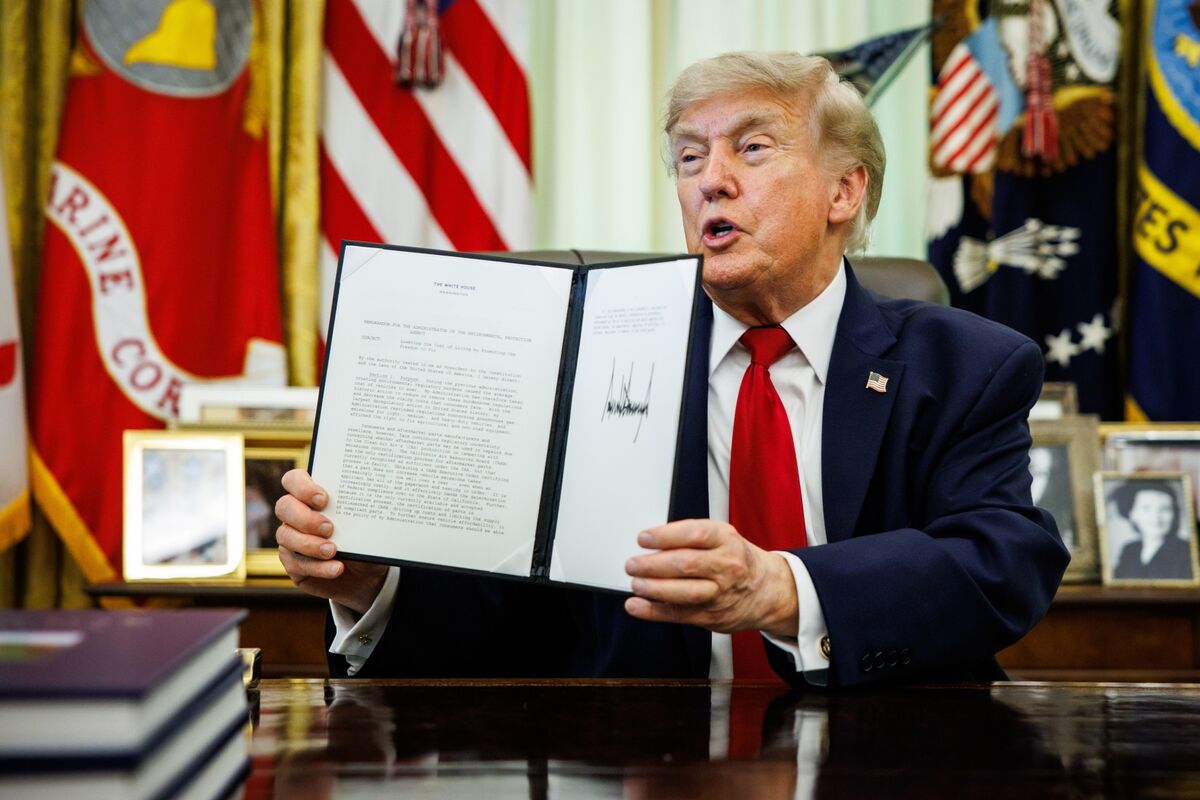
- Trump announces pardons for pollution violators prosecuted for "fixing their car" (Center — Politics - CBSNews.com)
- Trump Pardons Six People Pursued for ‘Fixing Their Car’ (Center — Bloomberg Politics)
- Sources: Trump likely to pardon pollution violators; weighing clemency for Diddy (Center — Politics - CBSNews.com)
- What Is Iran Building Now in the Zagros Mountains? (Right — RedState)
- Fox host warns Trump will pay for his 'breathtaking' corruption (Left — Alternet.org)
- Trump Scores Appeals Court Victory in Battle Over National Park Historical Displays (Right — RedState)
- Signs of Victory: I-95 Welcomes President Donald Trump Int'l Airport (Right — RedState)
Daily Analysis
Read the full Parallax Pulse for April 8, 2026 — an AI-powered analysis of how Left and Right media covered the biggest stories this day.
More Headlines From April 8, 2026
- Republican Projected to Hold Marjorie Taylor Greene’s House Seat (Center)
- US oil prices fall over 18% after Trump agrees to two-week ceasefire with Iran (Center Right)
- New York Wants a Cut of Counter-Strike's Loot Boxes (Center Right)
- Republican Clay Fuller to replace Marjorie Taylor Greene in House (Center)
- 5 US House races shift toward Democrats: Cook Political Report (Right)