Trump Has No Clue What His Supreme Court Has Just Unleashed
Source: The New Republic · Bias: Left
Summary
Now that the Supreme Court has gutted yet another piece of the Voting Rights Act, this one concerning redistricting, here’s one thing we know for sure: Democrats will have to enter into a new era of procedural total war. That might make many of them uncomfortable, but when it comes to the future of the liberal agenda, the stakes are enormous.With Donald Trump’s active encouragement, Republicans are already seizing on the ruling—which essentially dismantled protections against racial gerrymandering—to threaten to redraw maps in the South to eliminate numerous congressional seats with Black representatives. While it’s largely too late to do so this cycle, Republicans will likely launch mid-decade redistricting in many Southern states heading into 2028, eliminating as many as 19 more Democratic seats in hopes of locking in a near-permanent GOP majority.In substantive and legal terms, this outcome is awful—see this overview from TNR’s Matt Ford for a full rundown—but in a purely political sense, is this Armageddon for Democrats? Not necessarily. The reason? Democrats can move to redraw maps in time for the 2028 elections in states where they control the legislatures. Which points to one big takeaway from the court ruling: State legislative races—which already attract too little attention—just got a lot more important. Many races underway now will help determine the party’s long-term prospects in the scorched-earth conflict that’s about to unfold.According to a new analysis by Fair Fight Action, a voting rights group, Democrats could redraw anywhere from 10 to 22 additional congressional seats for the party in time for the 2028 elections if they push hard with redistricting in seven blue and swing states. The analysis—which is circulating among Democratic leadership aides and outside groups and was obtained by TNR—concludes that being aggressive could theoretically offset Republican gains, even in a maximalist GOP redistricting scenario.“Democrats have a clear path to neutralize this GOP power grab if they want to take it,” Max Flugrath, senior communications director of Fair Fight Action, told me. “This is the ‘break glass in case of emergency’ moment for American democracy.”The range of potential Democratic gains is so broad because so much depends on which party controls key state legislatures after the fall elections. Strikingly, even if Democrats flip zero chambers, they can redraw up to 10 additional congressional districts for the party, the analysis finds, by maximizing gerrymanders in New York, Colorado, Oregon, and Maryland, where Democrats control governorships and state legislatures.But even more strikingly, Democrats could redraw as many as 22 additional congressional districts for the party overall if they flip legislative chambers in other states and redraw aggressively in them, the analysis finds.Take Wisconsin, where the governor is a Democrat and Republicans control the state legislature. Democrats think they have a good shot at flipping both legislative houses, due in part to dramatic Democratic overperformances in recent special elections.Notably, Republicans control six congressional seats in Wisconsin while Democrats control two. But the state is evenly divided, with Democrats winning recent statewide elections there. Ironically, precisely because Wisconsin has long been heavily gerrymandered for the GOP, Democrats can now redraw three additional House districts for themselves, the analysis finds, by unpacking current urban districts and linking up Democratic voters in the north.Then there’s Minnesota, where Democrats control the governorship and State Senate. The State House is tied, but Democrats are bullish on flipping at least one seat, which would mean a trifecta. While the state constitution may bar an immediate redistricting, that could theoretically be amended in time for Democrats to redistrict for the 2028 or 2030 elections.Another possibility is Pennsylvania. This would require flipping one legislative chamber, the senate—and redrawing aggressively by concentrating Republicans in central rural districts and spreading around urban Democratic voters more, the Fair Fight Action analysis finds. It argues that three congressional seats are gettable in Wisconsin, three in Minnesota, and up to six in Pennsylvania.“Twenty-two House seats across seven states may sound like a heavy lift,” Flugrath told me. “But our analysis shows it’s well within reach if blue-state governors and legislatures squeeze every potential seat out of the maps.”This analysis, of course, attempts to quantify the very outer range of what’s possible. Much will be decided by how hard Democrats push. But they are gearing up: House minority leader Hakeem Jeffries told Politico that Democrats will seek gerrymanders at minimum in New York, Colorado, Maryland, and Illinois.Flipping more legislatures this cycle is also essential, however.
Related Coverage
- Melania gives Congress private deadline as she works around Trump's team: report (Far Left — Raw Story)
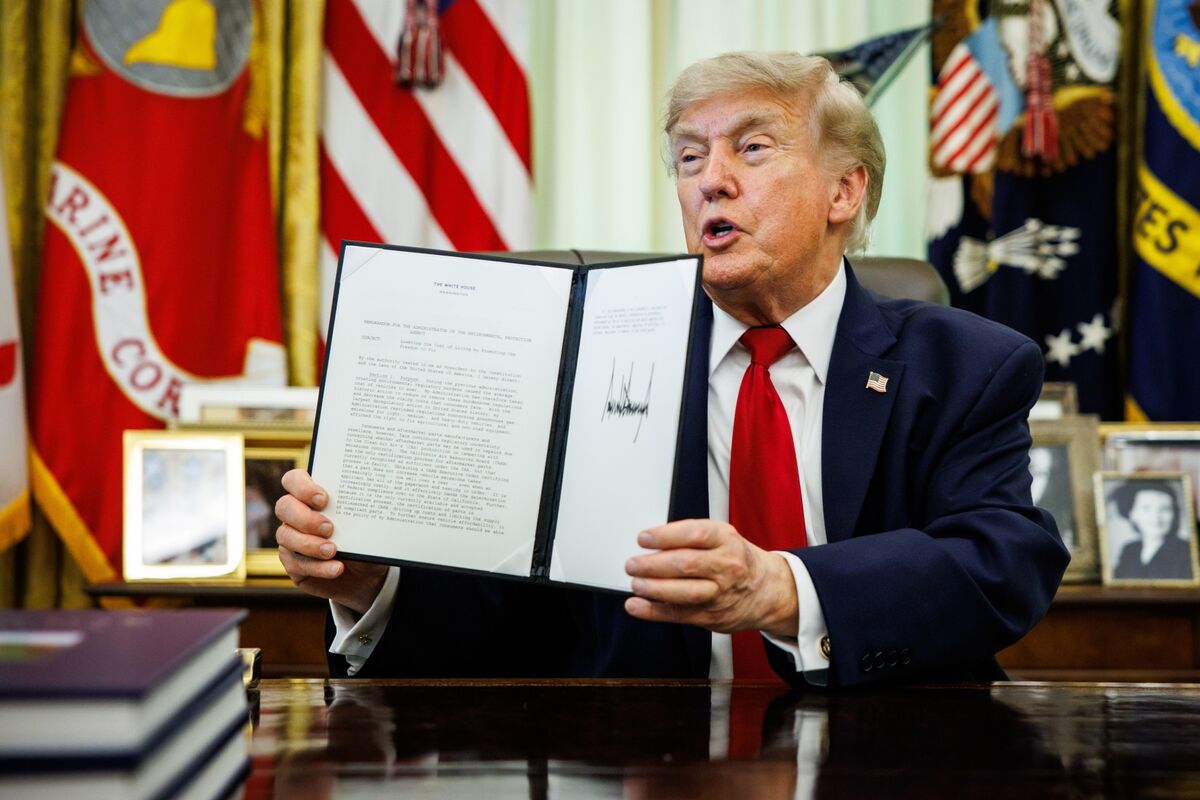
- Trump announces pardons for pollution violators prosecuted for "fixing their car" (Center — Politics - CBSNews.com)
- Trump Pardons Six People Pursued for ‘Fixing Their Car’ (Center — Bloomberg Politics)
- Sources: Trump likely to pardon pollution violators; weighing clemency for Diddy (Center — Politics - CBSNews.com)
- Fox host warns Trump will pay for his 'breathtaking' corruption (Left — Alternet.org)
- Trump Scores Appeals Court Victory in Battle Over National Park Historical Displays (Right — RedState)
- Signs of Victory: I-95 Welcomes President Donald Trump Int'l Airport (Right — RedState)
- Trump’s ‘ramped up’ rhetoric leaves unifying tone of July Fourth speech in question (Center Left — NBC News Politics)
Daily Analysis
Read the full Parallax Pulse for April 30, 2026 — an AI-powered analysis of how Left and Right media covered the biggest stories this day.
More Headlines From April 30, 2026
- Iran’s New Leader Pledges to Guard Nuclear and Missile Tech (Center)
- Janet Mills ends Senate campaign in Maine, paving way for Graham Platner (Center)
- Louisiana halts House elections after Supreme Court map ruling (Center Left)
- Mills suspends Senate campaign in Maine (Center)
- Supreme Court strikes down institutionalized racism (Far Right)