Transcript: Inside the Wild, Unpredictable California Governor’s Race
Source: The New Republic · Bias: Left
Summary
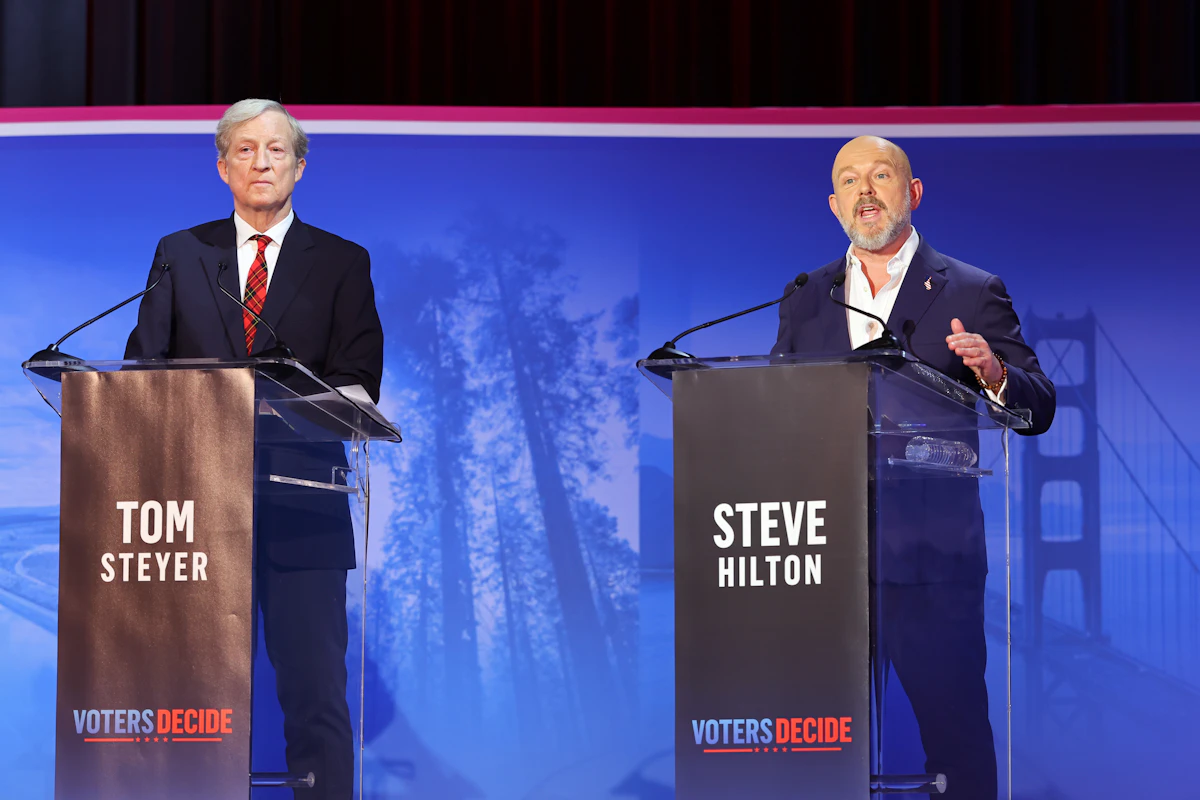
This is a lightly edited transcript of the May 6 edition of Right Now With Perry Bacon. You can watch the video here or by following this show on YouTube or Substack.Perry Bacon: I’m Perry Bacon, the host of the The New Republic show Right Now. We have a great guest who’s really up early in the morning. This is David Dayen. He’s the executive editor of The American Prospect, which is one of these magazines—like The New Republic—that is left of center and trying to cover the news in a pro-democracy perspective. And David has done some great work. If you follow him on Twitter or Bluesky, he’s one of the best chroniclers of economic policy particularly, but he runs a great magazine. I’m really honored that David’s come on. So David, thanks for joining me.David Dayen: Thanks for having me, Perry.Bacon: So I want to start with the big—you’re the rare person who writes about national politics who is based in California. I wish we had more people who were interested in California because, as we know, it’s the biggest and most important state. And so what I want to talk about first is the governor’s race there—it’s heating up, the voting is going to start pretty soon. And my first question is: a few weeks ago, the big worry was the two Republicans would finish ahead and Democrats would be kind of locked out of that. But I think that’s no longer the problem in some ways, because Donald Trump solved that problem.Dayen: Yeah. It’s a combination of two things. So one—Donald Trump helped solve the problem by endorsing one of the two Republican candidates. The fear was that there are essentially two prominent Republicans in this race, and at the time, there were up to eight prominent Democrats. And the way that we do elections in California is with what they call the top-two primary. So on your primary ballot are all the candidates—Democratic, Republican, Decline to State—no matter who you are, you see all those candidates. There are actually 62 candidates on the ballot. And you vote for whoever you want, Democratic, Republican, doesn’t matter, and the top two advance regardless of party. And obviously this is a state where you could see 65 percent of the voting public vote Democratic and 35 percent vote Republican—but if those two Republicans in the governor’s race got essentially an equal amount of votes, they would have 17, 18 percent of the electorate, and it would be hard for one of those eight Democrats to get more than that—therefore creating a situation where even though 65 percent of the electorate voted Democratic, they’d only have the choice of two Republicans for governor in the general election. And under the statute—this was created by initiative in 2010, and under that initiative, you can’t write in anybody. So in the general election, it’s just the two who are on the ballot.So that was a very palpable fear, I think—particularly when the polls started coming out and showed the two Republicans essentially neck and neck, and other Democrats who hadn’t really gained traction behind them. Now, two things happened. The first is, as you say, Donald Trump endorsed Steve Hilton, who is a Fox News commentator, a former adviser to the British government under David Cameron. And he endorsed Hilton over this guy Chad Bianco, who’s the Riverside County Sheriff and an Oath Keeper—an admitted Oath Keeper—and a MAGA guy. You would expect, if Trump endorses one over the other, for those two candidates to split. And indeed, in the polling, we’re seeing Hilton poll much higher than Bianco now. So that gives an opportunity for one Democrat to get into that top two.The other thing that happened, obviously, is that Eric Swalwell—who was running essentially in that top tier of Democrats—had to drop out, for obvious reasons. And so when Swalwell dropped out, that narrowed the field. Another candidate, Betty Yee, dropped out of the race and endorsed Tom Steyer. We’ll talk about those candidates in a second. So the Democratic field has consolidated a bit while the Republican field has stratified a bit. And so that fear is lessened—although it’s not completely gone. You could still see this happen.Bacon: So I’ve been looking at the polls some, and there’s a lot of buzz about the race—but it appears, from where I’m sitting and not close to the race, that a lot of the Swalwell vote went to Xavier Becerra, the former Biden administration official who used to be in the leadership in the House. Is that what happened? And secondly, why do you think that was? It wasn’t like Swalwell endorsed Becerra.Dayen: Yeah. It’s a very interesting dynamic. You saw this happen almost immediately and incredibly inorganically, I would have to say—where all of a sudden there was just all this buzz happening on the Becerra side, after he was in the race for a year with essentially nobody talking about him. So what is going on here?
Related Coverage
- 'Demon in human skin!' Fox News host loses it as Dem threatens to upend Texas Senate race (Far Left — Raw Story)
- The Race to Rescue 8,000 Sailors Still Stranded Behind Hormuz (Center — Bloomberg Politics)
- Inside the security operations for July Fourth celebrations in D.C. (Center — Politics - CBSNews.com)
- This Republican Has a Wild Idea for Fixing Housing Prices: Let the Market Actually Work (Far Right — Townhall)
- Inside Carney’s Pipeline Deal with Alberta and BC (Far Left — The Tyee | BC's home for today's news, analysis and updates )
- Egypt’s World Cup staffers clash with Dallas police in wild scene (Right — New York Post)
- Vance: Rep. Ocasio-Cortez will lead Democrat presidential race in 2028 (Far Right — One America News Network)
- Scorching heat and empty baptism pools: Inside Trump's deserted American State Fair (Far Left — Raw Story)
Daily Analysis
Read the full Parallax Pulse for May 6, 2026 — an AI-powered analysis of how Left and Right media covered the biggest stories this day.
More Headlines From May 6, 2026
- Trump knocked for ballroom hypocrisy: They wanted to 'put Powell in jail' (Left)
- Republicans fill out the House battlefield with challengers in key districts (Center Left)
- GOP wins can’t save them from their huge losses 'where it matters most' (Left)
- Abortion pill fight thrust into spotlight as midterms heat up (Center)
- Honda Cancels EV Plant in Canada – Despite Prior Deal for Billions in Subsidies (Far Right)