Transcript: How Opposing Data Centers Can Save Democracy
Source: The New Republic · Bias: Left
Summary
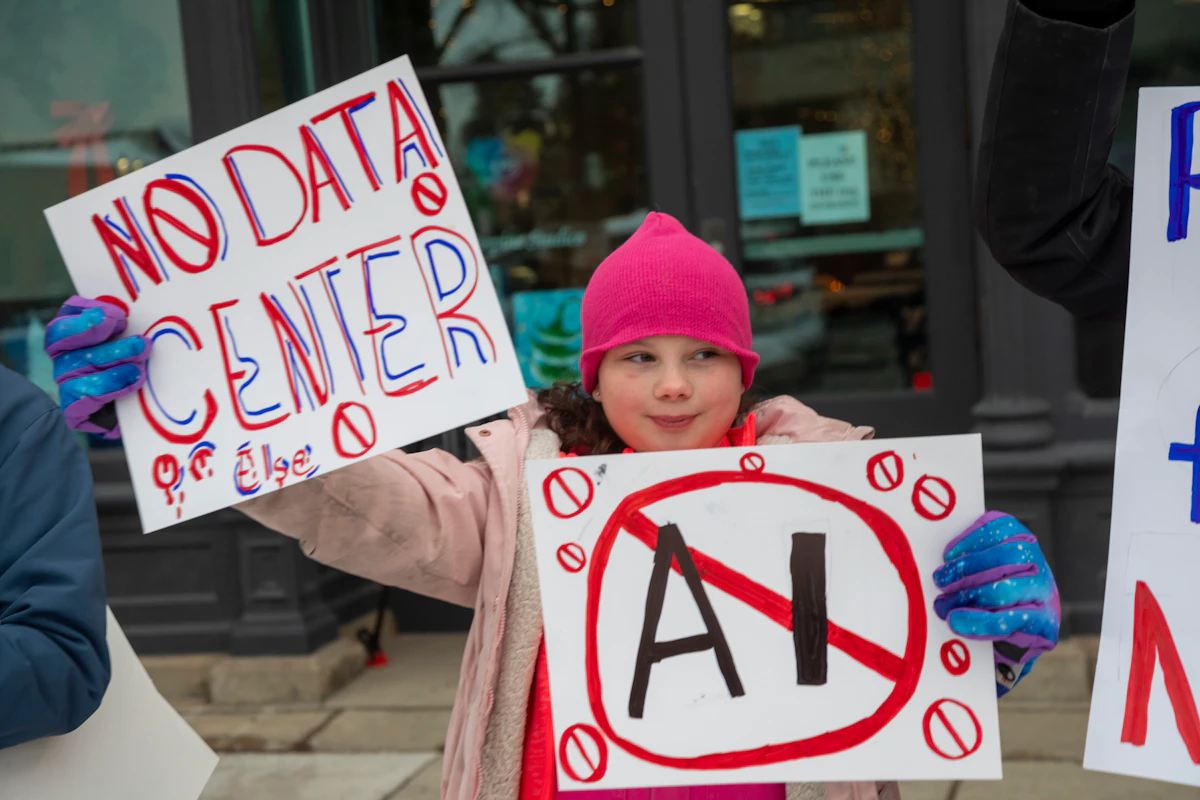
This is a lightly edited transcript of the June 12 edition of Right Now With Perry Bacon. You can watch the video here or by following this show on YouTube or Substack.Perry Bacon: We have a great guest today, Astra Taylor, one of the smartest people I know. She’s done documentary filmmaking, she’s written a ton of books, she’s an organizer with the Debt Collective, and she’s a person who’s just studied and is very thoughtful about a lot of different subjects. So Astra, thanks for joining me. Welcome.Astra Taylor: Thanks for having me. Glad to be here.Bacon: So we’re going to start with the topic of the year, millennium, decade. I want to talk about AI for a bit, because you wrote a piece I’m interested in. The title’s in The Guardian: “The fight against data centers isn’t just about tech, it’s about democracy.” But let me start with a basic premise here, which is: are data centers inherently bad, and is AI inherently bad? So talk about those things first.Taylor: Oh, those are some big questions. Are data centers inherently bad? No. And data centers aren’t new. They’re new in the news, right? But data centers, 20 years ago, before we were talking about AI—data centers are where we store our data, and we were storing our data for old-fashioned social media usage or other streaming services. So data centers have been around for a long time, and there was a big boom, a data center build-out during COVID actually, when internet usage exploded and there was a lot of access to low-interest capital that facilitated the build-out. And one way of thinking about data centers is they’re the backbone of the internet, right? It’s where the cloud comes to earth. But they’re obviously much more prominent now, and they’re just being built at a different scale—hyperscale, to use the term.Bacon: Let me come back to that, though. Data centers themselves have existed a long time. That’s what I wanted to get at.Taylor: Yeah. So they’re not inherently evil.Bacon: It’s new in the news, but it’s not new. We’ve had data centers. That’s what I was trying to draw out a little bit.And I guess I do want to ask—a lot of people, I’ll say on the left, are very AI-skeptical. And I wonder—I think we can talk about the economics of it and the growth of it, but is AI inherently bad itself? It’s a very broad question, but I’m just curious what you think.Taylor: I think AI in this economic model, in this political economic paradigm, is veering towards inherently bad. You cannot separate the technology from the economics, and this is a point I’ve been making since my first book, which is called The People’s Platform: Taking Back Power and Culture in the Digital Age, which came out in 2014. That was essentially a political economy of the internet, of the old-fashioned pre-AI internet. And my argument there was that you cannot separate technology from the underlying business model of these firms. And that just seems to me like one of those basic eternal insights we should not lose sight of. And so in a sense, this is the same movie but just on steroids, right? The AI boom is happening in a period of much more intense wealth concentration.So the “inherent” question—people like to say technology is neutral. I think that’s a bit wrong. Yes, you can use machine learning to assist a robust scientific infrastructure, or you can use machine learning to enhance a drone that is engaged in a genocide.Bacon: That’s what I’m getting at. Could there be a world where AI is used nicely?Taylor: Technology is flexible, yeah. But we would need very different societal conditions and be operating under a different government with a lot more constraints. And I just want to say on the “neutral” point: yeah, sure, you can use a knife to kill someone or to make a sandwich, but that doesn’t mean it’s neutral. It’s a tool that cuts things.And I think the AI that is being designed right now is being designed for specific purposes. OpenAI—the definition they have of AGI, artificial general intelligence, that they’re looking towards is a tool that can do economically valuable labor. In other words, they’re trying to build a human worker replacement engine. And so neutrality—I don’t think this technology is neutral, but I also don’t think it is inherently good or bad. It’s embedded in societal conditions.Bacon: So we’ve talked about data centers and now AI. Now we’re talking about AI data centers. How did this happen? You’re in North Carolina, but I think it’s nationwide. I feel like in the last 18 months, you’ve had AI data center protests, bans, really almost every part of the country—rural, suburban. Really not urban, because data centers are mostly in more spread-out areas, but how did this happen?Taylor: Yeah. And it’s actually becoming more urban. There are protests in the streets of Vancouver right now over a big data center.
Related Coverage
- "Empire of AI": Karen Hao on How AI Is Threatening Democracy & Creating a New Colonial World (Far Left — Democracy Now!)
- Tillis pronounces SAVE America ACT ‘dead’ as vital voter legislation remains stalled in Senate (Far Right — BizPac Review)
- To Reduce Electrical Grid Strain Amid Heat Wave, Data Centers Are Ordered to Use Backup Power (Center Left — NYT > U.S. > Politics)
- Mom Neglects to Mention a Chilling Detail in Glowing Article About Her Trans Child, Who was at the Center of Landmark Supreme Court Case Involving Boys in Girls’ Sports (Far Right — The Gateway Pundit)
- US Jobs Data Comes in Under Forecast | Bloomberg Businessweek Daily 7/2/2026 (Center — Bloomberg Politics)
- Kennedy Center rolling out $25,000 VIP rooftop tickets for July Fourth celebrations (Center — The Hill News)
- More New Poll Data on Senate Races That Doesn't Look Good for Dems (Right — RedState)
- Top MAGA defector says Trump's US 'not a democracy' (Left — Alternet.org)
Daily Analysis
Read the full Parallax Pulse for June 15, 2026 — an AI-powered analysis of how Left and Right media covered the biggest stories this day.
More Headlines From June 15, 2026
- Pence cast doubt on possibility of US, Iran peace deal before Trump announcement (Center)
- Trump, Vance, Iranian official sign US-Iran peace memo (Center)
- UFC Stages Successful White House Fight Night—if Not for Obama Insult (Center Left)
- Gavin Newsom says DOJ probe is political — but take a closer look (Right)
- The fog of the Iran MOU (Center Right)