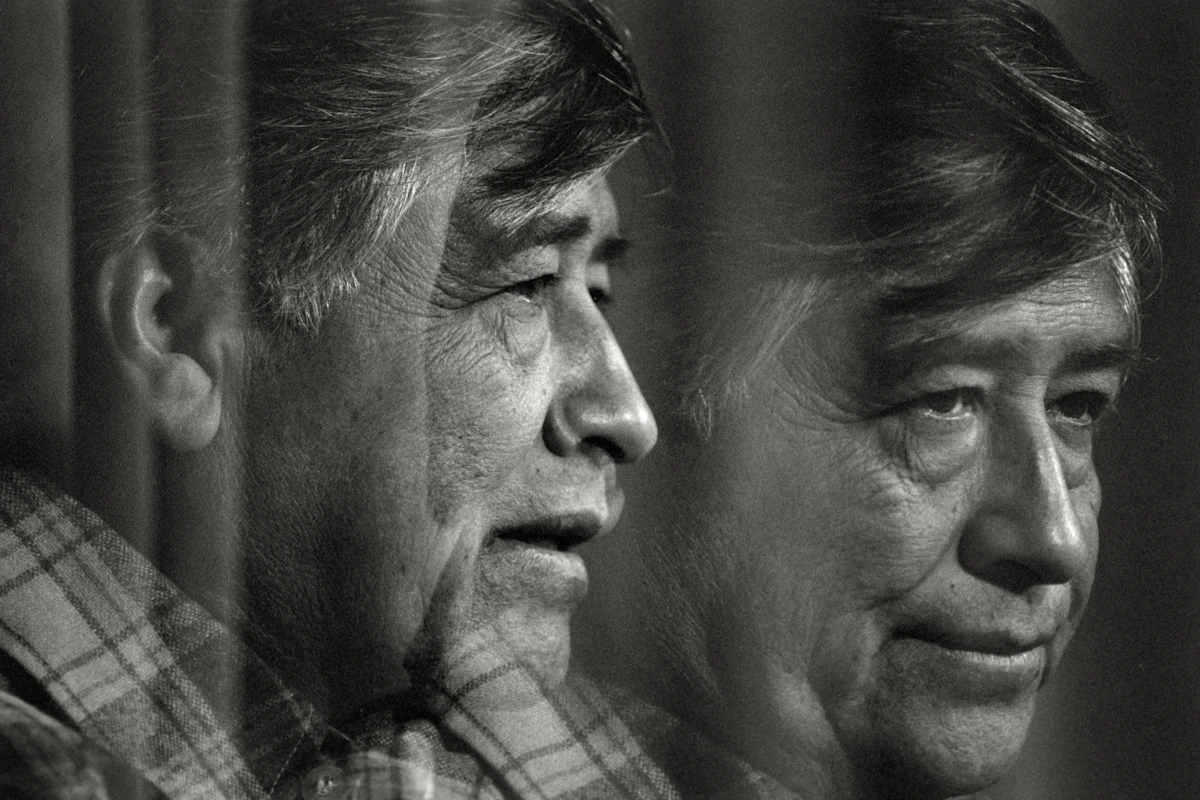
The Shame of Cesar Chavez
Source: The New Republic · Bias: Left
Summary
There are 27 elementary and high schools named after Cesar Chavez in California, nine in Texas, and three each in Arizona and New Mexico. The New York Times put them in a quandary March 18 by reporting that Chavez sexually molested two minors, from the ages of 12 and 13, and that he raped his longtime aide-de-camp, Dolores Huerta. Now America has to figure out what to do on Cesar Chavez Day this March 31 and, more broadly, how to think about his legacy. This task is complicated by the fact that Chavez’s legacy and his life’s achievement have been out of alignment for some time.The facts laid out in the Times piece are unchallengeable and grim. The 12-year-old, Debra Rojas, wrote Chavez: “I think of you all the time. Do you think of me?” Three years later, Rojas had sexual intercourse with Chavez in a motel, a clear violation of California’s statutory rape law. Had this been reported, Chavez might easily have spent several years in prison. The 13-year-old, Ana Murguia, continued to have sexual encounters with Chavez (never intercourse) until she turned 17, by which time she’d tried to kill herself “multiple times.” Huerta, now 96, confirmed to the Times that she had two traumatic sexual encounters with Chavez. In one, she wrote Wednesday on Facebook, she felt “manipulated and pressured” because Chavez was “my boss.” The other encounter was an unambiguous rape (“forced, against my will, and in an environment where I felt trapped”). That too could have landed Chavez in prison. In both instances, Huerta became pregnant with children whose paternity remained a secret until now.The two organizations most associated with Chavez, the United Farm Workers, or UFW (which he created with Huerta) and the Cesar Chavez Foundation, do not dispute the allegations. The UFW Foundation called them “shocking” and “indefensible,” and canceled its annual Cesar Chavez Day celebrations. The Cesar Chavez Foundation said it was “deeply shocked and saddened.” But neither group seemed wildly surprised. That’s because Chavez was never the plaster saint America tried to make him. Chavez was a genius at labor organizing during the Delano grape strike and boycott of 1965–1970, and a skillful lobbyist in shaping, with California Governor Jerry Brown, the 1975 Agricultural Labor Relations Act. The latter was the first state law to extend collective bargaining rights to farmworkers, who were not included in the 1935 National Labor Relations Act, or NLRA. The brilliance of Chavez’s grape strategy was to turn farm laborers’ exclusion from the NLRA to his advantage by using a tool—the secondary boycott—that Congress had outlawed in the Taft-Hartley amendments to the NLRA enacted in 1947. Since farmworkers were excluded from the NLRA’s labor protections, they were also excluded from the Taft-Hartley prohibition.A secondary boycott is a boycott not against the offending business but against another business that does business with the offending business—in this instance, supermarkets that sold table grapes. Congress outlawed secondary boycotts because they’re a devilishly powerful tool. In the case of the grape boycott, supermarkets caved to UFW boycotts because they didn’t have much stake in whether they carried California grapes or not. Chavez’s decision to target table grapes, as opposed to any of the many other agricultural products produced in California’s Central Valley, was also ingenious, because grapes are not a staple and have little nutritional value. Nobody needs grapes.Another heroic accomplishment of Chavez’s was to get California to ban el cortito, a short-handled hoe that required farmworkers to bend over. Performing such stoop labor as a child bequeathed Chavez (and many others) a lifetime of back pain. But growers insisted the work couldn’t be done as well with a long-handled hoe. The real reason bosses preferred el cortito was that it made it easier to tell when a farmworker was taking a break. All a supervisor had to do was see who was standing upright. Thanks to Chavez and a young lawyer for California Rural Legal Assistance named Maurice Jourdaine, el cortito was banned by the California Supreme Court in 1975. Today it’s on display at the Smithsonian’s National Museum of American History as “a symbol of … exploitative work conditions.” (Don’t tell President Donald Trump!)These are Chavez’s greatest achievements, and they are reasons to revere his prowess as a labor leader. Unfortunately, Chavez didn’t see himself as a mere labor leader; he sought a more intangible legacy, and, in a way, he got it. Today Chavez is remembered as an exemplary Chicano, but schoolchildren can be forgiven for not knowing exactly why. The Times story introduces Chavez as “one of the most revered figures in the Latino civil rights movement.” But although Chavez did some civil rights work, that wasn’t his principal task.
Related Coverage
Daily Analysis
Read the full Parallax Pulse for March 19, 2026 — an AI-powered analysis of how Left and Right media covered the biggest stories this day.
More Headlines From March 19, 2026
- Hegseth Says Iran War Not Becoming a ‘Forever War’ or ‘Quagmire’ (Center)
- ‘The real pandemic’: Jason Whitlock sounds alarm on black youth violence, blames breakdown of family structure (Right)
- US detects drones over Army base where Rubio, Hegseth live: Report (Far Right)
- FBI investigating former National Counterterrorism Center Director Joe Kent over alleged leaks (Right)
- Trump compares attack on Iran to Pearl Harbor in meeting with Japanese PM (Center)