The one sentence in Trump's election order that should rattle state officials
Source: Alternet.org · Bias: Left
Summary
Deep inside the executive order on mail voting President Donald Trump signed March 31 is a technical-sounding line: “States and localities should preserve, for a 5-year period, all records and materials — excluding ballots cast — evidencing voter participation in any Federal election (e.g., ballot envelopes, regardless of carrier).”This article was originally published by Votebeat, a nonprofit news organization covering local election administration and voting access.But the line is a bigger deal than it sounds like, should the executive order go into force (it’s currently facing four federal lawsuits asserting the president exceeded his authority with it). Right now, federal law requires such records to be kept for 22 months. The order more than doubles that requirement, and does so without specifically defining what counts as evidence of “voter participation in any Federal election.” That puts state and local election administrators in a familiar bind: trying to comply with a sweeping directive without clear boundaries, and without any obvious plan for how to store what could be a massive increase in materials. County budgets and state laws — and the realities of available physical and digital storage — weren’t built with this kind of expansion in mind. The order’s use of the word “should” is telling, said David Becker, executive director of the Center for Election Innovation and Research and a former DOJ voting rights attorney. Taken as a whole, he argued, the order is broadly unconstitutional. And in this specific instance, its language appears to acknowledge a key limitation: the president cannot compel local jurisdictions to retain more election records than federal law requires.The 22-month retention period in existing law was deliberately chosen, he said — long enough for investigators to pursue credible evidence, but finite, so election administrators can prepare for the next federal cycle.“You can’t have every election that’s ever been held be stored constantly forever,” Becker said. “Paper takes up room, and voting machines have to be reprogrammed for the next election.”The sentence in the order explicitly exempts cast ballots from the five-year retention period, though it isn’t clear why. The White House did not respond to a request to explain that. Still, the order would include storage of a wide range of materials that show a voter cast a ballot and how that ballot was processed. In practice, that could include envelopes with voter information and signatures, poll books and electronic check-in records, absentee ballot logs that show when ballots were sent and returned, provisional ballot envelopes and affidavits, and more.Overwhelming numbers of boxes, bytes, and mandates The scale of election record storage is already substantial. Across a federal election cycle, jurisdictions manage thousands of sealed boxes of ballots, envelopes, and related materials that must be securely stored and organized for potential audits. That amount of paper takes up a lot of space. In Fulton County, Georgia, for example, the FBI seized roughly 700 boxes of election materials related to the 2020 election from a single jurisdiction. That was just a subset of what Fulton County stores, and an even smaller subset of what the state stores. Across Georgia, thousands of boxes full of hundreds of thousands of pieces of paper from across every election held in the past 22 months are stacked and waiting. That helps illustrate the type of storage space that would be required to comply with this provision. Available evidence suggests storage space is already a constraint, particularly for under-resourced jurisdictions. Many rural counties have few secure storage facilities that could accommodate this influx of paper, and some counties struggle even more to retain digital files. Tammy Patrick is the chief program officer at the Elections Center, a resource hub and training center for local election officials. She told Votebeat this week that many elections offices “don’t have a designated computer.” In some smaller counties, election work is part time and resources are shared with other less-than-full-time offices. Ultimately, the capacity of various elections offices to expand their physical and digital storage demands will differ widely by jurisdiction.In some cases, digital storage limits have already affected operations, like in Bexar County, Texas, where accumulated election data strained system capacity and delayed primary results earlier this month. Election offices also already handle thousands of physical records that must be kept in secure, often climate-controlled environments. Texas officials have warned that paper-based systems create “new challenges for storing and securing materials.” Those needs have grown as more and more counties returned to the use of paper ballots and other physical records.
Related Coverage
- Dems rage after Florida bans illegals from attending state colleges (Far Right — BizPac Review)
- Trump, ballot seizures and a ‘declaration’: Gavin Newsom teases tiresome July 4 address to the state (Right — New York Post)
- 'Not mentally well': MAGA suspects Trump sabotaged by liberals armed with weather machines (Far Left — Raw Story)
- Great American State Fair flyovers showcase military might (Center — NewsNation)
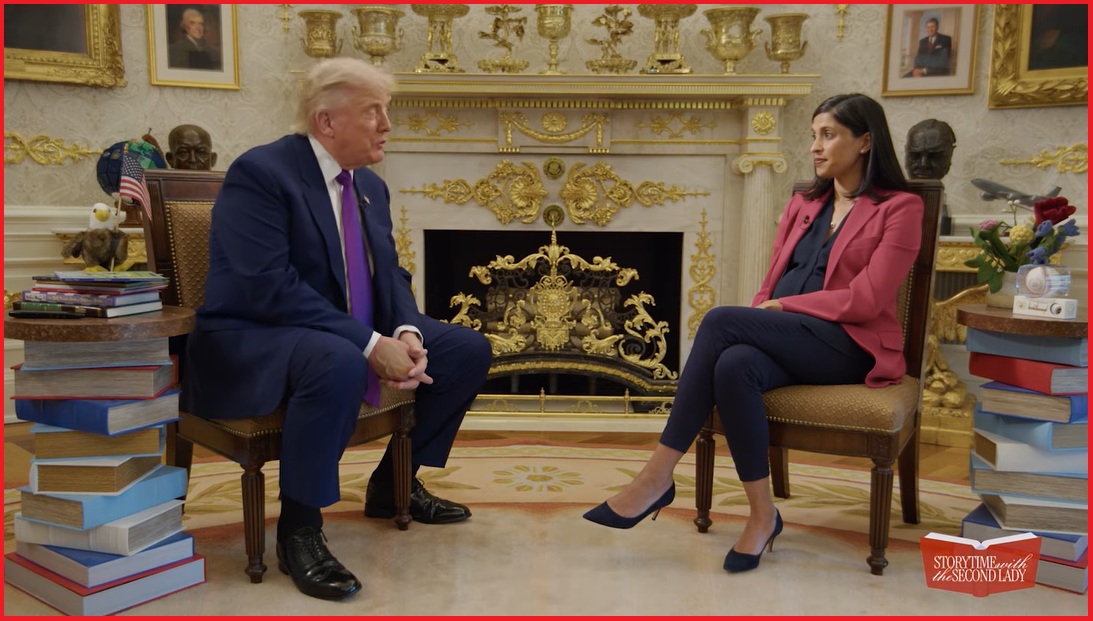
- ‘The second-most good-looking president’: Trump entertains on Usha Vance’s program (Far Right — WorldNetDaily)
- President Trump Reads “Presidents Play” (Far Right — The Last Refuge)
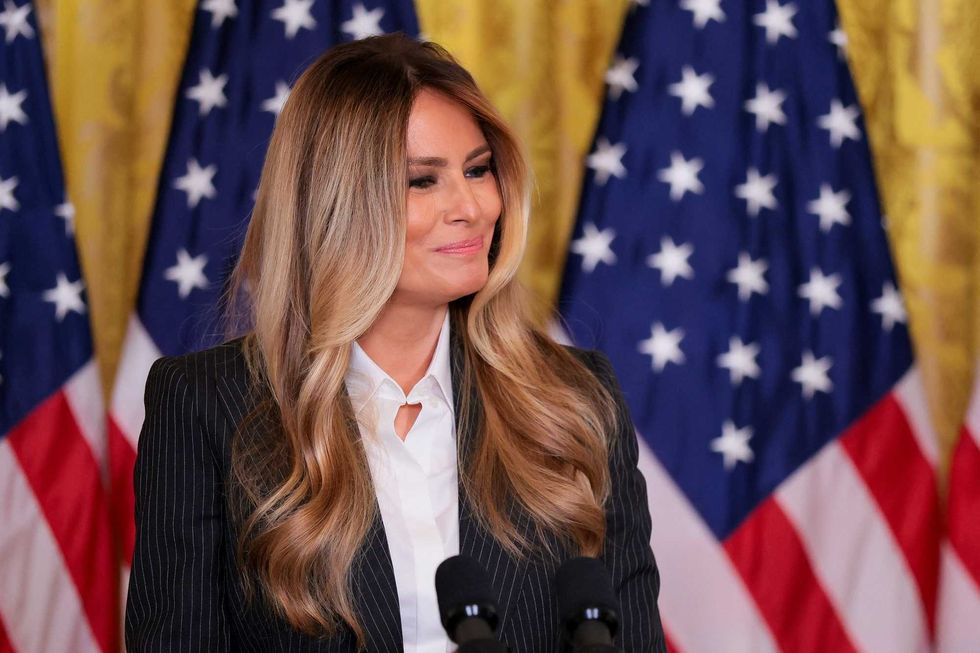
- Melania gives Congress private deadline as she works around Trump's team: report (Far Left — Raw Story)
- Happy Freedom 250! Acting DNI Bill Pulte Fires More “Deep State” Intel Officials (Far Right — The Gateway Pundit)
Daily Analysis
Read the full Parallax Pulse for April 8, 2026 — an AI-powered analysis of how Left and Right media covered the biggest stories this day.
More Headlines From April 8, 2026
- Republican Projected to Hold Marjorie Taylor Greene’s House Seat (Center)
- US oil prices fall over 18% after Trump agrees to two-week ceasefire with Iran (Center Right)
- New York Wants a Cut of Counter-Strike's Loot Boxes (Center Right)
- Republican Clay Fuller to replace Marjorie Taylor Greene in House (Center)
- 5 US House races shift toward Democrats: Cook Political Report (Right)