Two-time failed challenger Rick Scott makes new bid for influence in divided GOP
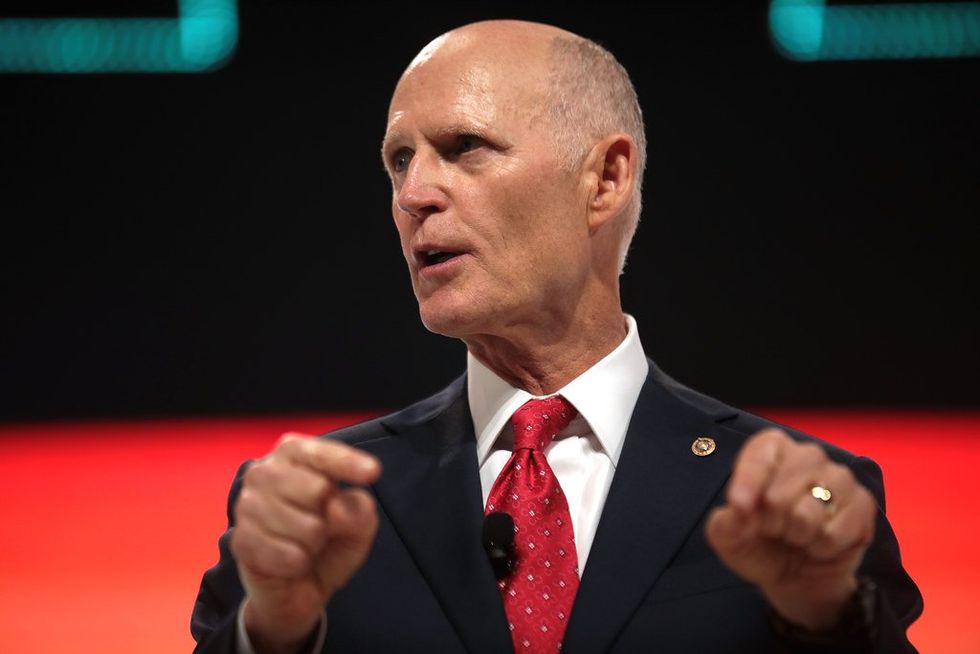
With tensions between President Donald Trump and Senate Majority Leader John Thune (R-South Dakota) growing — and the 2026 midterm elections a little over four months away — Sen. Rick Scott (R-Florida) invited Trump to address Senate Republicans at a lunch held on Wednesday, June 26. Scott is saying that he was trying to promote a healthy dialogue between Trump and Thune, but the Florida senator, according to Politico's Jordain Carney, proposed the lunch "without Majority Leader John Thune's express approval" — and Scott's actions are fueling speculation about his possible motivations."What has become eminently clear in recent weeks is that Scott — after a long career in business, two terms as governor and nearly eight years as senator — just isn't a back-bench kind of guy," Carney reports in Politico. "He has lots of thoughts on how the Senate should be run and a willingness to express them, even if it puts him at odds with Thune's vision. The leader, who trounced Scott in a 2024 conference election, has largely avoided holding doomed votes that would split Republicans and, like many GOP senators, would like nothing more than to get past the months-long intra-party fight over the SAVE America Act, the elections bill pushed by Trump."Scott, according to Carney, "insists that those who see this as a prelude to a leadership challenge" against Thune "have it all wrong."The Florida senator/ex-Florida governor told Politico, "Here's what I don't get. Other people get to put out their position. If I put out mine, then I want to be leader?"But Carney notes that Scott's latest actions are "only his latest attempt to stay in the thick of the action in a body where obscurity can be hard to avoid.""His stint running the GOP Senate campaign arm ahead of the 2022 midterms was controversial and ended with Democrats beating historical headwinds and slightly expanding their bare majority," Carney reports. "He annoyed colleagues with his policy of not intervening in contested Republican primaries and infuriated some of them by promulgating a policy agenda through his personal political operation that they hadn’t agreed to. That did not deter Scott from challenging then-Minority Leader Mitch McConnell after the election that year, garnering only 10 votes of 47. He tried again after McConnell stepped down as leader two years later. Scott won 13 votes in a three-way race, but Thune ultimately prevailed."Carney points out that Thune, unlike McConnell, Scott "doesn't have an openly antagonistic relationship with Scott." And the Senate majority leader avoided criticizing Scott during an interview with Politico.Thune told Politico, "He brings people in that help inform our conversations and discussions about some of the major policy issues. I'm very supportive of what he's doing."